Lighting is the single most powerful tool in interior design for setting emotional tone, yet in most bedrooms, it is the most neglected. Relying on a single, blazing flush-mount ceiling fixture in the center of the room turns what should be a calming evening retreat into an interrogation room.
To create an authentic sanctuary that gently prepares your mind and body for restorative rest, you need layered, indirect illumination. By replacing harsh overhead fixtures with wall sconces, pleated table lamps, and architectural accent channels, you can transform your bedroom into a tranquil boutique retreat.
1. The Three Tiers of Bedroom Lighting
Professional lighting designers never rely on a single light source. A well-designed master suite incorporates three distinct circuits:
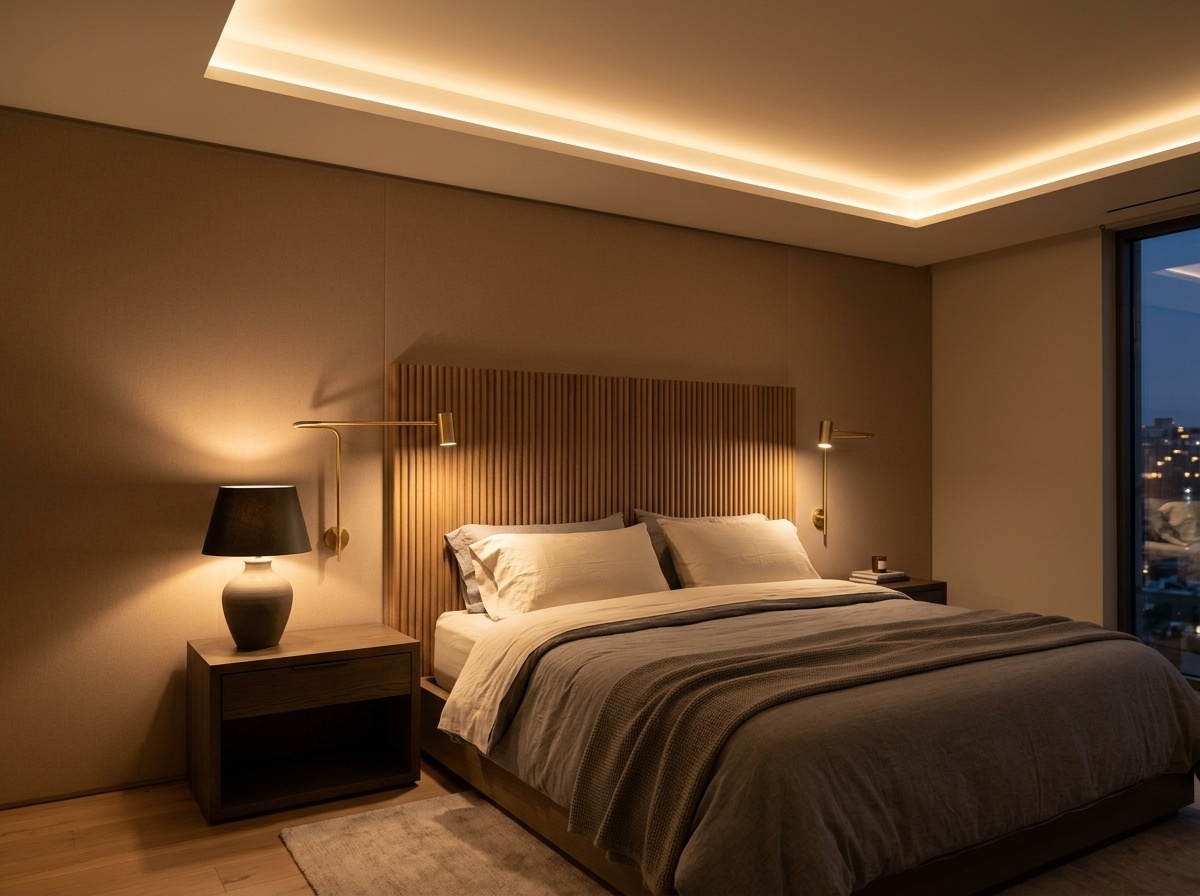
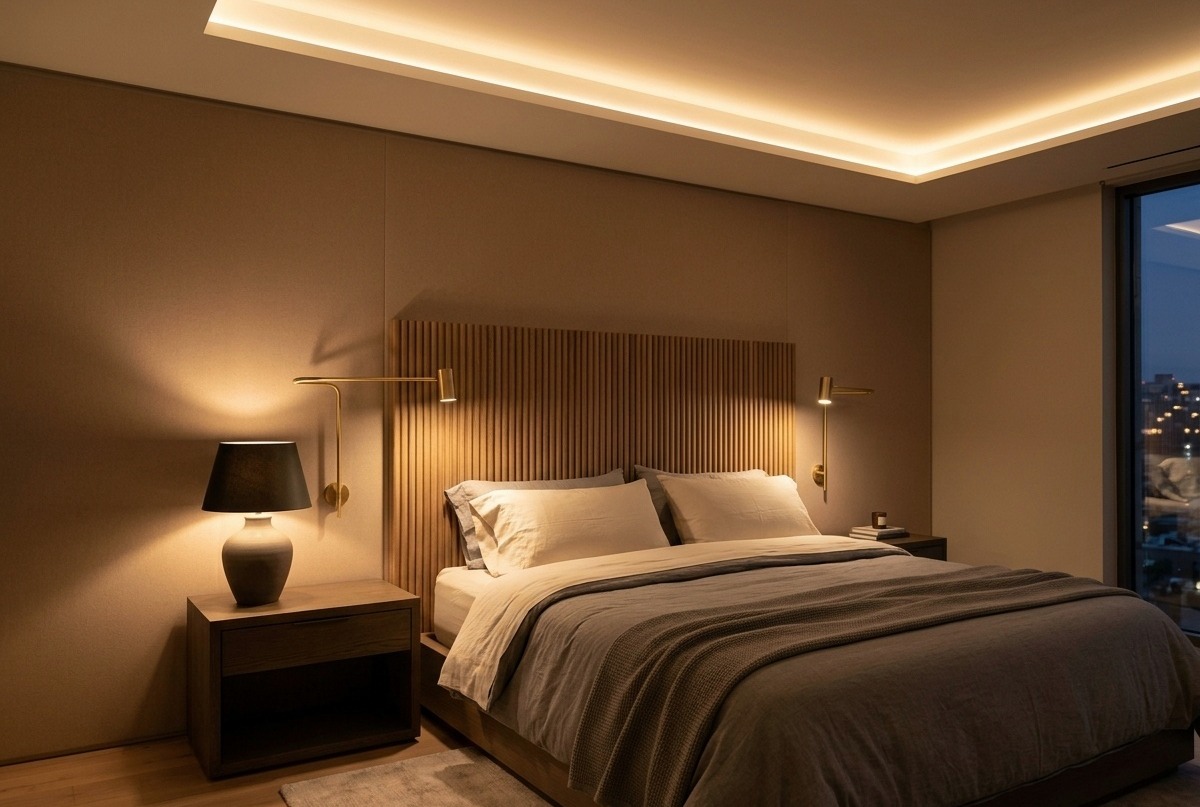
- Ambient Glow: A diffused, low-intensity background glow that fills the room without casting direct down-glare. Consider a fabric drum pendant or an indirect cove LED strip.
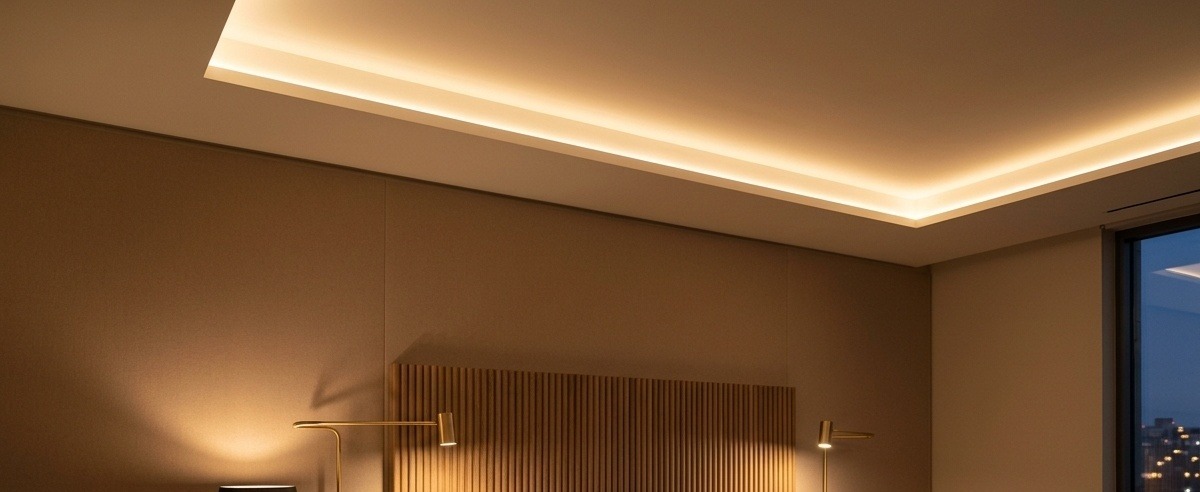
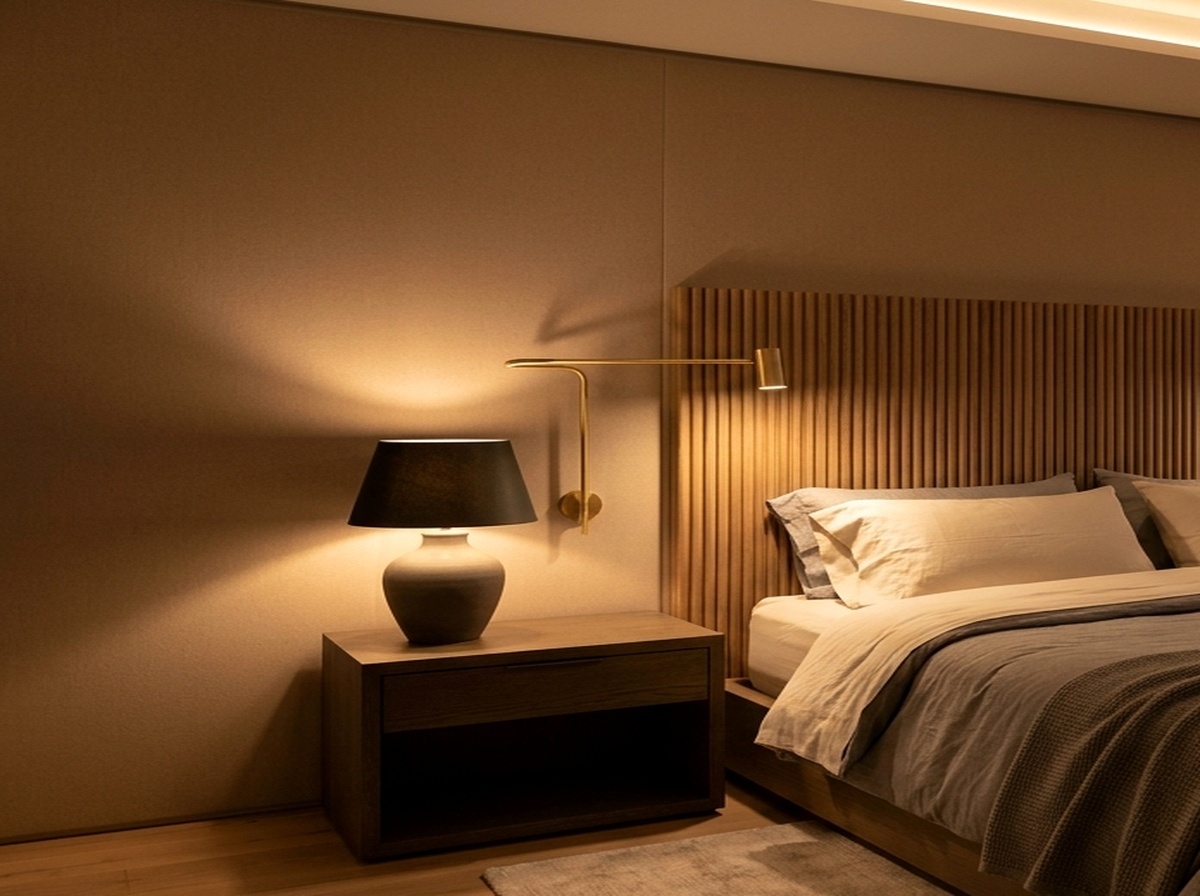
 Accent focal point: a slim brass picture light adding intimate depth to bedroom wall decor.
2. Wall Sconce Placement & Mounting Heights
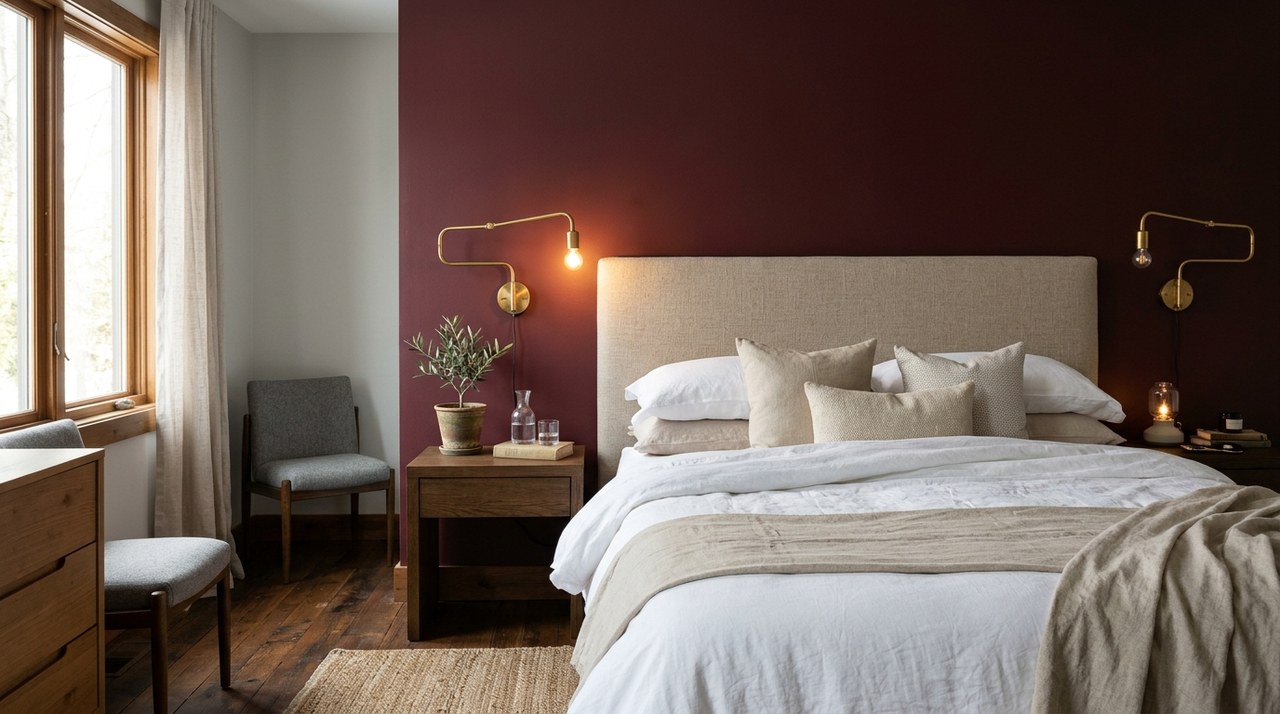
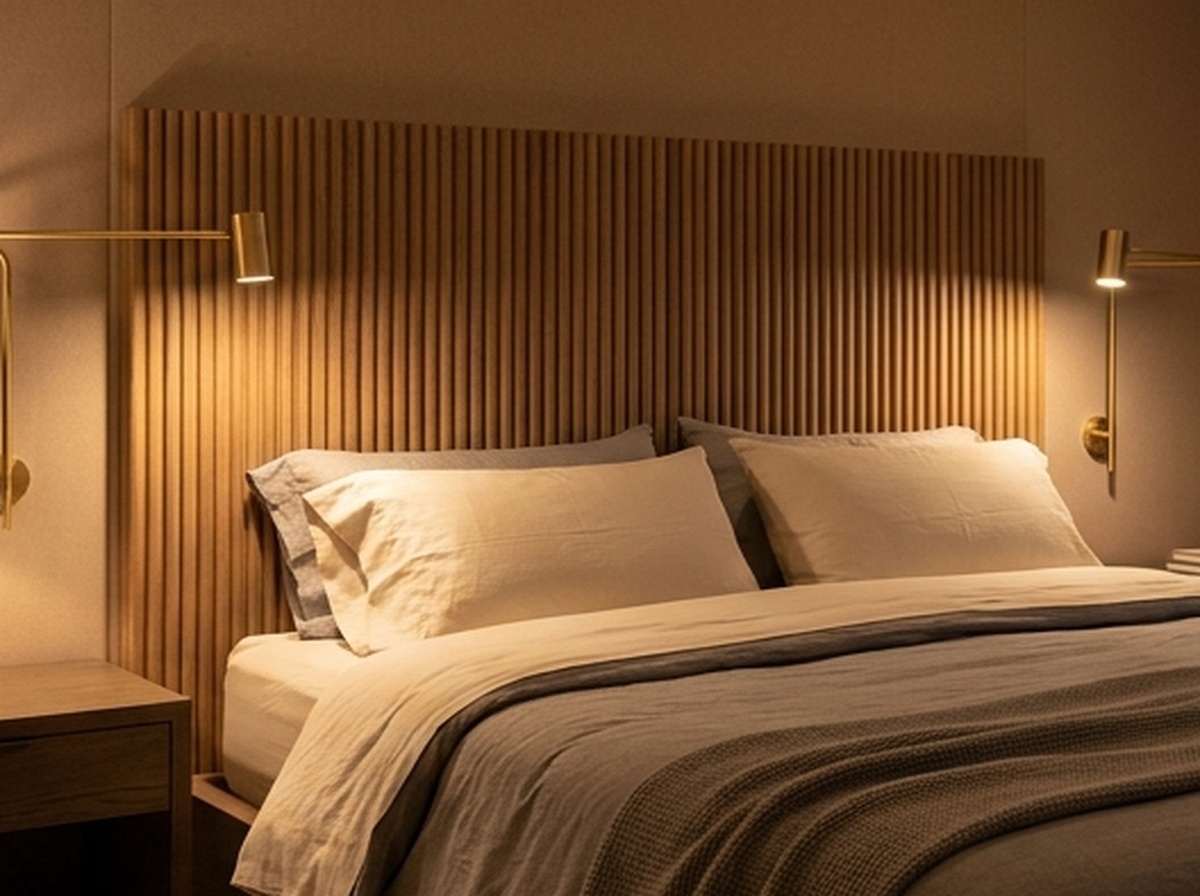
Wall sconces are an interior designer favorite because they free up valuable real estate on your nightstand tabletop. Getting the height right is critical for glare-free reading:
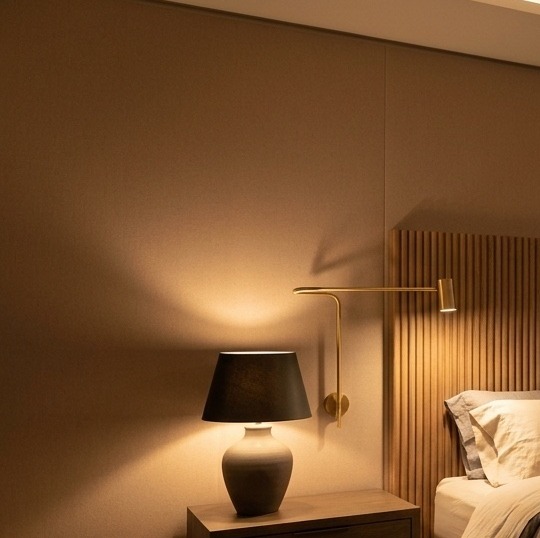
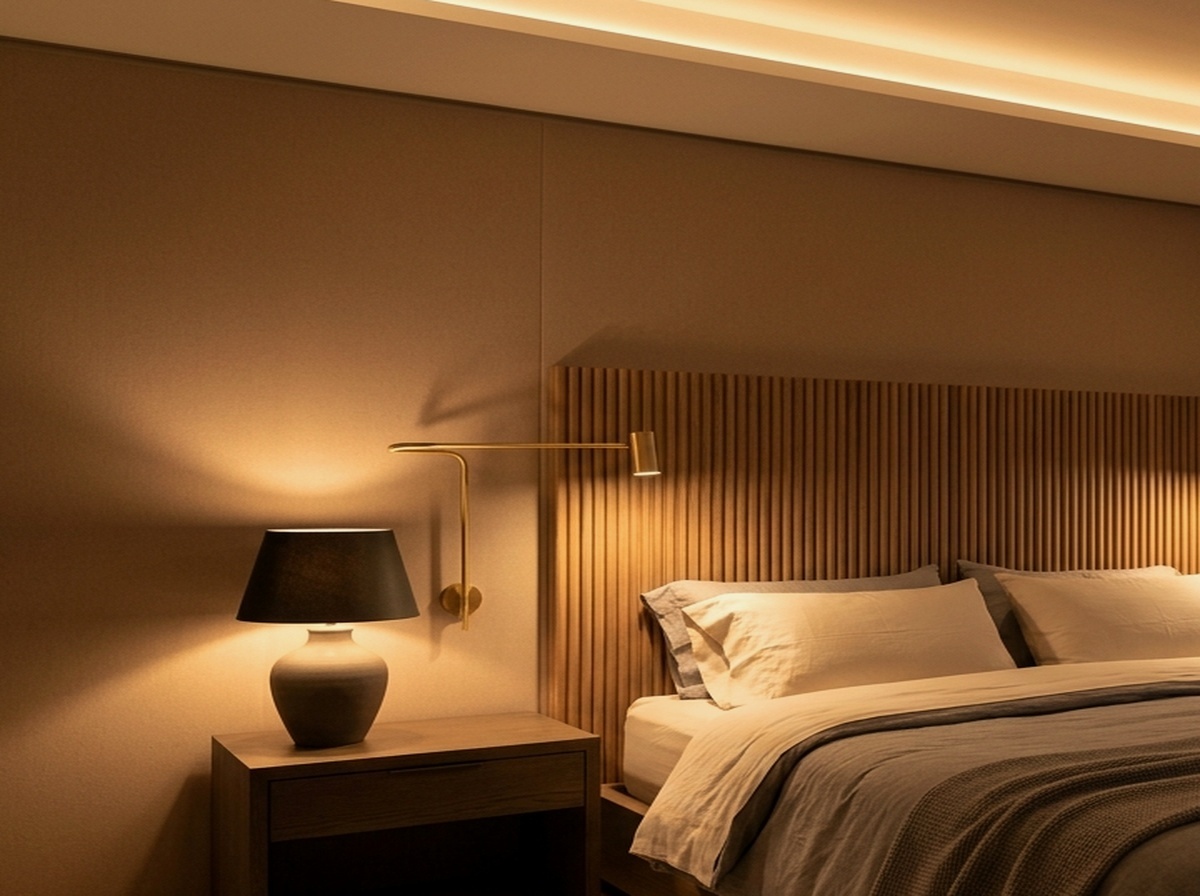
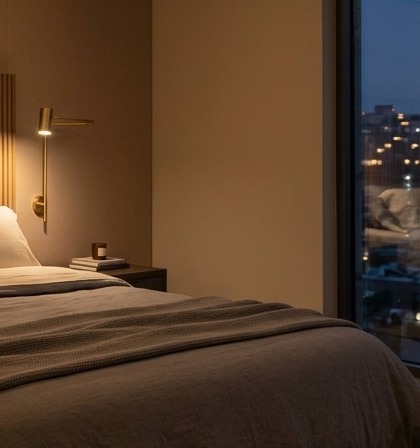
- Mounting Height: For bedside reading, mount wall sconces 50 to 55 inches above the finished floor, or approximately 30 to 32 inches above the top of your mattress.
- Eye-Level Rule: When sitting propped up in bed, the bottom rim of the sconce shade should sit right around eye level. This ensures the bulb casts light downward onto your book rather than directly into your eyes.
- Plug-In Convenience: You do not need to hire an electrician to rip into your drywall. Choose high-end plug-in sconces equipped with brass or painted cord covers for a bespoke, built-in look.
3. The Circadian Rule: 2700K Warm White Only
The color temperature of your light bulbs directly dictates your melatonin production. Daylight bulbs (4000K–5000K) emit heavy blue spectrum light that tricks your brain into thinking it is noon.
- Specify 2700K Warm White: 2700K produces that soft, relaxing incandescent glow reminiscent of candlelight.
- Look for 90+ CRI: The Color Rendering Index (CRI) measures how accurately a bulb renders real colors. Cheap 80 CRI LED bulbs make bedroom fabrics and paint look gray and lifeless; a 90+ CRI bulb reveals rich wood grain and textile depth.
4. Embrace Dimmers on Every Circuit
A bedroom light switch should never be just on or off. Install rotary or smart dimmer switches on all overhead and wall fixtures. Dimming your lights to 20% in the last 45 minutes before sleep creates a subconscious cue for your nervous system to wind down.
5. Architectural Accent Lighting
To give your bedroom the depth of a luxury hotel suite, add low-voltage warm LED channel lighting:
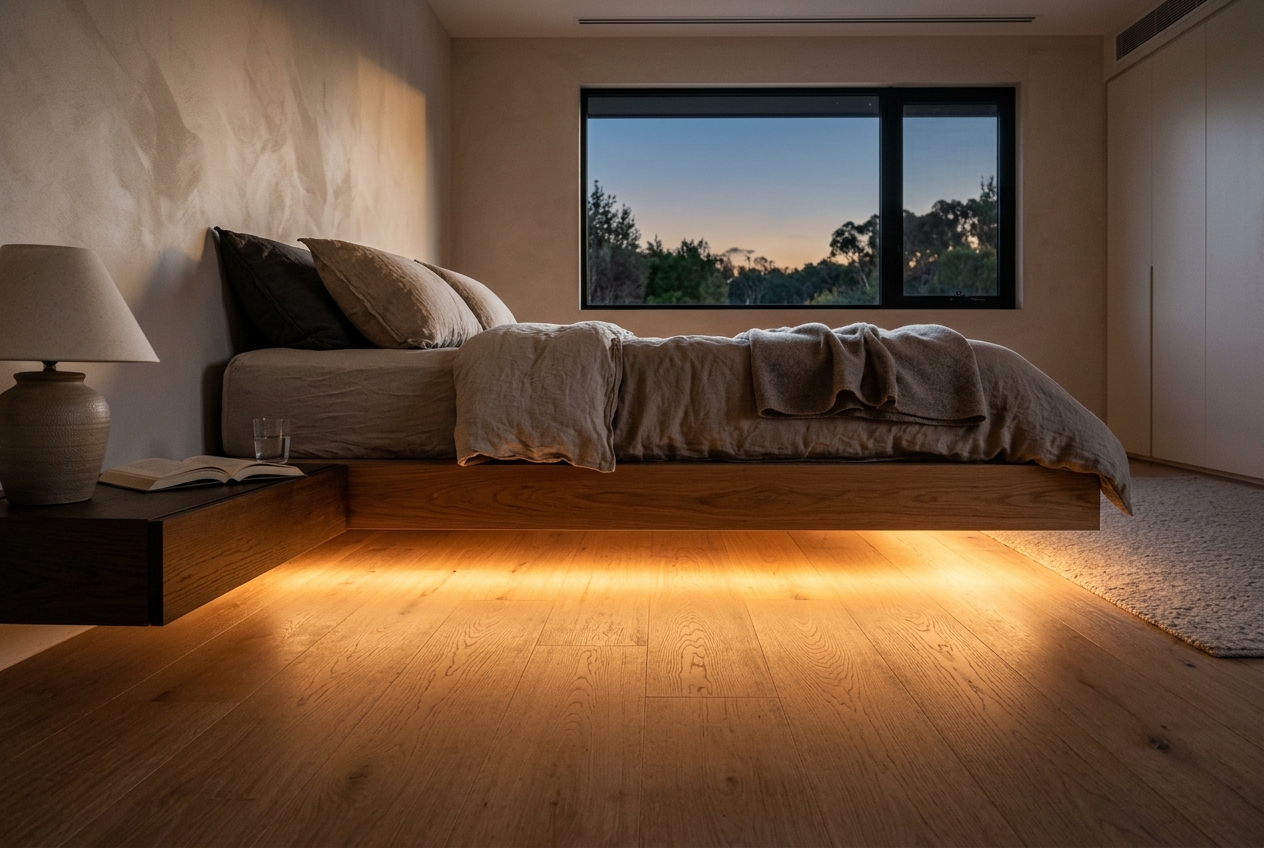
- Under-Bed Motion Glow: Install an under-bed motion sensor warm strip (2400K) that softly illuminates the floor when you step out of bed at night without waking your senses.
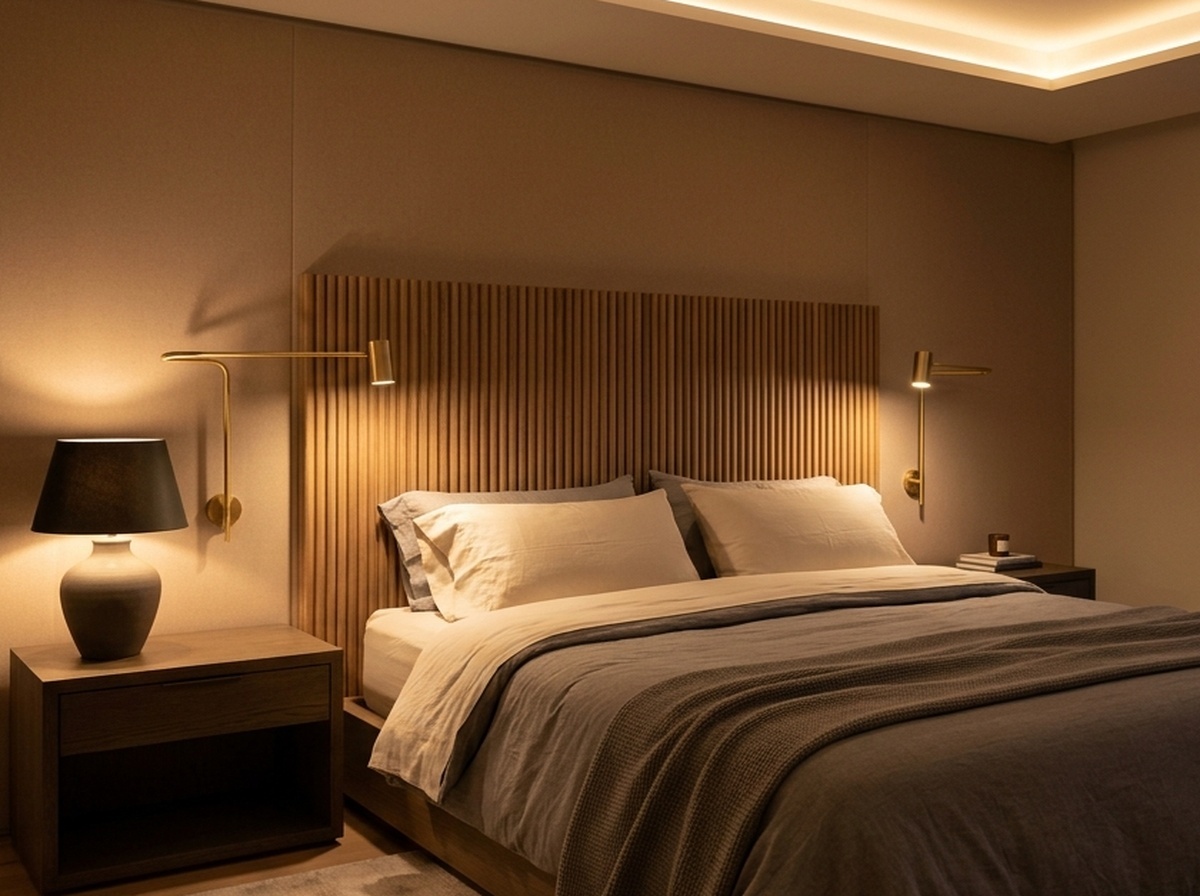
- Behind-Headboard Grazing: Tuck an indirect LED channel behind an upholstered or wood slat headboard to create a floating halo effect across the back wall.
Frequently Asked Questions
Can I mix brass sconces with black table lamps?
Yes. Mixing finishes creates a collected, designer aesthetic. Pair warm antiqued brass wall sconces with matte black or ceramic table lamps, provided the overall room palette shares warm, cohesive undertones.
How bright should bedside reading lights be?
For comfortable reading without eye strain, choose a bulb that produces approximately 400 to 450 lumens (equivalent to a 40-watt incandescent bulb) in a warm 2700K temperature.
Are swing-arm sconces or fixed sconces better?
Swing-arm sconces offer greater flexibility because you can pivot the light beam directly over your book and tuck it back flat against the wall when finished. Fixed shade sconces provide cleaner architectural lines.
Should bedside lamps match exactly?
While traditional design favored identical matching lamps, modern bedrooms often feature subtle asymmetry—such as a wall sconce on one side and a sculptural table lamp on the other—unified by similar heights and light outputs.