A bedroom dresser is both a heavy-duty storage workhorse and an architectural anchor. Yet all too often, dresser tops turn into chaotic dumping grounds for mail, loose change, tangled jewelry, and forgotten laundry piles.
When thoughtfully proportioned and intentionally styled, a dresser balances the visual weight of your bed while keeping clothing categorized and accessible. Whether you are furnishing a sprawling master suite or organizing a compact apartment bedroom, here is the designer blueprint for choosing, placing, and styling a bedroom dresser.
1. Choosing the Right Dresser Silhouette
The shape of your dresser should be dictated by your room's wall dimensions and ceiling height:
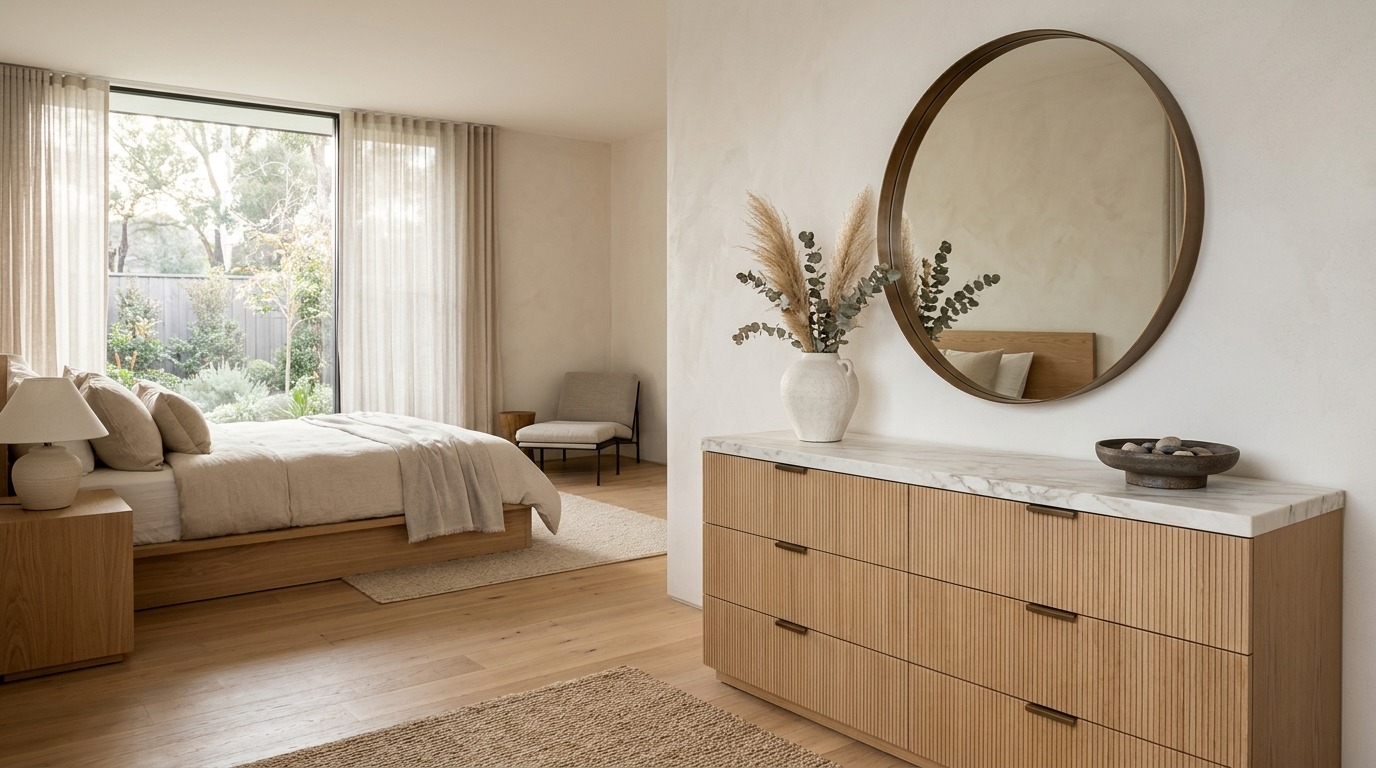
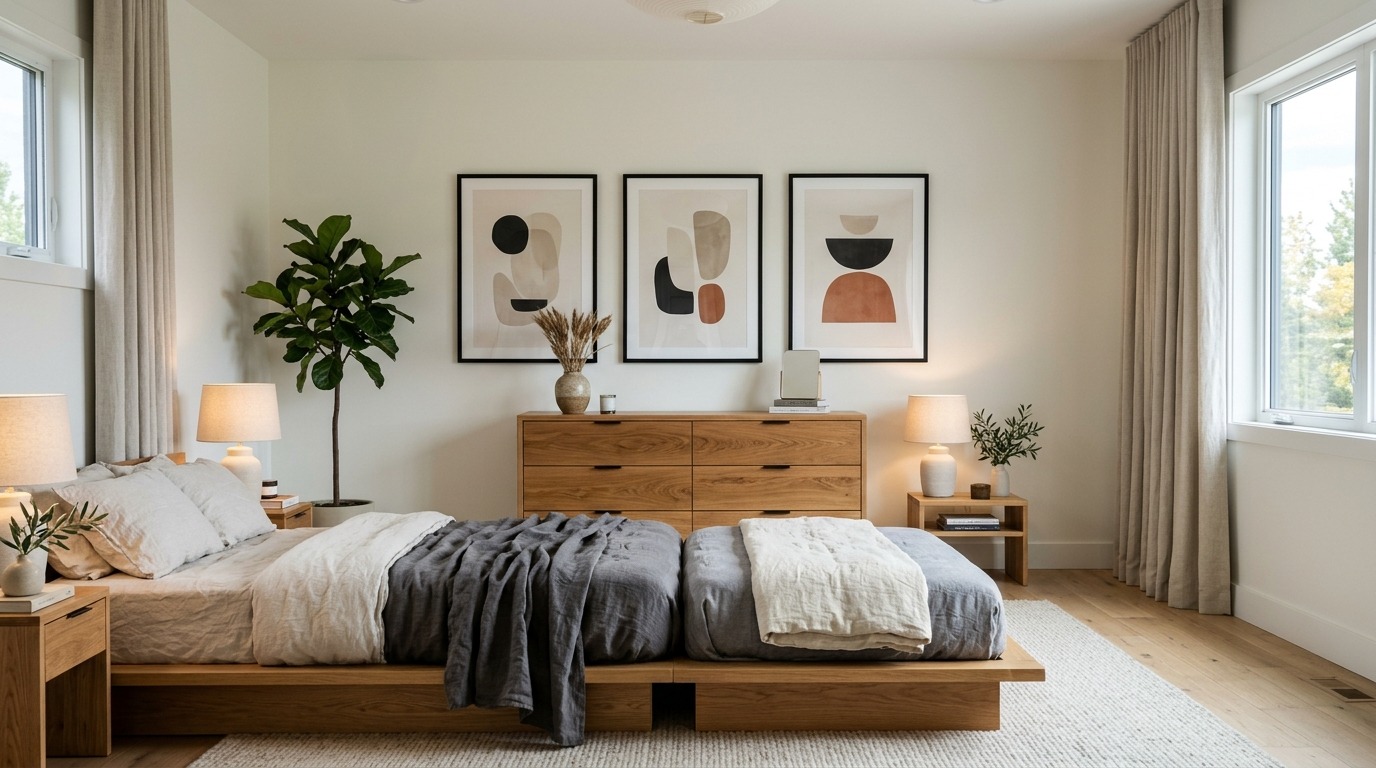
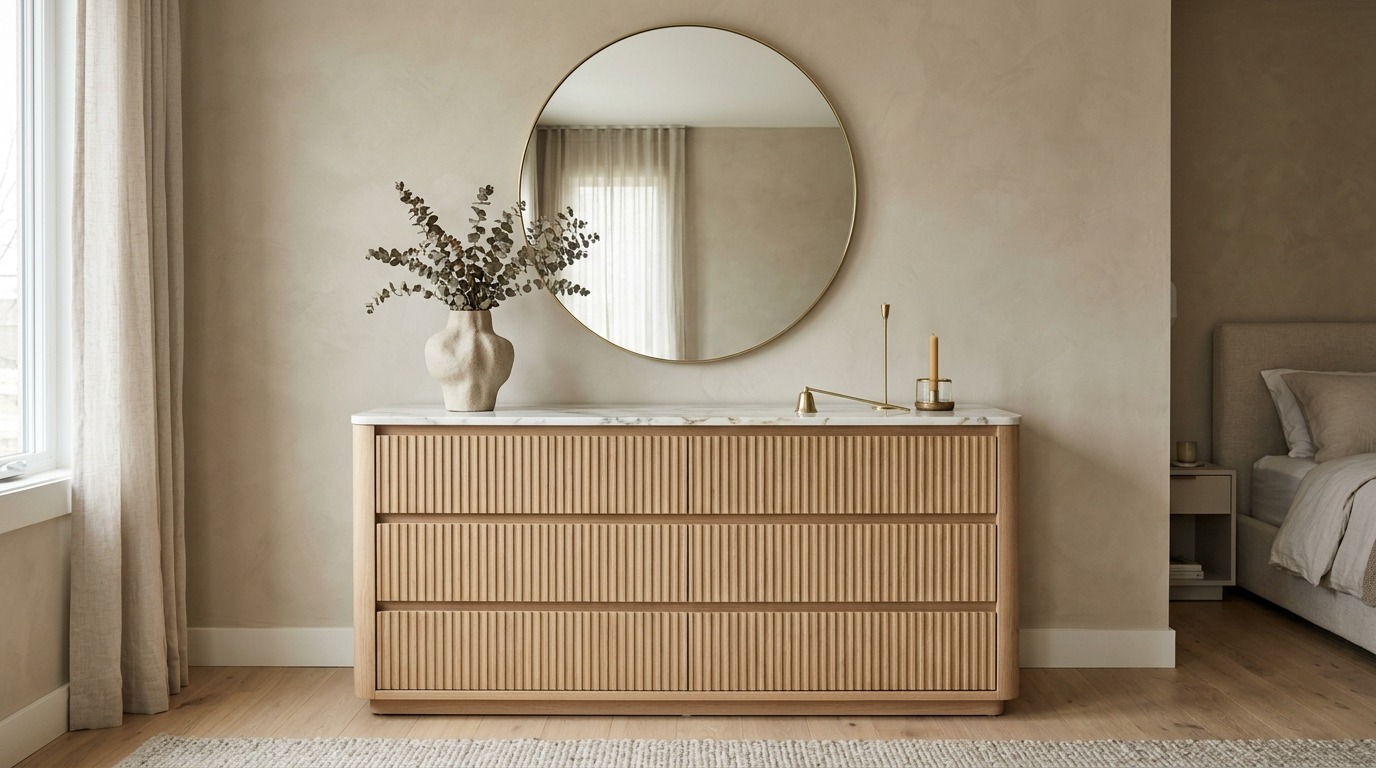
- The Horizontal 6-Drawer Double Dresser (Wide Walls): Ranging from 56 to 68 inches wide, a horizontal double dresser is the gold standard for master bedrooms. Its low profile (around 32 to 36 inches tall) allows ample wall space above for large mirrors or framed art.
- The Vertical 5-Drawer Tallboy / Chest (Narrow Walls): Standing 48 to 54 inches tall but only 30 to 36 inches wide, a vertical chest takes advantage of upward height in compact bedrooms with limited floor space.
- The Dresser-Desk Combo: In multi-functional guest rooms, selecting a long console dresser that transitions into a writing desk maximizes every linear foot.
2. Spatial Clearances: The 36-Inch Rule
Before purchasing a dresser, measure your room's walkway clearances carefully:
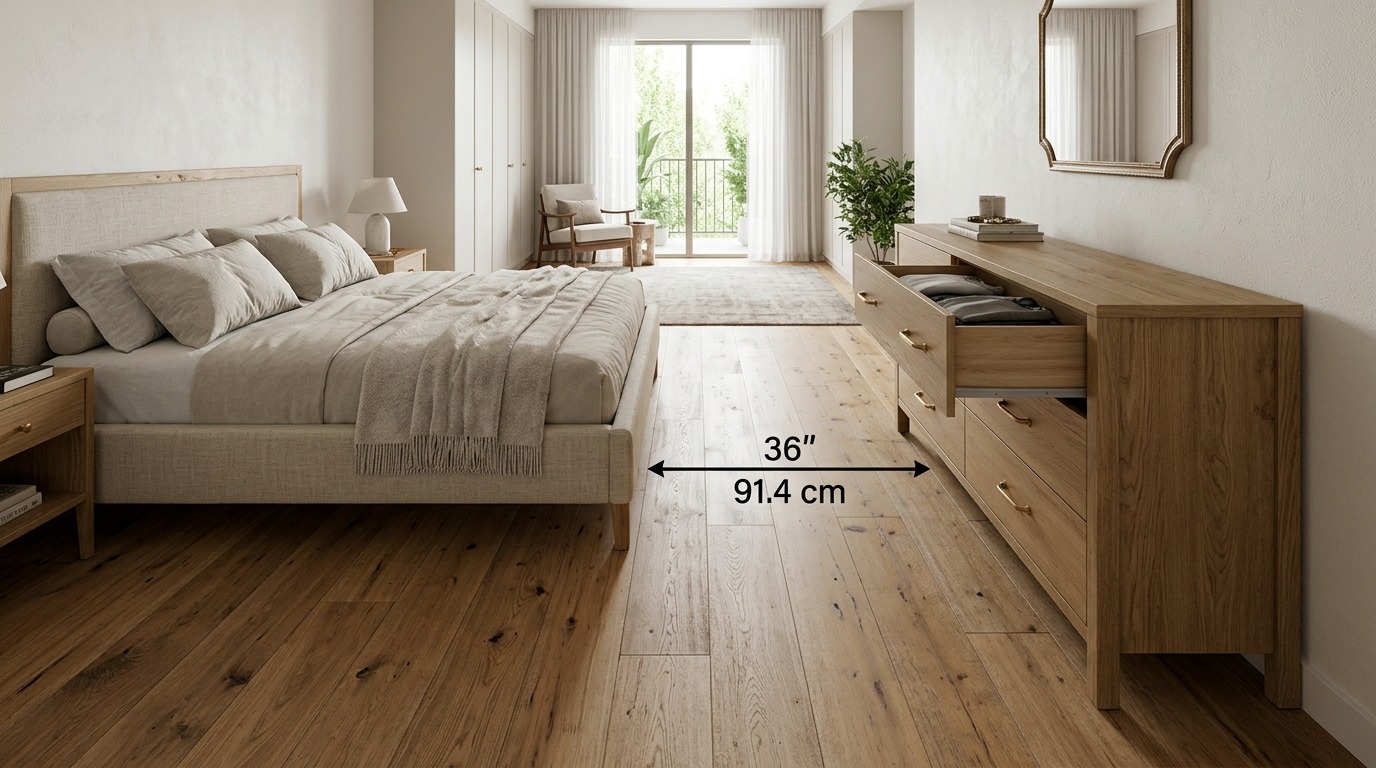
- Walkway Clearance: Maintain at least 36 inches of clear floor space between the front edge of the dresser and the foot of your bed or adjacent furniture.
- Drawer Extension: Remember that drawers extend 14 to 18 inches when opened. You should be able to pull a drawer all the way out and comfortably squat down to retrieve items without bumping into the mattress frame.
3. The Designer Formula for Styling Dresser Tops
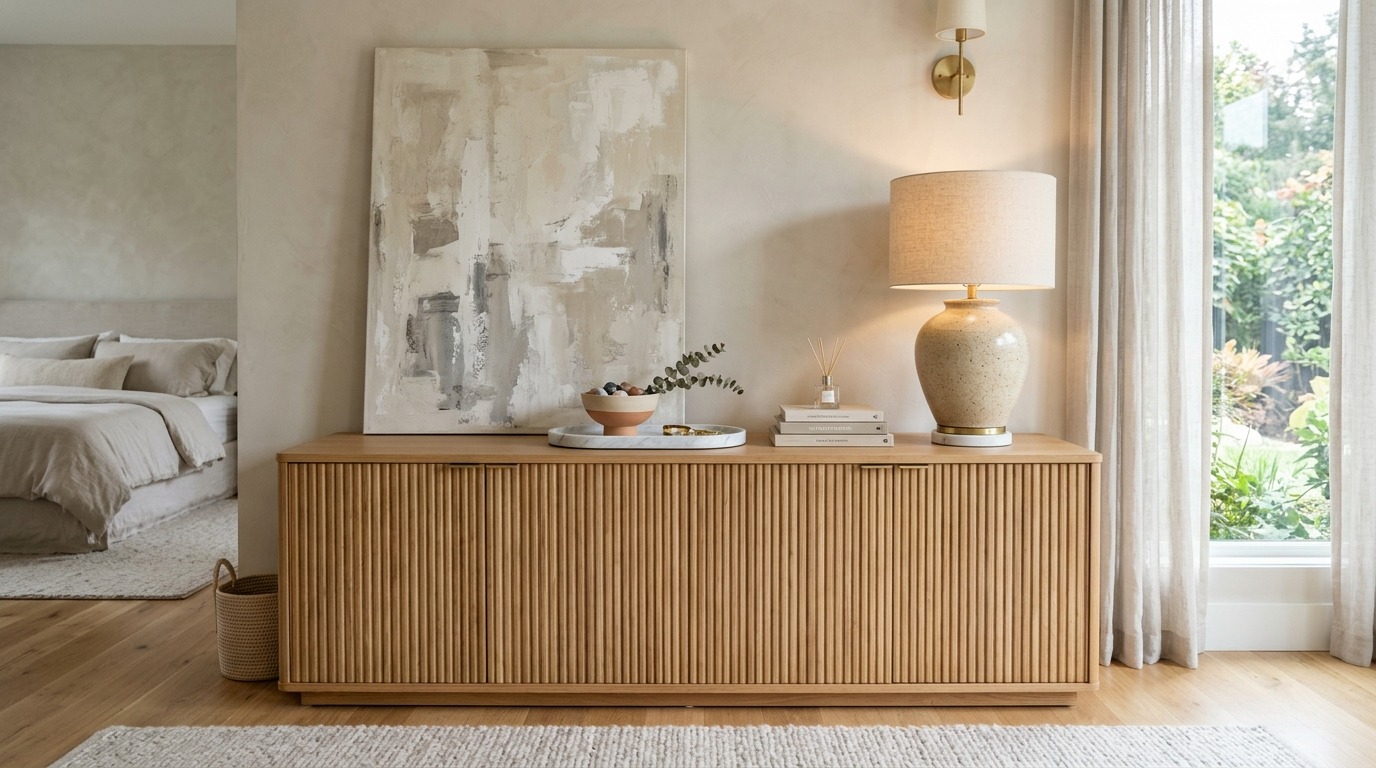
Avoid the temptation to push matching accessories symmetrically across the entire top. Use the dynamic asymmetrical layout:
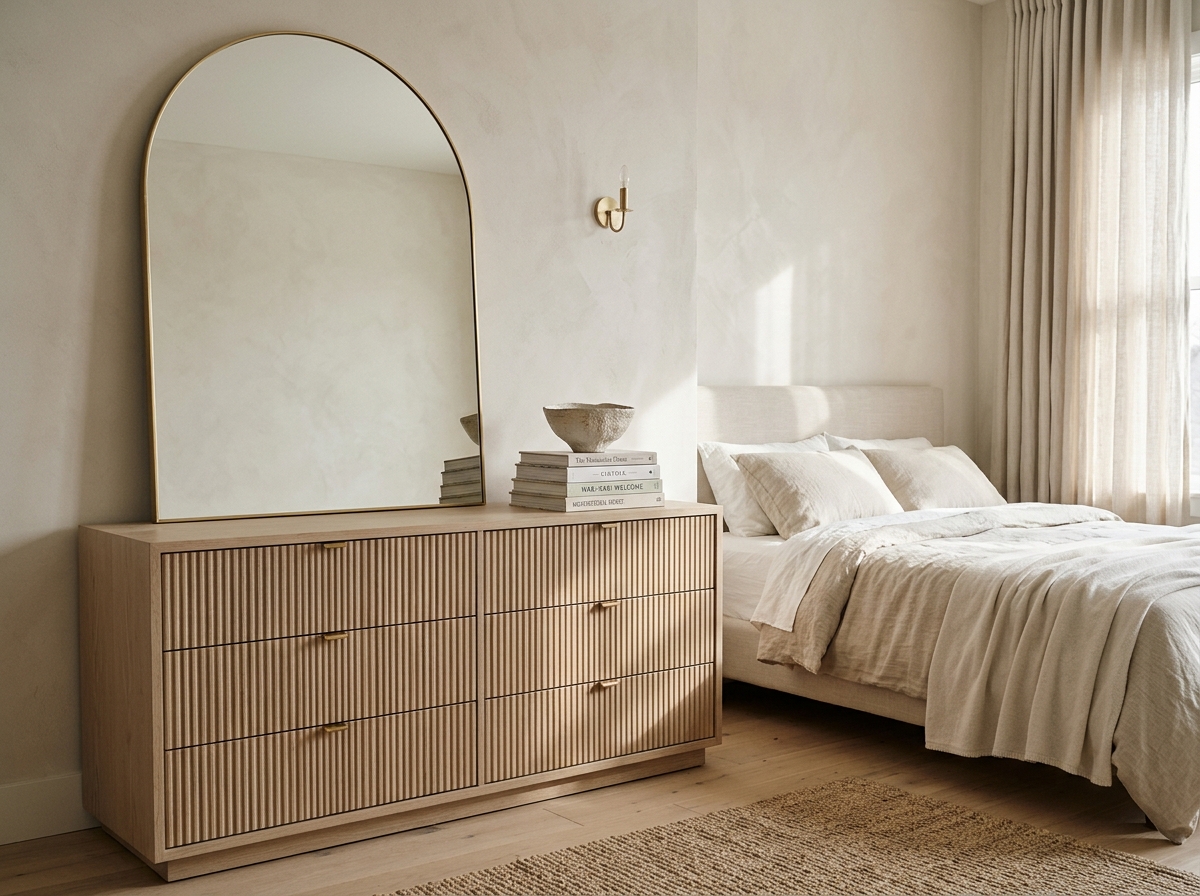
- The Vertical Anchor (Off-Center): Hang a 36-inch circular mirror or lean an oversized framed landscape painting slightly off-center on the wall.
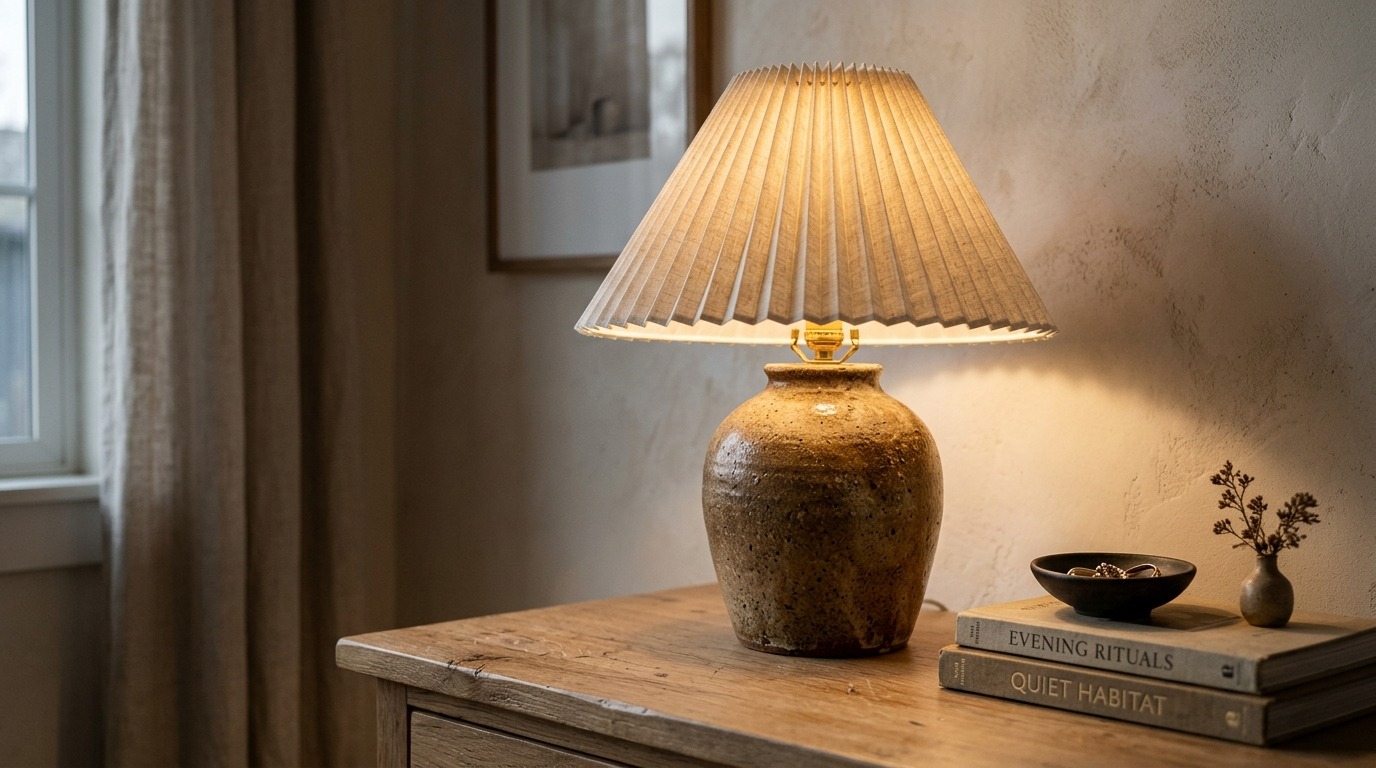
- The Light Source: Place a substantial ceramic table lamp or task lamp on the opposite side of the mirror to balance visual weight.
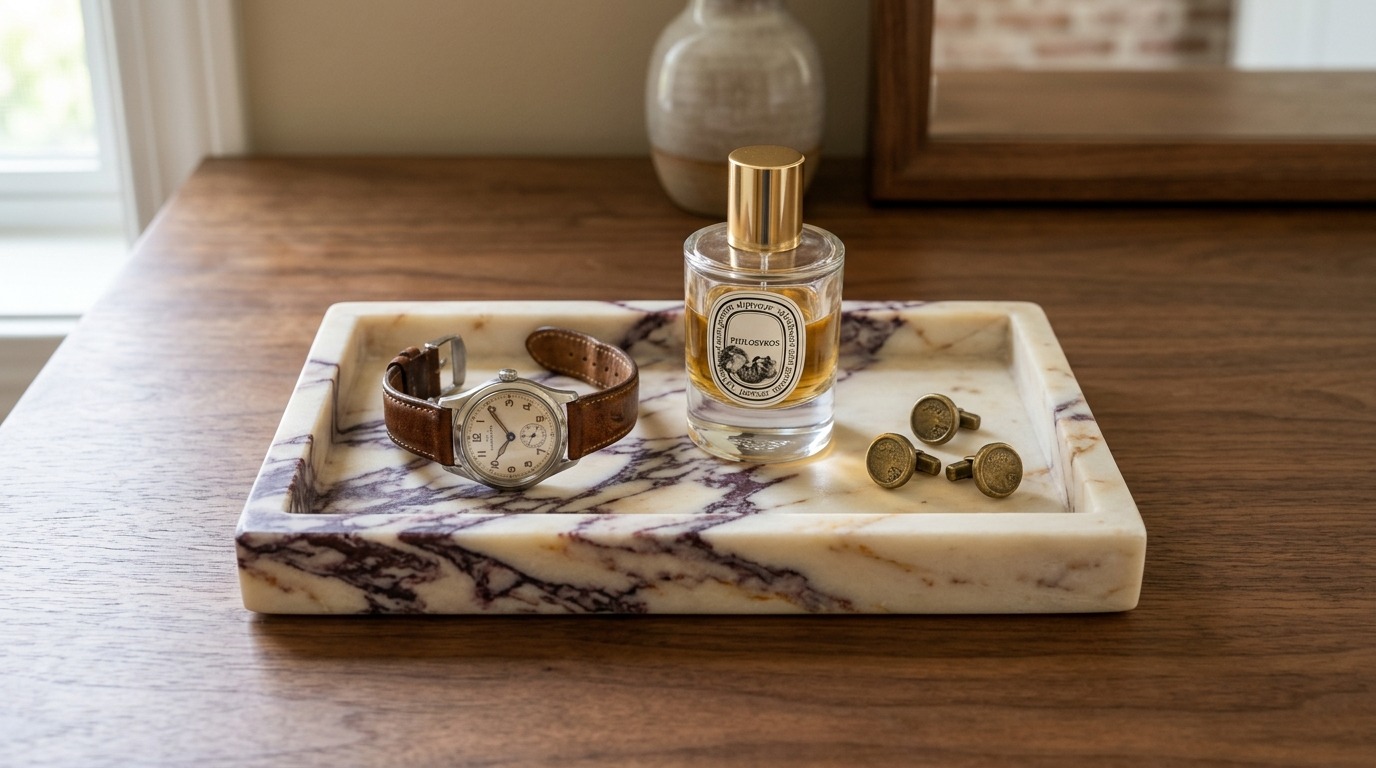
- The Catchall Zone: Keep a low marble, leather, or stoneware tray in the center for everyday items like watches, perfume bottles, and sunglasses.
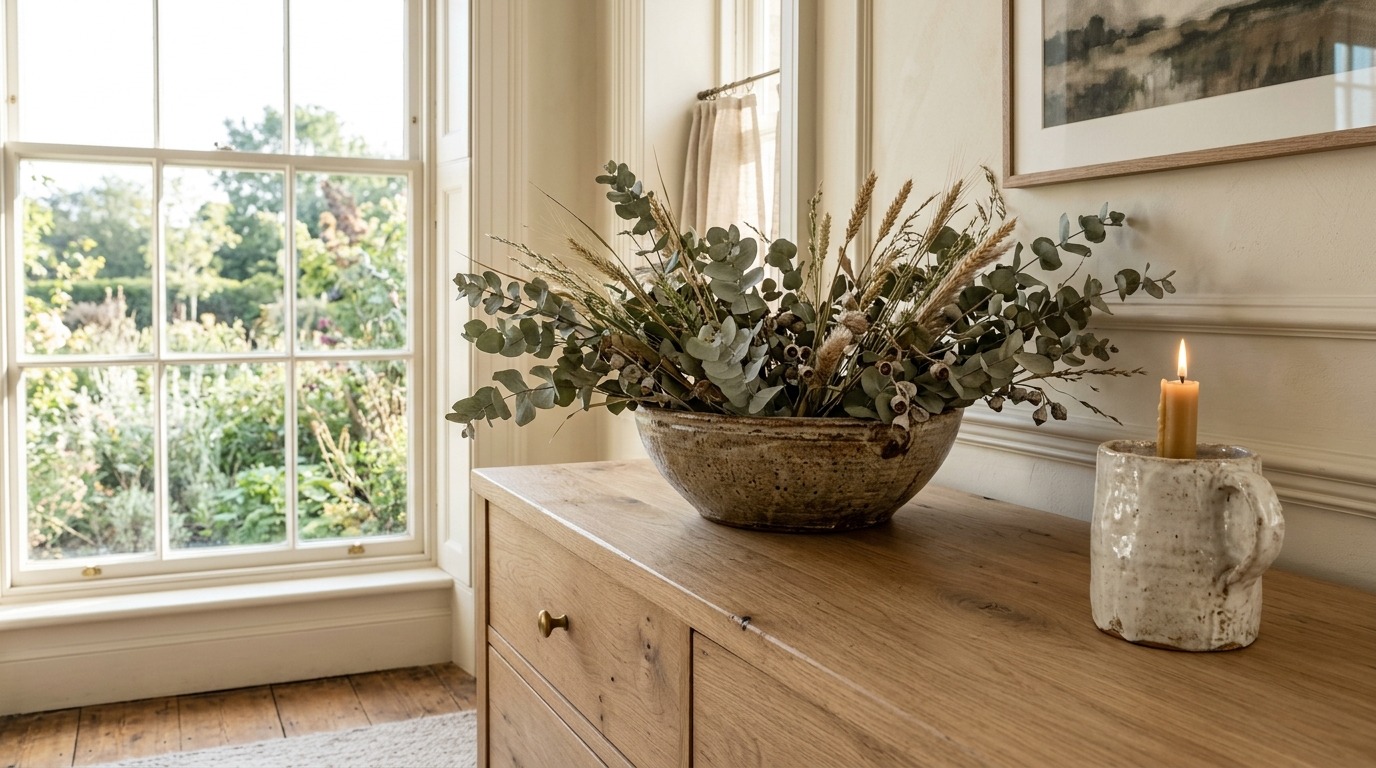
- Natural Touch: Add a low stoneware bowl or ceramic vessel with dried botanicals or seasonal foliage.
4. Internal Drawer Organization Systems
Outer beauty means little if opening a drawer reveals a chaotic mess of clothing. Implement modular organization dividers:
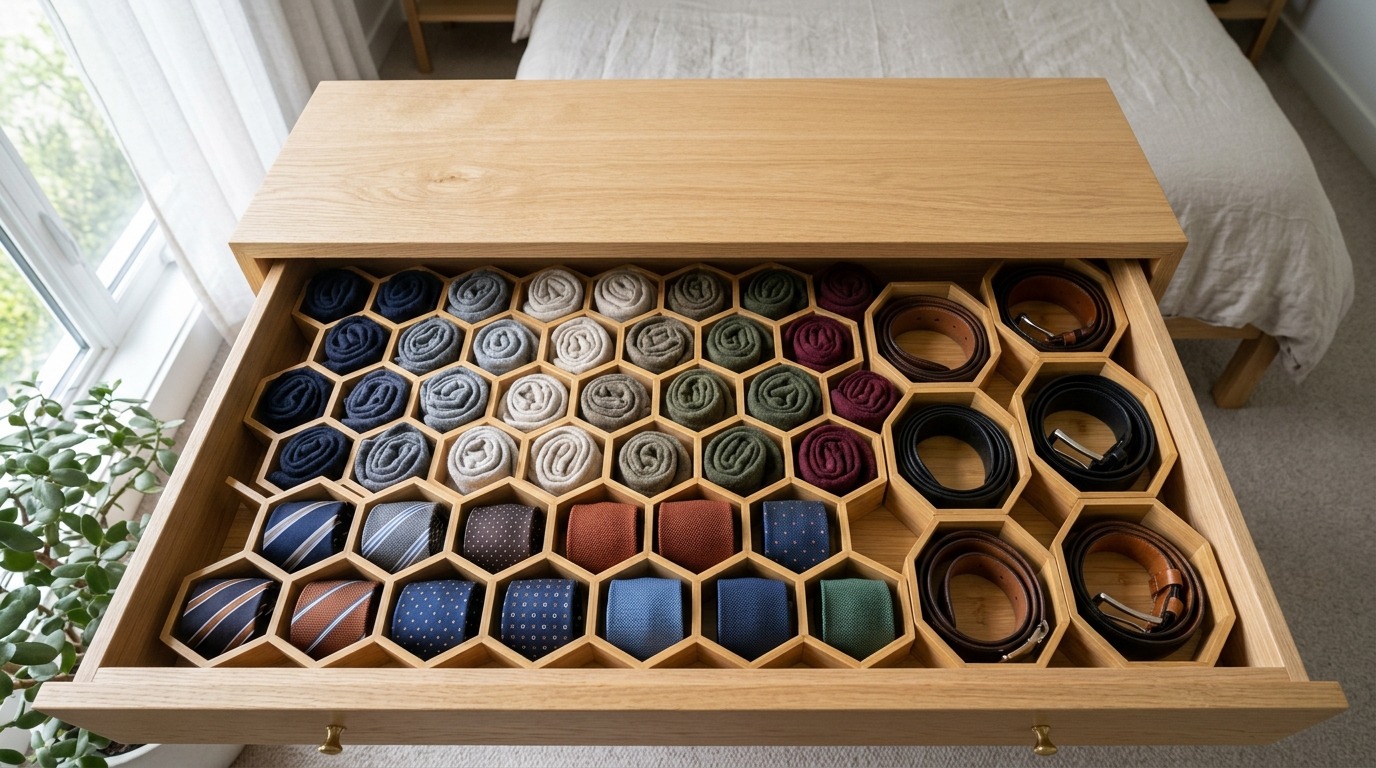
- Honeycomb Dividers for Small Items: Dedicate top shallow drawers to socks, undergarments, and belts using adjustable fabric or bamboo dividers.
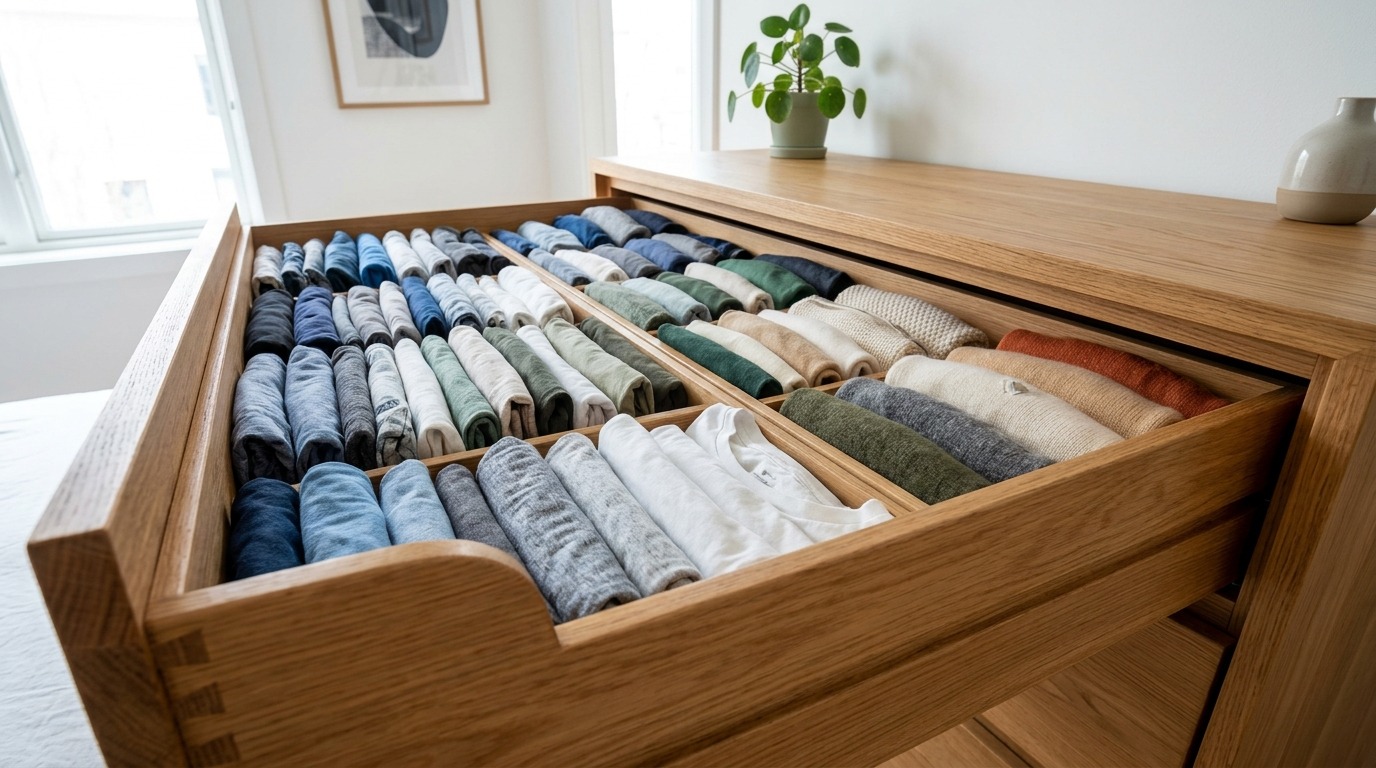
- The File-Folding Method: Instead of stacking t-shirts and sweaters on top of each other (which causes piles to collapse when pulling an item), fold clothing into neat rectangles and store them vertically like files in a filing cabinet. You can see every shirt at a glance.
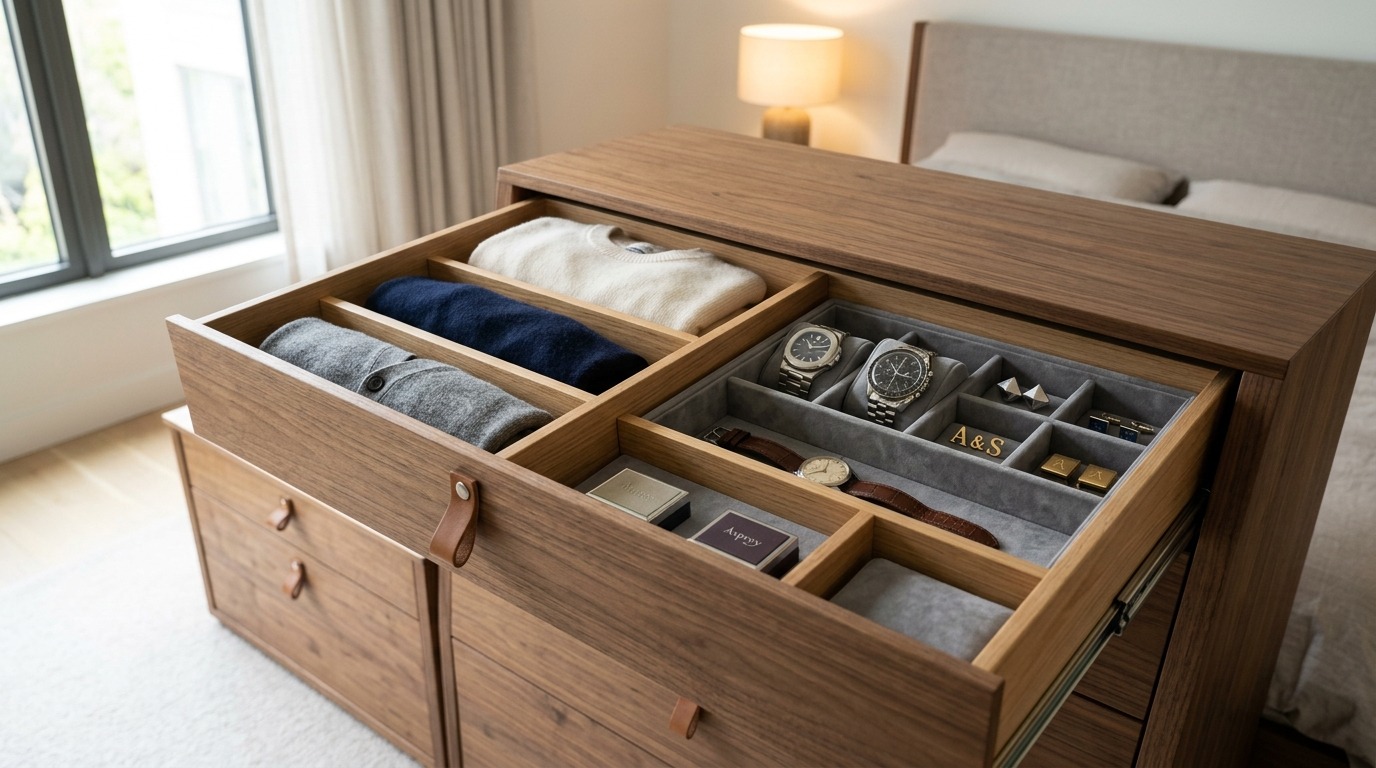
- Felt Trays for Jewelry & Accessories: Line a top drawer with custom velvet or felt inserts for rings, watches, and cufflinks.
5. Upgrading Hardware for a Bespoke Look
If your dresser feels generic, replacing standard drawer pulls with custom hardware delivers an immediate upgrade:
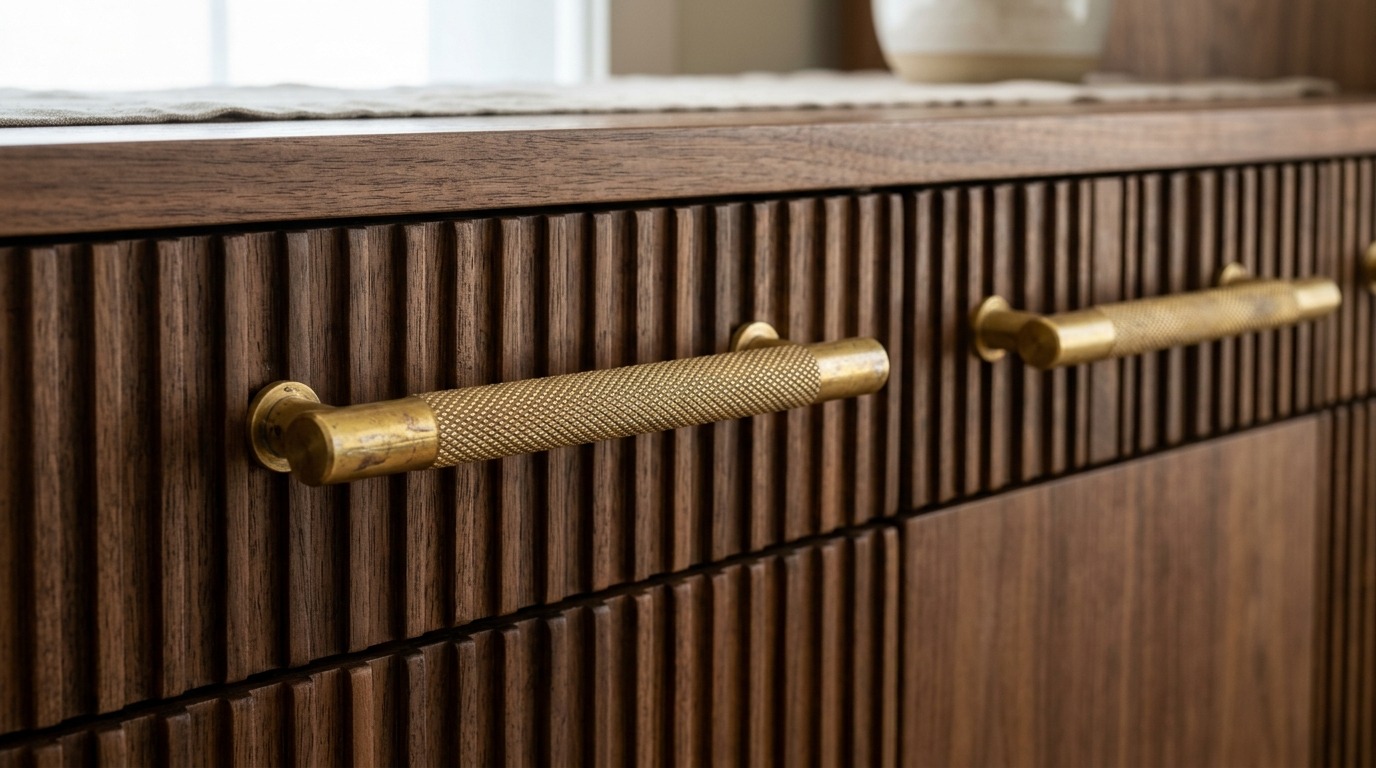
- Swap standard round knobs for knurled unlacquered brass bar pulls or turned dark horn handles.
- On mid-century dressers, leather strap pulls with brass rivets introduce rich, organic tactile contrast.
Frequently Asked Questions
Should a dresser match the nightstands?
No! Matching bedroom sets straight out of a showroom often make a room feel flat and dated. Mix wood finishes—such as pairing painted nightstands with a warm walnut dresser—to give your bedroom a curated, collected-over-time character.
How high should a mirror be hung above a dresser?
Hang a mirror so the bottom edge sits 4 to 6 inches above the dresser top. This keeps the mirror and dresser visually connected as a single architectural unit rather than two disconnected floating elements.
What should not be kept on a dresser?
Avoid cluttering your dresser top with paperwork, open laptops, piles of unfolded laundry, or loose beauty products without an organizing tray.
What is the best wood for a bedroom dresser?
Solid hardwoods like American walnut, white oak, maple, and cherry offer maximum durability and will not sag under the weight of heavy clothing drawers over years of daily use.