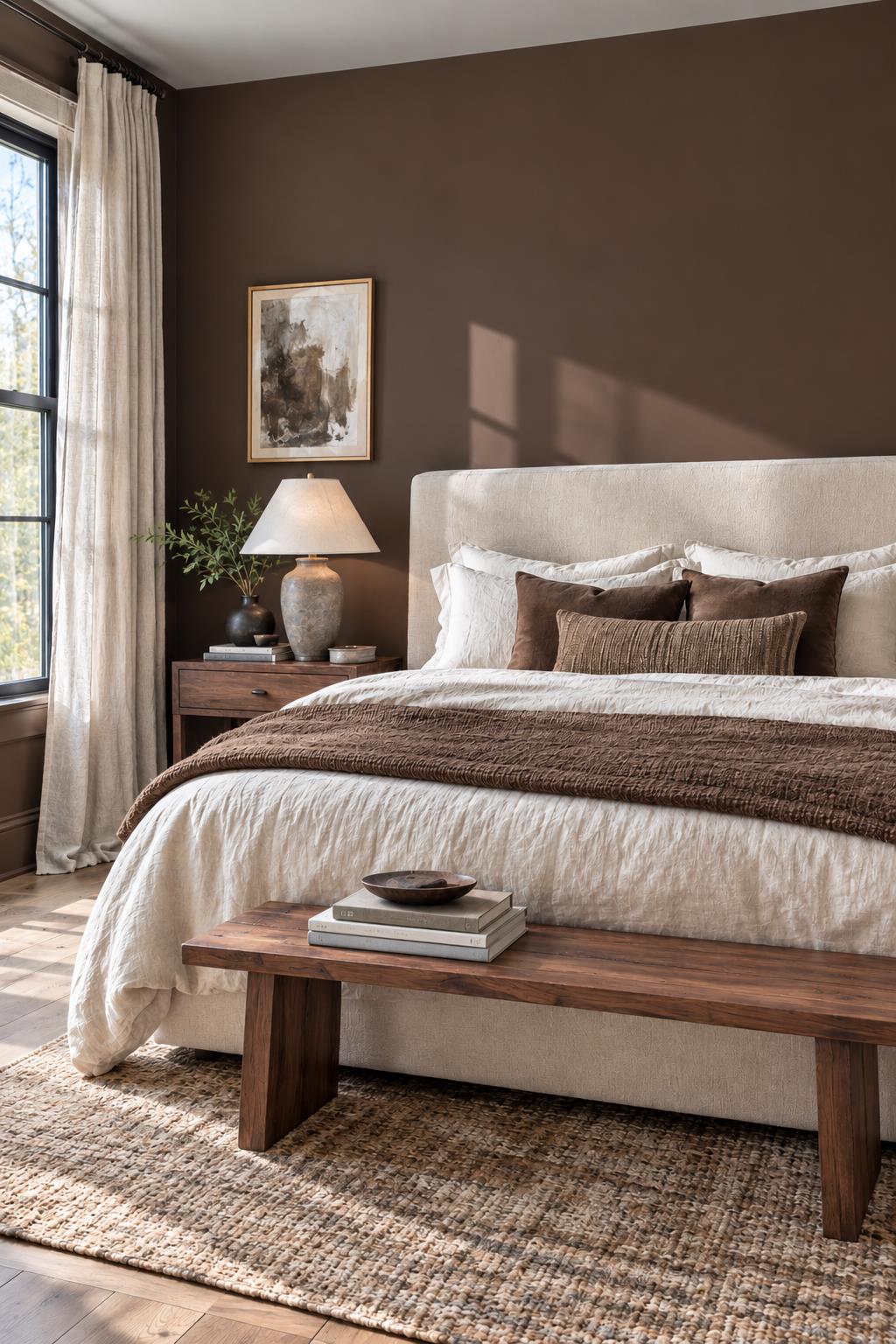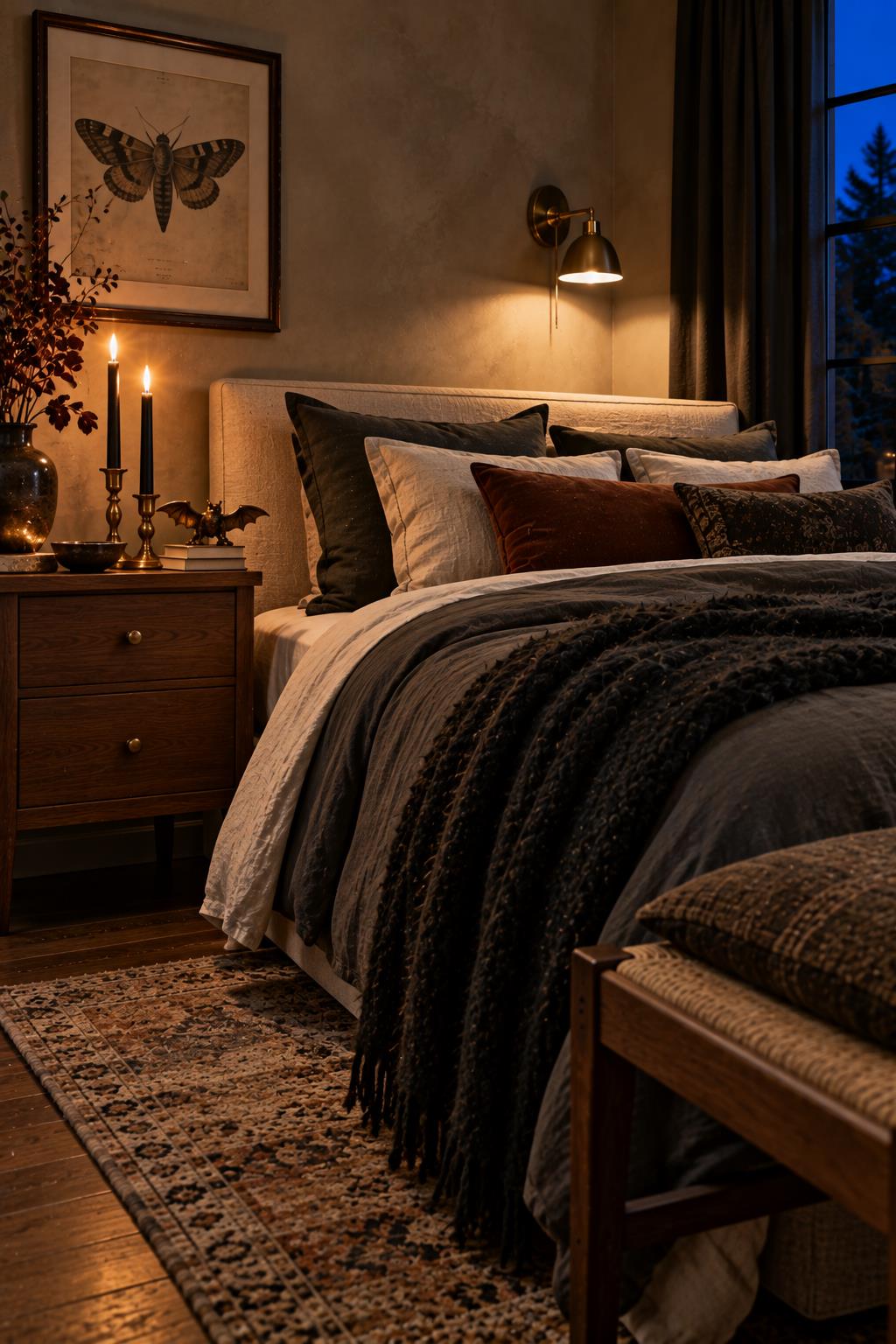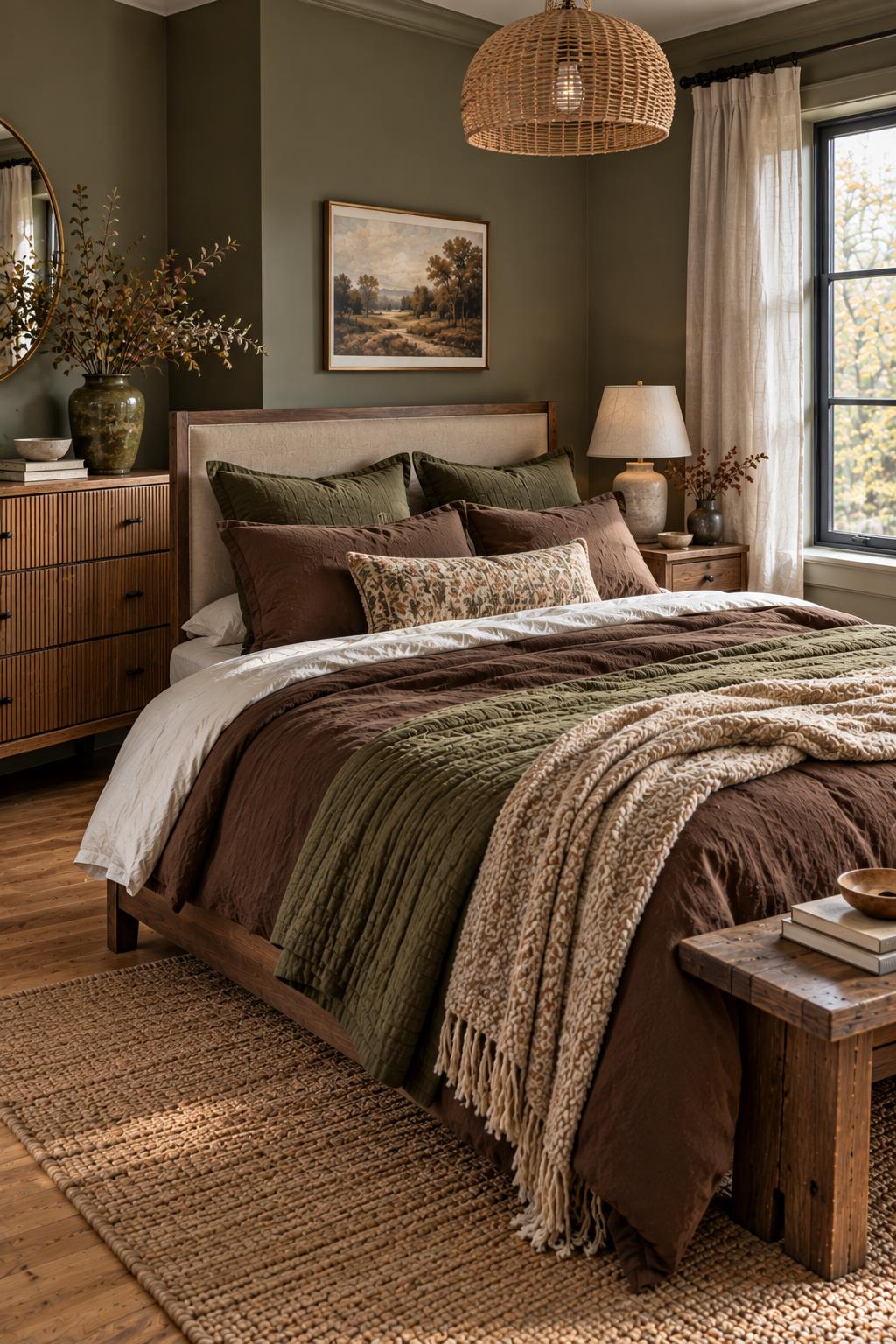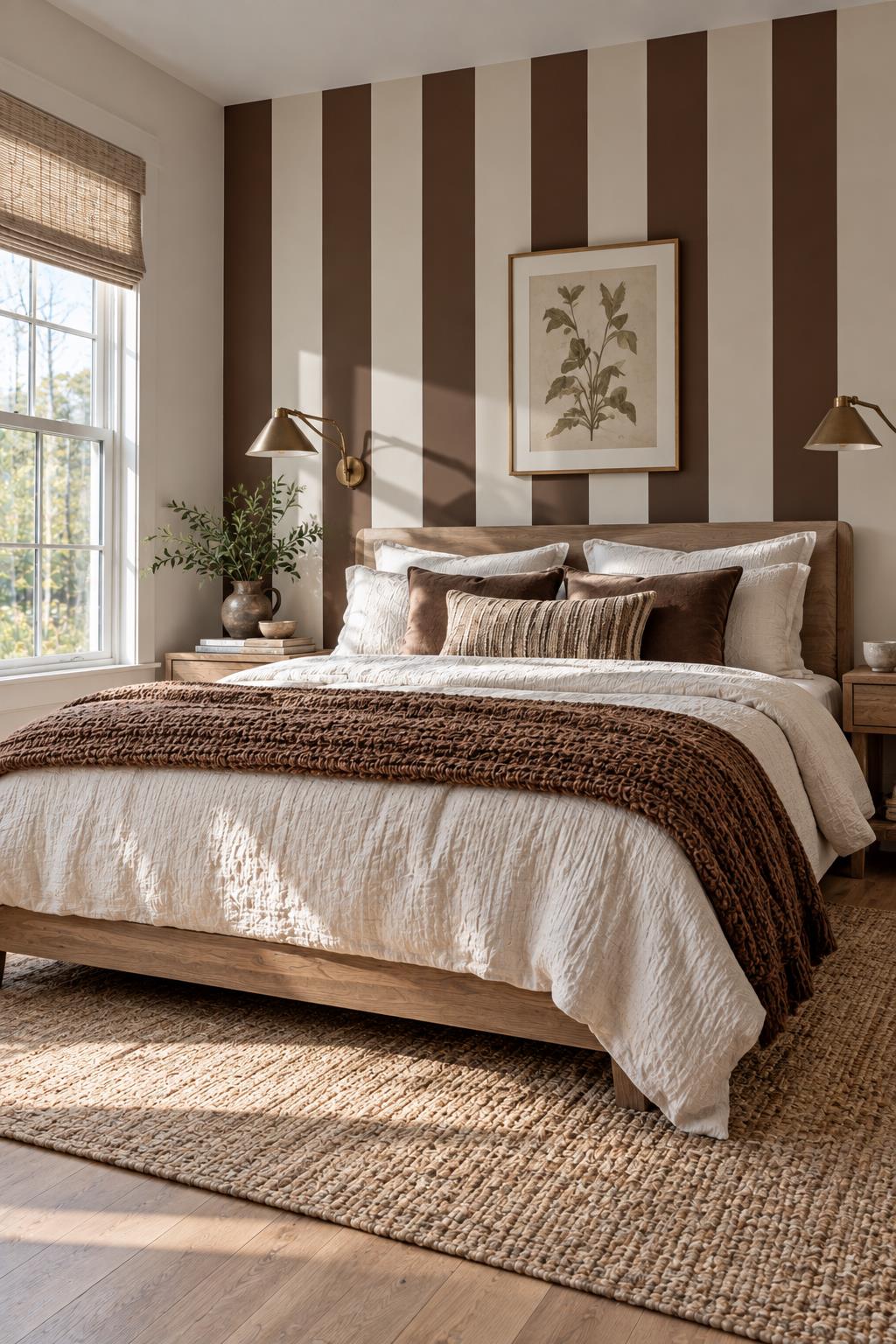
Brown is earth. And earth looks strange with nothing growing out of it.
That's the thinking behind the green and brown bedroom aesthetic, and why it's more convincing than brown on its own. Once there's something living in the room, the brown stops looking heavy and starts looking natural, like soil under a tree.
The shortcut is a single olive tree in a terracotta pot. Before you buy another cushion, try that.
Why real green beats green paint
Green walls with brown furniture is a different look, more cabin, more lodge. The green and brown bedroom aesthetic that's trending on Pinterest right now is mostly brown rooms with living green in them. The leaves bring movement, shadow and a slightly silver-green that no paint quite matches.
Olive trees are the favorite because the leaves are small and gray-green, which sits well against mocha and chocolate. Other good options: a fiddle leaf fig for bigger rooms, a Ficus Audrey, or a trailing pothos if you have no floor space.
Mocha walls with texture
Flat brown paint and a plant can look a bit like a furniture store. Limewash or a plaster-look paint gives the brown some movement, visible brush strokes and a chalky finish, and suddenly the wall looks as natural as the tree.
Olive in fabric, sparingly
Once there's a real plant, you only need one or two green textiles to tie it in. An olive linen pillowcase pair, or a quilt folded at the foot. Keep the main duvet cream so the bed stays light.
Terracotta, rattan and clay
The materials that suit this aesthetic come from the same place the colors do: the ground. An aged terracotta pot for the tree. A rattan side table. A handmade clay vase. Jute underfoot. Each one adds a slightly different brown, which is what makes the room feel layered rather than matched.
Put the plant where the light is
An olive tree needs at least six hours of bright light, so it belongs beside the brightest window, not in a dark corner for looks. If your bedroom is dim, choose a pothos or a ZZ plant instead, and keep the olive tree in the living room.
Ochre as the accent
If you want one more color, make it ochre or mustard, in a framed print or a single cushion. It sits between the green and the brown and warms both up.
Keep the bedding simple
This aesthetic falls apart when the bed gets busy. Cream sheets, cream duvet, one brown layer, two green pillowcases. That's it. Let the tree be the pattern.
A quick shopping list for this look
If you're starting from a plain room, this is roughly what the images here are built from:
- Mocha or warm brown limewash for the walls, one gallon covers a wall twice.
- A four-to-five-foot olive tree, $60 to $150 depending on size.
- A large aged terracotta pot, 16 inches or wider, with a drainage hole.
- Cream linen or cotton duvet and white sheets.
- Two olive green pillowcases.
- One chocolate brown quilt or knit throw.
- A rattan side table and a jute rug.
- One abstract print with ochre in it.
You can build most of it over a month. Start with the tree and the paint. Those two do 80 percent of the work.
Caring for an olive tree in a bedroom
Olive trees are forgiving, but bedrooms are tricky because the heat comes on in October and the air dries out.
- Light: six hours of bright light minimum. A south or west window, within three feet of the glass.
- Water: only when the top two inches of soil are dry. In winter that might be every two to three weeks.
- Pot: terracotta, not glazed ceramic. It breathes and stops the roots from staying wet. Make sure there's a drainage hole.
- Air: keep it away from radiators and heating vents. Dry, hot air is what makes the leaves drop.
- Turn it: a quarter turn every week so it doesn't lean toward the window.
If leaves start dropping in the first month, don't panic. Olive trees sulk after a move and usually settle within six weeks.
Mistakes to avoid
- Too many plants. One tree is a statement. Six small plants on every surface is a jungle, and it breaks the calm.
- Bright green textiles. Keep fabric greens muted: olive, moss, sage. Kelly green or lime will look plastic next to real leaves.
- Dark corners. Putting the tree where it looks best but gets no light means it'll look bad in a month.
Green and brown bedroom FAQ
What shade of green goes with brown?
Olive, sage and moss. Avoid emerald and mint; they're too cool and fight with warm browns.
Are olive trees hard to keep indoors?
They need bright light and less water than you'd think. Let the top two inches of soil dry before watering. A south or west window is ideal.
Can I use fake plants?
A good-quality faux olive works, but check the leaves up close. The cheap ones are too shiny and the trunks look plastic. Real is better if you have the light.
Does this work with dark brown walls?
Yes. The darker the walls, the more the silvery olive leaves stand out.