Few things dictate your daily physical energy, cognitive focus, and emotional well-being more than the quality of your sleep. Yet millions of adults wake up every morning suffering from lower back stiffness, aching hips, and persistent neck soreness—unaware that their mattress is the primary culprit.
When shopping for a mattress, marketing jargon like "cloud-like softness" or "ultra-firm orthopedic support" can be dangerously misleading. Spinal health requires an exact balance of contouring pressure relief and firm structural pushback. Here is the ergonomic, evidence-based guide to finding the right mattress for back support and deep, restorative sleep.
1. The Medical Verdict: Why Medium-Firm Is King
For decades, the standard medical advice was to sleep on an ultra-firm mattress resembling a plywood board. However, extensive clinical trials published in medical sleep journals have proven this advice wrong.
- The Problem with Ultra-Firm: When a mattress is too hard, your shoulders and hips cannot sink into the comfort layer. This causes your lumbar spine to hover unsupported in mid-air, straining lower back muscles all night.
- The Problem with Ultra-Plush: When a mattress is too soft, your heavy pelvis sinks deeply into the core, bending your spine into an unnatural hammock curve that pinches spinal discs.
- The Ideal Choice (Medium-Firm, 6–7/10 on the Firmness Scale): A medium-firm mattress provides just enough contouring cushioning to relieve pressure on the hips and shoulders while delivering robust pushback support under the lower back, keeping the spine in neutral alignment.

2. Mattress Construction Types Compared
Understanding internal materials helps you avoid sagging beds:
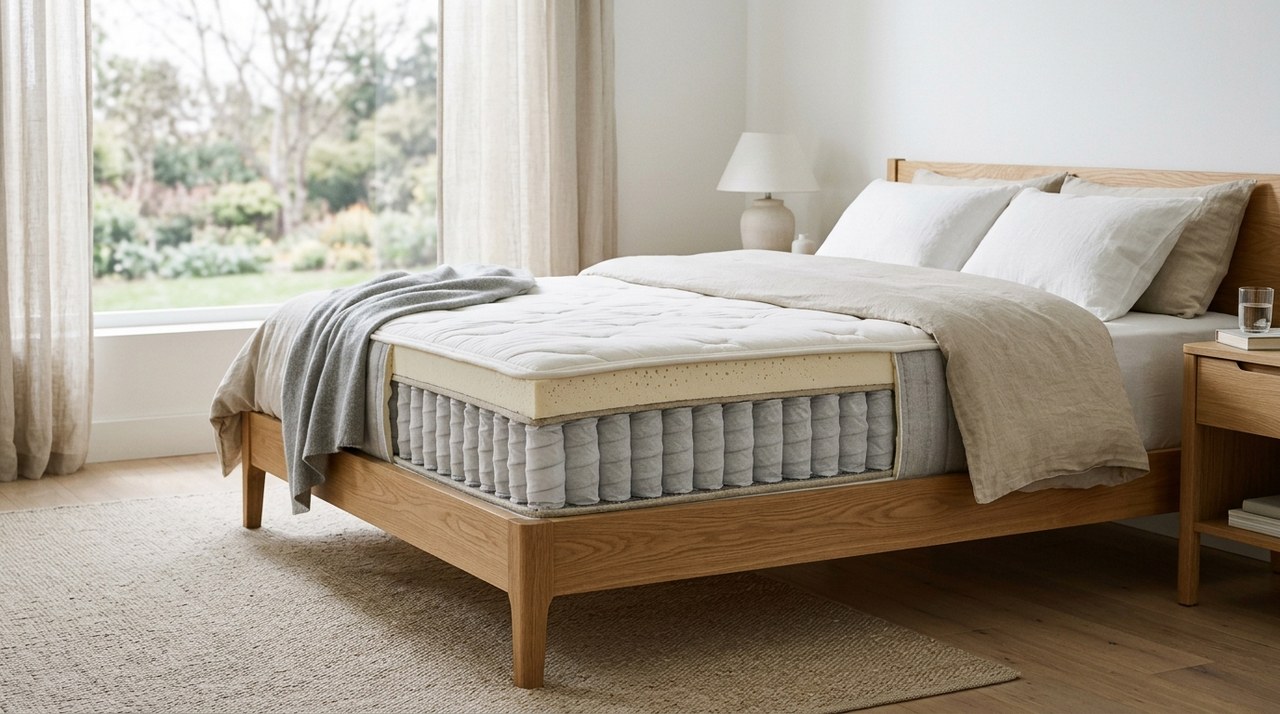
- Pocketed Coil Hybrids (Best Overall): Hundreds of individually fabric-encased steel coils topped with 2 to 3 inches of natural latex or memory foam. The coils compress independently beneath your body curves while promoting airflow, keeping you cool.
- Natural Latex (Best for Durability & Responsiveness): Harvested from rubber tree sap, Dunlop or Talalay latex is hypoallergenic, eco-friendly, and naturally buoyant. It lifts your body rather than letting you sink into quicksand, making it effortless to change sleeping positions.
- All-Foam Memory Mattresses: Excellent for deep motion isolation if your partner tosses and turns, but prone to heat retention unless infused with open-cell gel or graphite.
3. Matching Firmness to Your Sleep Position
Your sleeping posture dictates where you need contouring vs. support:
- Side Sleepers (Firmness 5.5 to 6.5): Side sleepers need a slightly plusher comfort tier to allow prominent hip bones and shoulders to sink in without numbness. Look for mattresses with zoned softer foam around the shoulders.
- Back Sleepers (Firmness 6.5 to 7.5): Back sleepers require reinforced support beneath the lumbar spine and pelvis to prevent lower back hyperextension.
- Stomach Sleepers (Firmness 7 to 8): Stomach sleepers need a firm, non-giving mattress surface to keep the hips from sinking, which twists the lower lumbar curve.
4. The Critical Foundation: Platform Slats & Spacing
Even the most expensive ergonomic mattress will sag and cause back pain if resting on an improper base:
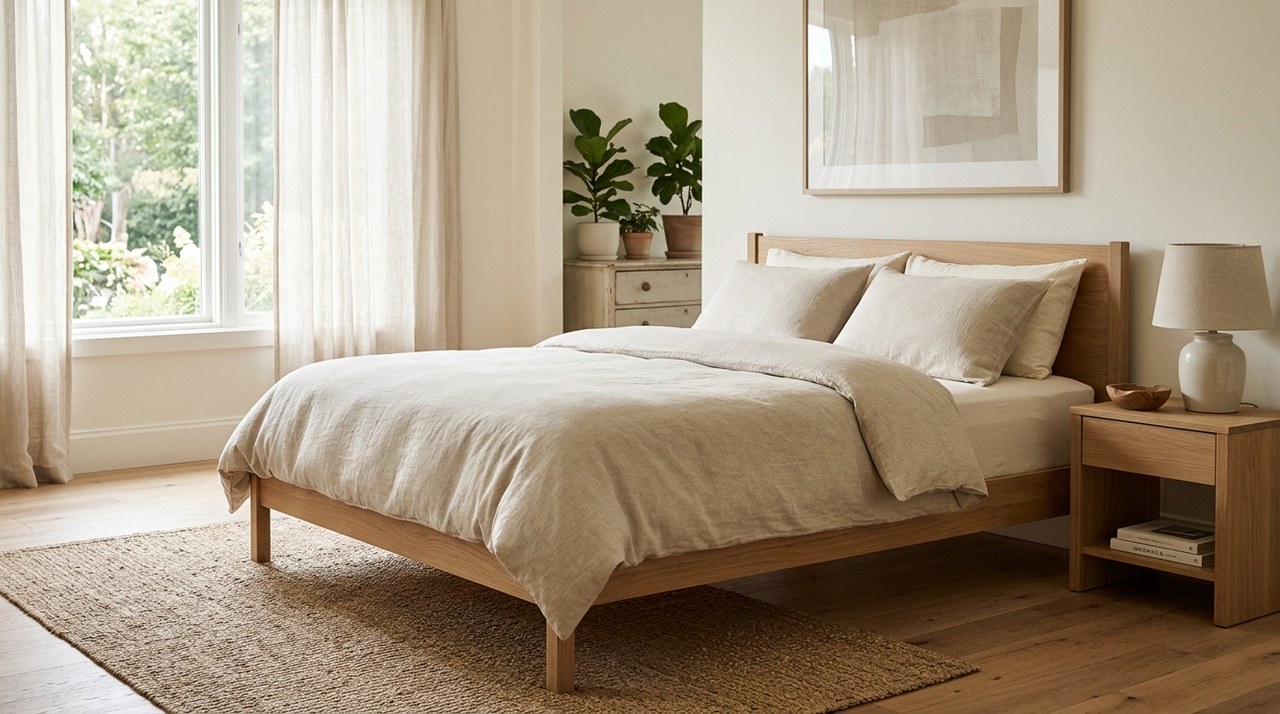
- Slat Spacing Rule: Slats on a platform bed must be no more than 3 inches apart. Wider gaps allow the coils or foam to push through, destroying mattress support and voiding manufacturer warranties.
- Center Support Leg: Queen and King bed frames must have a sturdy center support beam with at least two contact legs touching the floor to prevent middle bowing.

5. When to Replace Your Mattress
Mattresses do not last forever. Even if the surface looks clean, internal coil fatigue and foam breakdown occur over time:
- Replace your mattress every 7 to 10 years.
- If you wake up with back pain that improves after 30 minutes of walking around, or if there is a visible body impression deeper than 1.5 inches, your mattress has lost its structural support.
Frequently Asked Questions
Can a mattress topper fix back pain on an old mattress?
A mattress topper cannot fix a sagging or broken mattress. Toppers only adjust the surface feel; they will simply conform to the dip in an old mattress, leaving your spine unsupported.
Is a memory foam or hybrid mattress better for lower back pain?
Hybrid mattresses are generally superior for back pain. The tempered steel coils provide active upward pushback that keeps your pelvis from sinking too far, while memory foam comfort layers cushion sensitive joints.
What pillow height should I use for neck and back pain?
Side sleepers need a thicker pillow (4 to 6 inches) to bridge the distance between ear and outer shoulder. Back sleepers need a medium-low pillow (3 inches) to prevent the chin from pushing toward the chest.
What is edge support and why does it matter?
Edge support refers to reinforced steel coils or high-density foam along the perimeter of the mattress. It prevents roll-off, makes getting in and out of bed easier, and allows you to use 100% of the mattress sleeping surface.