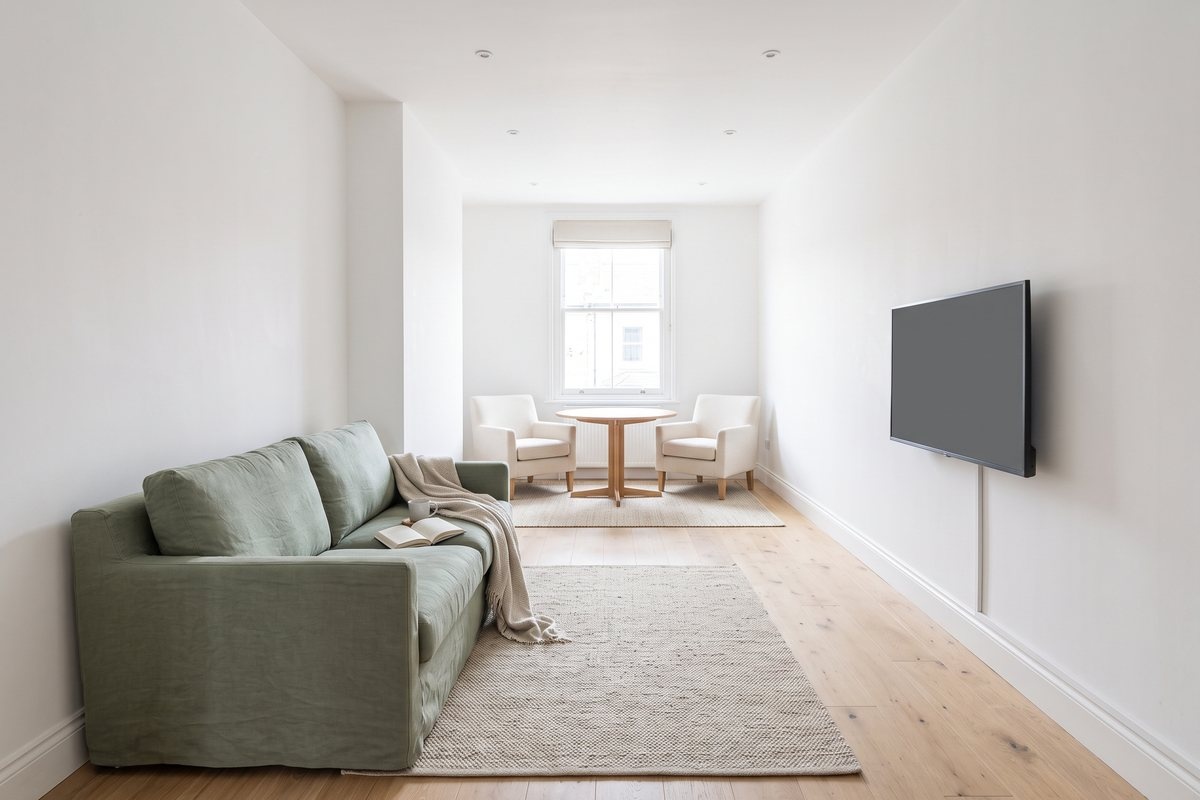
In a long, narrow living room, the usual advice stops working. Push the sofa against one long wall, the TV on the other, and you get a bowling alley with a couch in it.
The fix is to stop treating it as one room.
The 1.5 test
Divide the room's length by its width.
- 1.5 or less: it's a normal room. Lay it out as one group.
- More than 1.5: it's long. Give it two zones, each with its own rug.
A 12 x 20 foot room is 20 divided by 12, about 1.7. That's two zones. One big rug down the middle would make it look like a corridor with carpet.
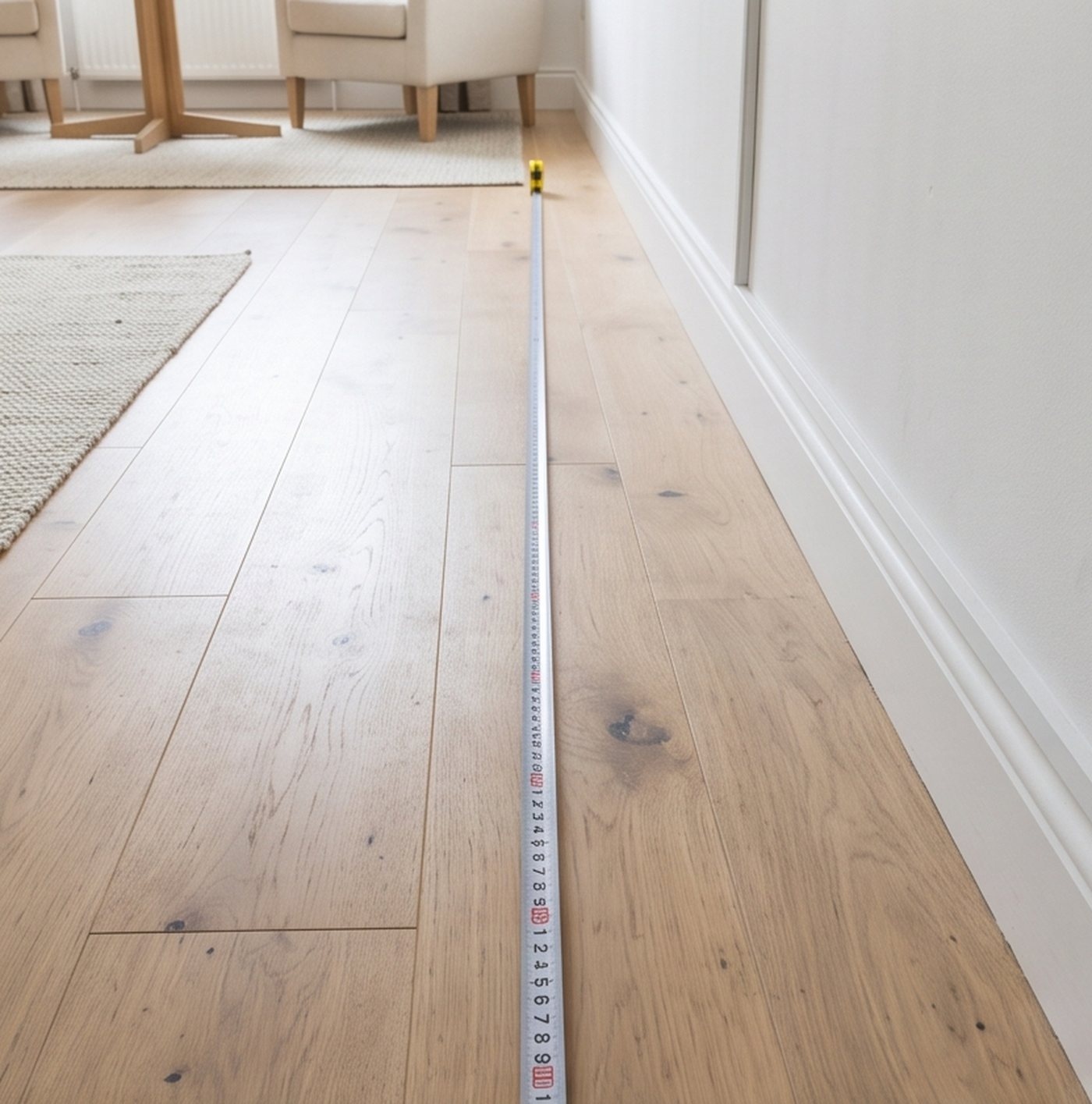
Decide what the two zones are
Most long rooms end up as one of these:
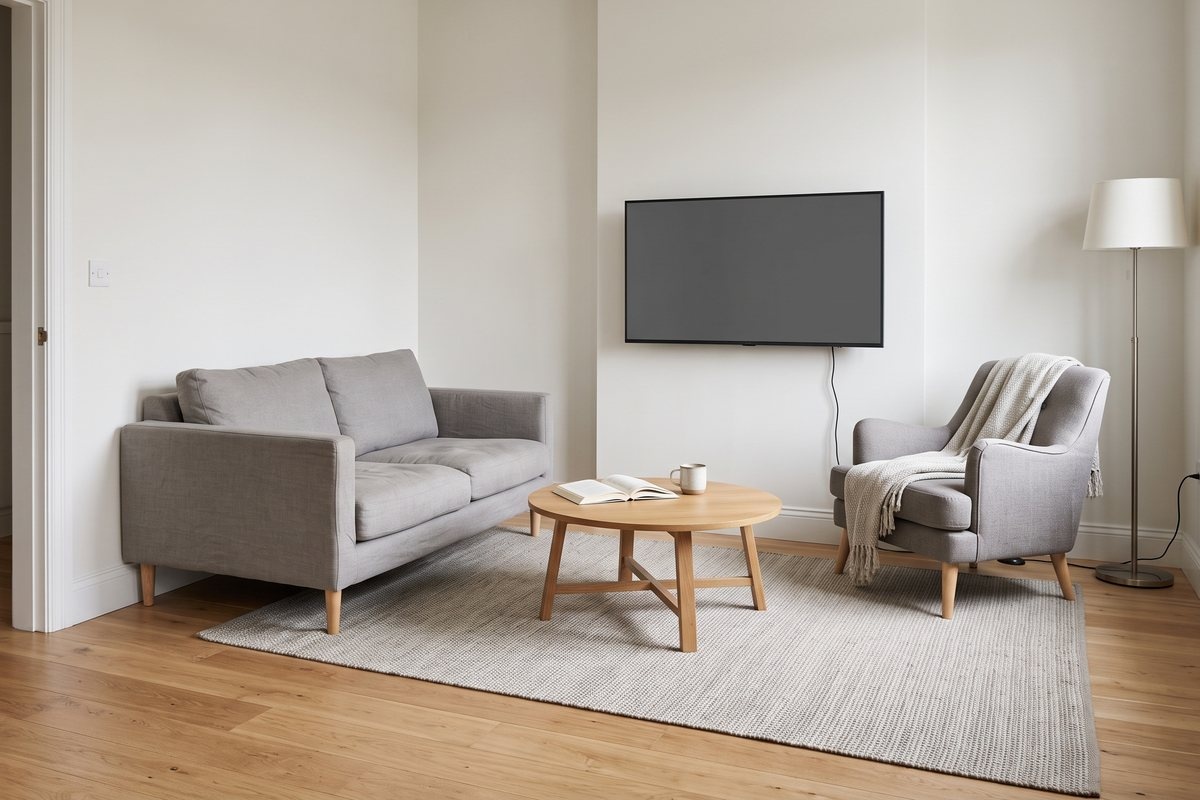
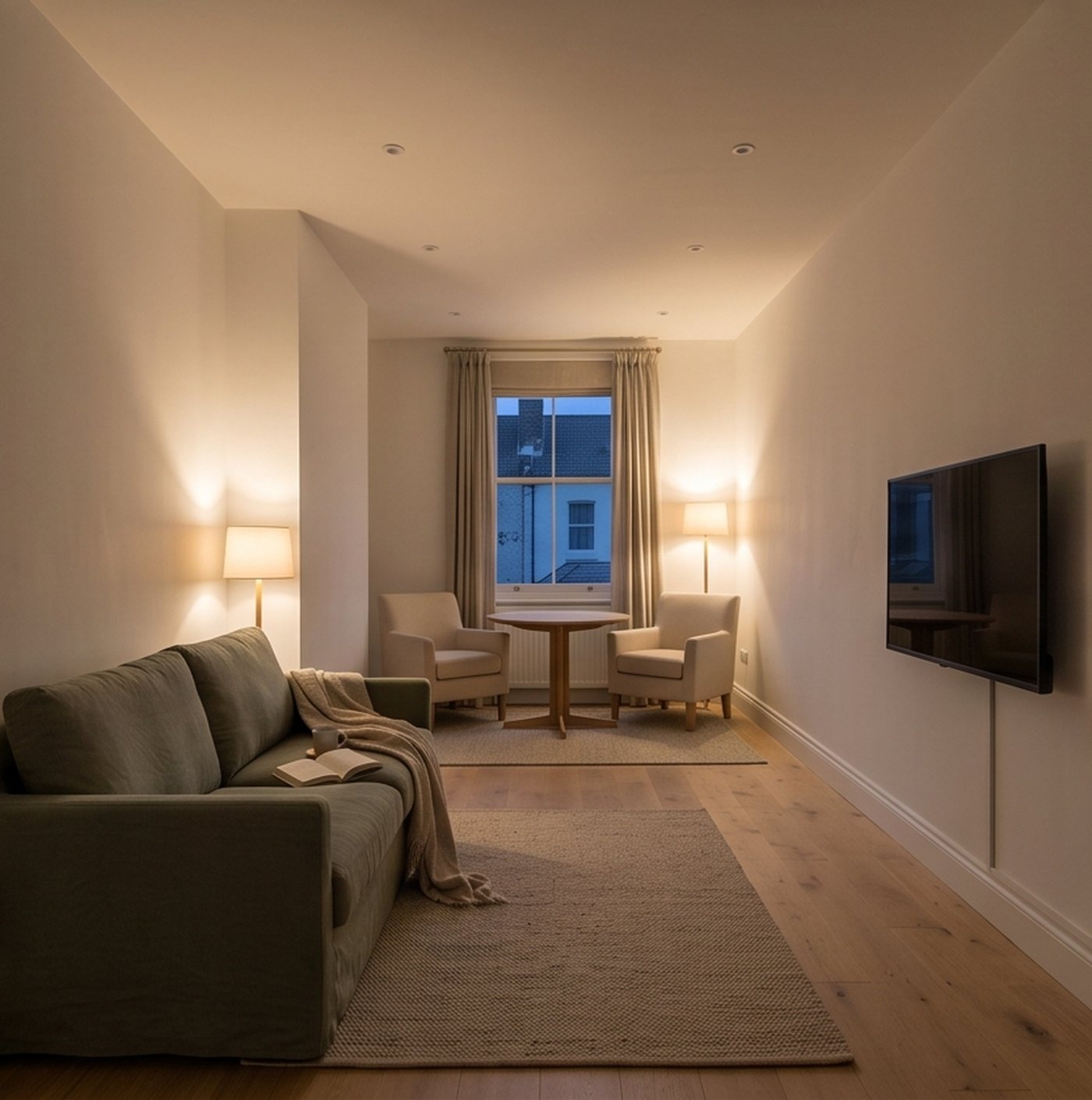
- TV at one end, reading or talking at the other. A sofa facing the screen, two chairs and a small table by the window.
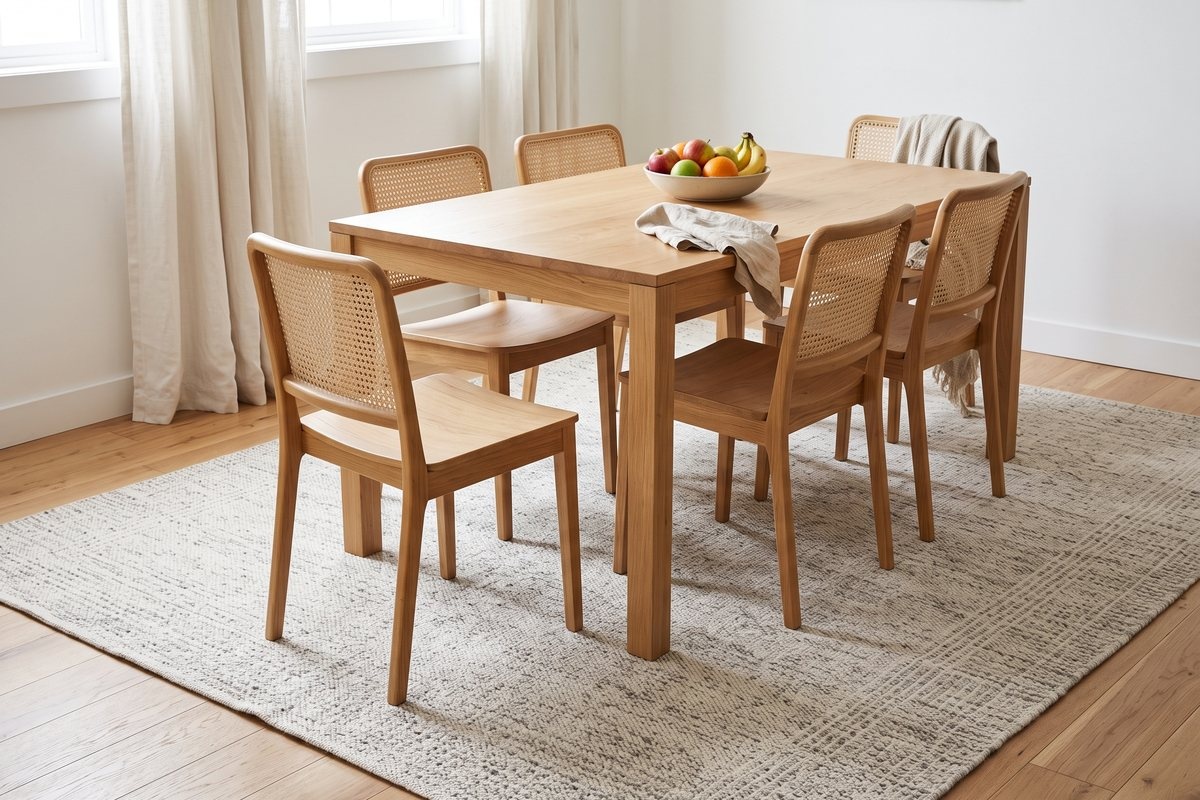
- Living at one end, dining at the other.
- Living at one end, a desk at the other.
Two small groups use a long room better than one group stretched thin. Guests split naturally into talkers and watchers.
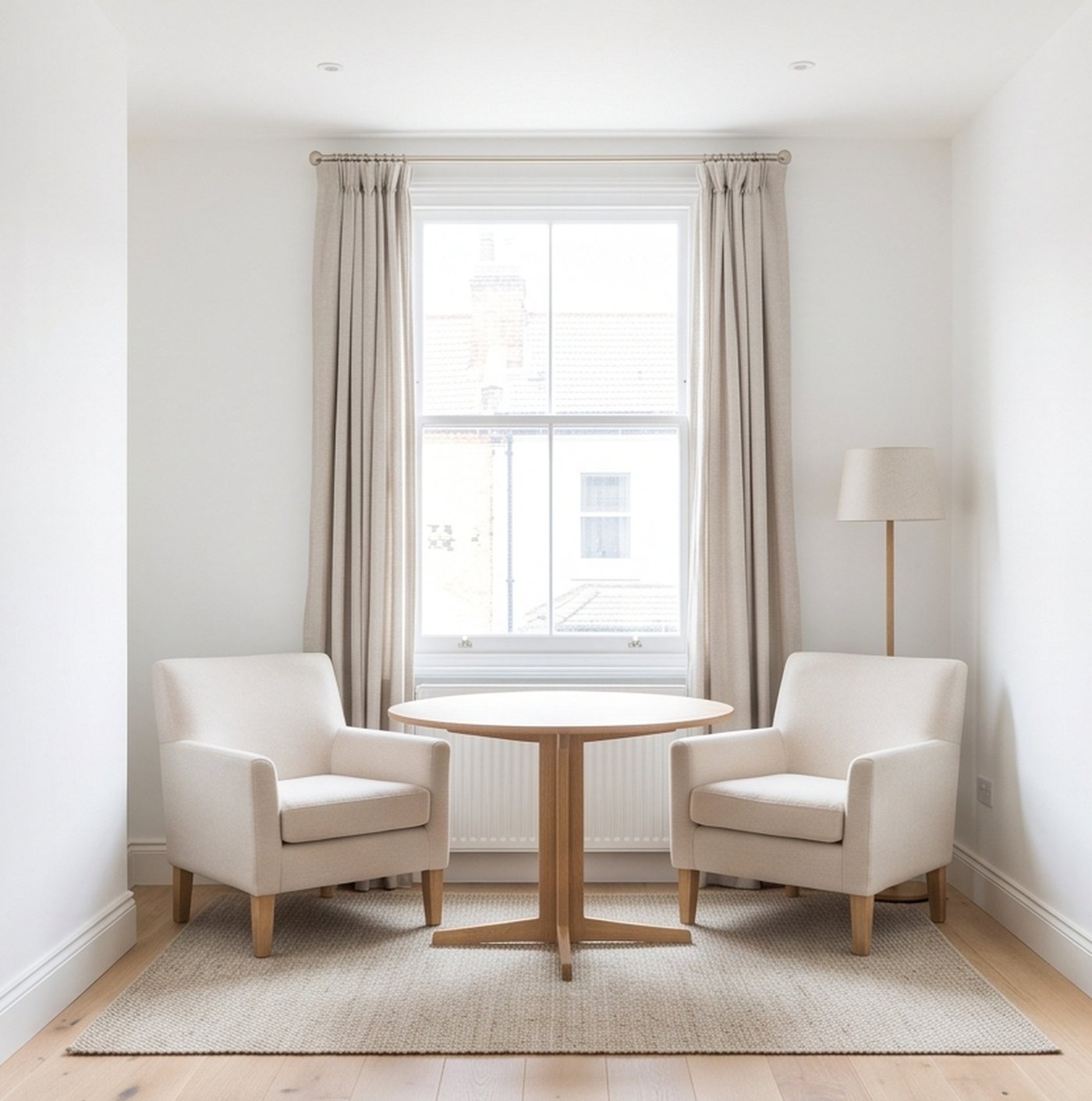
Run the path along one long wall
Keep the walkway along one long side of the room, past both zones, 30 to 36 inches wide. Don't let it cut through the middle of either group.
If the room has two entrances, one at each end, this is the path that joins them. Put it on the side the doors are closest to.
Where the TV goes
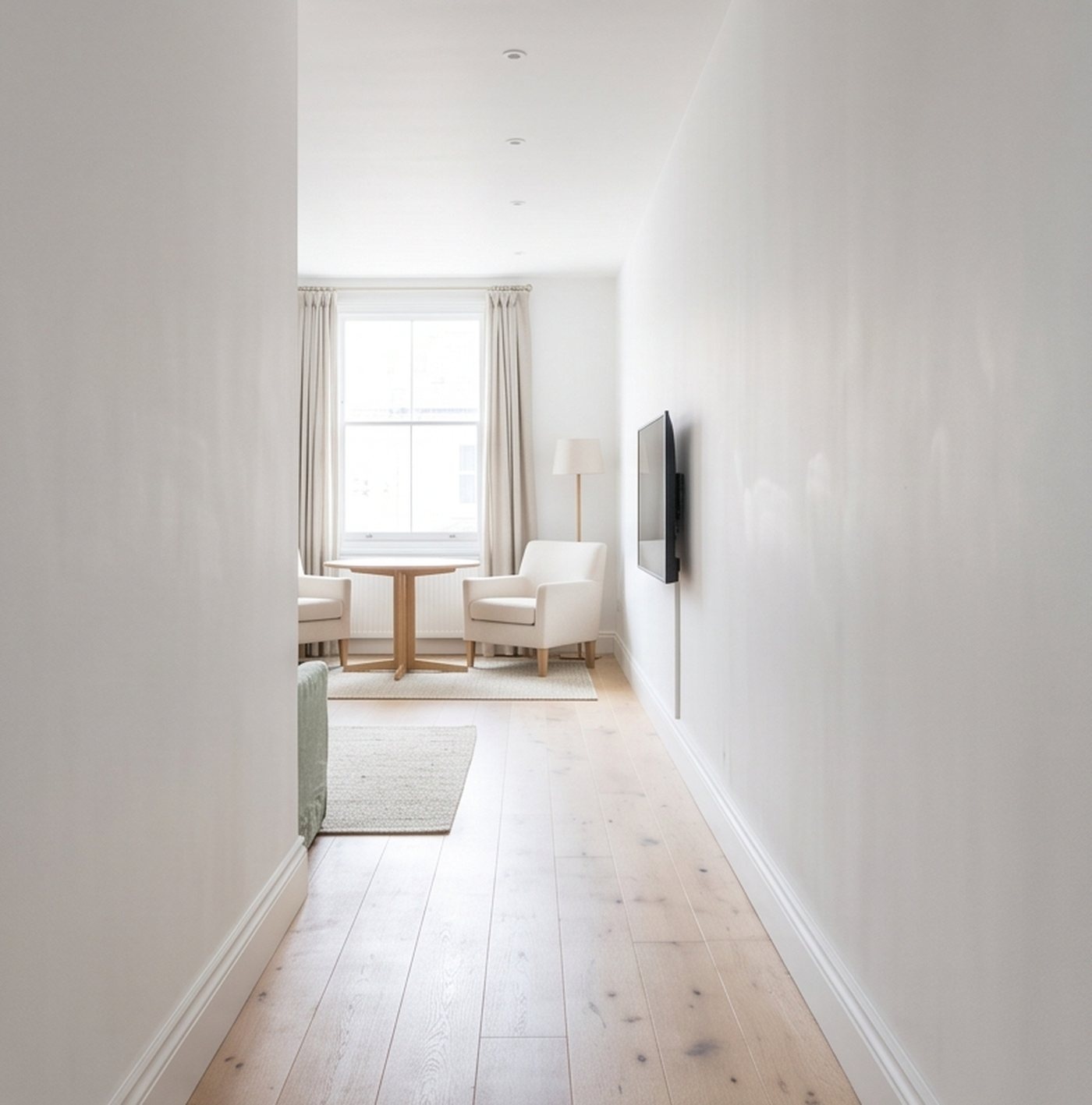
Put the TV on the short wall at one end and face the sofa toward it. That turns the end of the room into a proper TV zone and keeps the screen out of the path.
For the distance, sit about 1.5 to 2.5 times the screen size away: roughly 7 to 9 feet for a 55-inch TV.
If the room is too narrow for the sofa to face the end wall, put the sofa on a long wall with the TV opposite, and keep the rest of the length for the second zone.
Fireplace at one end?
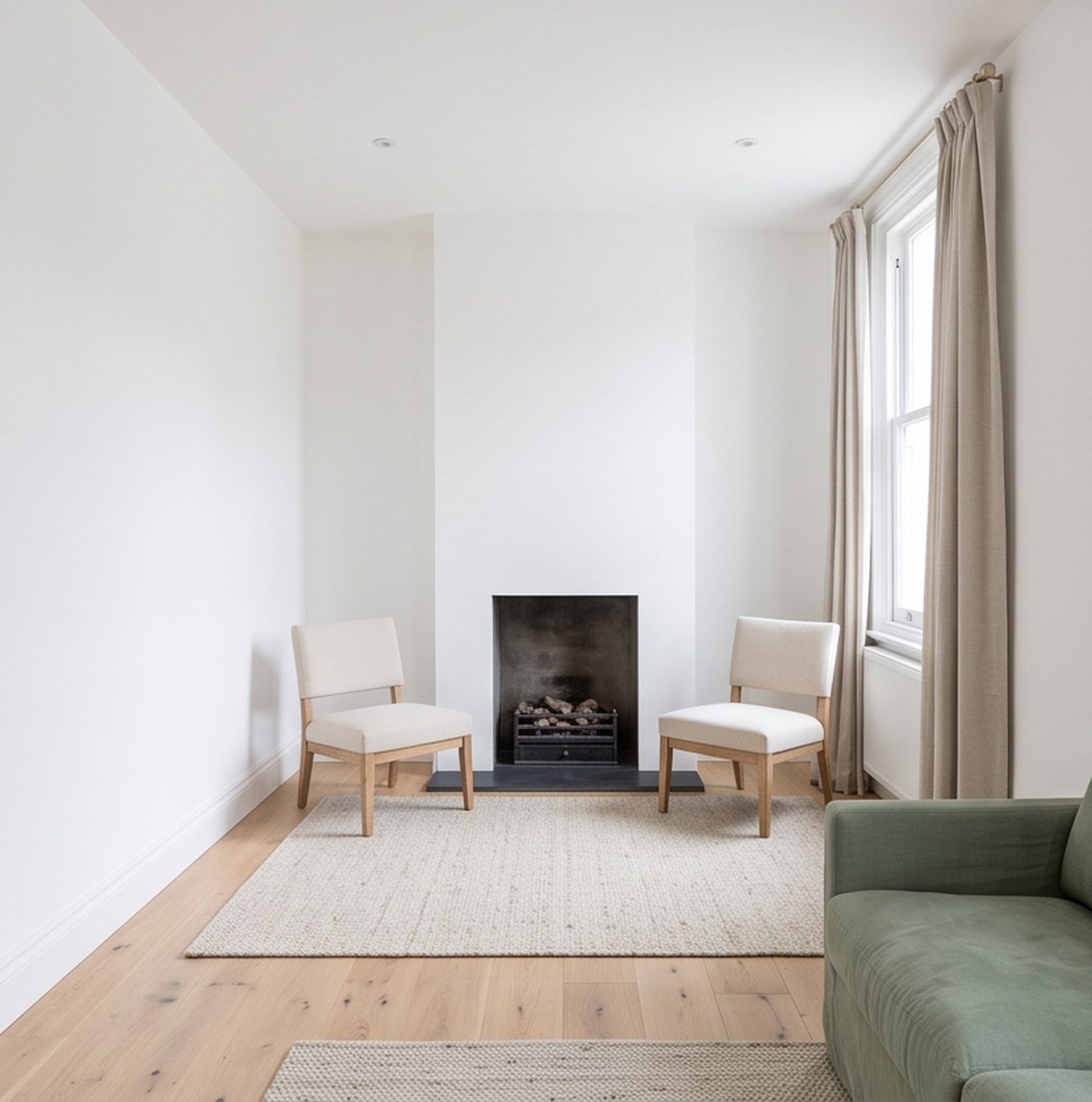
Then that end is your seating zone. Center the rug on the fireplace and set the seats at right angles to it. If you also want a TV there, put it beside the fireplace rather than high above it, where the middle of the screen ends up well over 48 inches from the floor.
One rug per zone, with floor between
- Size each rug for its zone, not for the whole room.
- Leave at least 12 inches of bare floor between the two rugs, so each reads as its own space.
- Never overlap them.
- Keep the path off the rugs, so nobody walks along a rug edge all day.
If it's very narrow
In a room about 10 feet wide, a big rug can end up with the walkway running along its edge. Here a smaller rug is the right choice, even though it goes against everything else you'll read about rug size. It's the one room where smaller wins, as long as the front legs of the seats still land on it.
Divide it without walls
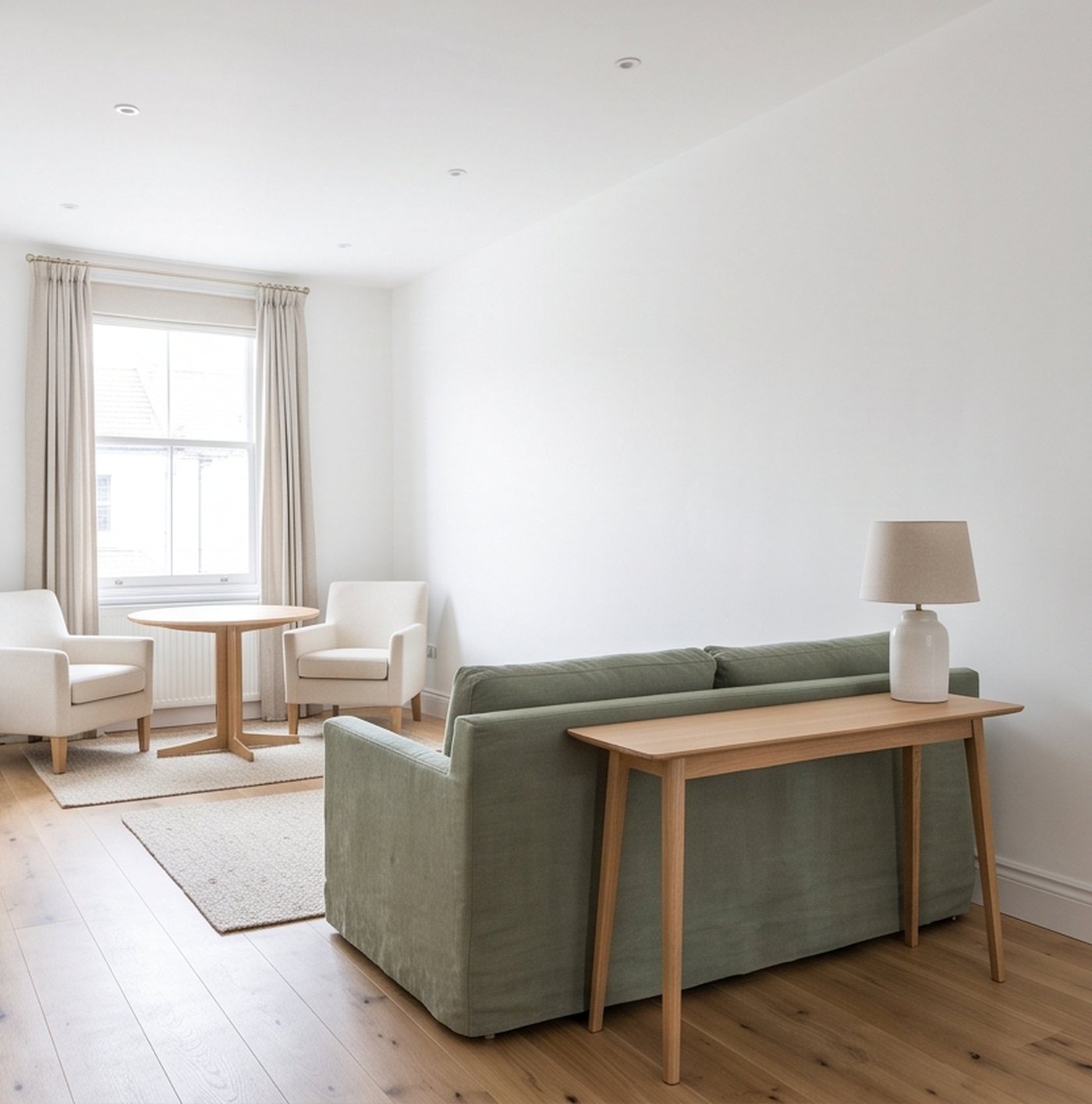
- A sofa back. Float the sofa with its back to the other zone, with a slim console behind it for a lamp.
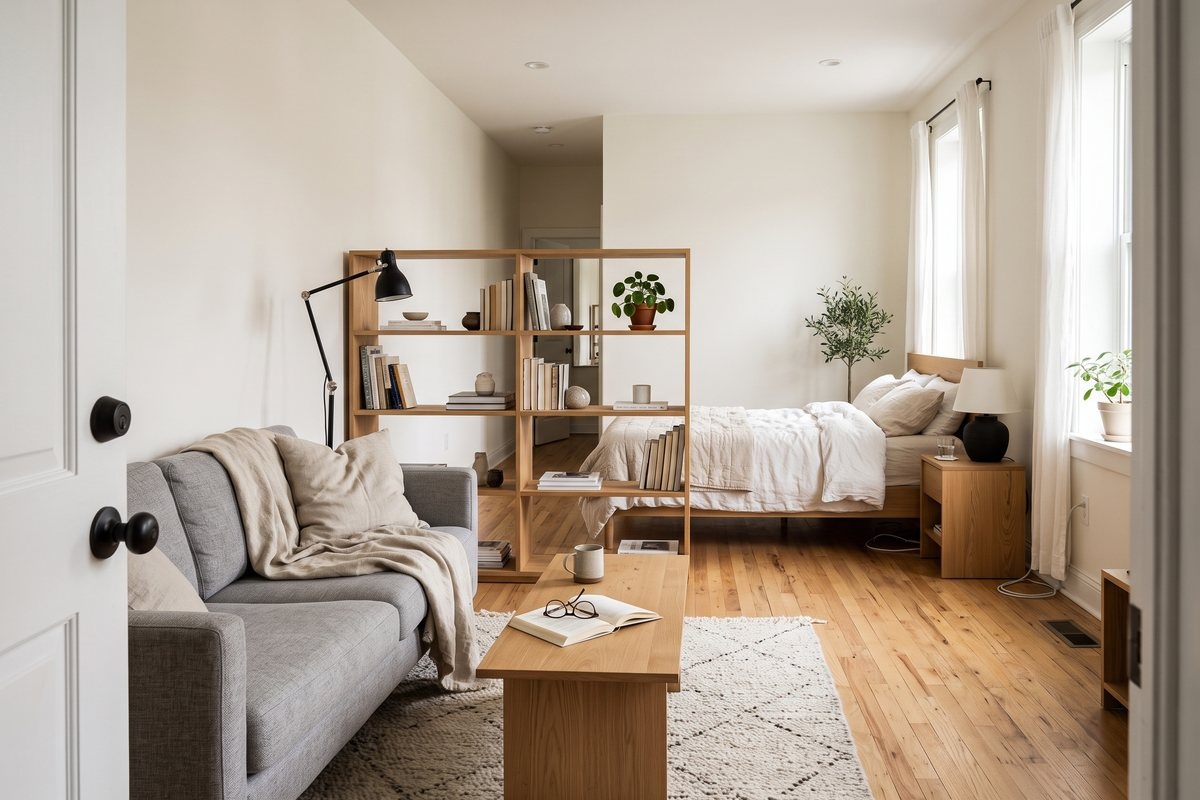
- Open shelves. A bookcase open on both sides, no taller than about 5 feet, divides without blocking light.
- Light. Lamps in one zone, a pendant or a different lamp in the other. At night, each lit zone reads as its own room.
Mistakes to skip
- One long rug down the middle.
- All the furniture lined up against the two long walls.
- The path running through the seating.
- A dark far end. A lamp in the farthest corner makes the whole room feel used.
FAQ
Where should the sofa go in a long narrow living room? Facing the TV at one end, or floated across the room with its back to the second zone. Against a long wall only if the room is too narrow for anything else.
Can I use one big rug in a long room? Only if the room passes the 1.5 test. If it's longer than that, two rugs sized for their zones look better.
What goes at the other end? Whatever you'd use: a reading corner, a dining table or a desk. Give it its own rug and its own lamp.
Long rooms, drawn to scale
Right-Size Room, No. 03 in the Decorwick Measured Home Series, has a chapter on long rooms and studios: the zoning rule, rug sizes for each zone in US and UK sizes, and long-room plans drawn to scale for living and dining, living and working, and narrow rooms with a TV. See Right-Size Room