Most kitchens pick one door style and run it everywhere. It works, but it can look a bit flat, like the whole room came out of one box.
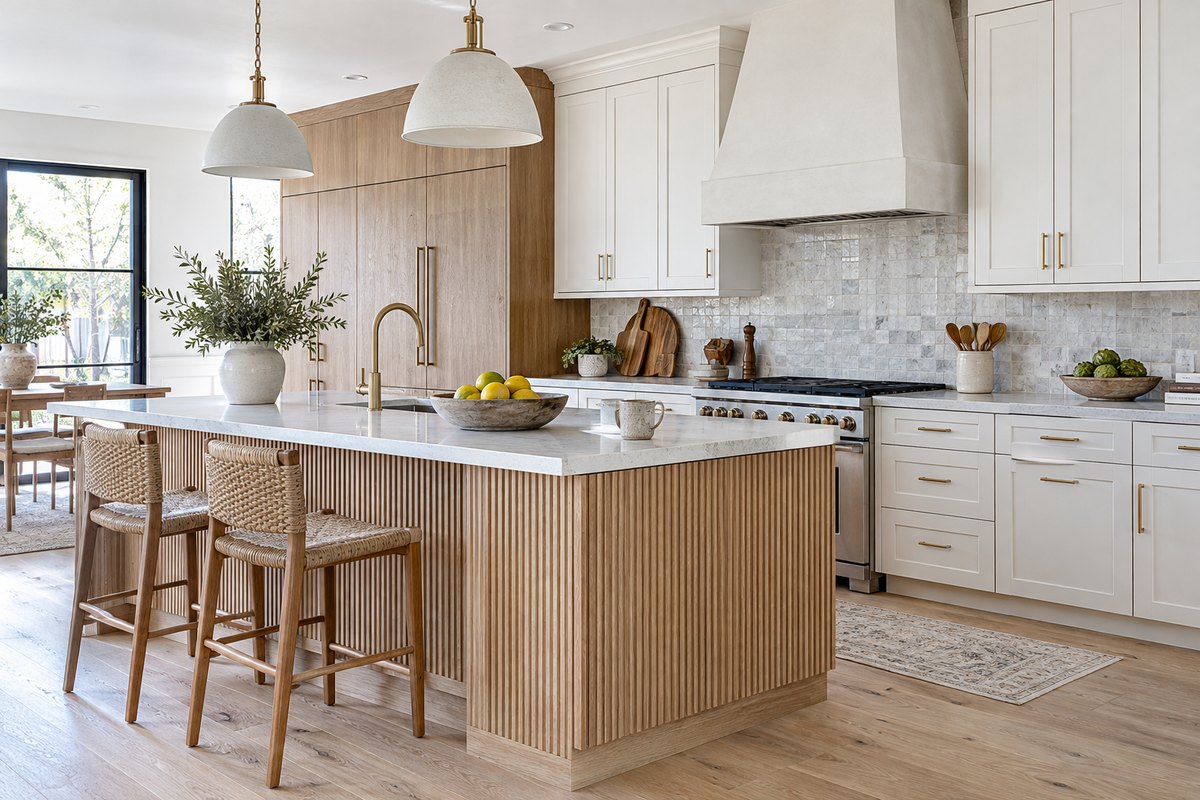
Some of the best kitchens on Pinterest right now do something different. They use two, sometimes three, door styles on purpose. Classic shaker doors on the cabinets you open all day. A wall of plain flat doors where the fridge and pantry hide. And a grooved, fluted wood island right in the middle, where everyone looks first.
The question people keep asking is whether that's allowed. It is. It just needs a few rules so it looks planned and not like a renovation that ran out of money halfway.
Can you mix kitchen cabinet styles?
Yes. Mixing shaker and slab cabinets, or adding a fluted island to a shaker kitchen, is one of the easiest ways to make a kitchen look custom.
What makes it work is that each style has its own job and its own zone. When a style shows up in random places, it looks like a mistake. When it covers one whole area, like the island or the tall wall, it looks like a decision.
The three styles, quickly
- Shaker: a flat center panel with a simple square frame around it. Timeless, easy to clean, fits almost any kitchen.
- Slab: one completely flat door, no frame, no detail. Clean and modern, and it almost disappears on a big wall.
- Fluted (or reeded): a door or panel covered in narrow vertical grooves. It adds texture and catches the light, so it works best in one spot you want people to notice.
The simple rule for where each style goes
This is the whole idea in one line: shaker for the everyday runs, slab for the tall wall, fluted for the island.
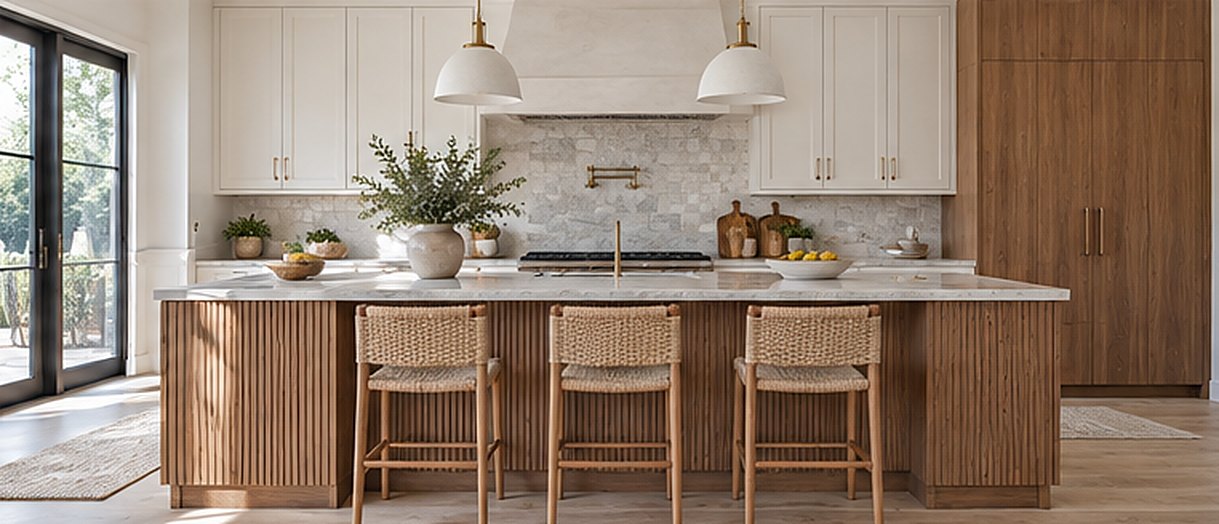
- Shaker on the main runs. The base and upper cabinets around the sink and stove get opened hundreds of times a week. Shaker doors hide fingerprints and small dings better than a perfectly flat door, and they keep the room feeling classic.
- Slab on the tall wall. Pantry cabinets, the fridge panel and the oven tower go floor to ceiling. Flat doors make that big block read as one calm wall instead of a grid of frames.
- Fluted on the island. The island is the piece you see first when you walk in. That's where the texture pays off.
The fluted island
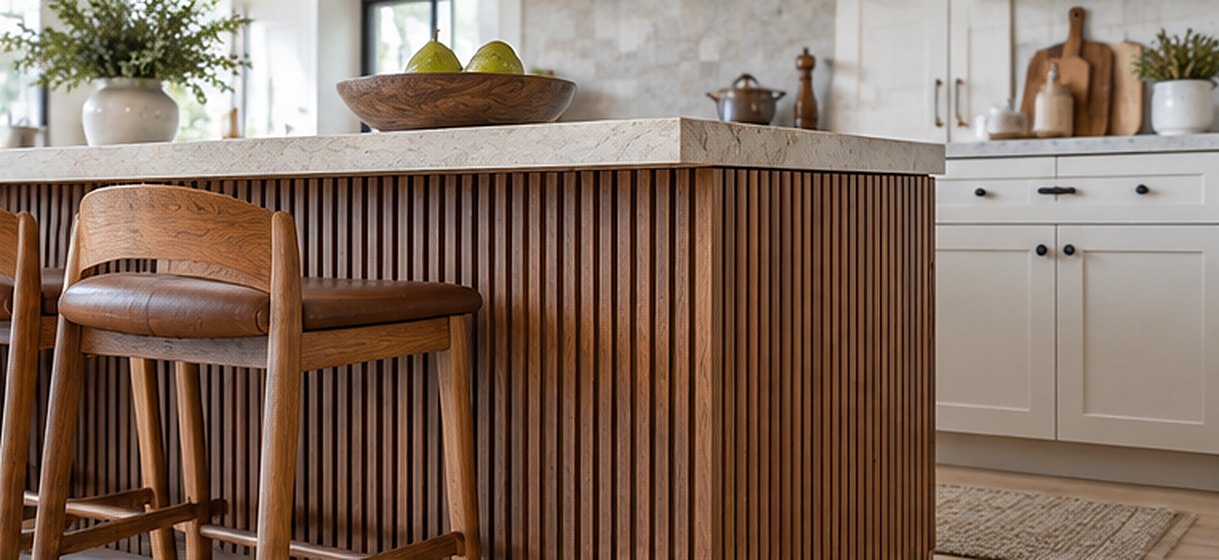
If you only do one thing from this post, do this. A fluted wood island next to plain shaker cabinets gives you most of the look for the least money.
Pick the wood by how warm you want the room.
- White oak is light, a little golden, and the easiest match for white or cream cabinets.
- Walnut is darker and richer. It looks great against white, but also against sage or deep green.
- Painted fluting in the same color as the cabinets is the quietest version. You get the texture without a second color.
Watch the groove size. Narrow grooves, around half an inch to an inch wide, look modern and refined. Wide, chunky ones look more rustic and can feel heavy on a small island.
Keep the top simple. A plain white or soft stone counter lets the grooves stand out. A busy veined slab and fluting will fight each other.
It doesn't have to be custom. Fluted panels are sold ready-made, and you can glue a sheet of them onto the back and sides of an existing island. Wood half-round dowels in a row work too, for a proper DIY fluted island. Stain or paint them after they're on.
A small cleaning note: grooves collect dust and the odd splash. A soft paintbrush or a dry microfiber cloth run down the lines once a week is enough. Keep the fluting off the cabinets right next to the sink and stove, where it would get messy fastest.
Slab doors for the tall wall
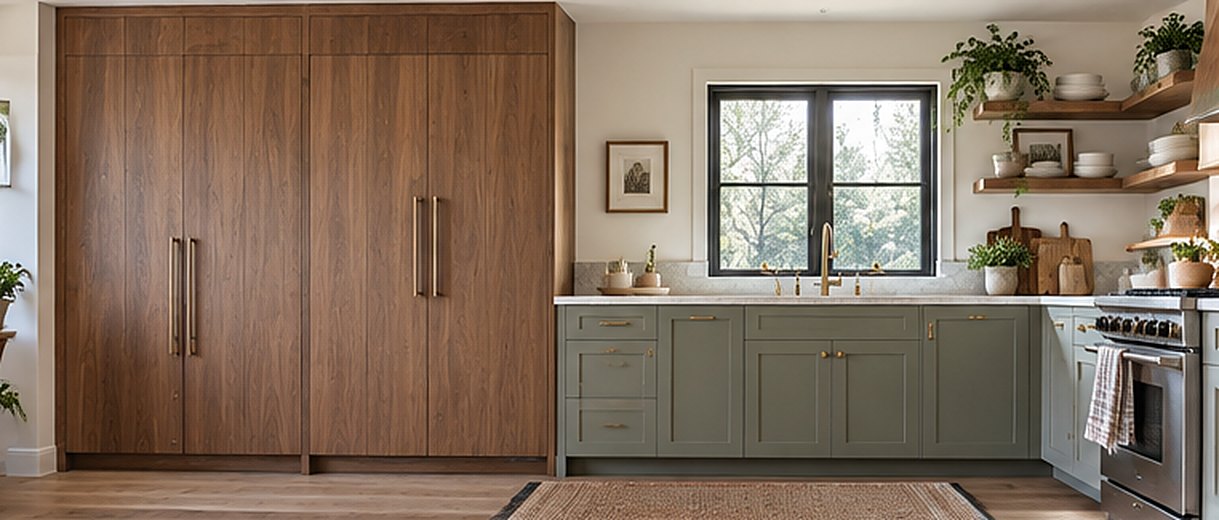
A wall of tall cabinets is big. Put shaker frames on all of it and you get a lot of lines. Flat slab doors turn it into one smooth surface that feels like part of the architecture.
- Hide the appliances here. Fridge, freezer and wall ovens behind matching slab panels look far calmer than stainless steel.
- Take it to the ceiling. Floor-to-ceiling slab cabinets look built in. A gap on top just collects boxes and dust.
- Use long bar pulls or no pulls at all. Tall, slim pulls suit slab doors. Edge pulls or finger pulls (a small lip cut into the top of the door) are even cleaner.
- Wood works especially well here. A slab wall in walnut or oak next to painted shaker cabinets is the classic two tone kitchen, and it doesn't need anything else.
How to make the mix look planned
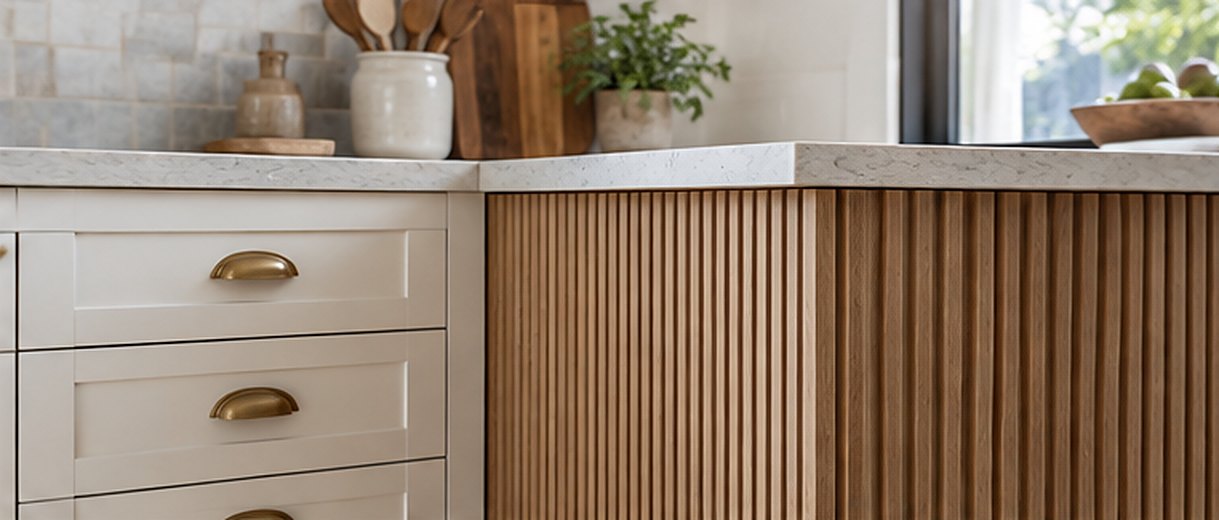
This is where most mixed kitchens go wrong or right. Keep these in mind and it'll look intentional.
- Two or three styles at most. Shaker plus slab plus fluted is already plenty. Don't add glass-front, beadboard and open shelves all at once.
- One countertop. Use the same stone or quartz on the island and the perimeter. It ties everything together.
- One hardware finish. Pick brass, black or nickel and use it on every door and drawer. The pull shapes can change (cup pulls on shaker drawers, long bars on slab doors), but the metal stays the same.
- Connected colors. Pull the island wood into the room somewhere else: open shelves, stools, a cutting board, the floor. Then it looks like it belongs.
- Change style at a natural break. A new style should start at a corner, an appliance or a separate piece like the island. Never switch door styles halfway along one run of cabinets.
Two tone color combos that work with a mix
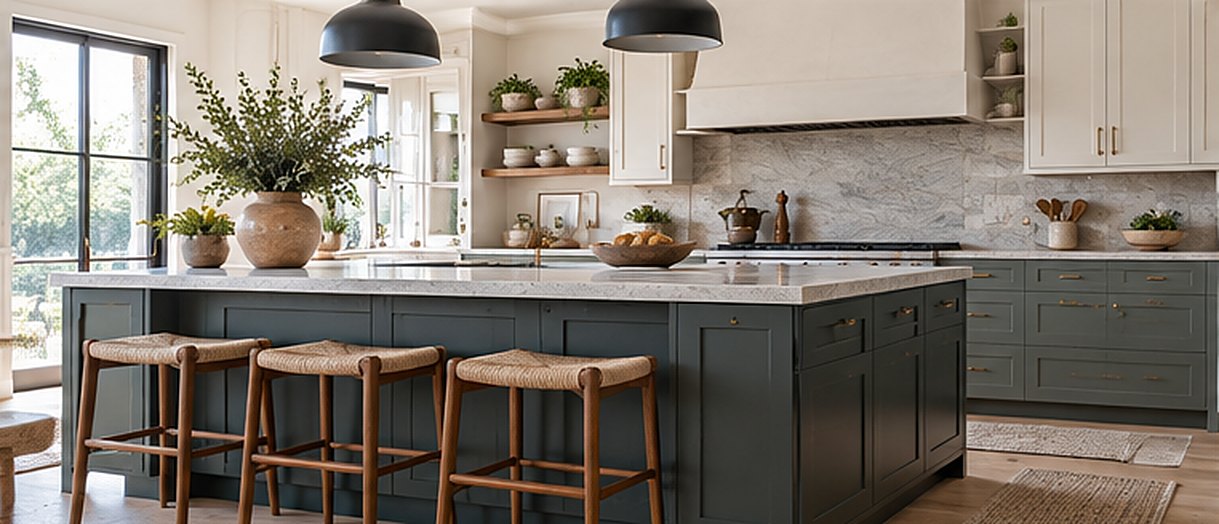
Mixing styles and mixing colors go hand in hand. A few pairings that are easy to live with:
- White shaker + white oak fluted island. Light, warm and the safest start.
- White shaker + walnut fluted island. Same idea, more contrast and a little more drama.
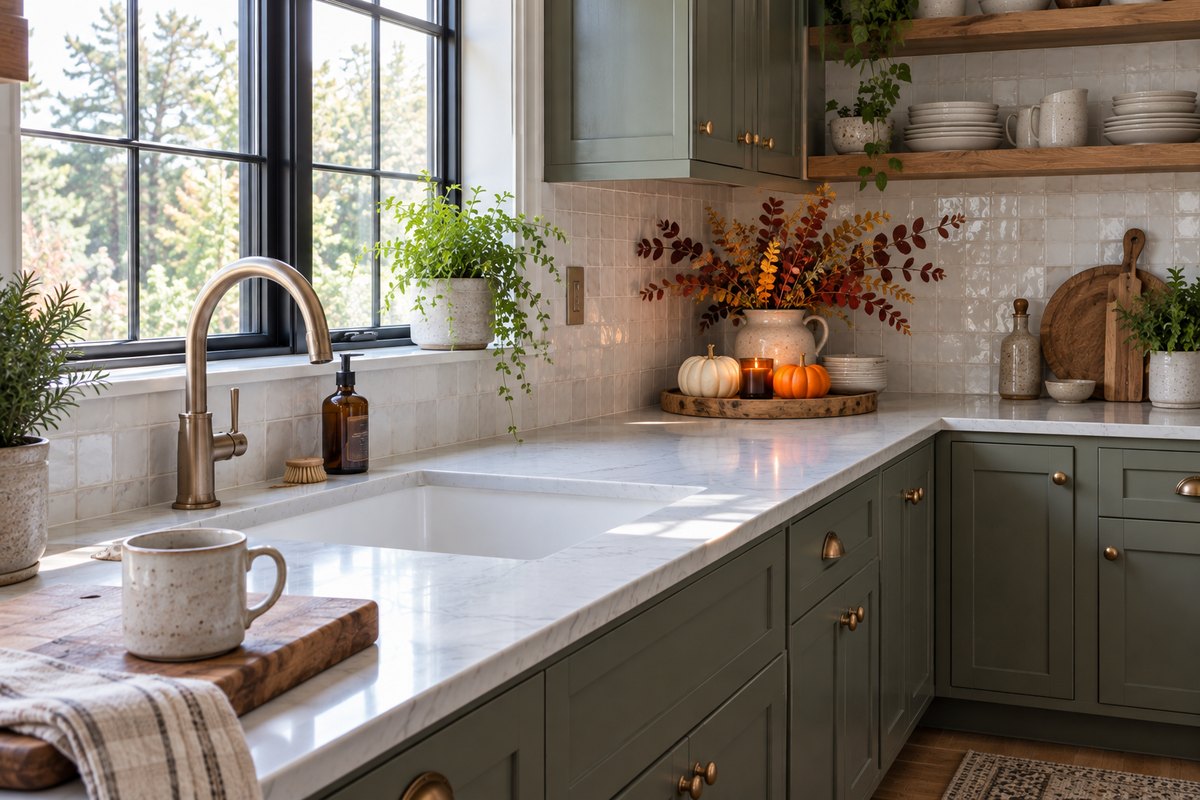
- Sage green shaker + walnut slab pantry. Soft and earthy. Great with brass.
- Deep green or navy shaker island + white uppers. Here the island changes color instead of style. Add wood through the stools or shelves.
- Cream shaker + oak slab tall wall. Warm and calm, good for kitchens that don't get much light.
A simple way to stay safe: light on top, heavier and darker below. Keep the upper cabinets light and put the wood or the darker color on the island, the base cabinets or the tall wall.
Mixing styles in a small kitchen
You can still do this in a small space. Just scale it back.
- Stick to two styles. Shaker for the cabinets, fluting on one small feature: the island, a peninsula end, or even a single fluted panel under the sink.
- Keep the colors close. Painted fluting in the same color as the shaker doors adds texture without making the room feel busier.
- Slab the tall stuff. If you have one tall pantry or fridge cabinet, flat doors keep it from crowding the room.
Fluted glass upper cabinets
Fluted glass (also called reeded glass) is another way to bring the look up high. It softens what's behind the door, so you can see shapes and color but not the mess.
- Use it on one or two upper cabinets, usually either side of the hood or the window, not every door.
- Frame it in slim shaker-style frames so it matches the rest of the kitchen.
- Put something worth seeing behind it: stacked white plates, glasses, a few bowls.
- If you already have a fluted wood island, fluted glass on top is enough texture. Skip it on the tall wall.
Mistakes to avoid
- Too many styles. Four door styles plus open shelving reads as chaos.
- Switching styles mid-run. Two shaker doors and then a slab door on the same wall looks like a replacement part.
- Mismatched hardware. Brass on the island, black on the pantry and chrome on the sink run is one mix too many.
- Fluting everywhere. One fluted feature is special. A fully fluted kitchen gets busy and hard to clean.
- Different counters on every surface. Let the cabinets do the talking and keep the countertop the same.
- Wood tones that almost match. An oak island that's slightly off from an oak floor looks like a mistake. Go clearly lighter, clearly darker, or match exactly. More on that in mixing wood tones with confidence.
Mixing kitchen cabinet styles FAQ
Can you mix shaker and slab cabinets?
Yes. Use shaker on the everyday base and upper cabinets and slab on the tall pantry or appliance wall. Keep the same countertop and hardware finish across both.
Can you have a different style island than the rest of the kitchen?
Yes, and it's the easiest place to start. The island is a separate piece, so a fluted, painted or wood island next to shaker cabinets looks deliberate.
How many cabinet styles can you use in one kitchen?
Two or three. Any more than that and the room starts to look unplanned.
Are fluted kitchen cabinets a trend?
Fluted wood has been popular for a few years now, so it's worth using it in one place instead of everywhere. A fluted island paired with classic shaker cabinets will date far more slowly than a fully fluted kitchen.
Is a fluted island hard to clean?
A little more work than a flat door. Dust it with a soft brush or dry cloth once a week and keep fluting away from the sink and stove.
Do mixed cabinets hurt resale value?
Not when it looks planned. Classic shaker on most of the kitchen keeps it broadly appealing, and a wood island or slab pantry wall reads as an upgrade.
Related reading
- Fall kitchen decor ideas that don't take over your counters
- Open shelving without the clutter
- Bathroom remodel ideas with a fluted wood vanity
- Mixing wood tones with confidence
Start with the island. If you love the fluted wood next to your shaker cabinets, the slab pantry wall is the natural next step.