Vintage Halloween decor from the 1950s looks like someone's grandmother kept it in a shoebox for seventy years, because usually someone did. The pumpkins are papier-mâché with the paint worn soft. The crepe paper has fold lines where it was packed away every November. The orange has faded to something closer to apricot.
That softness is the entire appeal. It's why this style sits better in a real house than anything bright from a big-box store, and why searches for 1950s Halloween decorations climb every September.
Here's what to look for, what it's worth, and how to put it together so it looks collected rather than cluttered.
What 1950s Halloween decor actually looked like
Postwar Halloween was a paper and pulp holiday. Plastic blow molds didn't really arrive until the late 1960s. The main pieces were:
- Papier-mâché and pulp jack-o'-lanterns, often with paper inserts for eyes and mouth so a candle glowed through.
- Die-cut cardboard decorations from companies like Beistle, embossed and printed with black cats, witches, owls and moons.
- Crepe paper in black and orange, used for streamers, table skirts and honeycomb tissue decorations.
- Tin noisemakers with lithographed cats and witches.
- Paper party masks and hats.
The color palette was narrow: orange, black, a little yellow, sometimes purple or green on witches. That narrow palette is what makes a collection look cohesive.
What they're worth
Prices vary wildly, but here's a rough guide from recent auction and resale listings:
- Die-cut cardboard cats and witches: $15 to $80, more for large or rare designs in good condition.
- Pulp jack-o'-lanterns: $60 to $250, with original paper faces pushing the higher end.
- Tin noisemakers: $15 to $50.
- Honeycomb tissue decorations: $25 to $100, higher if the honeycomb opens fully.
If a piece is priced like a new decoration, it's probably a reproduction.
How to spot a reproduction
Reproductions are everywhere, and some are lovely. But if you're paying vintage prices, check:
- Weight. Original pulp is light and slightly fibrous. Reproductions in resin feel heavy and cold.
- Printing. Original die-cuts show slight registration drift, where colors don't line up perfectly. Modern prints are crisp.
- Back side. Originals usually have a plain, aged gray or brown card back. Reproductions often have a white back or a printed copyright line.
- Smell. Old paper smells like old paper. You'll know it.
Buying reproductions on purpose is completely fine. Just pay reproduction prices.
Build around one surface
The biggest styling mistake with vintage Halloween is spreading it out. One pumpkin here, one cat there, a garland on the stairs. It gets lost. Collect everything on one surface instead: a dresser, a sideboard or a mantel. Pieces this soft need company to be seen.
Add tarnished silver and candlelight
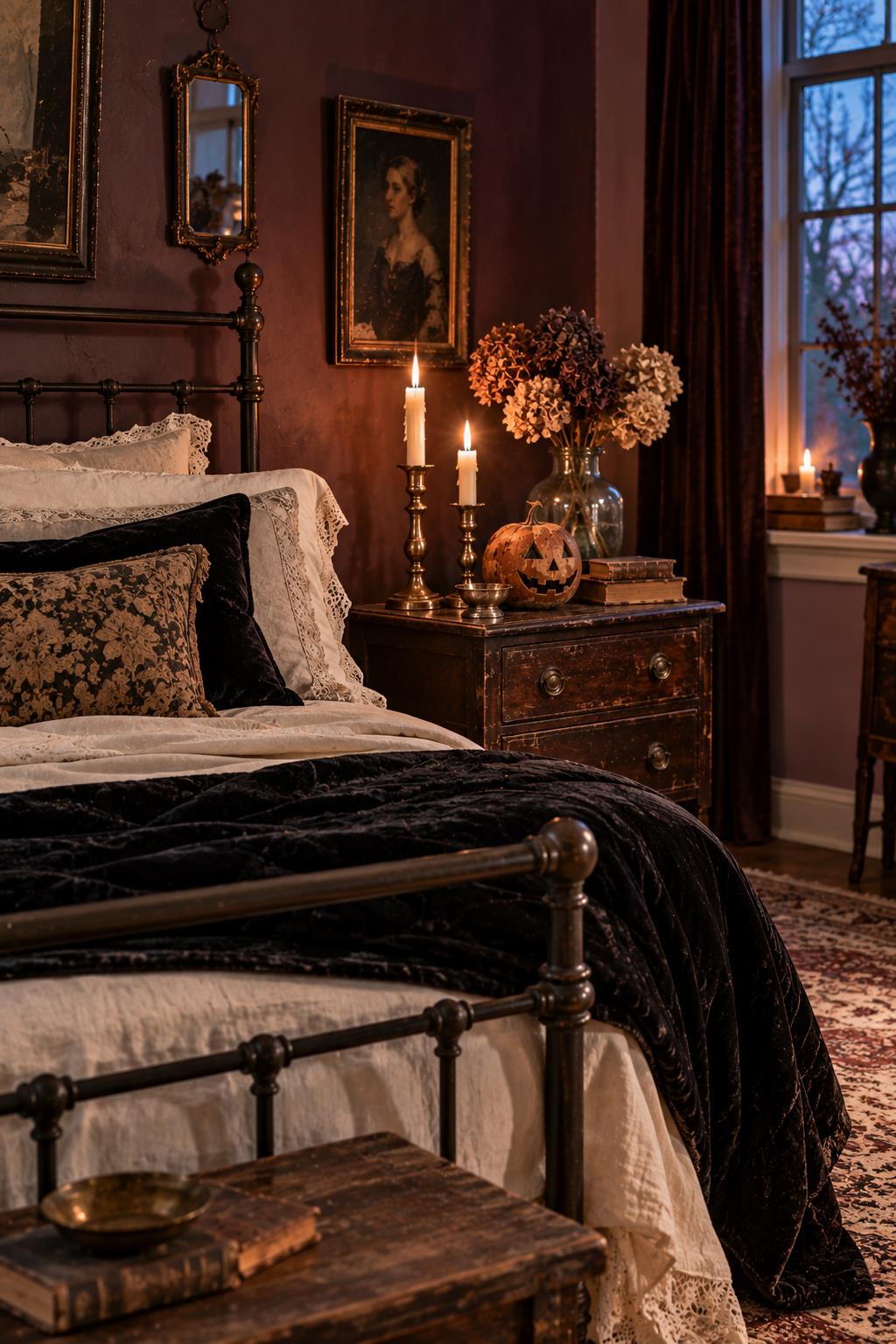
The best partner for faded orange and black is old metal. Tarnished silver candlesticks, brass that's gone brown, a pewter bowl. Leave them unpolished. Then add ivory tapers and light them in the evening. Candlelight is kind to aged paper; it warms the faded orange and hides the wear.
Keep real flames well away from the paper. Papier-mâché and crepe burn fast. Put candles at least a foot from anything paper, or use good flickering LED tapers.
Old photographs as background
Antique cabinet cards, the stiff sepia portraits sold by the box at flea markets, are the perfect backdrop. Prop three or four in a row behind the pumpkins. They add a slightly eerie, anonymous-ancestor feel without a single skull.
A dark wall helps
Soft vintage pieces disappear against white walls. Against deep olive, oxblood or near-black, the faded orange suddenly glows. If you're not painting, hang a dark velvet or linen panel behind the display.
Dried plants, not fake ones
Dried seed heads, black-eyed Susans gone to seed, bare branches and dried hydrangea fit the vintage mood. Plastic spiders and fake leaves don't. Keep the plant material as faded as the decorations.
Storing vintage Halloween decorations
They survived seventy years; don't let them fail in yours. Wrap each piece in acid-free tissue, store in a rigid box away from the attic and basement, where heat and damp do damage. Keep crepe paper flat and dry. And never store die-cuts rolled or folded if they weren't originally.
Vintage 1950s Halloween FAQ
Where can I find 1950s Halloween decorations?
Estate sales, antique malls, eBay and Etsy, and local auction houses in September. Estate sales usually have the best prices.
Are reproductions worth buying?
Yes, for the look. Brands like Bethany Lowe and several small makers produce good pulp and paper reproductions at a fraction of vintage prices.
How do I display vintage Halloween without it looking cluttered?
Group everything on one surface, add old metal and candlelight, and use a dark wall behind it.
What colors were 1950s Halloween decorations?
Mostly orange and black, with touches of yellow, green and purple. The orange has usually faded to a soft apricot.