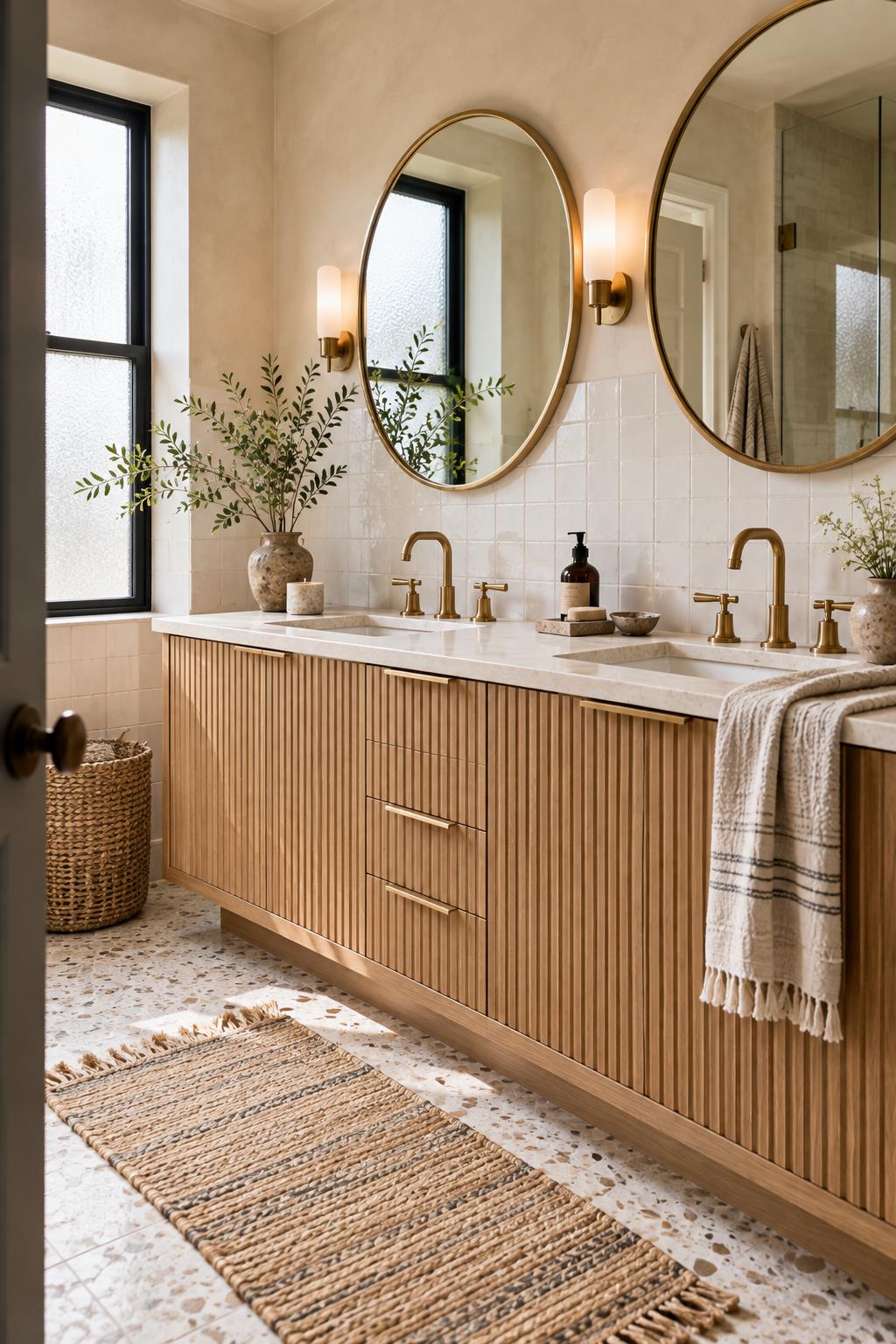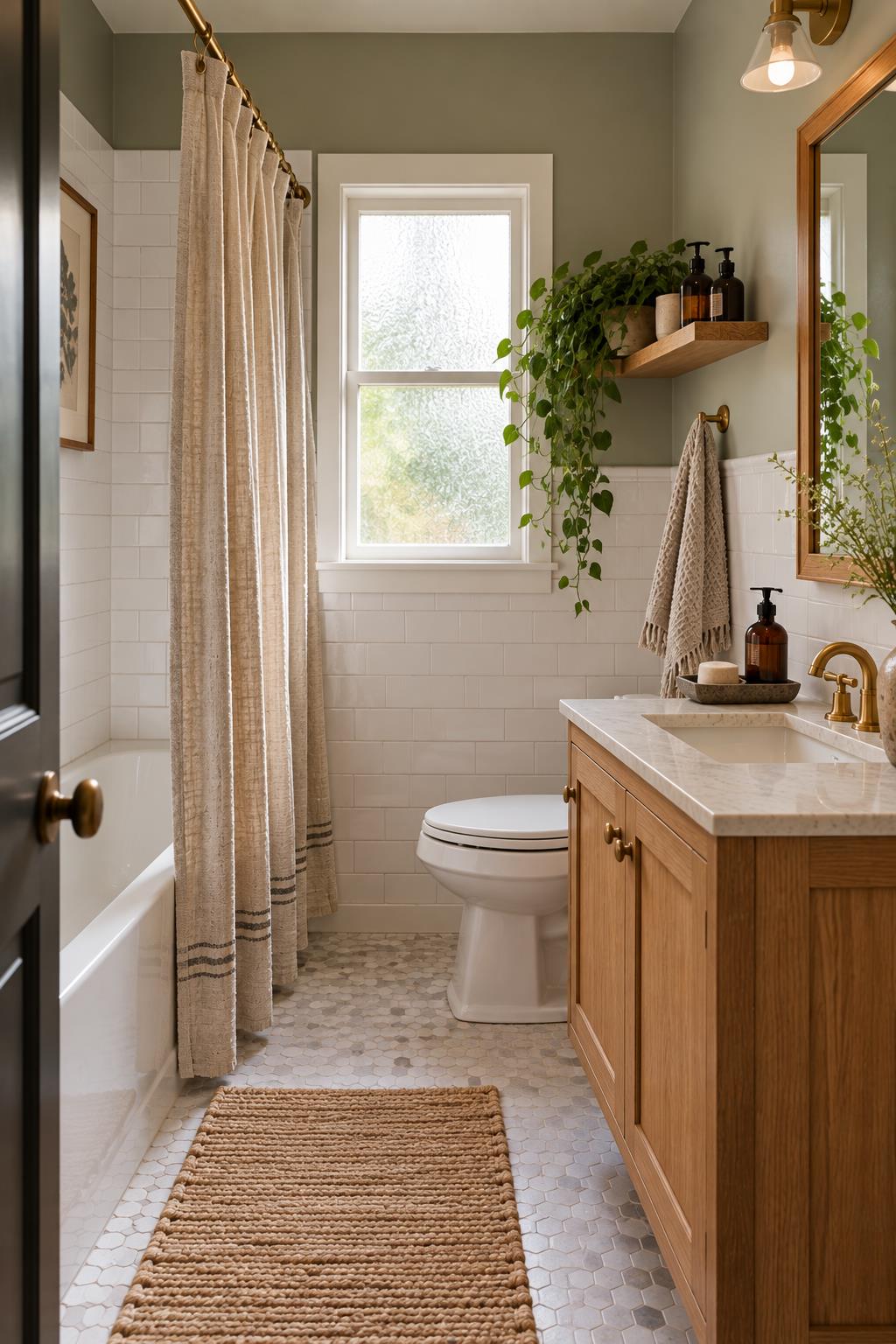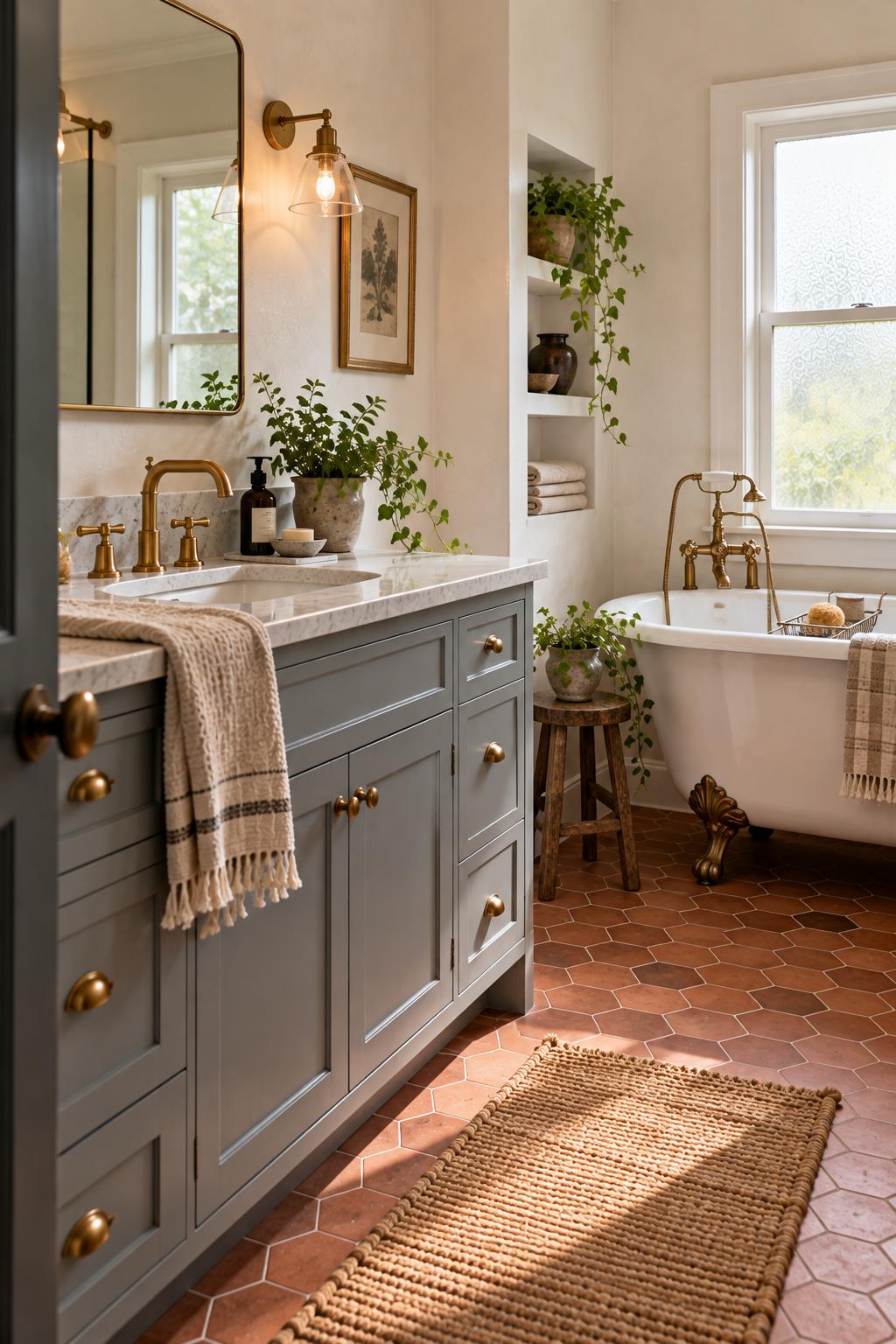
Terracotta underfoot. A painted blue-gray vanity. White walls.
It's a combination that shows up again and again in European farmhouses and it works perfectly in a US bathroom. The terracotta is warm without making the room feel brown. The blue-gray vanity cools it just enough. And practically, terracotta hides dirt and water marks better than anything white ever could.
Terracotta tile shapes
- Hexagon: classic and slightly rustic. Shown here.
- Square: 8x8 or 12x12, simple and traditional.
- Rectangle or brick: in herringbone or straight lay.
- Octagon and dot: with small contrasting insets.
Handmade terracotta varies in color and has irregular edges; machine-made is more uniform.
Is terracotta practical in a bathroom?
Yes, if sealed. Unsealed terracotta is porous and absorbs water and stains. Sealed terracotta is durable, warm underfoot and very forgiving. It's been used in Mediterranean bathrooms for centuries.
For shower floors, check the tile is rated for wet areas and has enough grip.
Seal it properly
- Seal before grouting to stop grout staining the tile.
- Seal again after grouting.
- Reseal every one to two years.
Some sealers deepen the color; others keep it natural. Test on a spare tile first.
The vanity color
Terracotta is warm. The vanity balances it:
- Blue-gray: Farrow & Ball Pigeon, used here. Cools the warmth.
- Sage green: soft and natural.
- Cream: very gentle.
- Navy: more dramatic contrast.
Avoid orange or brown vanities; too much warmth.
White walls
Plain white plaster or white paint keeps the room light and lets the floor and vanity be the color. Warm white rather than stark.
Brass fittings
Aged brass faucets and knobs sit naturally between terracotta and blue-gray.
A clawfoot tub
A white clawfoot tub on a terracotta floor is a classic combination. The tub feet sit on the warm tile like furniture.
Small brass mirror
A small brass-framed mirror above the vanity keeps the room simple and warm.
Green plants
Ivy or a small fern in a clay pot looks perfect with terracotta. Bathrooms with a window are ideal for them.
Grout color and width
Grout makes a big difference with terracotta. Warm gray, sand or a light cement color look natural. Avoid bright white grout, which looks stark and shows dirt, and dark grout, which makes the tiles look busy.
With handmade tiles, use a slightly wider grout joint, about 1/4 inch, to accommodate irregular edges. Machine-made tiles can go tighter.
Terracotta beyond the floor
If you love the floor, carry terracotta a little further:
- A terracotta tile skirting along the base of the walls.
- Terracotta tiles on a window sill or shower niche.
- A terracotta pot or two for plants.
Keep it to small touches so the floor stays the main event.
Underfloor heating
Terracotta holds heat well, which makes it ideal over electric underfloor heating. On cold mornings a warm terracotta floor is one of life's small luxuries. Mats cost around $10 to $20 per square foot to install in a bathroom.
Terracotta-look porcelain
Porcelain tiles that mimic terracotta need no sealing and are very durable. They're a good option for busy family bathrooms. Real terracotta has more variation and warmth.
What it costs
- Handmade terracotta tile: $8 to $25 per square foot.
- Machine-made terracotta: $4 to $10 per square foot.
- Terracotta-look porcelain: $3 to $8 per square foot.
- Installation and sealing: $10 to $20 per square foot.
Mistakes to avoid
- Not sealing. Stains and water marks.
- Warm vanity color. Balance with cool tones.
- Too much pattern. Keep walls plain.
- Orange-toned grout. Choose a warm gray or sand grout.
Terracotta bathroom floor FAQ
Is terracotta good for bathroom floors?
Yes, when properly sealed. It's warm, durable and hides dirt.
How do you seal terracotta tiles?
Seal before and after grouting, and reseal every one to two years.
What color vanity goes with terracotta floor?
Blue-gray, sage green, cream or navy.
Is terracotta slippery when wet?
Honed or unglazed terracotta has good grip. Glazed tiles can be slippery.