An area rug in a bedroom serves two essential purposes: it acts as a visual anchor that defines the sleeping zone, and it provides a soft, warm landing for your bare feet every morning. Yet choosing the wrong rug size is one of the most frequent mistakes made in bedroom design.
A rug that is too small looks like an awkward bath mat floating under the bed, while an oversized rug can swallow a room and cramp your walkways. To help you select with complete confidence, here is the comprehensive designer guide to rug sizes and placement rules for Queen and King beds.
1. Queen Bed Rug Size Rules (60" x 80" Mattress)
For a standard Queen mattress, you have two primary size options depending on your room dimensions:
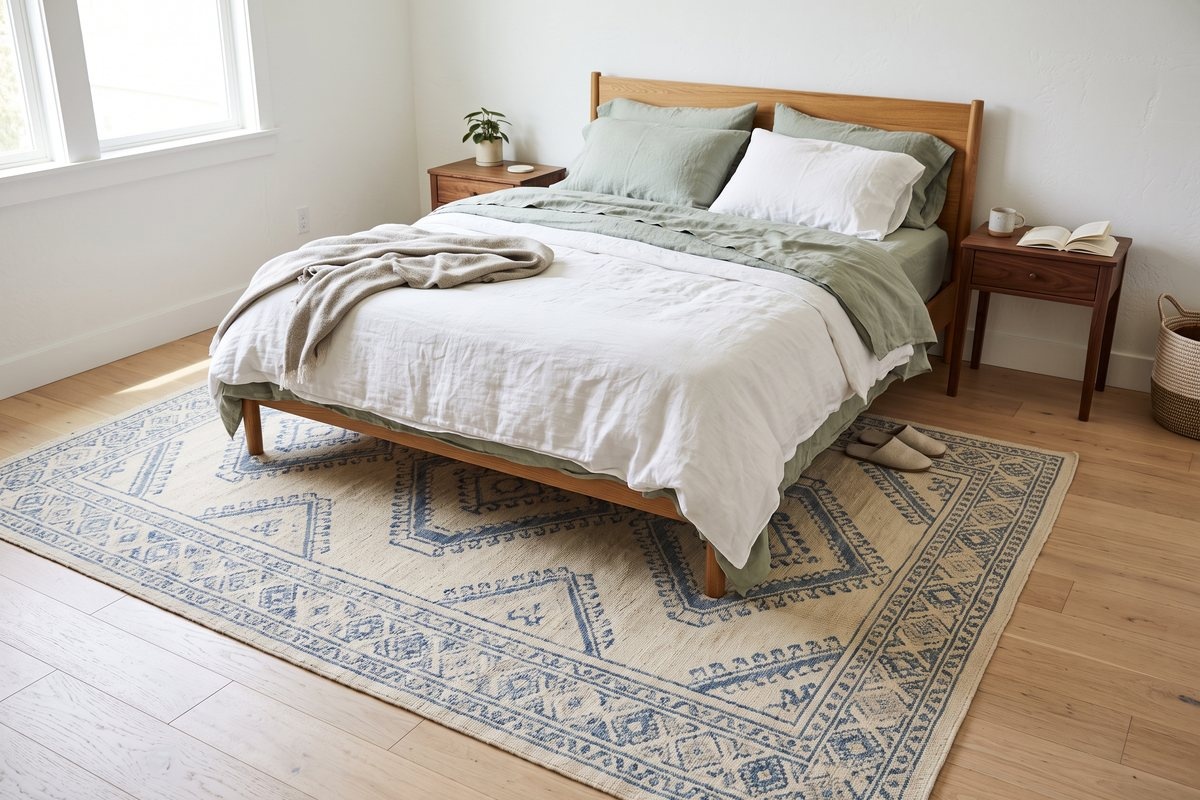
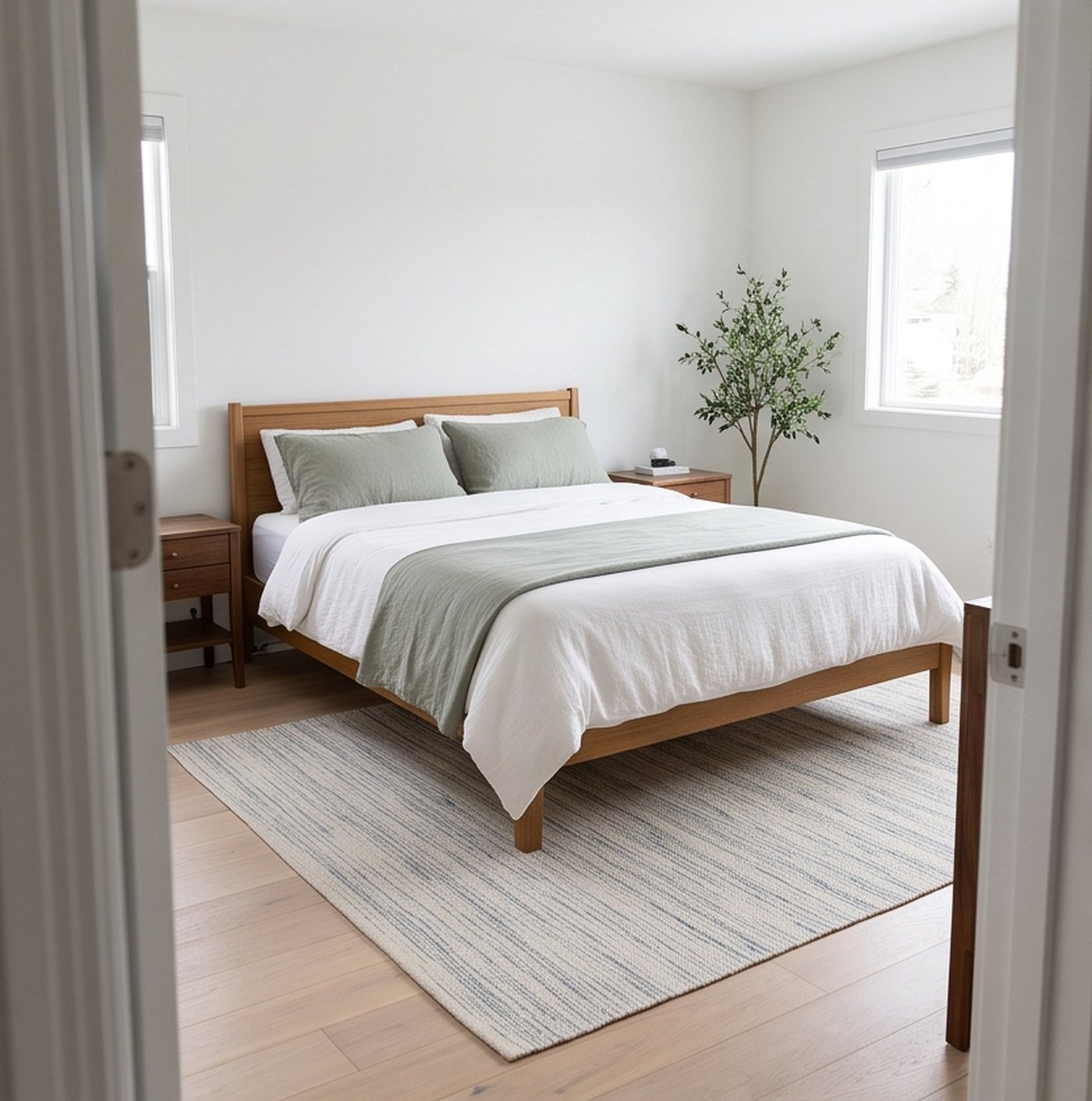
- The Gold Standard: 8x10 Feet: An 8x10 rug is the ideal choice for most master bedrooms. Oriented perpendicularly to the bed, it provides approximately 24 to 30 inches of exposed rug on either side and 36 inches at the foot of the bed.
- The Compact Alternative: 6x9 Feet: If your bedroom is small (under 11x12 feet), a 6x9 rug will fit comfortably, providing roughly 18 inches of soft landing on either side.
2. King Bed Rug Size Rules (76" x 80" Mattress)
Because a King mattress is over 6 feet wide, it demands a substantially larger rug foundation to maintain proportional balance:
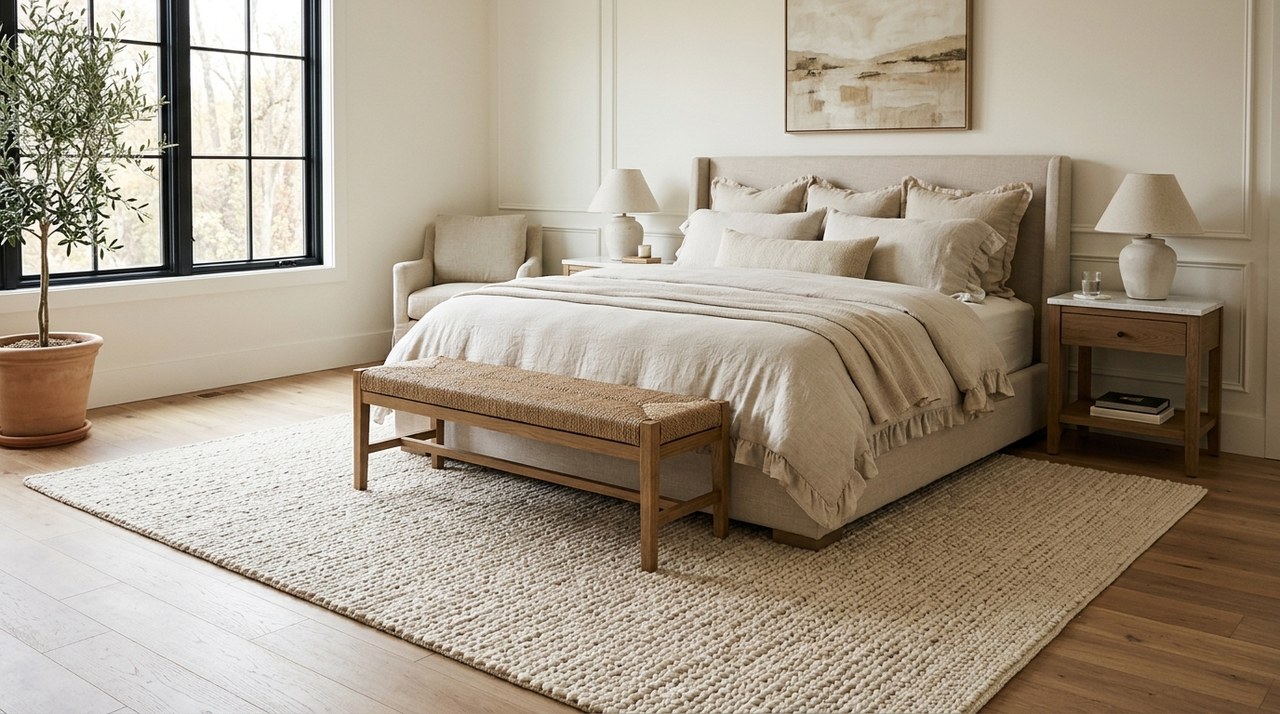
- The Gold Standard: 9x12 Feet: A 9x12 area rug is the undisputed designer choice for a King bed. It provides 26 to 30 inches of plush flooring on both sides and extends gracefully past any bench placed at the foot of the bed.
- The Grand Suite: 10x14 Feet: For sprawling master bedrooms with high ceilings, a 10x14 rug accommodates the entire bed and both nightstands with room to spare.
3. Placement Strategy: All-On vs. Two-Thirds Rule
Where should the rug start in relation to your headboard and nightstands?
Option A: The Two-Thirds Rule (Recommended)
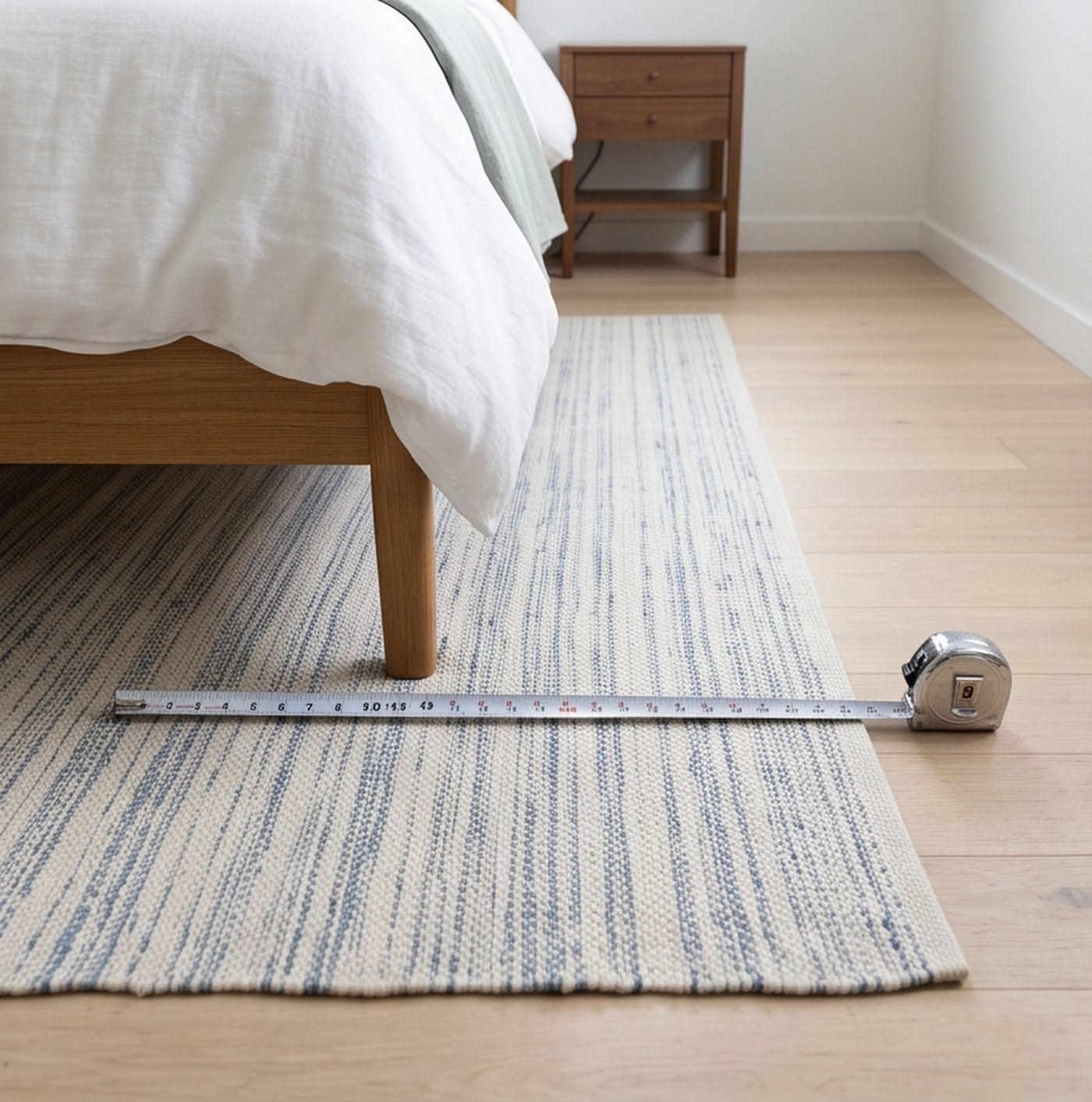
Slide the rug under the bottom two-thirds of the bed, stopping approximately 8 to 10 inches in front of your nightstand legs. This leaves your nightstands resting firmly on the bare hardwood floor, preventing uneven wobble while maximizing the rug area exposed around the sides and foot.
Option B: All-On (Master Suites)
In larger rooms, pull the rug all the way to the headboard wall, placing both the bed and the entire nightstand setup on top of the rug. Ensure the rug extends at least 12 inches past the outer edge of each nightstand.
4. Best Rug Materials for Bedroom Sanctuaries
Bedrooms experience low foot traffic compared to hallways or entryways, meaning you can prioritize comfort and softness:
- 100% Wool Flatweave or Hand-Knotted: Wool is naturally stain-resistant, flame-retardant, and provides exceptional thermal insulation against cold subfloors.
- Plush High-Pile or Morrocan Wool: Ideal for cozy, relaxed bedrooms, but ensure the pile height (under 1 inch) allows under-bed drawers or doors to open freely.
- Avoid Stiff Jute or Sisal Under Bare Feet: While natural fiber rugs look lovely, coarse jute can feel scratchy on bare morning feet. If you love the organic jute look, layer a smaller plush sheepskin or vintage wool runner over top.
5. Don't Skip the Rug Pad
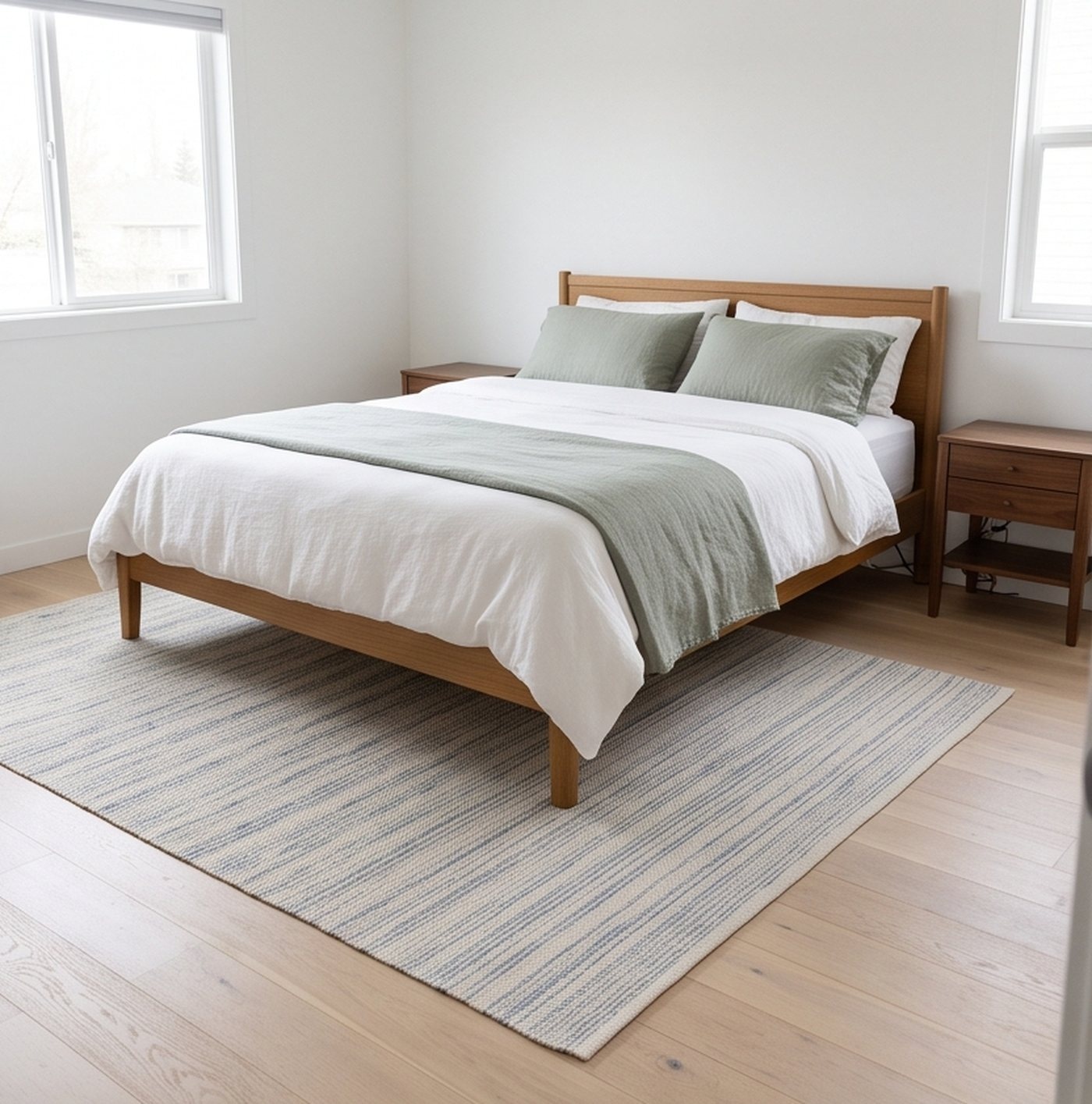
Always install a dual-surface felt-and-rubber rug pad (1/4-inch thickness) beneath your bedroom rug. It prevents creeping, protects your hardwood floor finish from backing friction, and adds a luxurious layer of cushion.
Frequently Asked Questions
Can I use runners instead of a large area rug?
Yes. If you have a narrow bedroom or do not want to lift a heavy bed frame, place two 2.5x8-foot or 2.5x10-foot runner rugs along each side of the mattress. This delivers warm morning footing at a fraction of the cost.
Should the rug touch the bedroom walls?
No. An area rug should never touch baseboards. Maintain at least 12 to 18 inches of exposed hardwood flooring between the edge of the rug and the bedroom walls to allow the room to breathe.
What if my room layout requires an off-center bed?
If your bed is placed closer to one wall due to window or door placements, align the rug with the bed rather than the room geometry. The rug should always visually frame the sleeping zone.
What rug size works best for a California King?
A California King is narrower and longer (72" x 84") than a standard King. A 9x12 rug remains the best fit, oriented perpendicularly to ensure plenty of foot-of-bed extension.