
Window treatments are the architectural couture of the bedroom. When curtains are hung correctly, they draw the eye toward the ceiling, soften harsh acoustics, and seal out sleep-disrupting streetlights. When done wrong—hung too low, too narrow, or ending inches above the baseboards—they can make even a spacious master suite feel stunted and uninviting.
Achieving five-star drapery requires understanding curtain hardware placement, header styles, and the critical balance between daytime light filtering and nighttime blackout privacy. Here is the designer blueprint for choosing and hanging bedroom curtains.

1. The Designer Golden Rule: High and Wide
The biggest mistake homeowners make is hanging the curtain rod directly on top of the window trim. This cuts off natural light and visually shrinks your room.
- Hang High (Near the Ceiling): Mount your curtain rod at least 8 to 12 inches above the window frame, or approximately 2 to 3 inches below the ceiling crown moulding. This draws the eye upward, making standard 8-foot ceilings feel soaring.
- Hang Wide (Past the Window Trim): Extend the curtain rod 10 to 14 inches past each side of the window frame. When the curtains are pulled open during the day, the fabric panels should stack neatly on the bare drywall, exposing 100% of the glass to maximize natural daylight.
2. Choosing Fabric: Linen Texture vs. Blackout Lining
A common dilemma is choosing between the relaxed, breezy aesthetic of 100% Belgian linen and the pitch-black sleep performance of thermal blackout curtains.
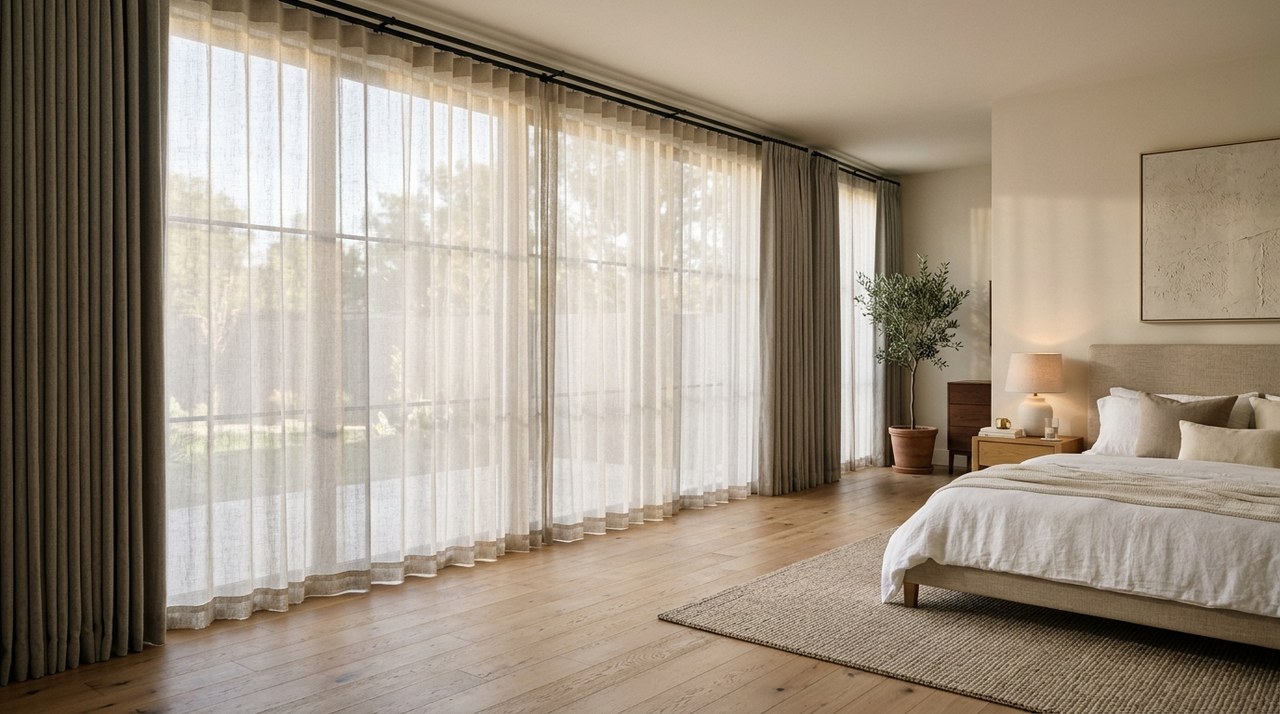
- The Double-Rod Solution: Install a dual-track or double-rod system. Mount sheer linen curtains on the inner rod to softly diffuse daytime sunlight while maintaining privacy. On the outer rod, hang heavyweight drapery lined with blackout fabric for evening sleep.
- Lined Belgian Linen: If you prefer a single-rod setup, choose custom or semi-custom linen curtains backed with a woven blackout liner. This gives you the organic, slubby drape of real linen on the room side while blocking 99% of external light.
3. Eliminating the Dreaded Light Halo
True blackout requires sealing the edges where light typically leaks around the curtain rod:
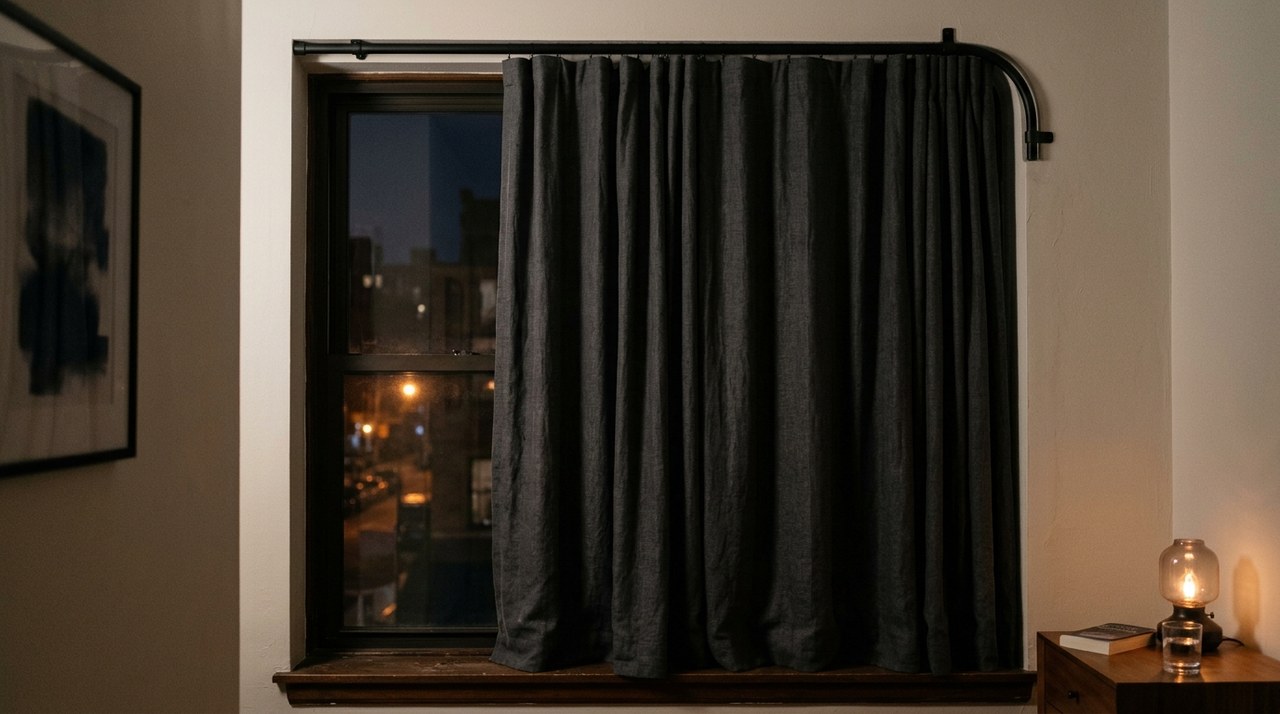
- French Return Curtain Rods: Instead of finials, use a French return rod (also called a wrap-around rod). The rod curves 90 degrees back into the drywall, allowing the outer curtain panel to sit completely flush against the wall and eliminating side light halos.
- Ceiling Recessed Tracks: In modern or contemporary bedrooms, mount a slim aluminum curtain track directly into a recessed ceiling pocket for an ultra-clean, flush architectural appearance.
4. Selecting Header Styles: Pleats vs. Grommets
The way fabric attaches to the rod dictates how smoothly the drapery stacks:
- Pinch Pleat / Euro Pleat: The timeless standard of luxury hospitality. Tailored pleats create structured, vertical folds that fall gracefully to the floor. Use curtain rings with nylon drapery hooks.
- Ripplefold: Sleek, modern, and wave-like, perfect for contemporary and Scandinavian interiors.
- Avoid Metal Grommets: Stamped metal grommets look dated and cheap, and they allow large pinpricks of light to pierce through the top of the curtain.
5. The Floor Break: Puddle, Kiss, or Hover?
How your drapery meets the floor defines the finished mood:
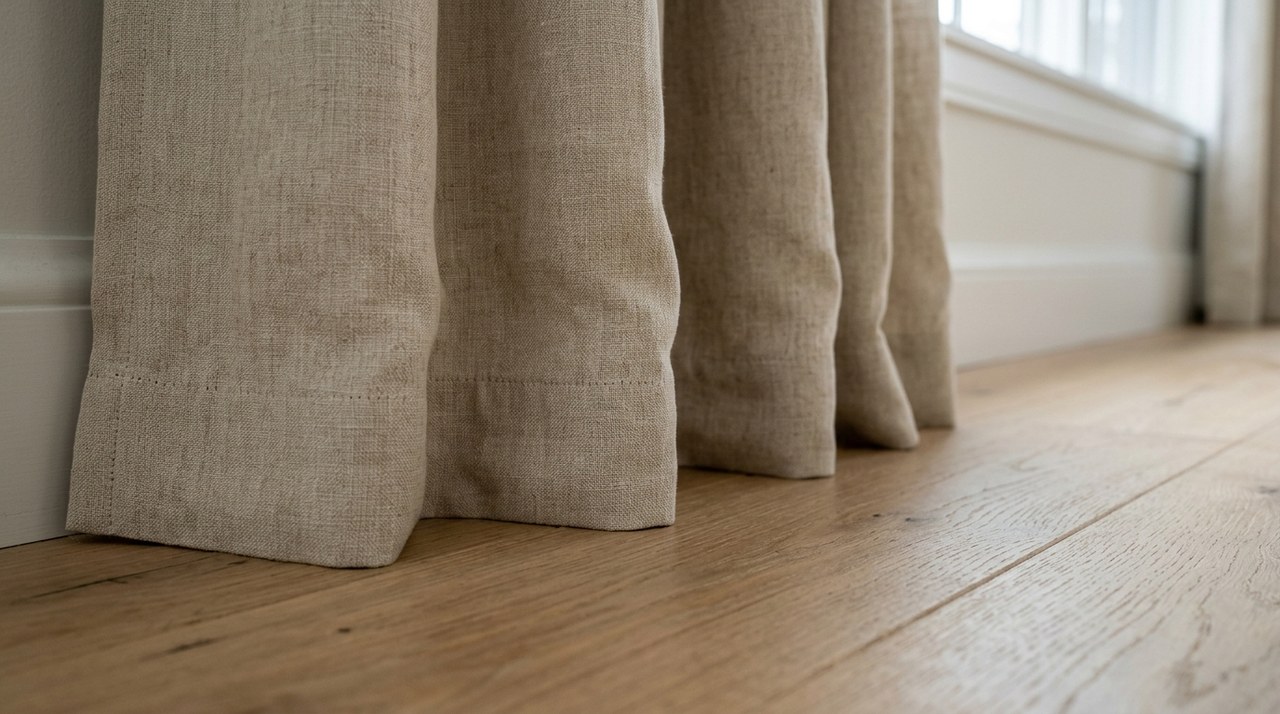
- The Gentle Kiss (Designer Preferred): The hem rests exactly 1/4 to 1/2 inch above the floor or lightly skims the hardwood. It looks crisp, modern, and does not collect dust or pet hair.
- The Break (1 to 2 Inches Excess): The curtain rests gently on the floor, similar to tailored men's trousers on dress shoes.
- Avoid Deep Puddling (4+ Inches): Deep fabric puddles are impractical for modern living and difficult to vacuum around.
Frequently Asked Questions
What width should my bedroom curtains be?
Curtain panels should have a combined width that is 2 to 2.5 times the width of the window. For example, if your window is 48 inches wide, you need at least 96 to 120 inches of combined curtain width to ensure lush, full folds when closed.
Can curtains help reduce bedroom noise?
Yes. Heavyweight velvet or triple-weave blackout linen curtains absorb sound vibrations, significantly dampening outside traffic noise and sirens.
How do you get wrinkles out of linen curtains?
Hang the curtains first and let gravity pull out shipping creases for 48 hours. Then, use a handheld garment steamer from top to bottom. The moisture allows natural linen fibers to relax gracefully.
Are blackout roller shades better than blackout curtains?
Blackout roller shades are excellent for minimalist windows, but they frequently leak light along the side edges. Pairing an inside-mount blackout shade with exterior linen drapery panels creates the ultimate light seal.