Designing a small bedroom often feels like a frustrating puzzle of compromises. When square footage is tight, a standard queen bed, a pair of nightstands, and a dresser can quickly turn an 11x11 foot room into an obstacle course of pinched walkways and jammed closet doors.
However, interior architects know that small spaces possess an inherent advantage: they naturally foster an intimate, jewel-box coziness that cavernous master suites often lack.
The secret to mastering a compact bedroom is not buying miniature dollhouse furniture. It is about understanding spatial geometry, liberating floor space through vertical and floating storage, and manipulating sightlines so the room feels twice its actual size.
Here are 10 designer-tested layout rules to optimize any compact bedroom.
1. Center the Bed on the Longest Uninterrupted Wall
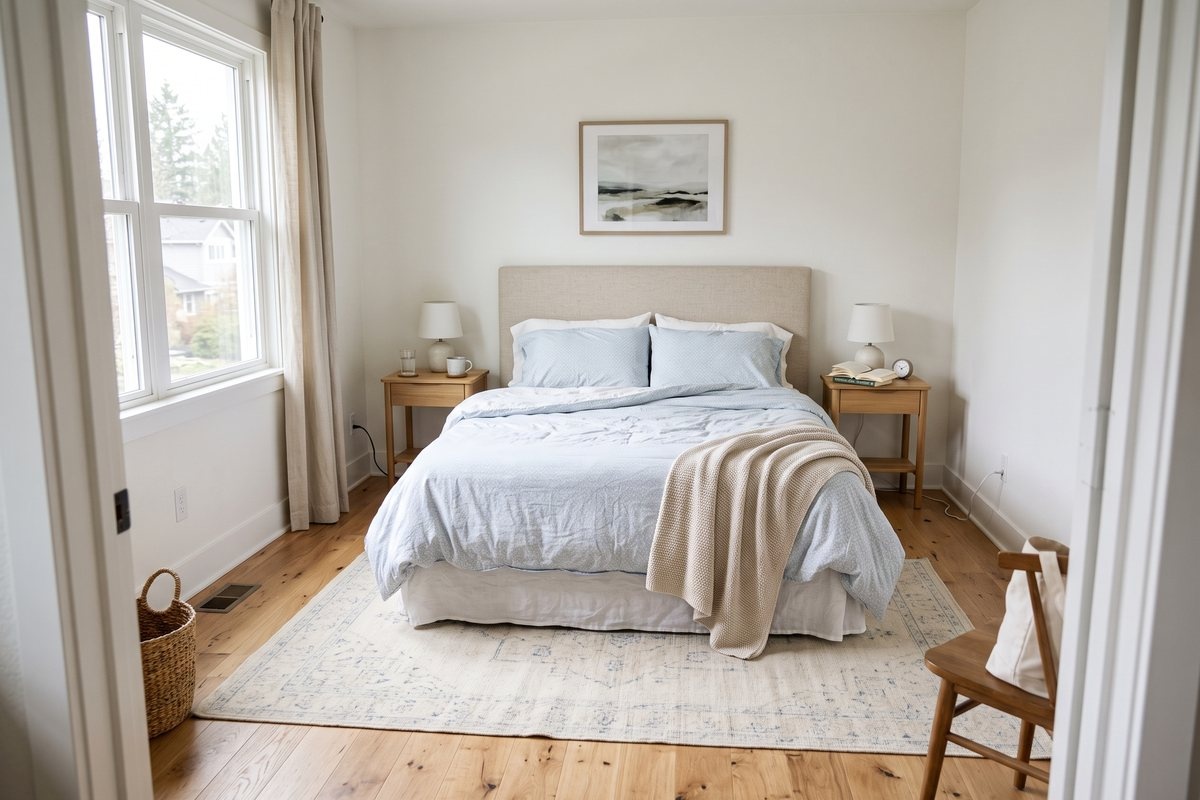
The most common layout mistake in small bedrooms is pushing the bed into a tight corner. While this seems to free up floor area, it forces one sleeper to climb over the other, makes changing sheets a daily struggle, and visually unbalances the room.
Instead, center your Queen bed on the longest solid wall. Maintain a minimum 24- to 30-inch clearance on both sides of the mattress. Preserving bilateral access makes the room function like a proper suite rather than a cramped dorm room.
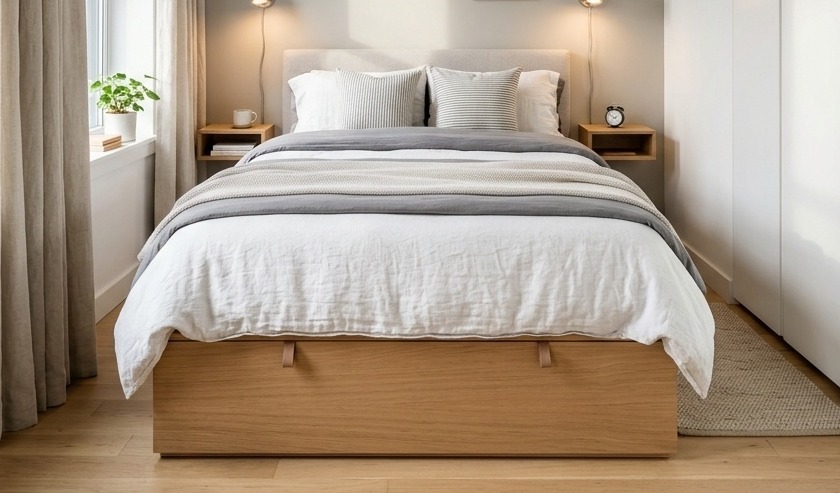
2. Upgrade to a Gas-Lift Hydraulic Storage Bed
In a small bedroom, the 30 square feet beneath your mattress is the most valuable real estate you own.
Skip traditional under-bed roll-out drawers, which require an extra 3 feet of clear floor space on each side just to pull open. Instead, invest in a gas-lift hydraulic storage bed frame.
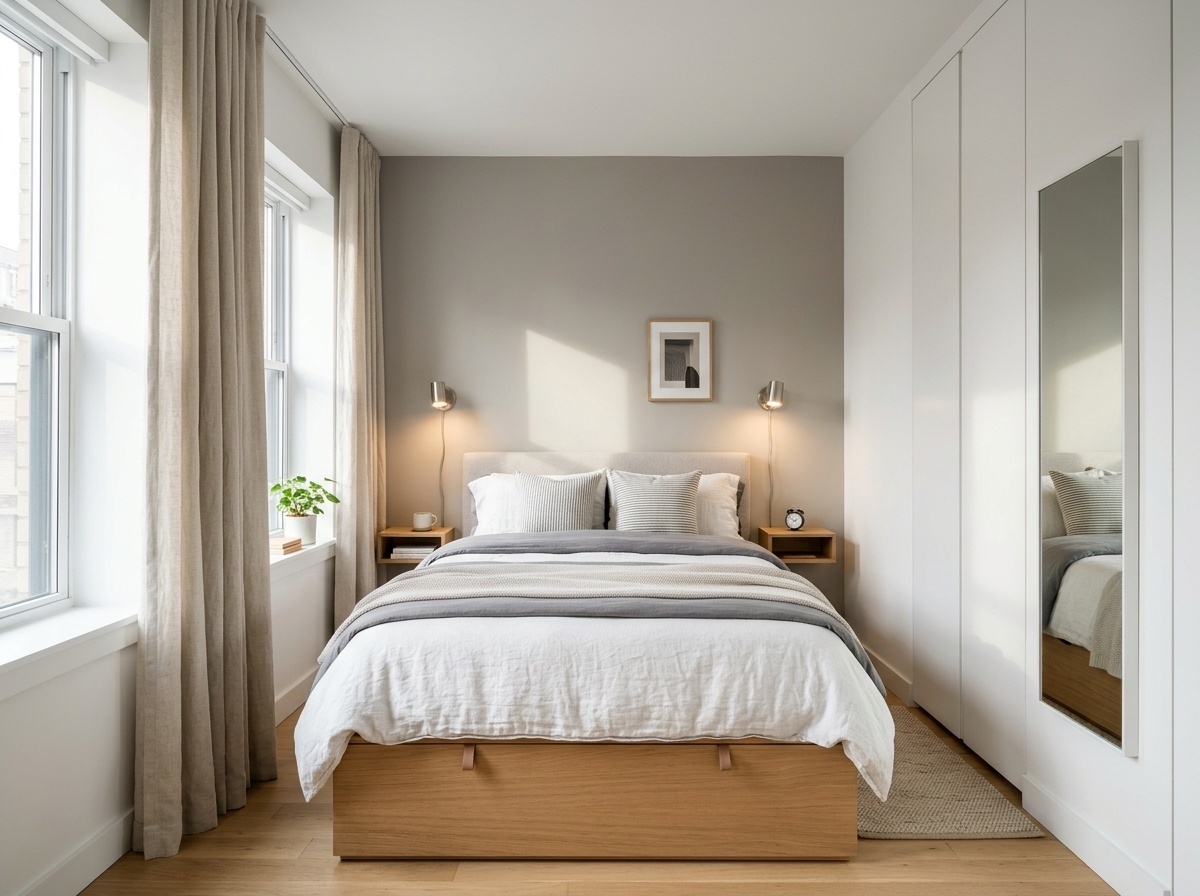
With a single gentle pull, the entire mattress lifts smoothly on pressurized pistons, revealing a cavernous, dust-free storage compartment underneath that easily holds off-season clothing, extra luggage, and spare winter duvets.
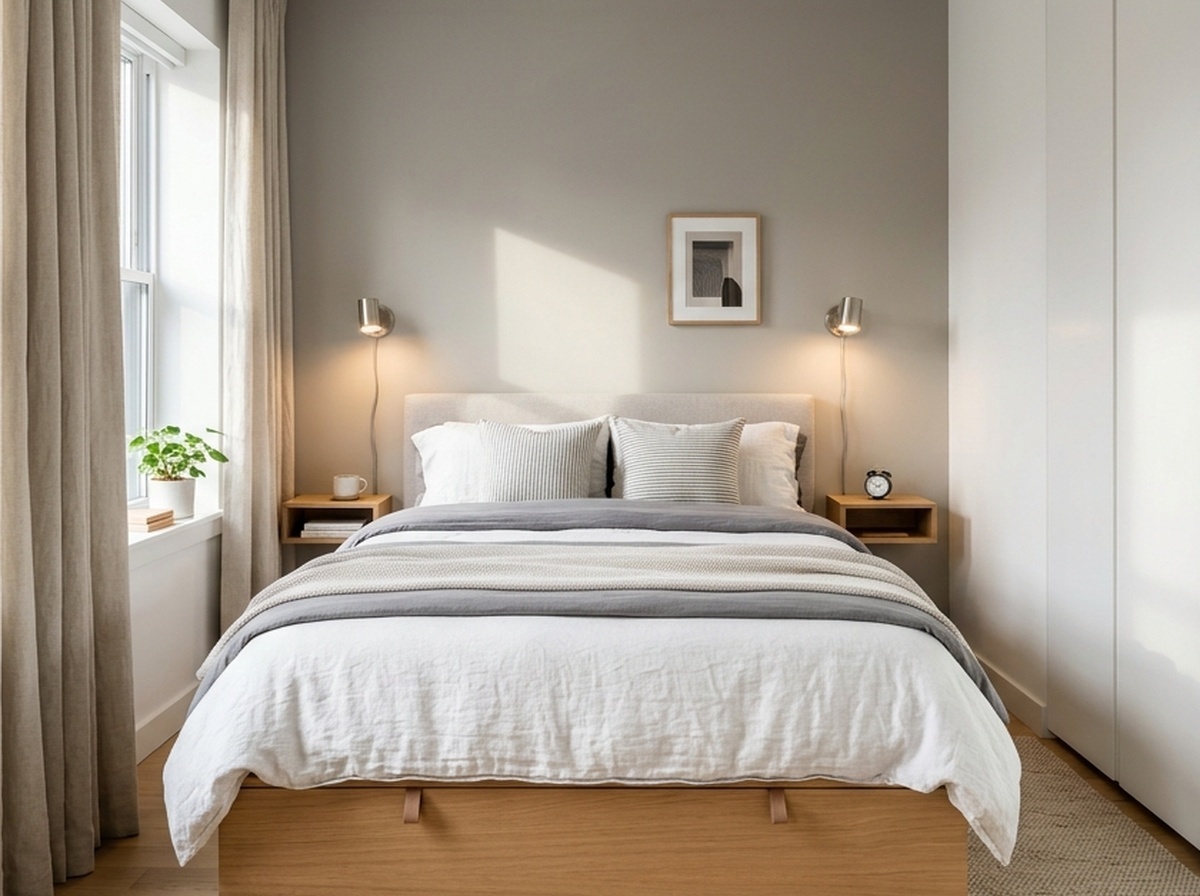
3. Liberate the Floor with Wall-Mounted Floating Nightstands
Floor-standing bedside tables with heavy legs visually crowd a compact room. When the eye can see the floor extending all the way to the baseboards, the brain perceives the entire room as larger.
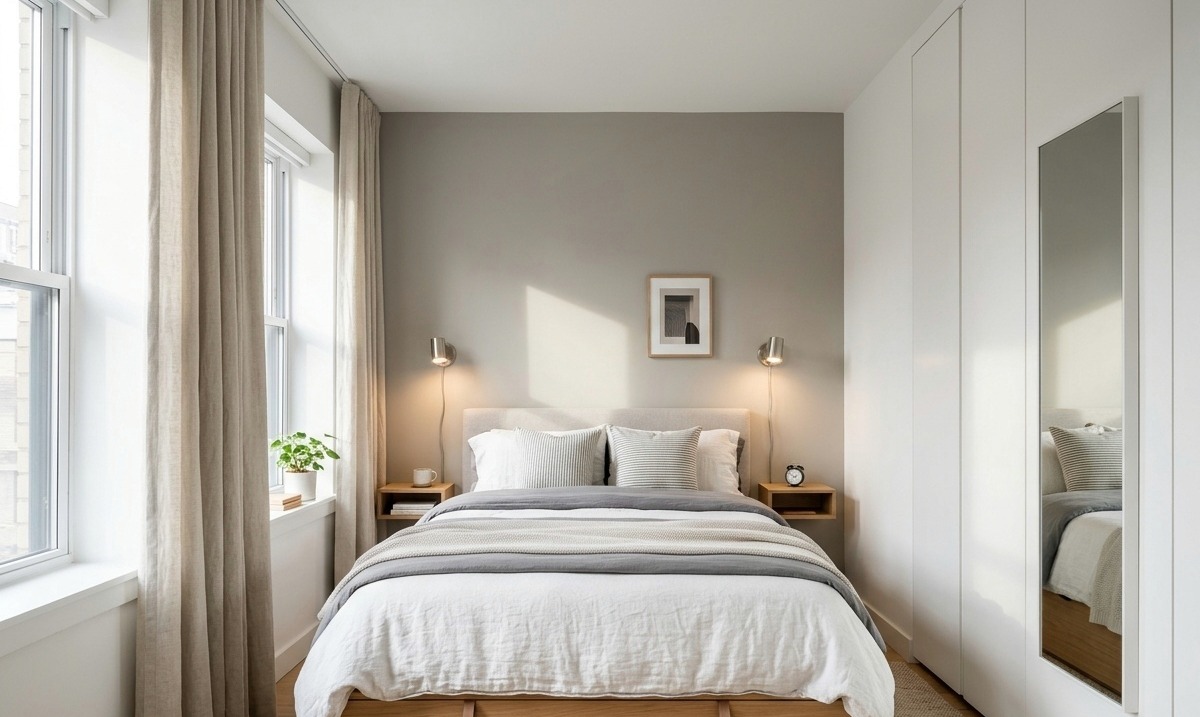
Mount floating timber bedside shelves with integrated drawer storage at 24 inches above the floor (flush with your mattress height). Floating nightstands provide an unencumbered surface for your phone and water glass while leaving the floor open for a clean, airy look.
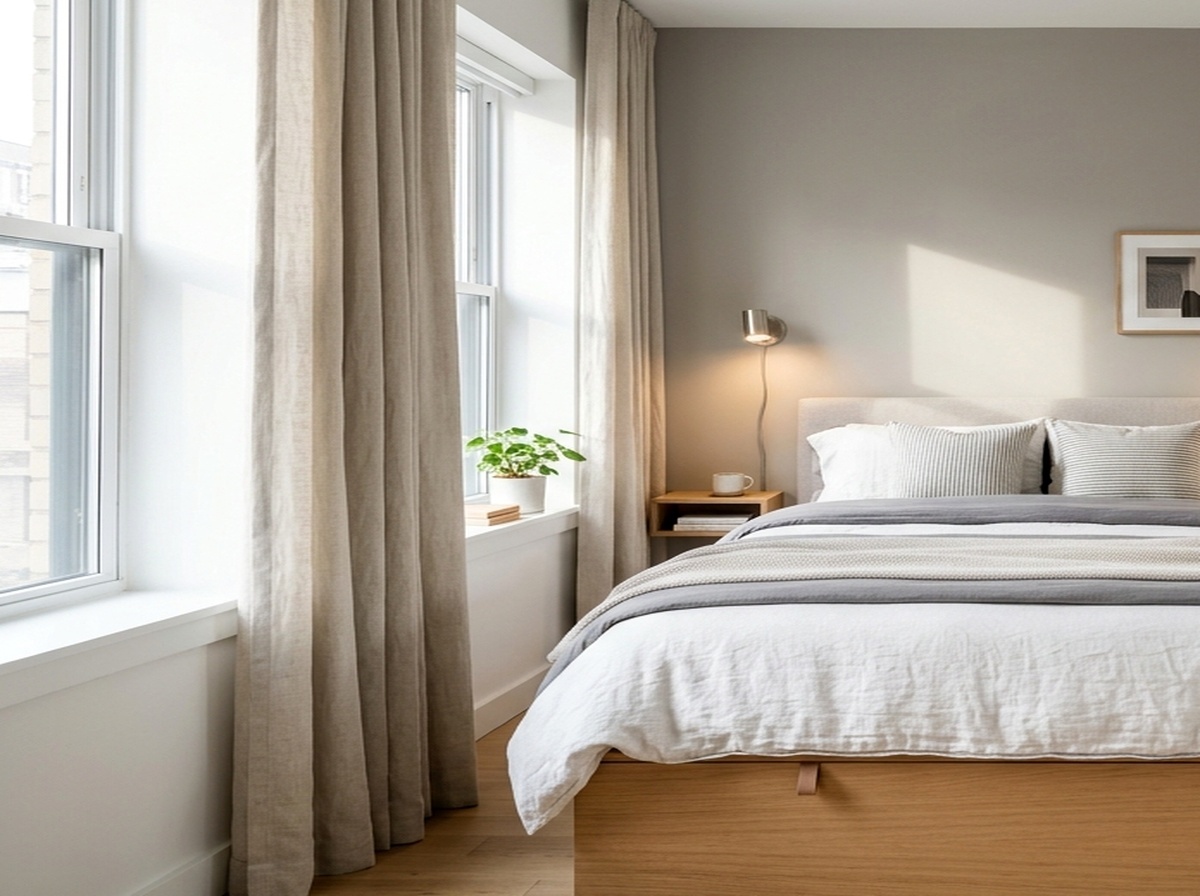
4. Banish Table Lamps in Favor of Plug-In Wall Sconces
On a compact 14-inch nightstand, a traditional table lamp base and shade can monopolize up to 70% of the usable surface area.
Eliminate table lamps entirely by installing plug-in wall-mounted swing-arm sconces mounted 28 to 32 inches above the mattress. Sconces provide focused, directional reading light right where you need it while leaving your nightstand completely clear for personal essentials.
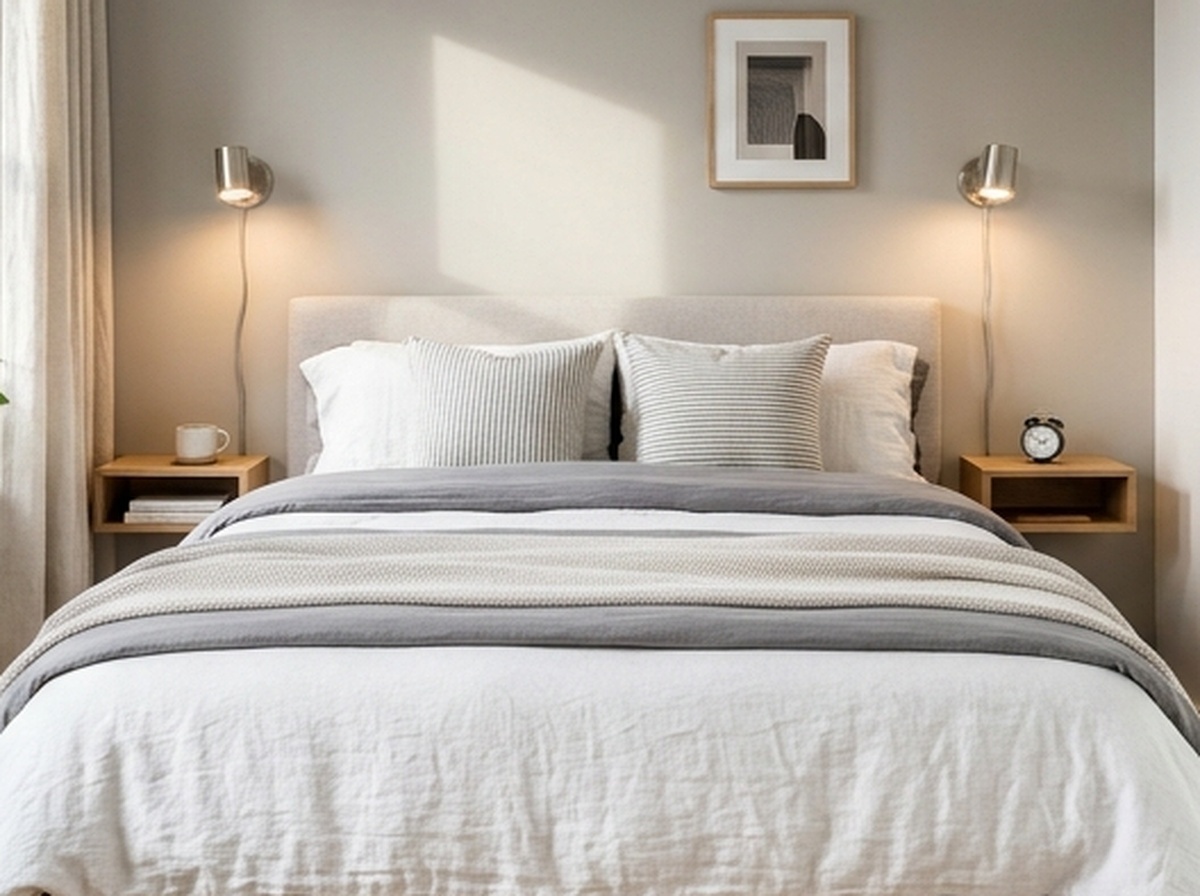
5. Mount Drapery at the Ceiling Crown to Stretch Vertical Scale
To make an 8-foot ceiling feel like 10 feet, manipulate your window treatments:
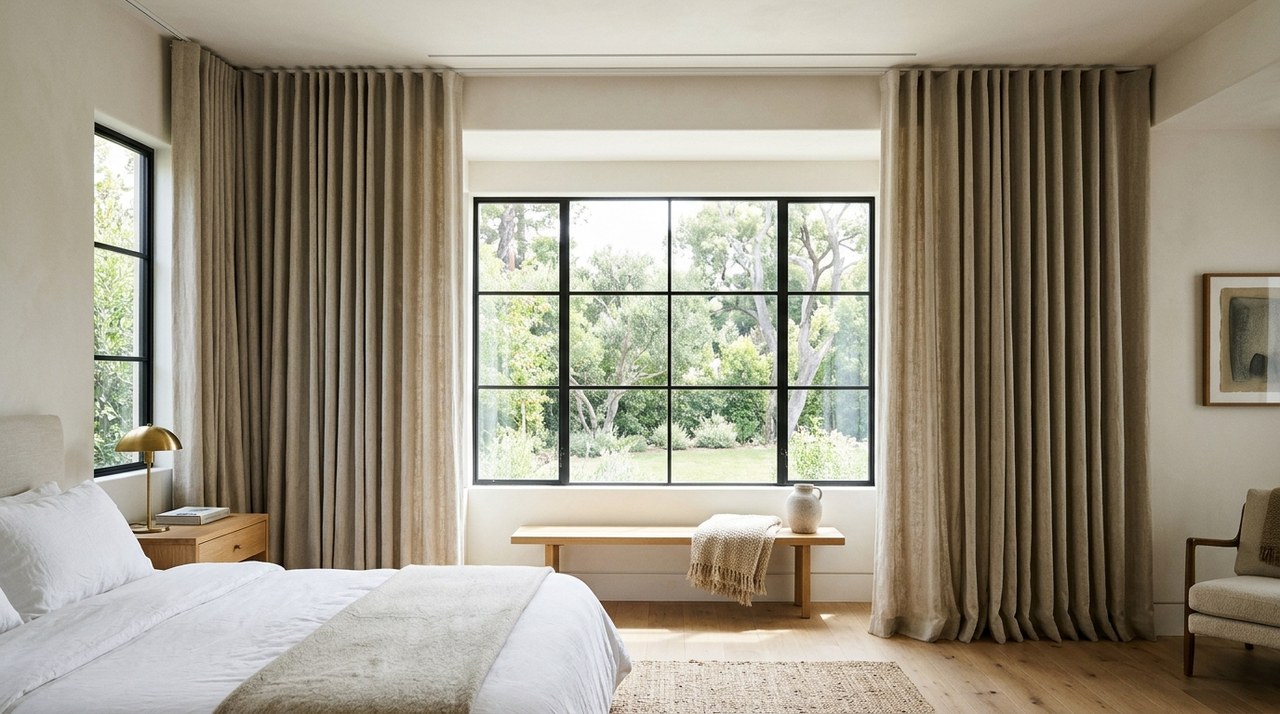
- Mount the Rod at the Ceiling: Never hang curtain rods directly on top of the window casing. Mount the rod 2 inches below the ceiling line or crown moulding.
- Extend the Rod 8 to 12 Inches Past the Frame: This allows the drapery panels to stack completely outside the glass when open, maximizing natural daylight and making small windows appear dramatically wider.
- Choose Light-Filtering Linen: Floor-to-ceiling unlined linen curtains in ivory or oatmeal soften window architecture while letting daylight filter through.
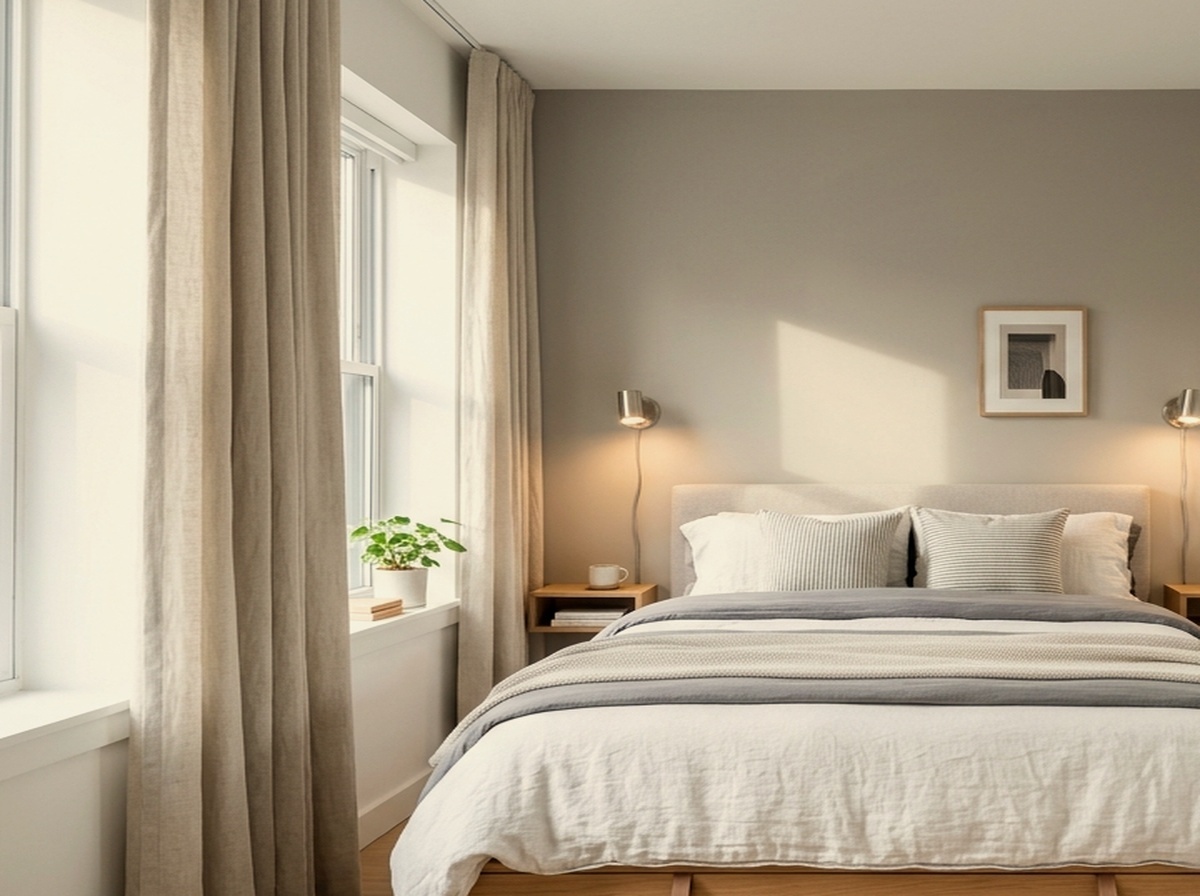
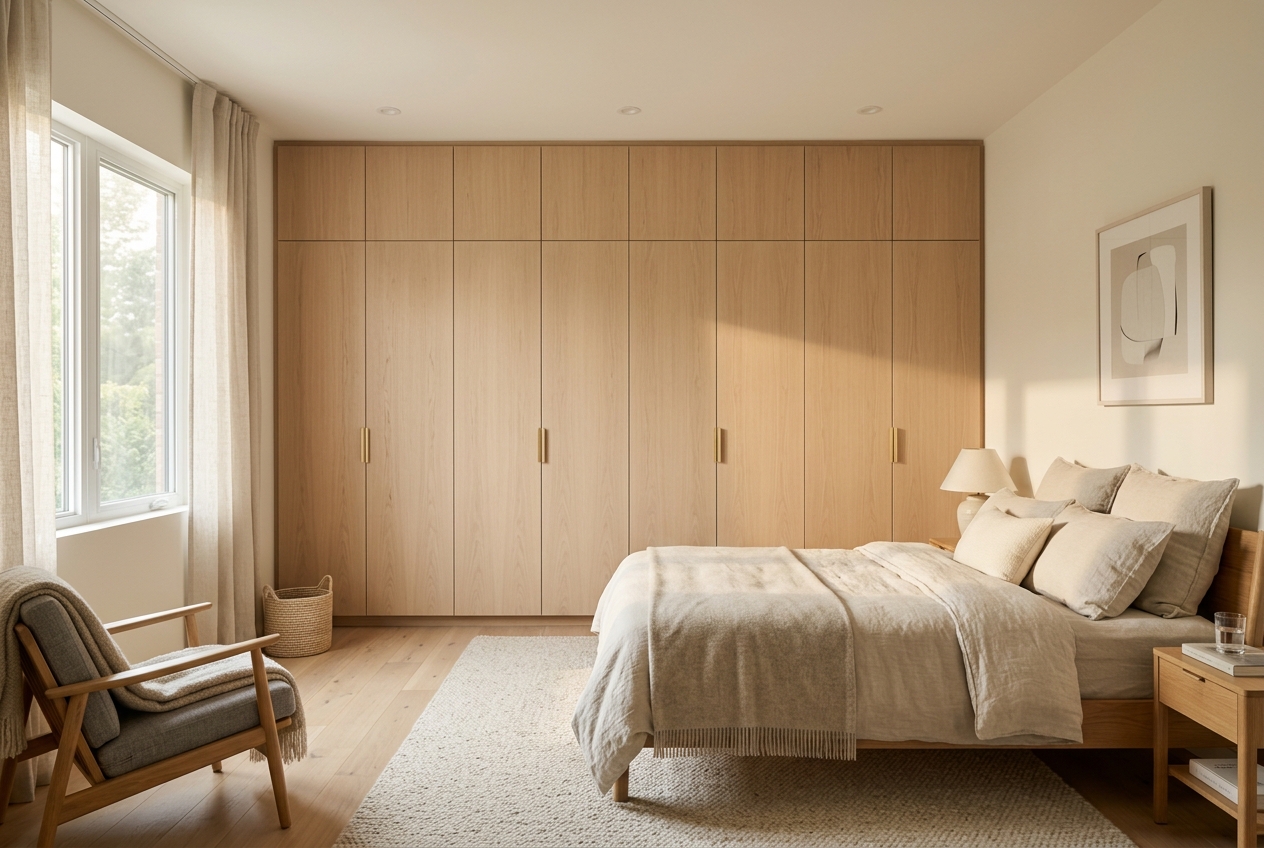
6. Maximize Vertical Reach with Full-Height Wardrobes
Standard freestanding dressers waste valuable vertical space between the top of the chest and the ceiling.
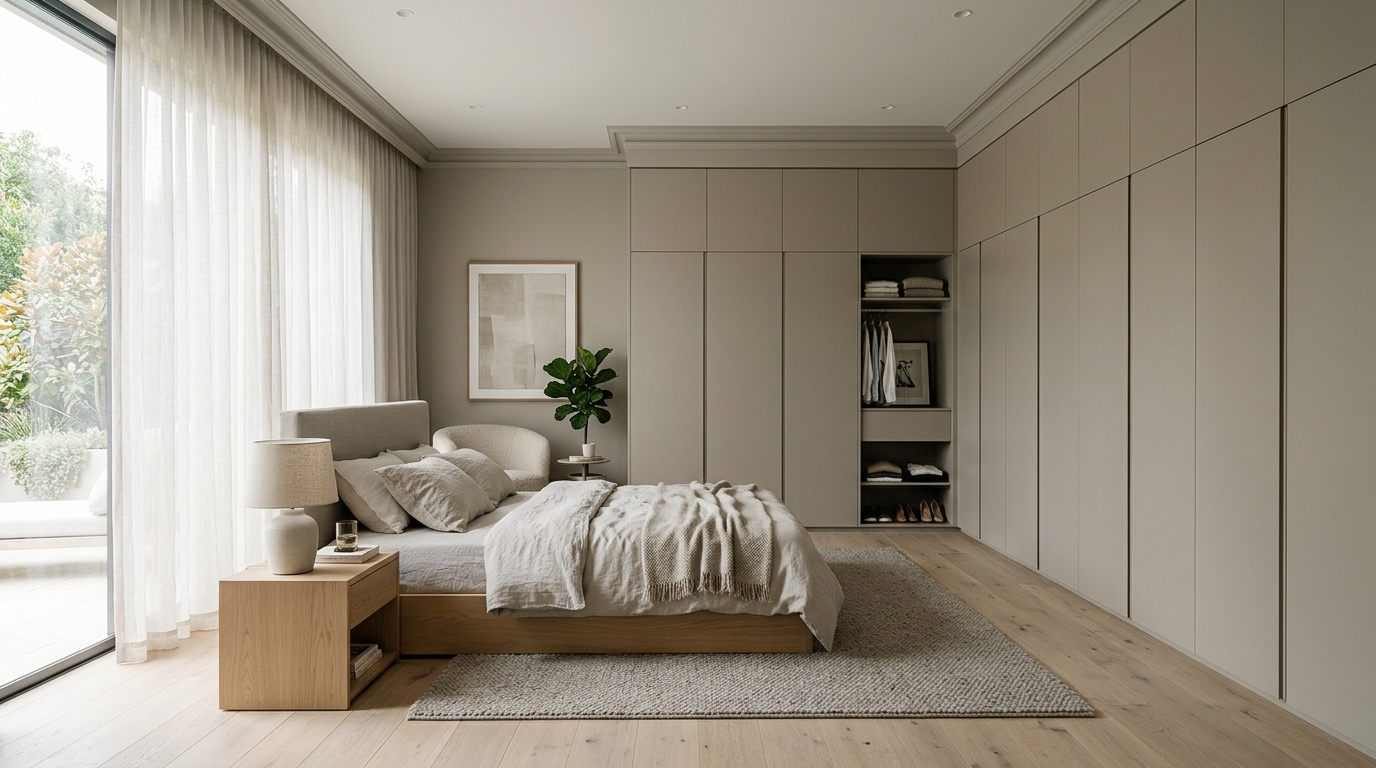
In a small bedroom, replace low dressers with a floor-to-ceiling wardrobe system (such as customized IKEA PAX units with trim molding). Extending storage all the way to the ceiling eliminates dust-catching gaps and provides double the hanging and shelving volume in the exact same footprint.
7. Use Mirrors Strategically to Double the Light
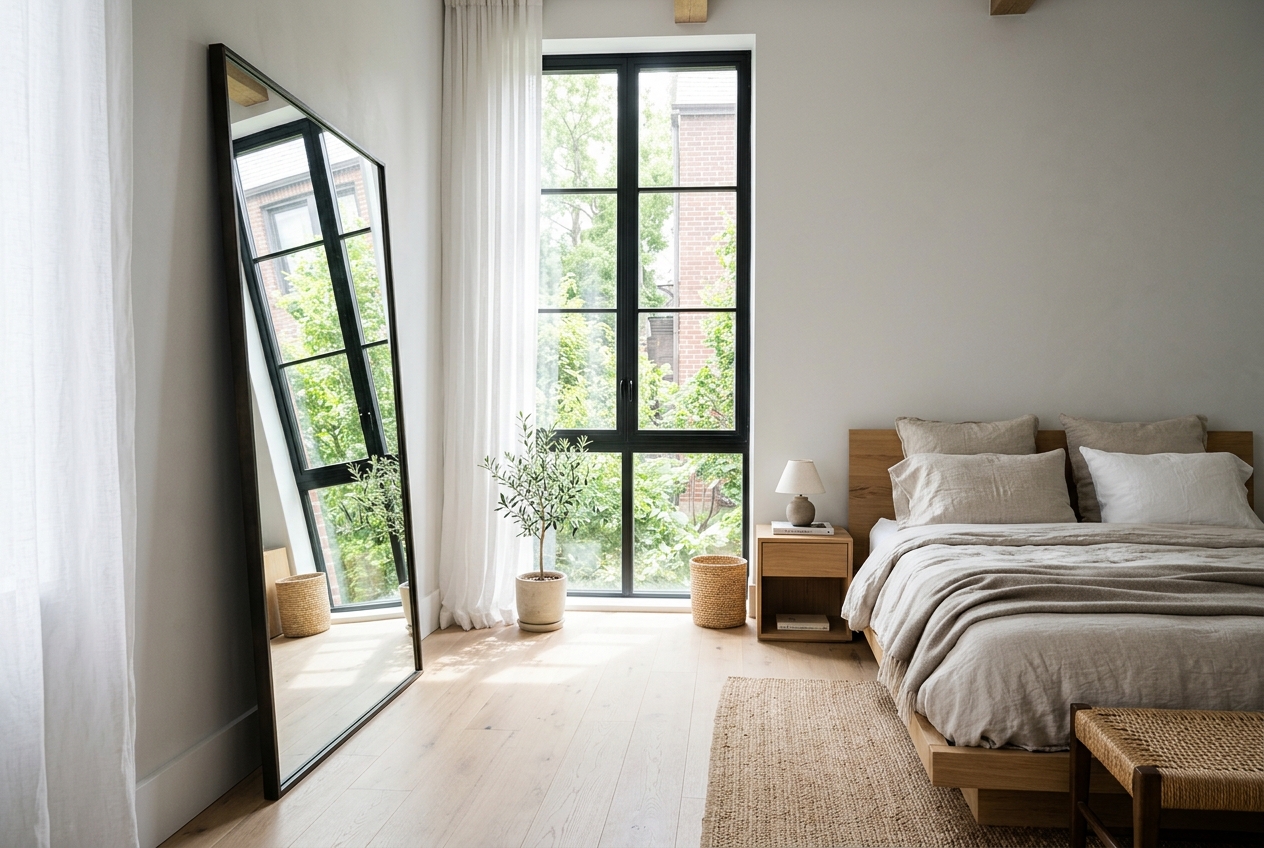
Mirrors are an architect's best tool for expanding compact dimensions. Rather than hanging small decorative wall mirrors, treat mirrors as reflective architectural elements:
- Mount a full-length mirror behind the bedroom door or on the inside of wardrobe doors.
- Position a large framed floor mirror opposite a window so it reflects outdoor greenery and daylight directly back into the darkest corner of the room.
8. Maintain Non-Negotiable Spatial Clearances
A small room only feels stressful when you are constantly bumping your shins or squeezing through tight gaps. Always preserve these minimum spatial clearances:
- Foot of Bed to Wall/Dresser: 30 inches minimum (36 inches preferred for easy dresser drawer pullout).
- Side of Bed to Wall: 24 inches minimum for natural entry and exit.
- Door Swing Arc: Ensure the bedroom entry door can swing fully open 90 degrees without grazing the mattress or bedside table.
9. Choose a Low-Profile or Slatted Headboard
Heavy, winged, or tufted headboards can protrude 8 to 10 inches into the room, stealing precious walkway space.
Choose a slender, low-profile upholstered panel or a wall-hung cushion headboard suspended from a brass rod. Alternatively, use a vertical wood slat accent wall that acts as a headboard with zero loss of floor space.
10. Stick to a Calming, Monochromatic Paint Scheme
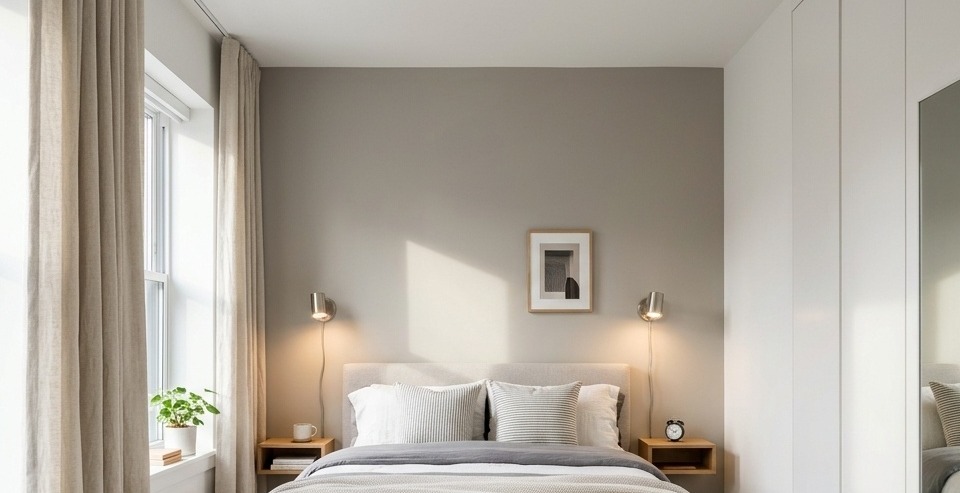
High-contrast accent walls and bold clashing trim visually chop a small bedroom into disjointed segments.
To create seamless visual continuity, paint your walls, baseboards, and closet doors in the same soft neutral hue—such as Benjamin Moore Swiss Coffee (OC-45) or Sherwin-Williams Pure White (SW 7005). When transitions are blurred, the room feels unified, serene, and infinitely more expansive.
Frequently Asked Questions
Can a king bed fit in a small bedroom?
As a rule of thumb, a standard 76x80-inch King bed requires a bedroom that is at least 12x12 feet to maintain minimum 24-inch walkways on both sides. In rooms smaller than 11x12 feet, a Queen bed (60x80 inches) is strongly recommended to preserve daily comfort.
How do I make a small bedroom feel less cluttered?
Adopt the "off-the-floor" principle: use floating nightstands, wall-mounted sconces, and hang drapery from the ceiling. Store all non-daily essentials inside a hydraulic storage bed or behind full-height closed wardrobe doors.
What is the best rug size for a small bedroom with a queen bed?
An 8x10 foot rug placed under the lower two-thirds of the Queen bed provides an ideal 24 inches of soft margin on both sides while stopping just short of your nightstands, preventing furniture wobbles.
Should small bedrooms have light or dark walls?
Both work, but they create different moods. Soft off-whites bounce natural light and make the room feel breezy and open. Alternatively, color-drenching a small room in a deep, moody tone (like navy or chocolate brown) blurs the corner boundaries, creating an intimate jewel-box effect.