Almost every room has one. The corner by the window that never had a job. Too awkward for a sofa, too tight for a chair, so it just sits there collecting a plant and a pile of things that don't live anywhere else.
That corner was dead space for two years before I put shelves in it. A few shelves turned it into a reading corner.
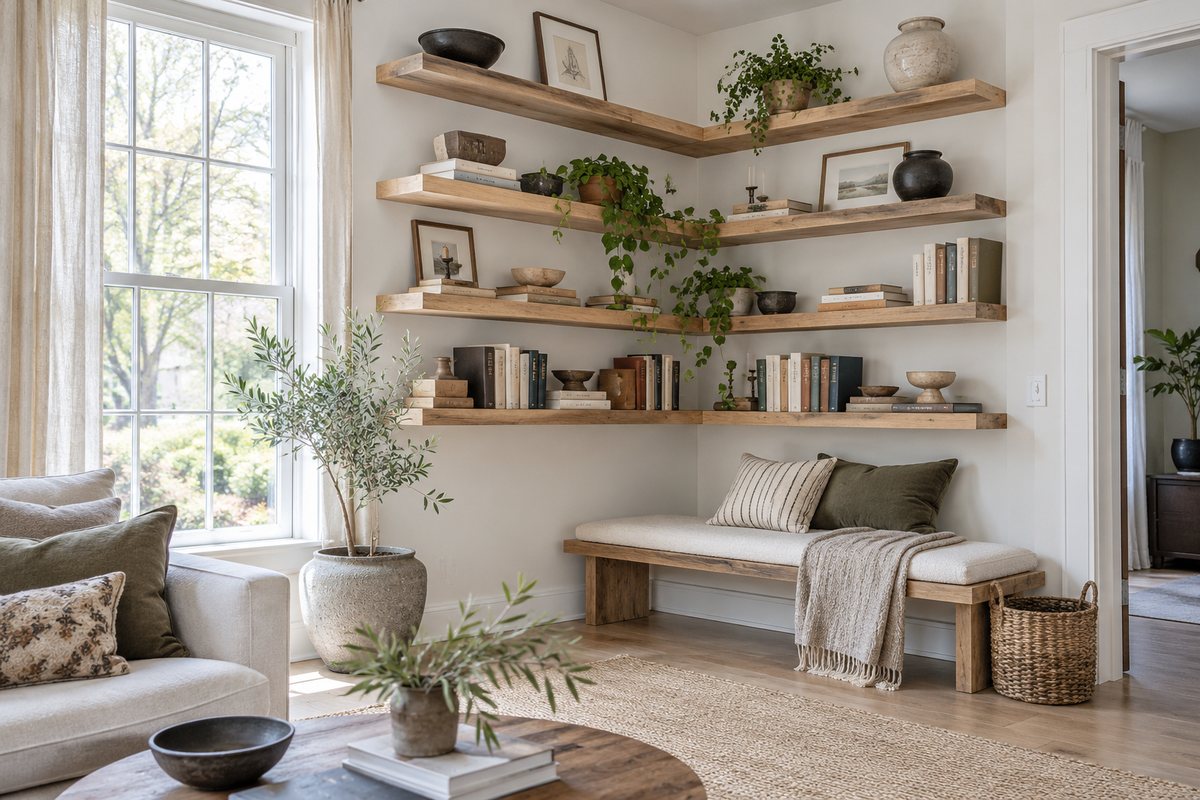
The shelves themselves are simple: plain wood floating shelves running along both walls and meeting in the corner. What makes them look good is how they're styled. Here are the rules that make it work.
Why a corner is the best place for shelves
A corner is the one spot where shelves take almost nothing away from the room.
- You don't lose floor space. Floating shelves sit on the wall. The floor underneath stays free for a bench, a basket or a plant.
- Two walls make it feel built in. Shelves that wrap a corner look like part of the architecture, not a piece of furniture pushed against the wall.
- The light is usually good. The corner beside a window gets daylight on the books and plants, and it's the natural spot to sit and read.
Wrap the corner
Run the shelves along both walls so they meet in the corner and read as one piece.
- Four or five shelves is the sweet spot for a standard ceiling height. Fewer looks thin, more starts to feel like a library wall.
- Space them evenly, roughly 12 to 15 inches apart, so tall books fit on the lower shelves.
- Start high enough to clear a bench. The lowest shelf should sit above head height when you're seated underneath.
- Go about 10 inches deep. That's enough for most books and objects without the shelves feeling heavy.
- Use thick shelves. A chunky shelf, around 2 inches thick, looks solid and custom. Thin shelves look temporary.
Weight the two walls unevenly
This is the rule that makes the whole thing look designed instead of stamped out.
If both walls carry the same amount of stuff in the same places, the corner looks mirrored and stiff. Instead, let one wall carry more.
- Make one side longer. In the room at the top of this post, the shelves run further along the window wall than the other one.
- Put the heavier things on one side, like a stack of books or a big vase, and lighter things opposite.
- Don't repeat the same object at the same height on both walls. If there's a black bowl on the top left, put something different on the top right.
Books low, objects high
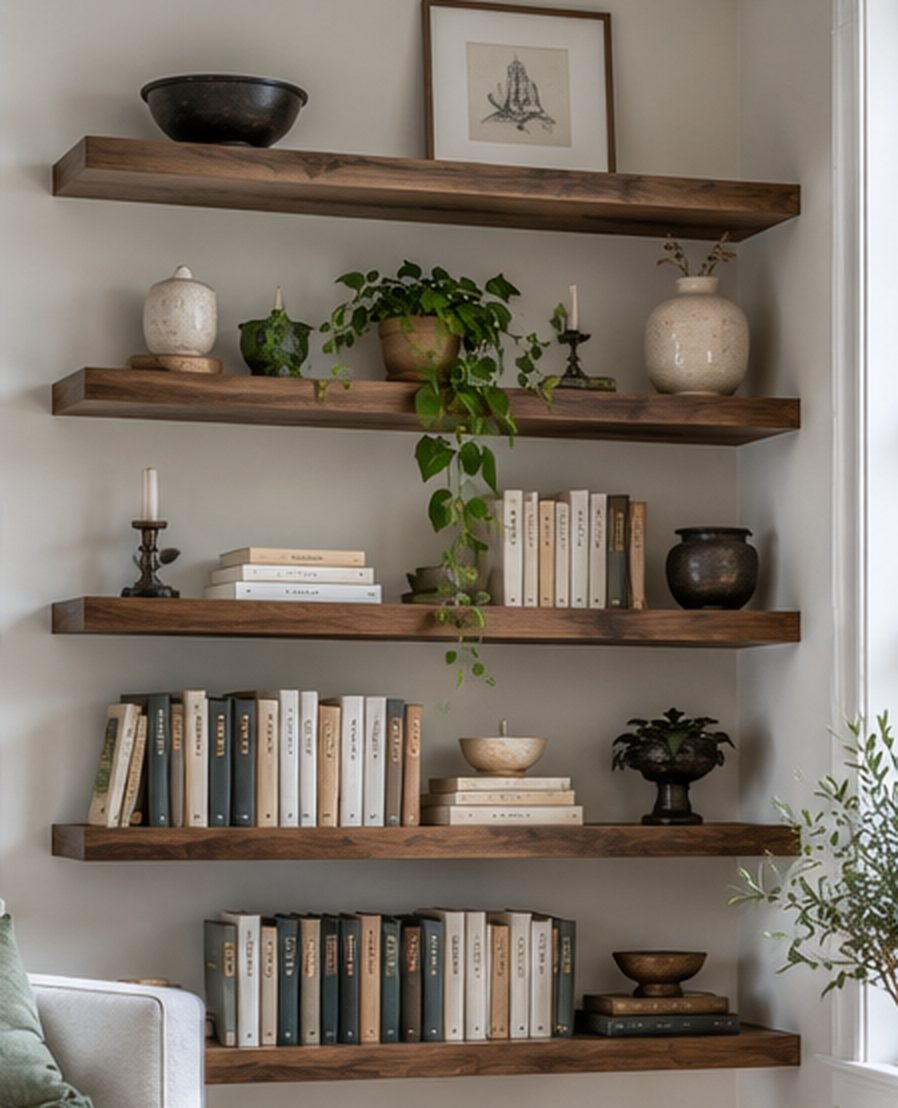
Books are the heaviest-looking thing you'll put on the shelves, so they belong at the bottom. The higher you go, the more space you leave.
- Bottom shelves: books. Mostly upright in rows, with a few short stacks lying flat to break them up. This is also where you can reach them from the bench.
- Middle shelf: a mix. A short stack of books, a small plant, a candlestick.
- Top shelves: objects. A bowl, a vase, a small framed print leaned against the wall. Leave plenty of empty wood showing.
Two small tricks that help:
- Stick to muted book spines. Cream, sand, olive, rust and black look calm. If your books are bright, turn a few around so the pages face out, or group the colors together.
- Put something on top of flat stacks. A small bowl or a stone on a stack of three books looks styled rather than left there.
Let one plant cross the corner
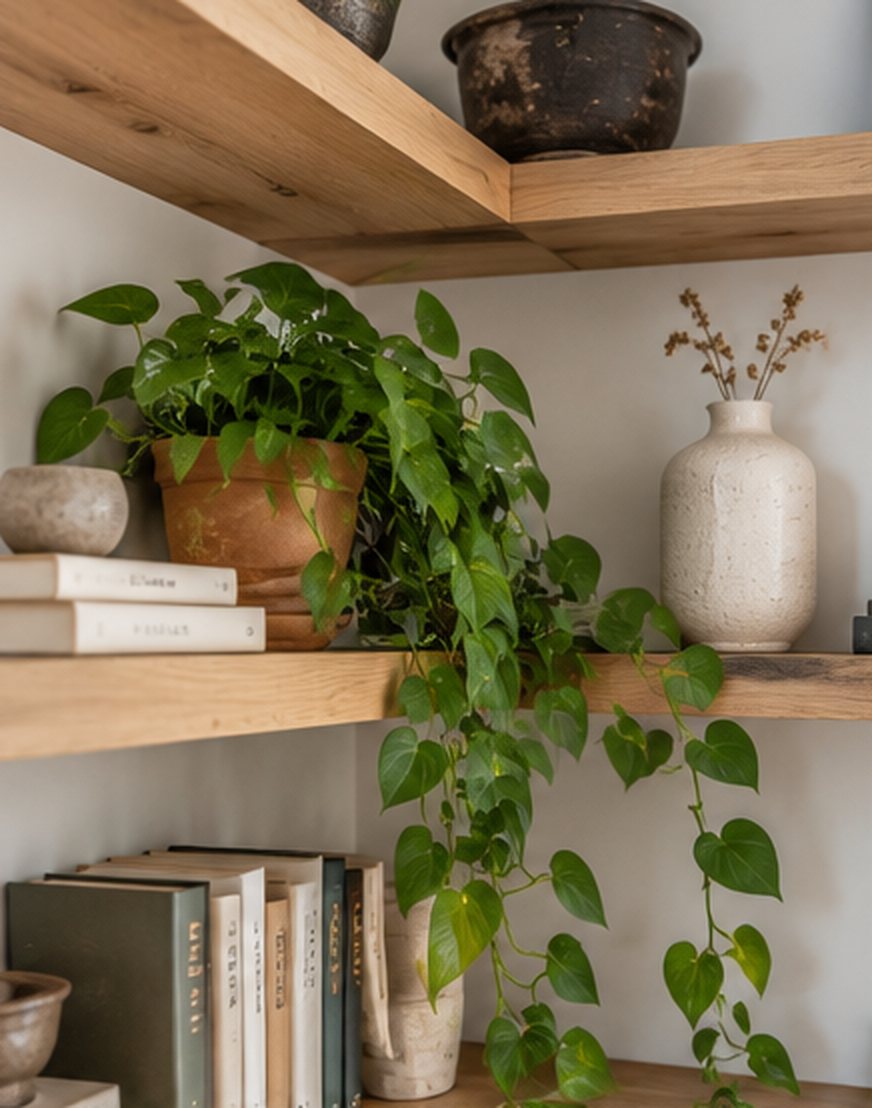
A corner of shelves can look like two separate shelving units that happen to meet. The fix is one trailing plant placed so it spills across the join.
A pothos, a string of hearts or a trailing philodendron all work. Set it on a middle shelf right beside the corner and let the vines hang down over both sides. It ties the two walls together and softens all the straight lines.
One is enough. Add two or three smaller upright plants elsewhere if you like, but keep only one trailing across the corner.
Light it from underneath
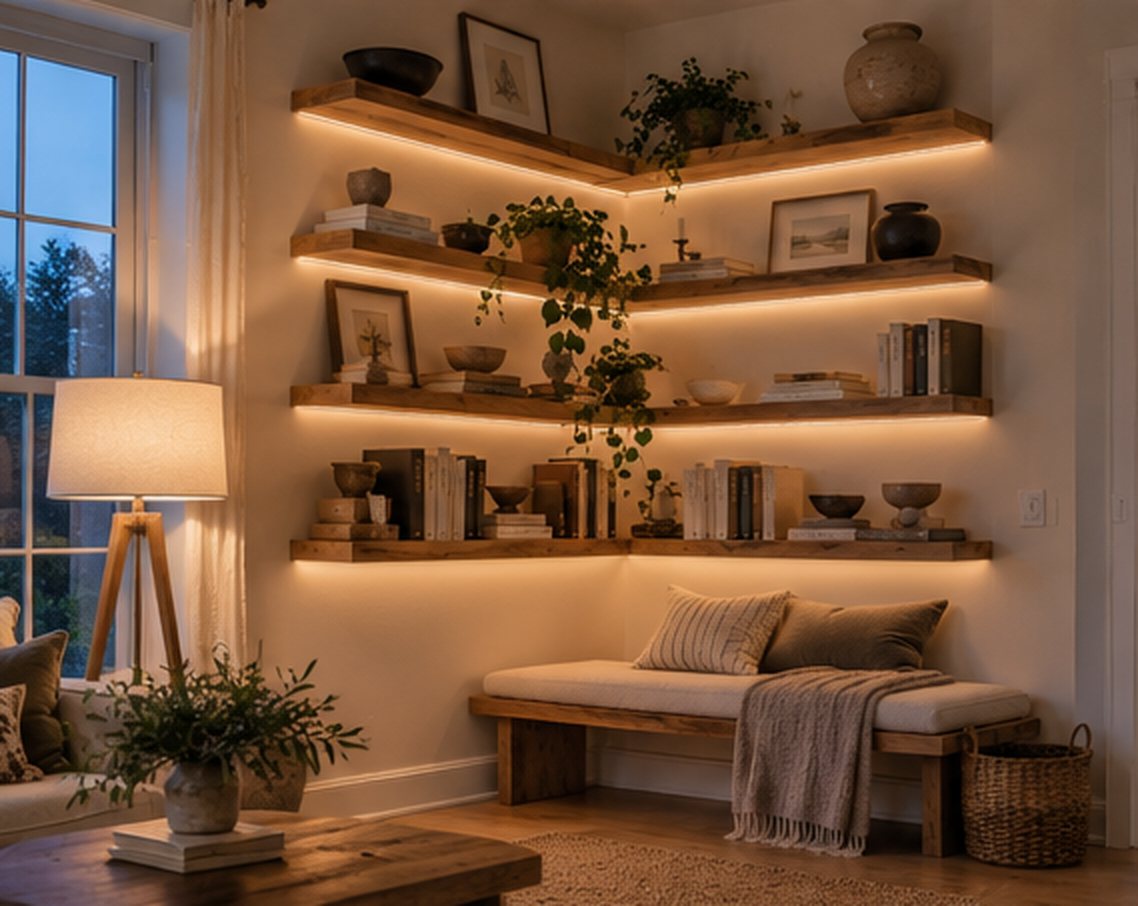
In the evening, shelves go dark and flat unless you light them. The easiest way is a warm white LED strip under the front edge of each shelf.
- Choose a warm white, around 2700K, so it matches your lamps. Cool white makes wood look grey.
- Stick the strip near the front, not the back, so the light washes down over the shelf below instead of making a hot line on the wall.
- Plan the wires first. Run them down the corner where they're least visible, or use a battery or rechargeable strip if you can't get a wire to a socket.
- Put them on a dimmer or a smart plug so they come on with the lamps.
Lit from underneath, the corner becomes a soft light source in the room, not just storage.
Put a bench underneath
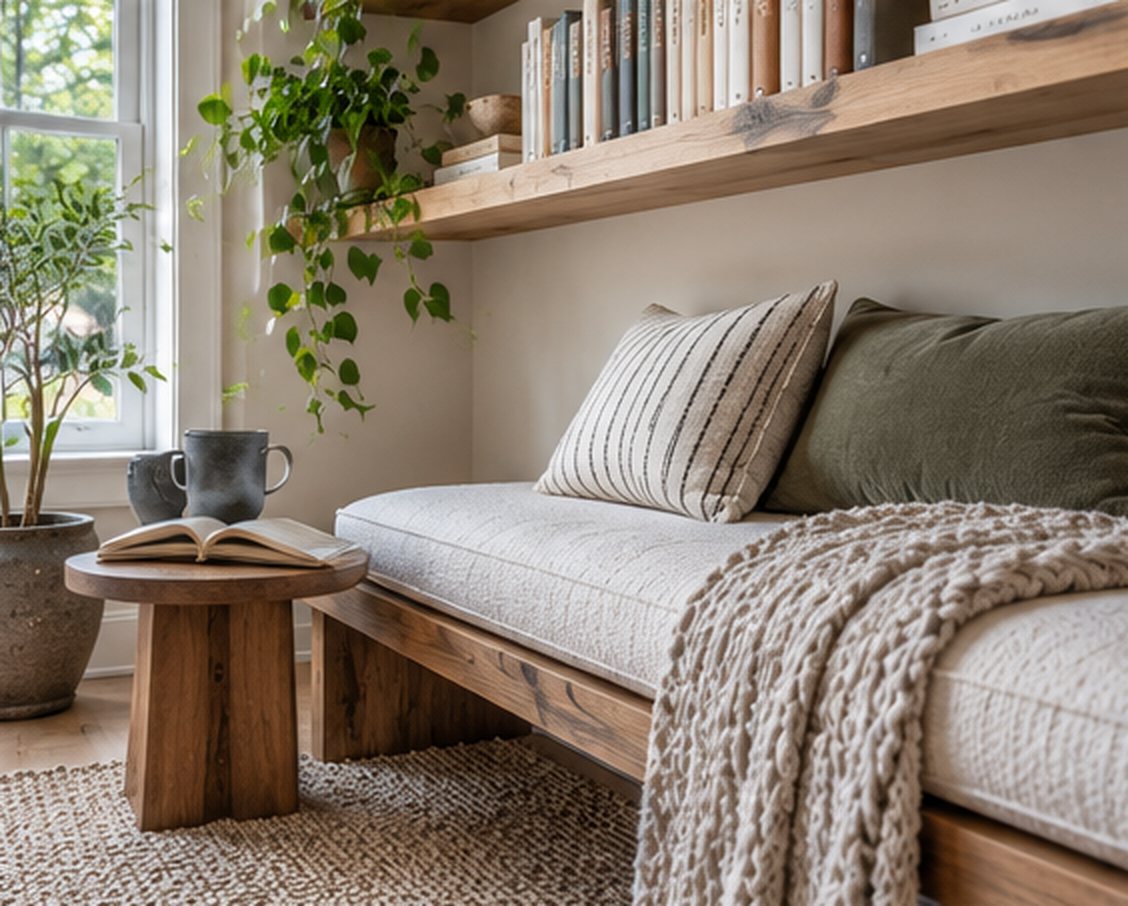
Shelves on their own are storage. Add a bench underneath and it becomes a reading corner.
- A long, low bench fits under the shelves without crowding them. Wood with a thick cushion is comfortable enough to actually sit on.
- Two pillows and a throw. One striped, one plain in a color from the shelves, like olive green.
- A small side table for a mug and whatever you're reading.
- A basket beside it for throws or the books that don't fit on the shelves.
If you don't have room for a bench, a single armchair angled into the corner does the same job.
A smaller version for bedrooms and hallways
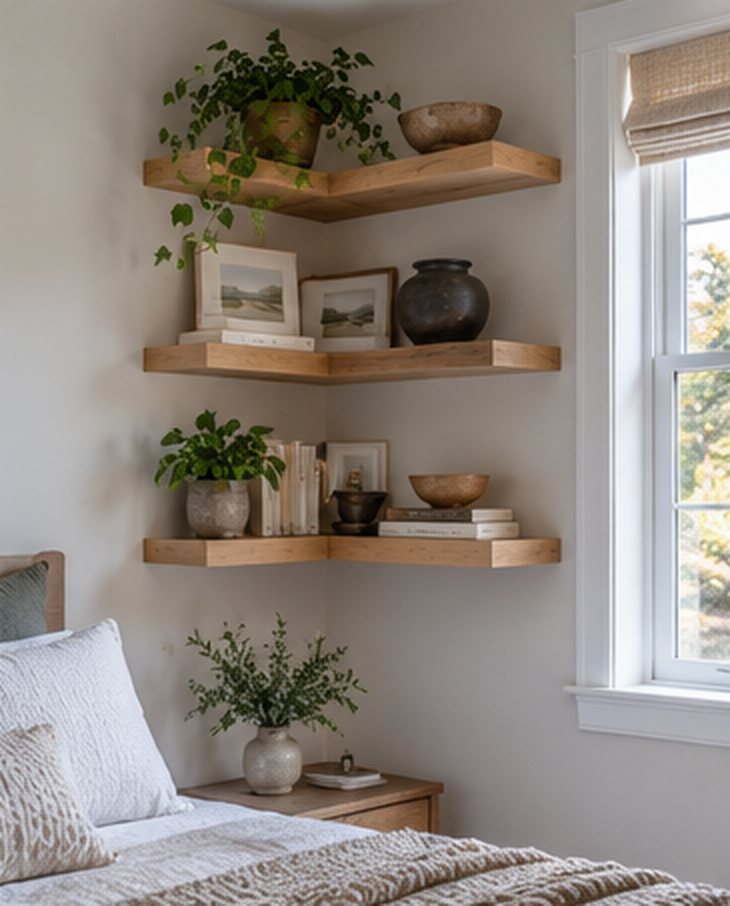
You don't need a big living room corner for this. In a bedroom, a hallway or a small office, scale it down:
- Three shorter shelves instead of five.
- The same rules: books on the bottom shelf, objects higher up, one plant on top.
- Keep it lighter. Fewer books, more empty space, so it doesn't close in the room.
Corner shelves by a bed make a good alternative to a nightstand if the room is tight.
Mistakes to avoid
- Filling every inch. Empty space is what makes the objects look chosen. Aim to leave a third of every shelf bare.
- Mirroring both walls. Same objects, same heights, same spacing looks stiff.
- Rainbow books all over. Group colors or stick to muted spines.
- Shelves too high. If you can't reach the books from the bench, the corner stops being useful.
- Visible brackets. Hidden floating brackets are worth it. Metal brackets under the shelves spoil the clean line.
- Thin shelves with heavy books. Check the weight rating and fix into studs or with the right wall anchors.
Corner bookshelf FAQ
How do you style corner floating shelves?
Keep books on the lower shelves and fewer objects higher up, weight the two walls unevenly so they don't mirror, leave empty space on every shelf, and let one trailing plant cross the corner.
How deep should corner floating shelves be?
Around 10 inches is enough for most books and decor. Go a little deeper, 12 inches, if you have large art books.
How far apart should floating shelves be?
Roughly 12 to 15 inches, so standard books fit upright with room above them.
Can floating shelves hold books?
Yes, if they're fixed properly. Use solid wood shelves on hidden steel brackets fixed into studs, or heavy-duty anchors rated for the weight.
How do you make a reading nook in a corner?
Wrap the corner in shelves, keep the books on the lowest shelves, and put a cushioned bench or a comfortable chair underneath with a small side table and good light.
Related reading
- The rule of three, explained
- Mixing wood tones with confidence
- A small living room that feels twice its size
- How to style a console table
Pick the corner, put up the shelves, and style them from the bottom up: books first, then objects, then the one plant that pulls it all together.