Plenty of living rooms, especially in older apartments, come with no ceiling light at all. Just a switch by the door that turns on an outlet.
That sounds like a problem. It's actually a head start. A single ceiling light is the least flattering light in a room. A room lit only by lamps looks better, as long as there are enough of them, at the right heights, in the right places.
The short answer: four lights, four heights
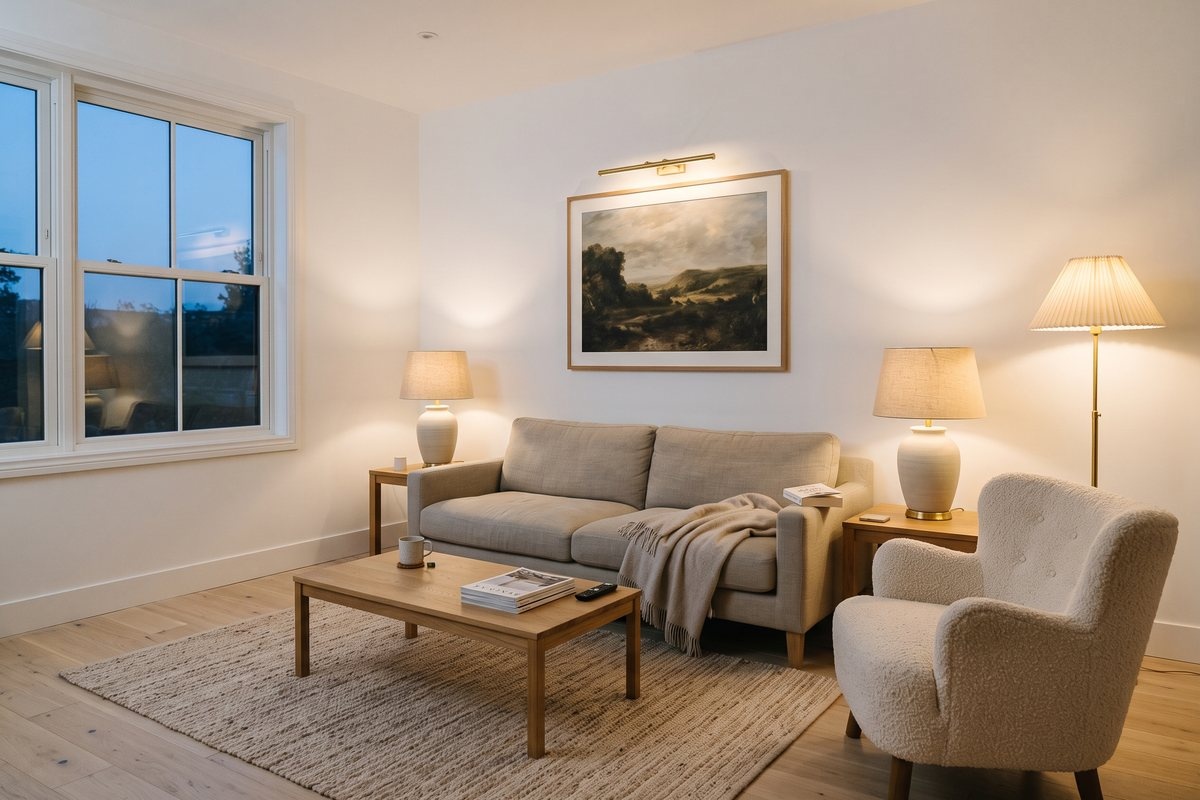
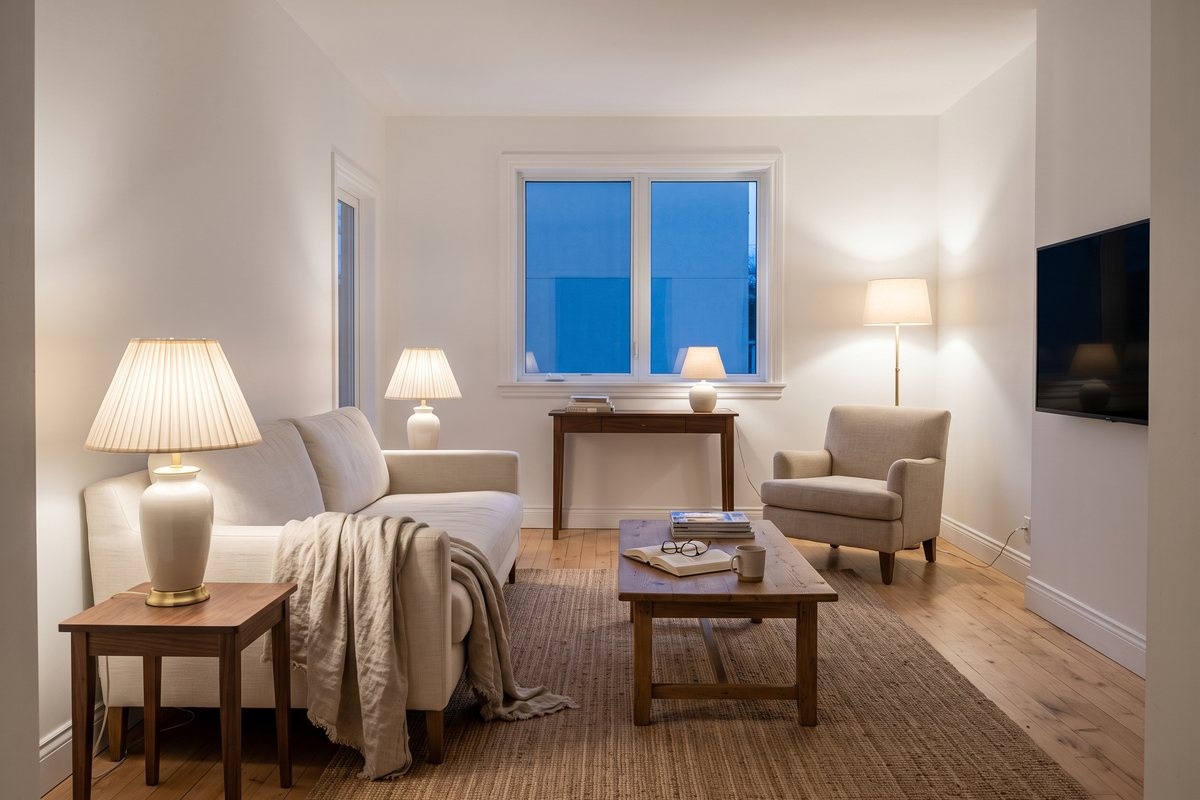
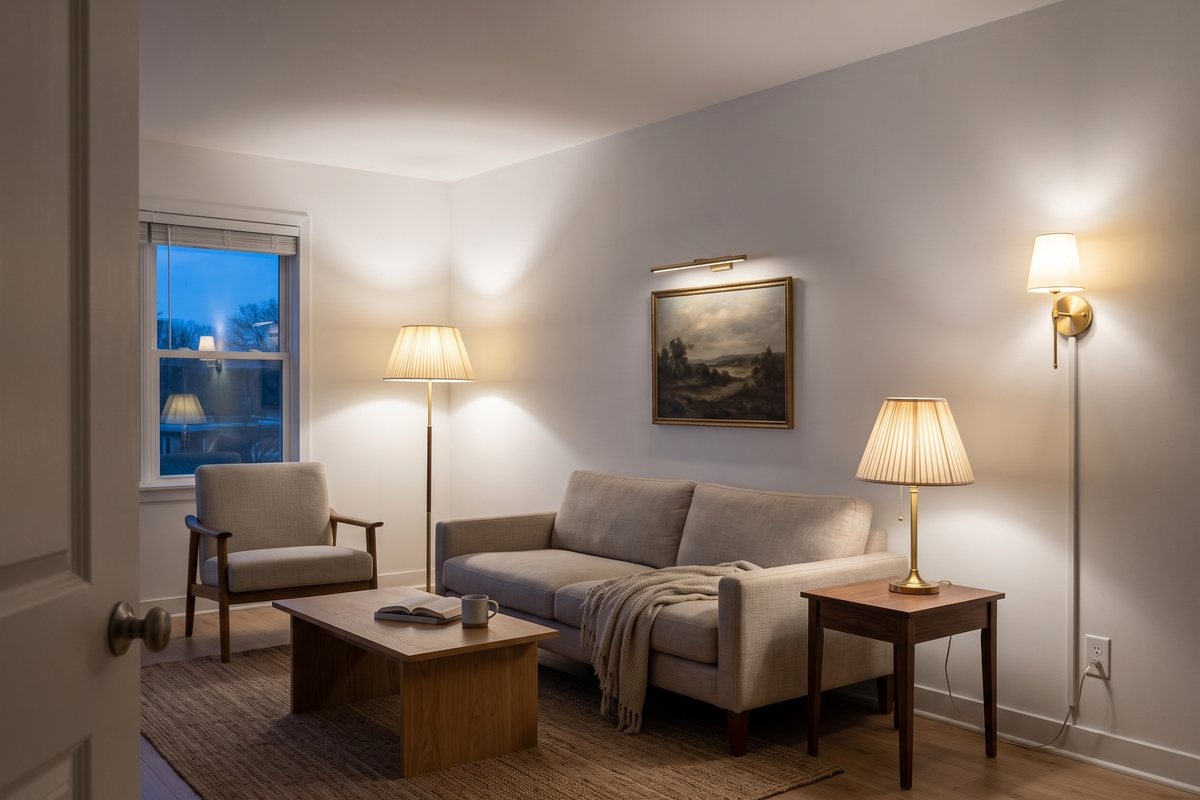
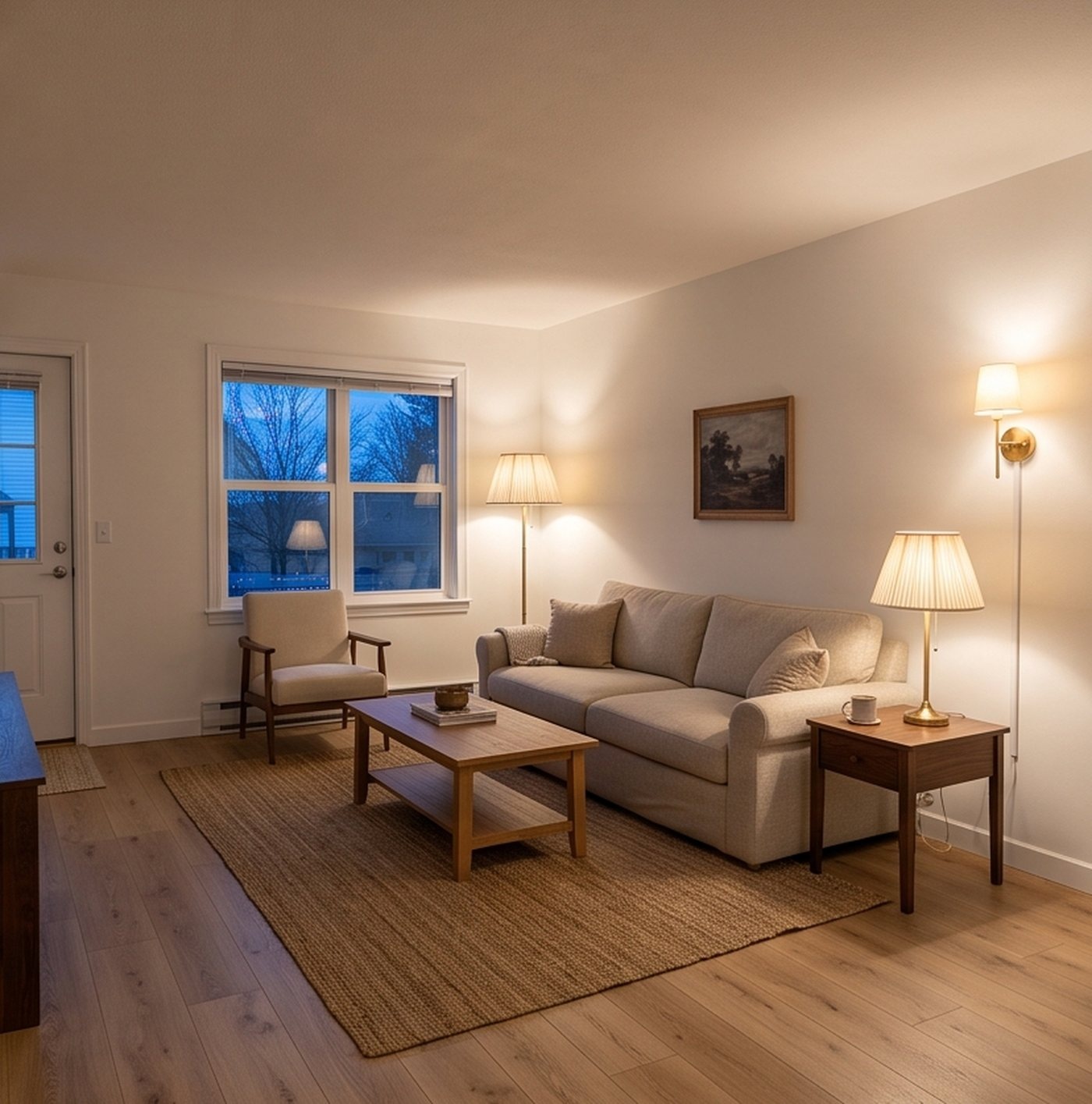
Light a living room with no overhead lighting from four separate points of light:
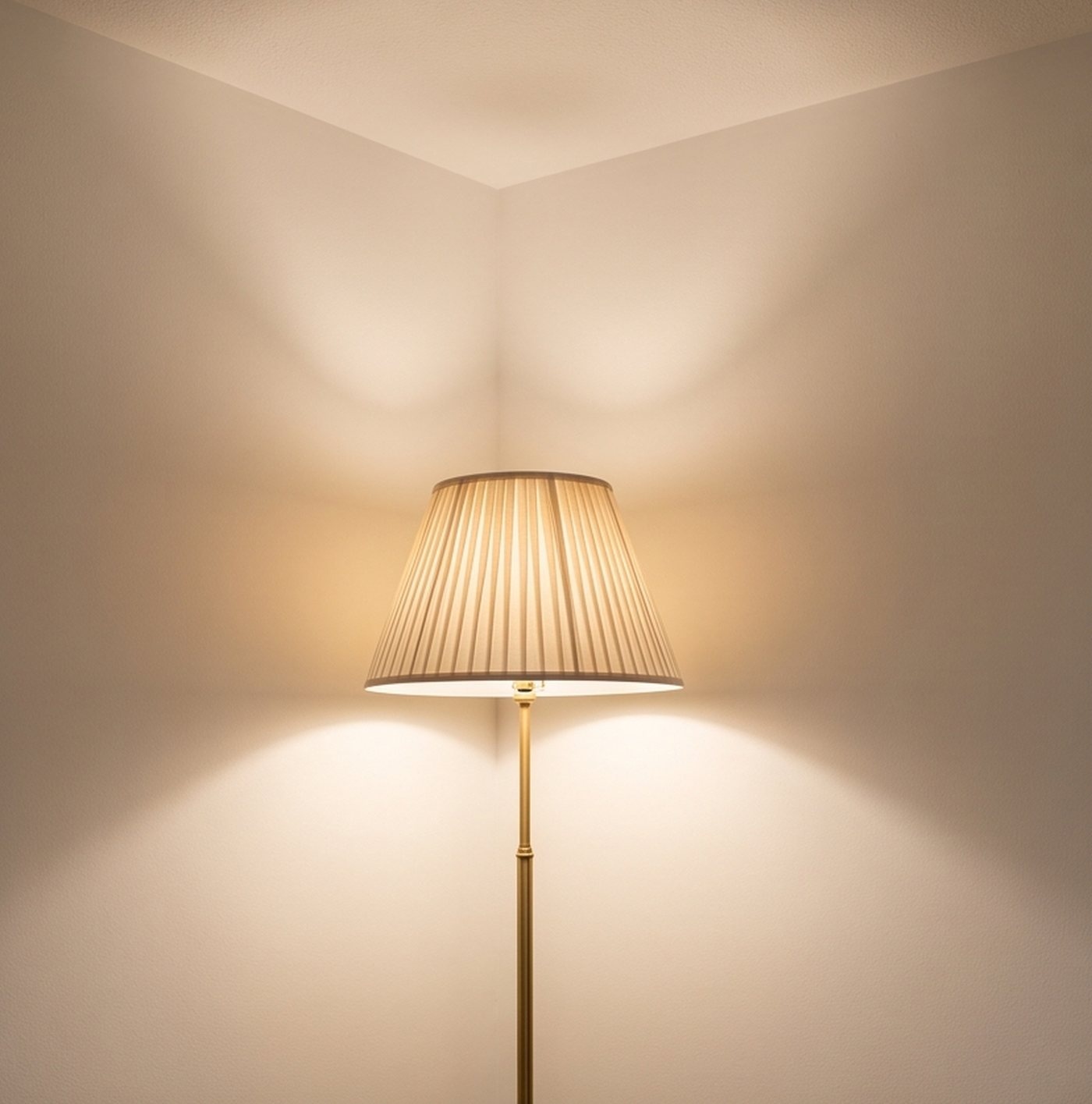
- A floor lamp that lights the ceiling. This does the job the missing ceiling light would have done.
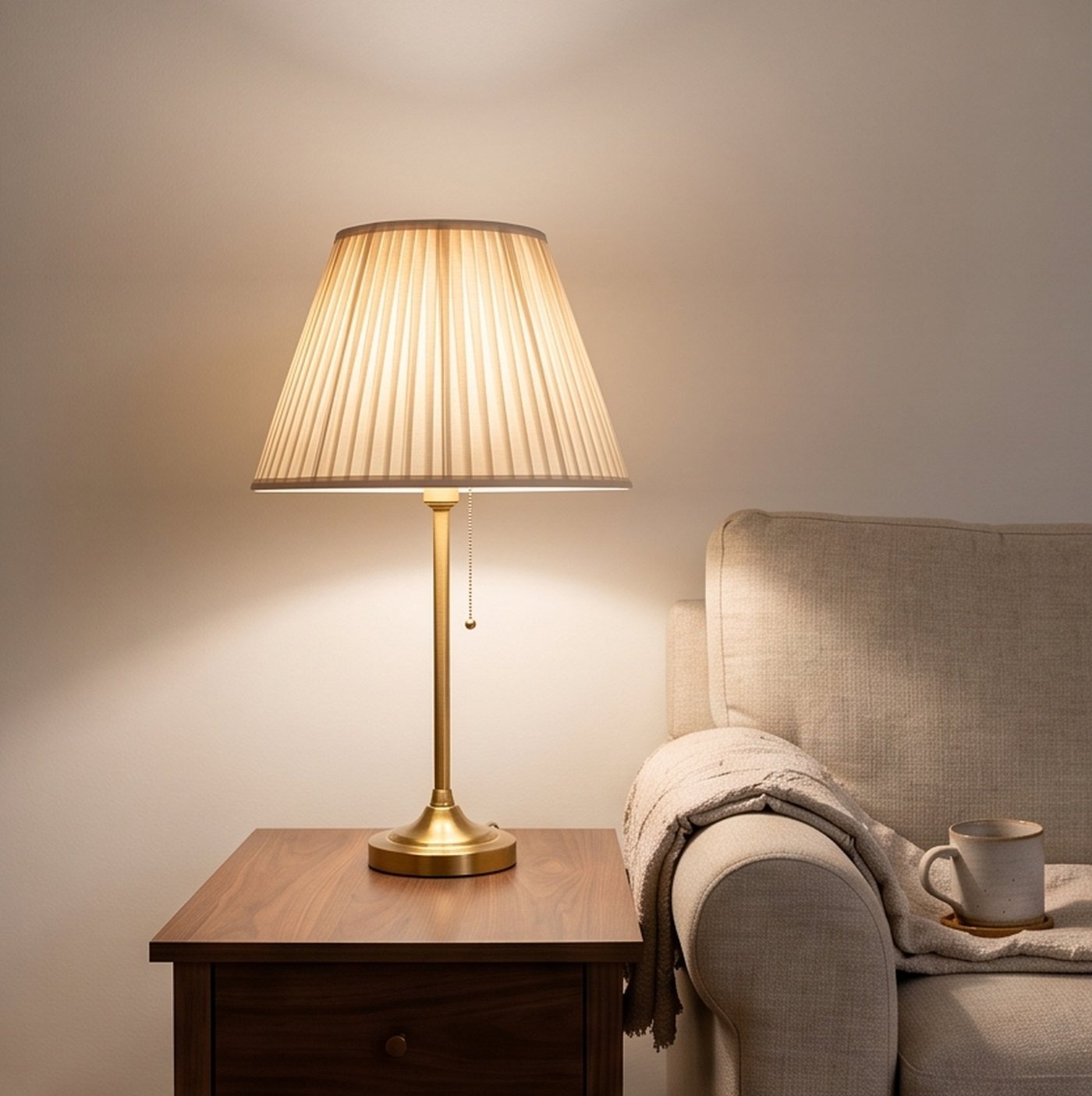
- A table lamp beside the sofa, for reading and for the warm pool of light you see when you walk in.
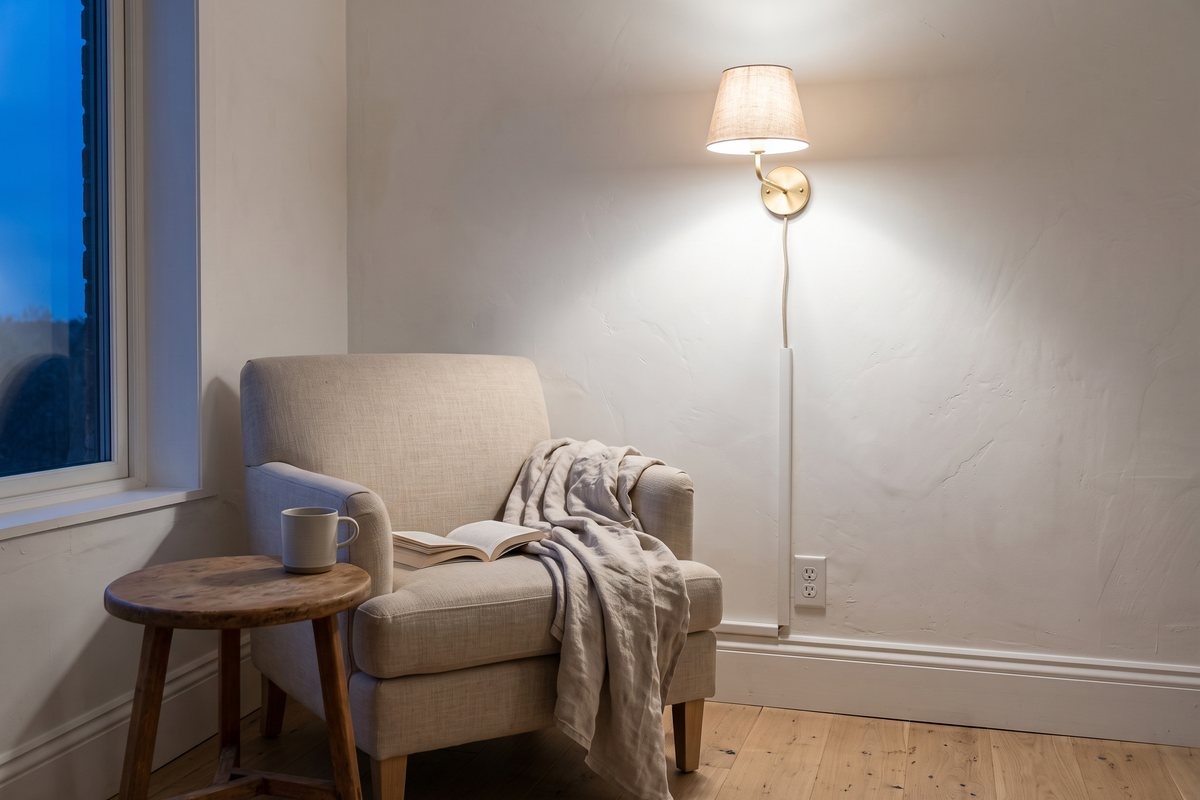
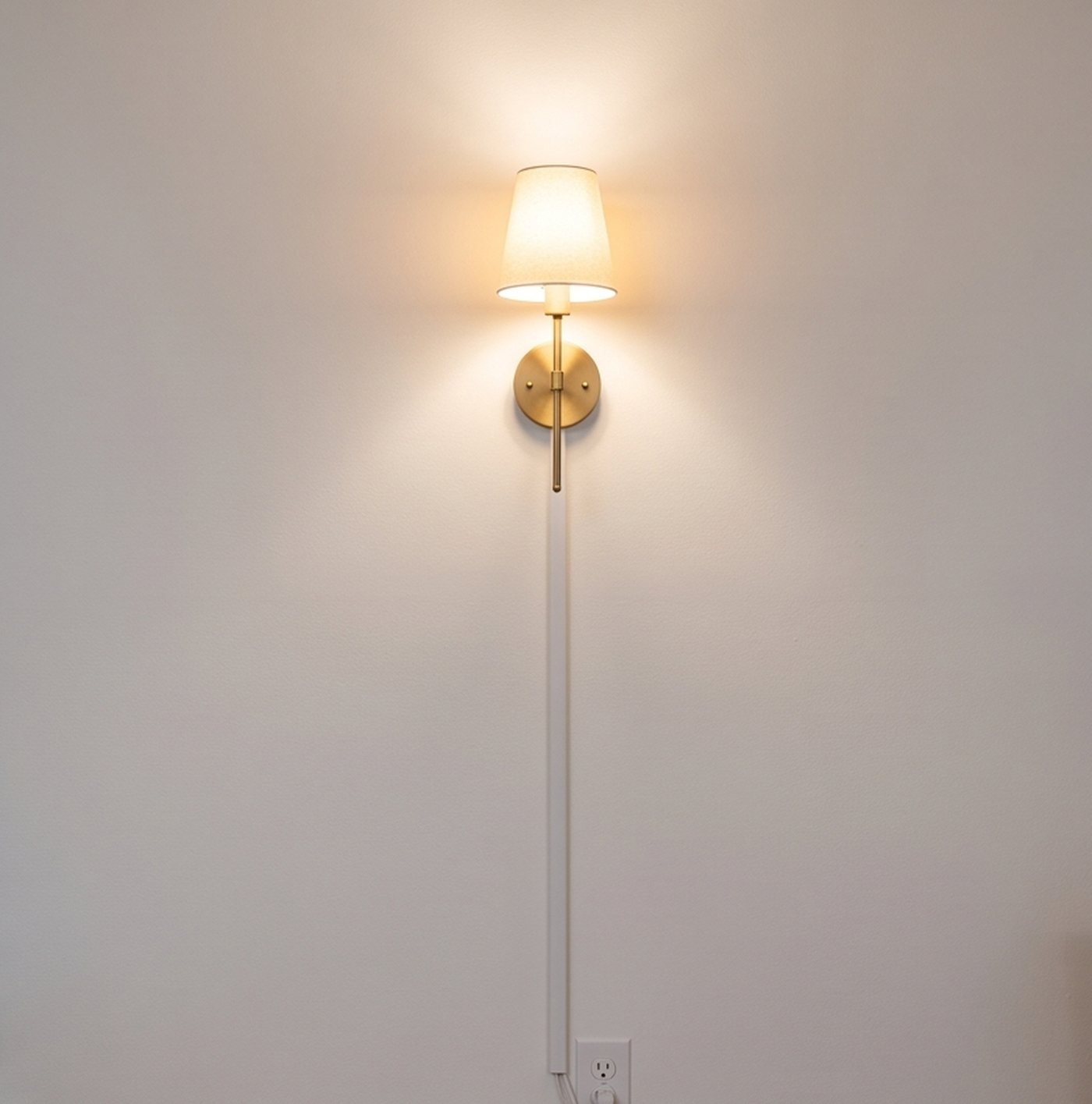
- A wall light, a plug-in sconce, at eye level or above.
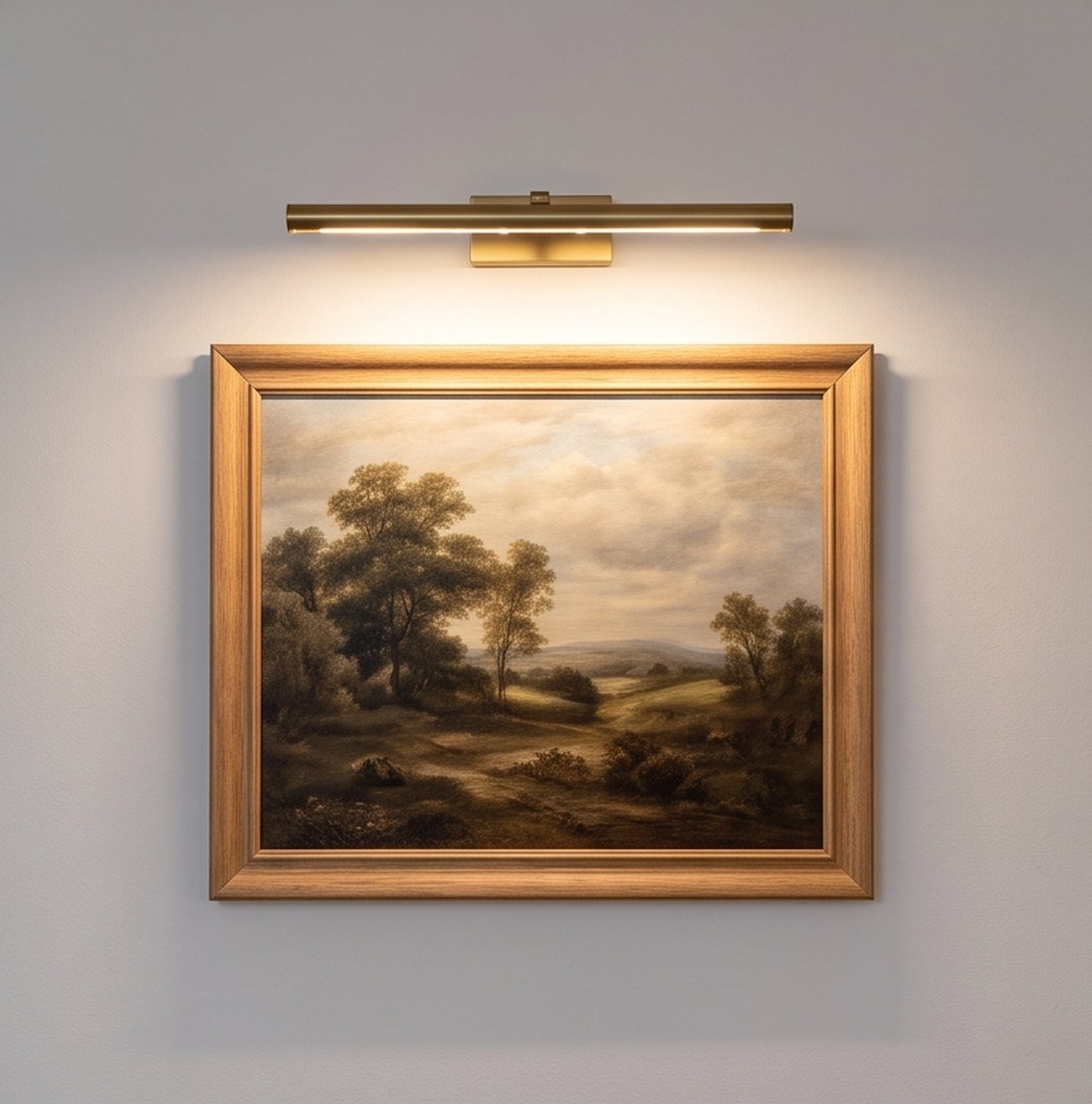
- A small accent light: a picture light over art or a little lamp on a shelf.
One low, one at eye level, one high and one small. Light at different heights is what makes a room feel finished instead of just lit.
Start with the floor lamp
Put a tall floor lamp in a corner, ideally the corner farthest from the window. Choose one whose light goes up as well as out: an uplighter, or a shade that's open at the top. The light bounces off the ceiling and fills the room the way an overhead fixture would, without the glare.
Then the table lamp
Beside the sofa, the bottom of the shade should sit at about seated eye level, roughly 38 to 42 inches off the floor. You see the glow, not the bulb. If you can see the bare bulb from the sofa, the lamp is too tall or the shade is too short.
Add a light on the wall
A plug-in wall sconce hangs on the wall like a picture and plugs into the nearest outlet. No electrician. In a living room, hang it 66 to 72 inches off the floor and run the cord straight down inside a paintable cord cover.
Finish with something small
A battery picture light over a painting, or a small lamp on a bookshelf, gives the eye somewhere to rest. It's the light people notice last and miss most when it's gone.
Place them in a triangle
Picture your room from above and draw lines between the lamps. If they make a triangle that covers most of the room, you're there. If they all sit along one wall, the far side goes dark and the room feels smaller.
How bright, in total?
The commonly cited Illuminating Engineering Society (IES) level for a living room is 10 to 20 foot-candles. One foot-candle is one lumen per square foot, so multiply your floor area by 10 and by 20.
A 12 x 15 foot room is 180 square feet, so aim for roughly 1,800 to 3,600 lumens across all your lamps. Four lamps of 800, 800, 450 and 200 lumens give you 2,250. Every LED box lists lumens, so you can add them up before you buy.
Make it switch from the door
The hard part of a room with no ceiling light is walking in to a dark room. Two fixes:
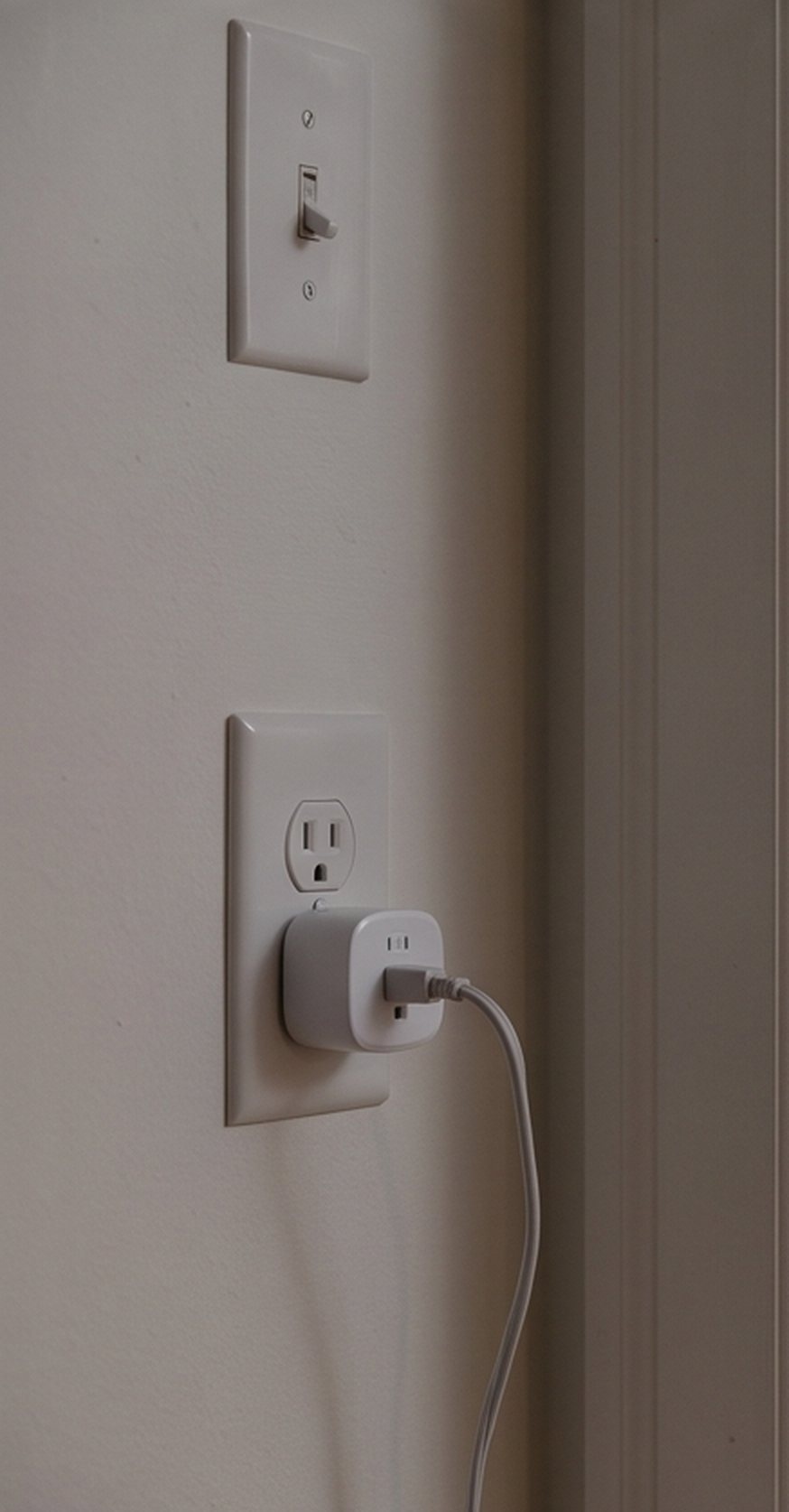
- Plug the floor lamp into the switched outlet if your room has one. In the US, a room built without a ceiling light usually has an outlet the wall switch controls instead. Flip the switch and see which lamp comes on.
- Or put it on a smart plug, set to come on at sunset, so the room is already lit when you get home.
Keep every bulb the same color
Use 2700K bulbs, labeled warm white, in every lamp in the room. Mixing a cool bulb with warm ones is the quickest way to make an evening room feel off.
Mistakes to skip
- One very bright floor lamp. The room goes from gloomy to clinical. Several smaller lights beat one big one.
- All the lamps along one wall.
- Bare bulbs at eye level. Every bulb should be behind a shade or frosted.
- Cords across the floor. Run them along the wall and behind furniture, never under a rug.
FAQ
How many lamps does a living room with no overhead lighting need? Usually three to five. Four is the sweet spot for an average living room: a floor lamp, a table lamp, a wall light and an accent.
Is there overhead lighting without wiring? Plug-in pendants and swag lights hang from a ceiling hook and plug into an outlet. They work over a dining table or in a corner, but a floor lamp aimed at the ceiling is simpler in most living rooms.
What about a large living room? Same rule, more points. Split the room into zones, and give each zone its own lamp group.
The full plan, room by room
The Lamp Plan, No. 04 in the Decorwick Measured Home Series, has this room drawn out with every lamp, its lumens and its spot, plus 13 more renter-safe room recipes at three budgets. See The Lamp Plan