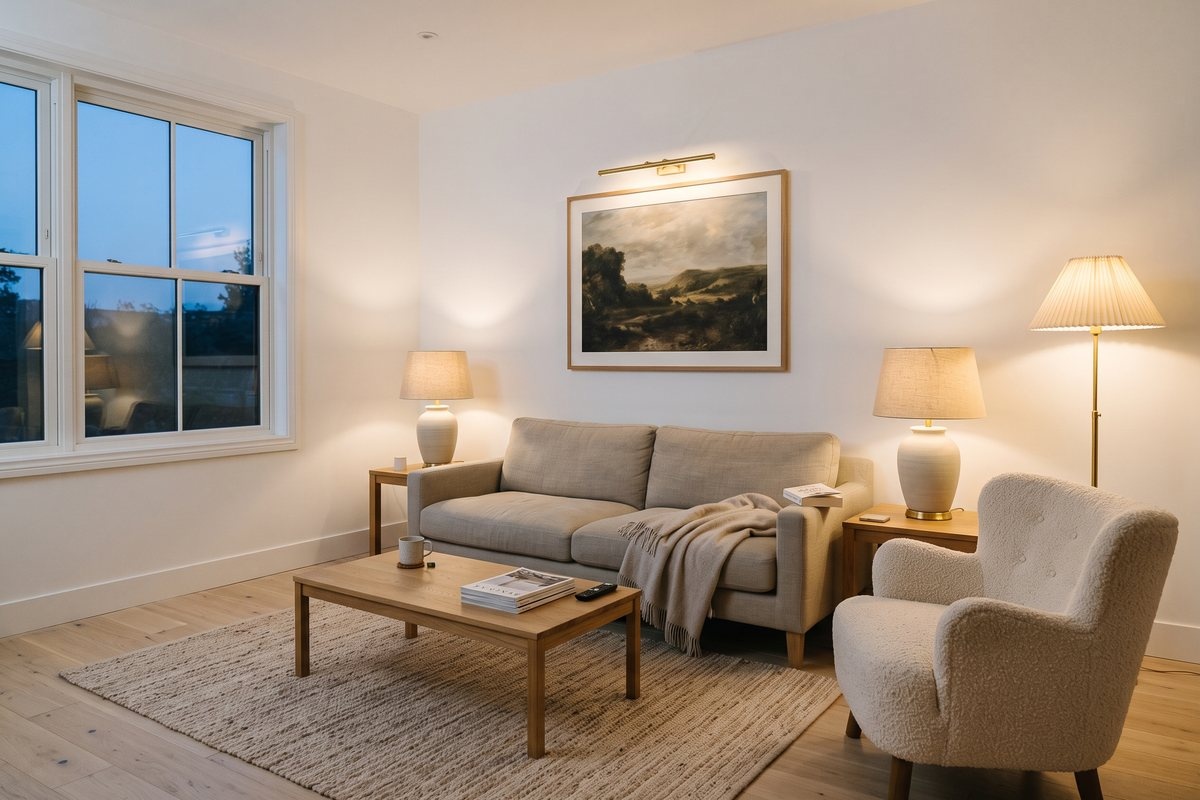
A north-facing living room gets no direct sun. The light that comes in is soft but cool and a little blue, and on a gray winter day the room can feel dim by lunchtime.
(In the Southern Hemisphere, it's the south-facing rooms that work this way.)
You can't add sun. You can add the right light in the right places, and help the daylight you do get go further.
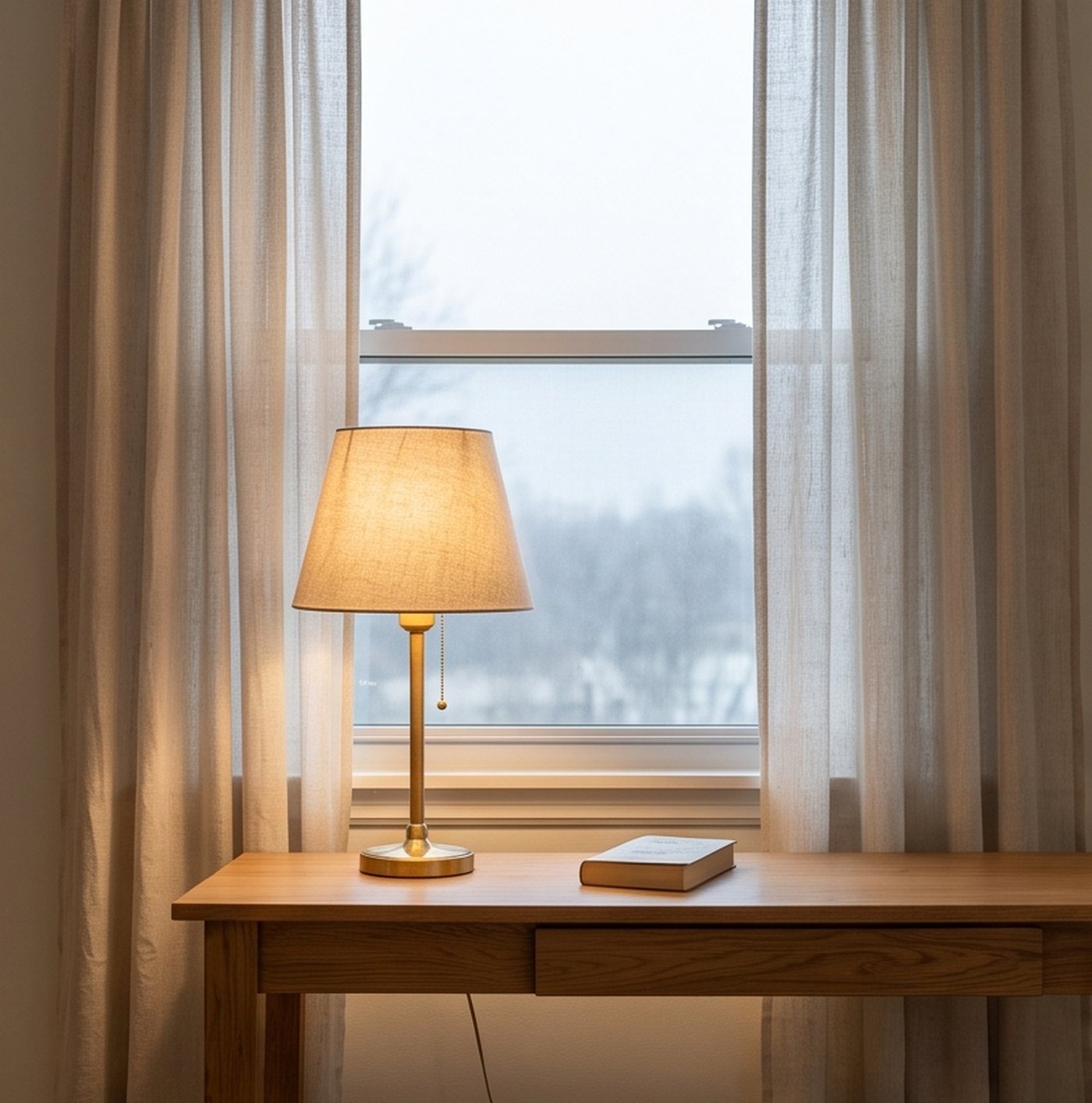
Put a lamp by the window
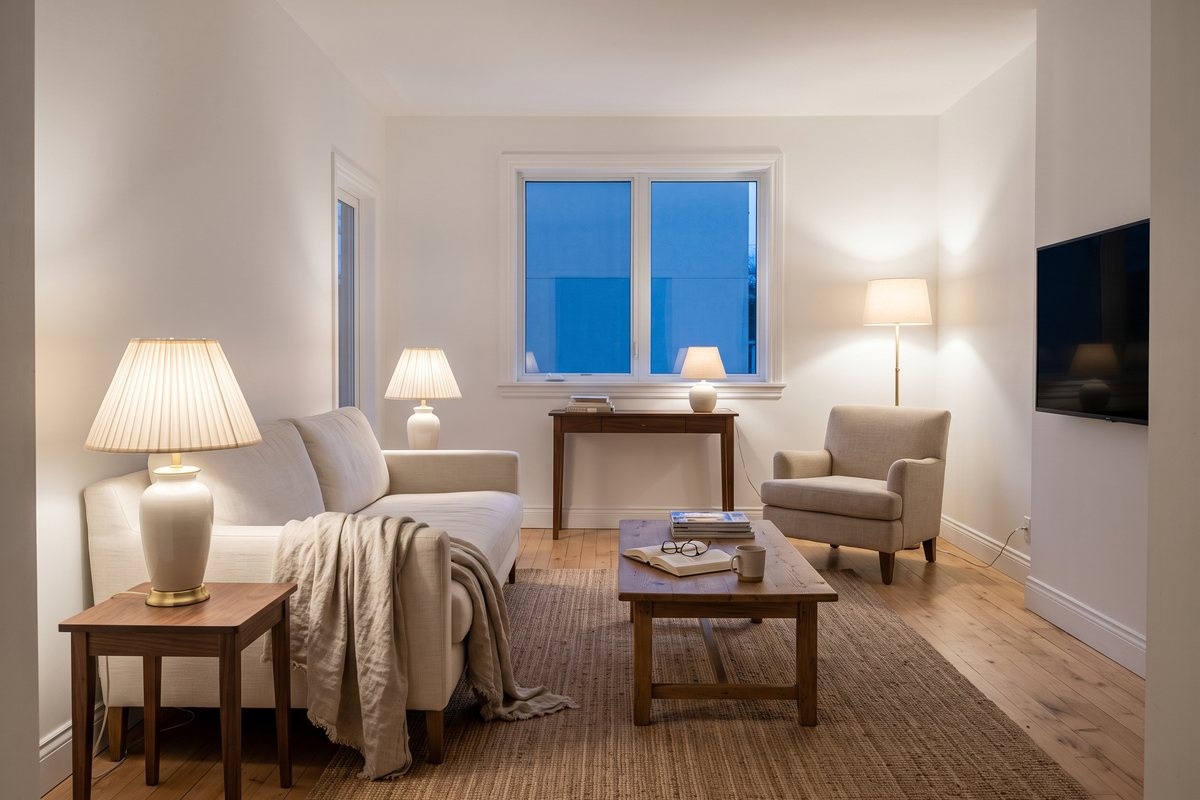
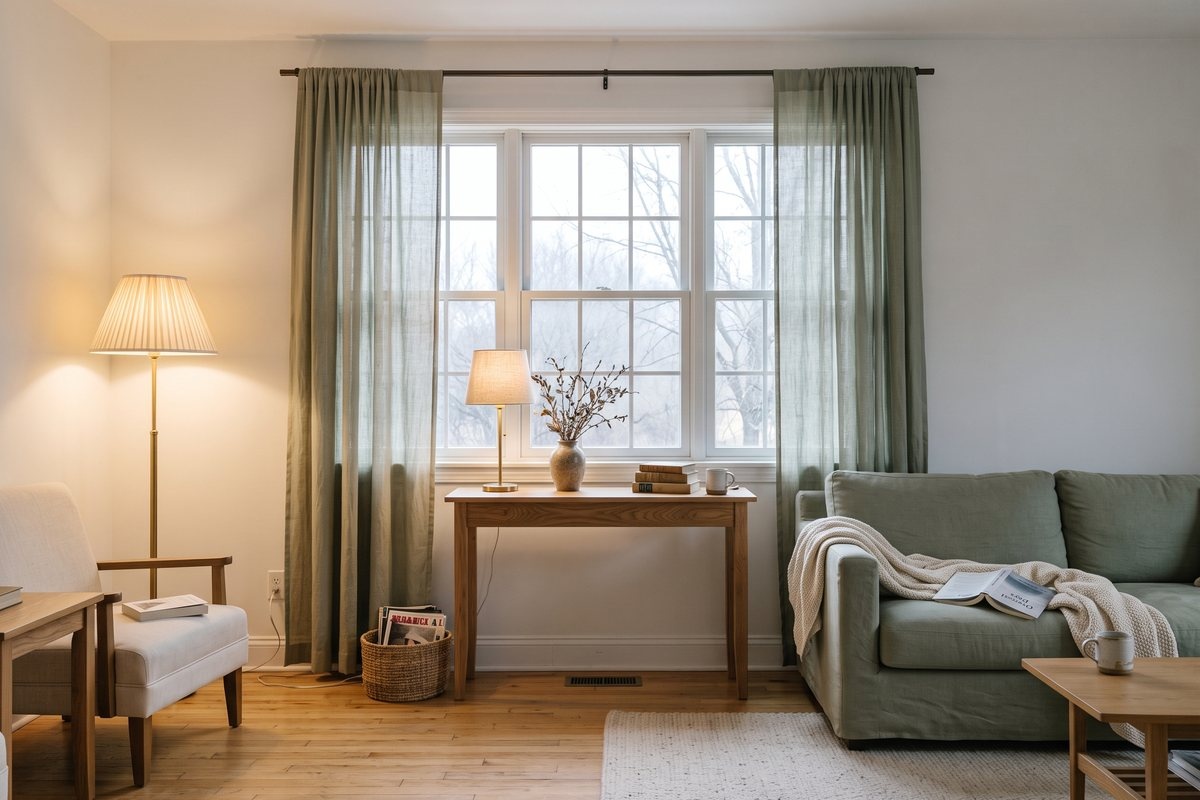
This sounds backward, but it's the trick that makes the biggest difference. A small lamp on a console or the sill under the window balances the cold light coming in, so the room doesn't have a dim blue end and a warm lamp-lit end.
And one in the far corner
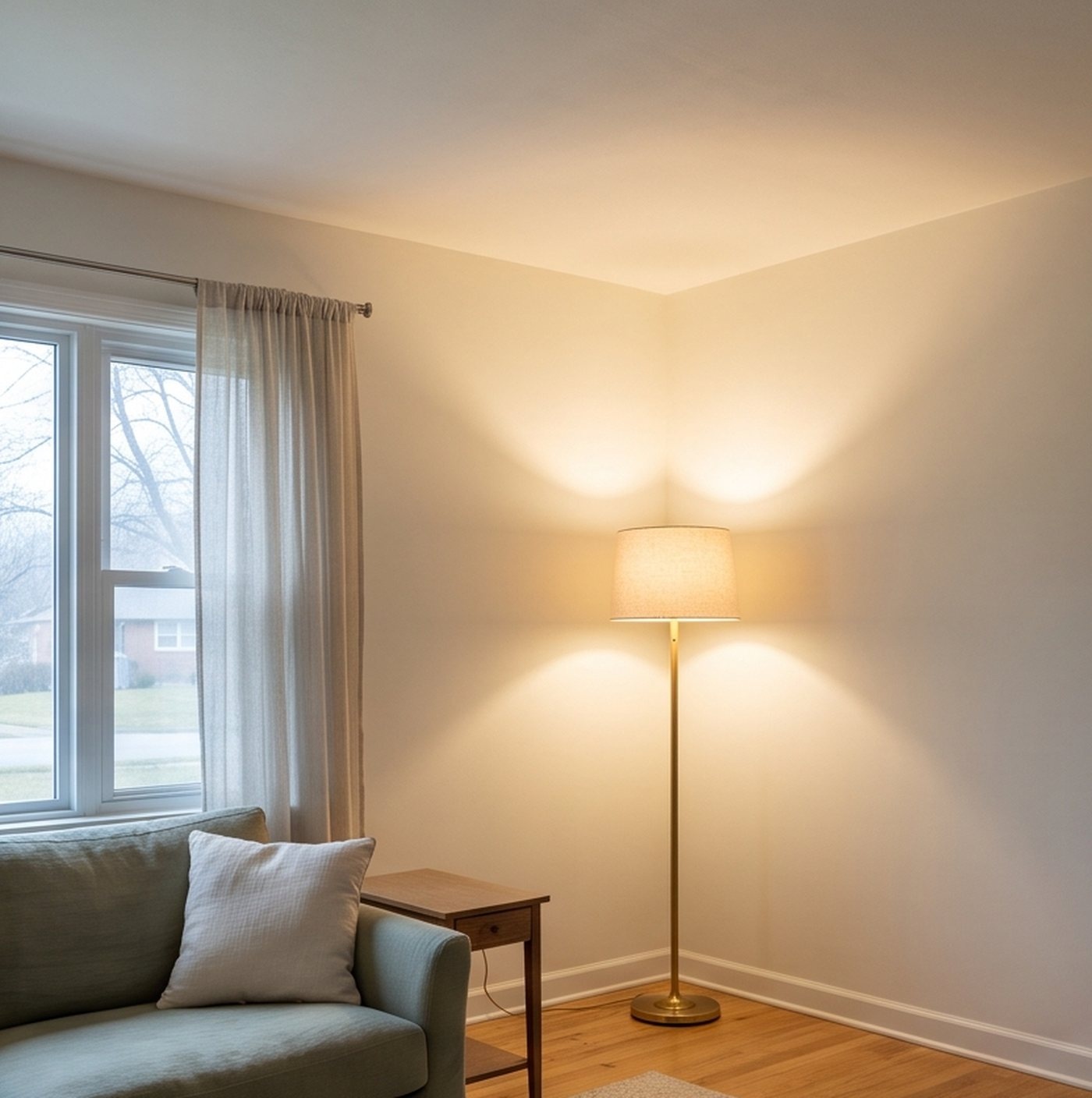
Then put a floor lamp in the corner farthest from the window, ideally one that throws light up onto the ceiling. Now light comes from both ends of the room.
Aim for the top of the lumen range
Living rooms are usually lit to 10 to 20 foot-candles, or 10 to 20 lumens per square foot. In a north-facing or dark room, aim for the top.
A 12 x 16 foot room is 192 square feet, so the target is about 1,920 to 3,840 lumens. In a dark room, plan for 3,000 or more across your lamps.
Switch lamps on in the afternoon
In winter, a north-facing room needs lamps long before sunset. Put them on a smart plug with a schedule, or a sunset trigger set to start early, so the room never slides into gloom while you're in it.
Warm bulbs, all the same
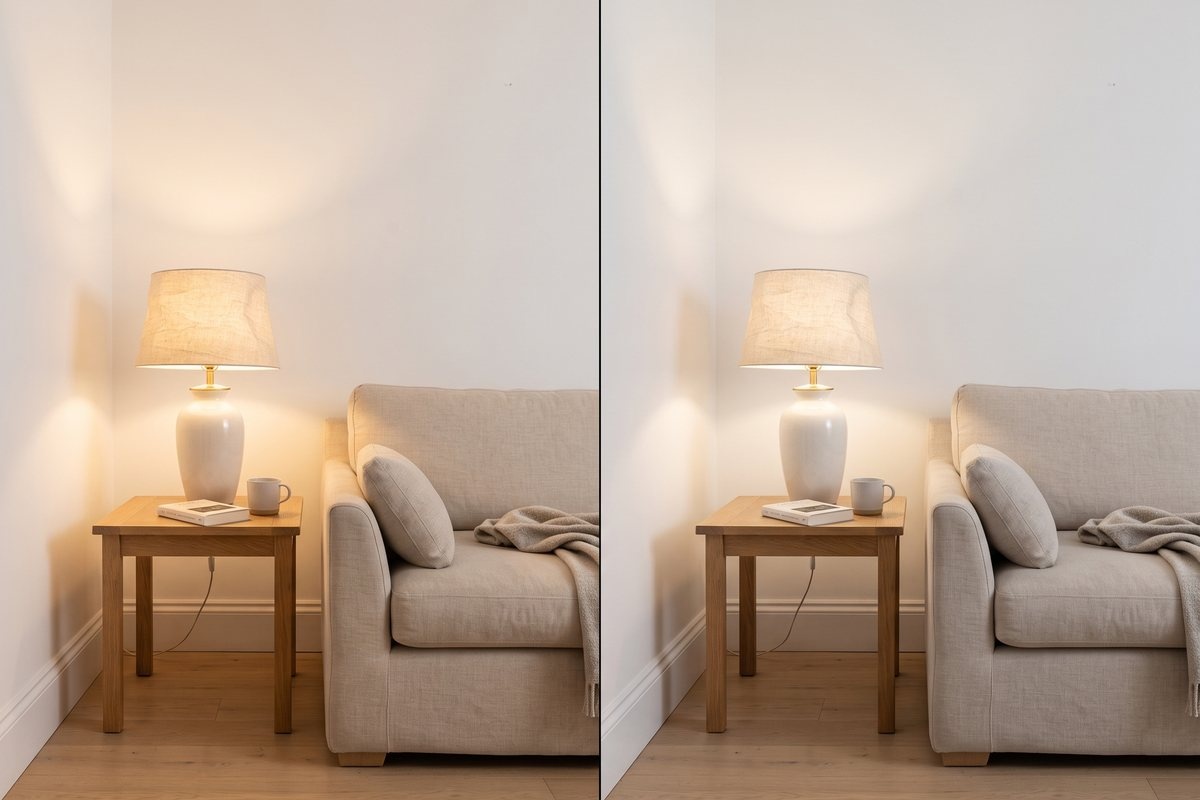
Use 2700K in every lamp, CRI 90 or higher. Cool daylight bulbs make a north-facing room feel even colder.
Help the daylight go further
Lighting does most of the work, but these help:
- Paint: a light color with a high light reflectance value (LRV) bounces more light. Warm whites and soft creams usually feel better in north light than stark cool whites.
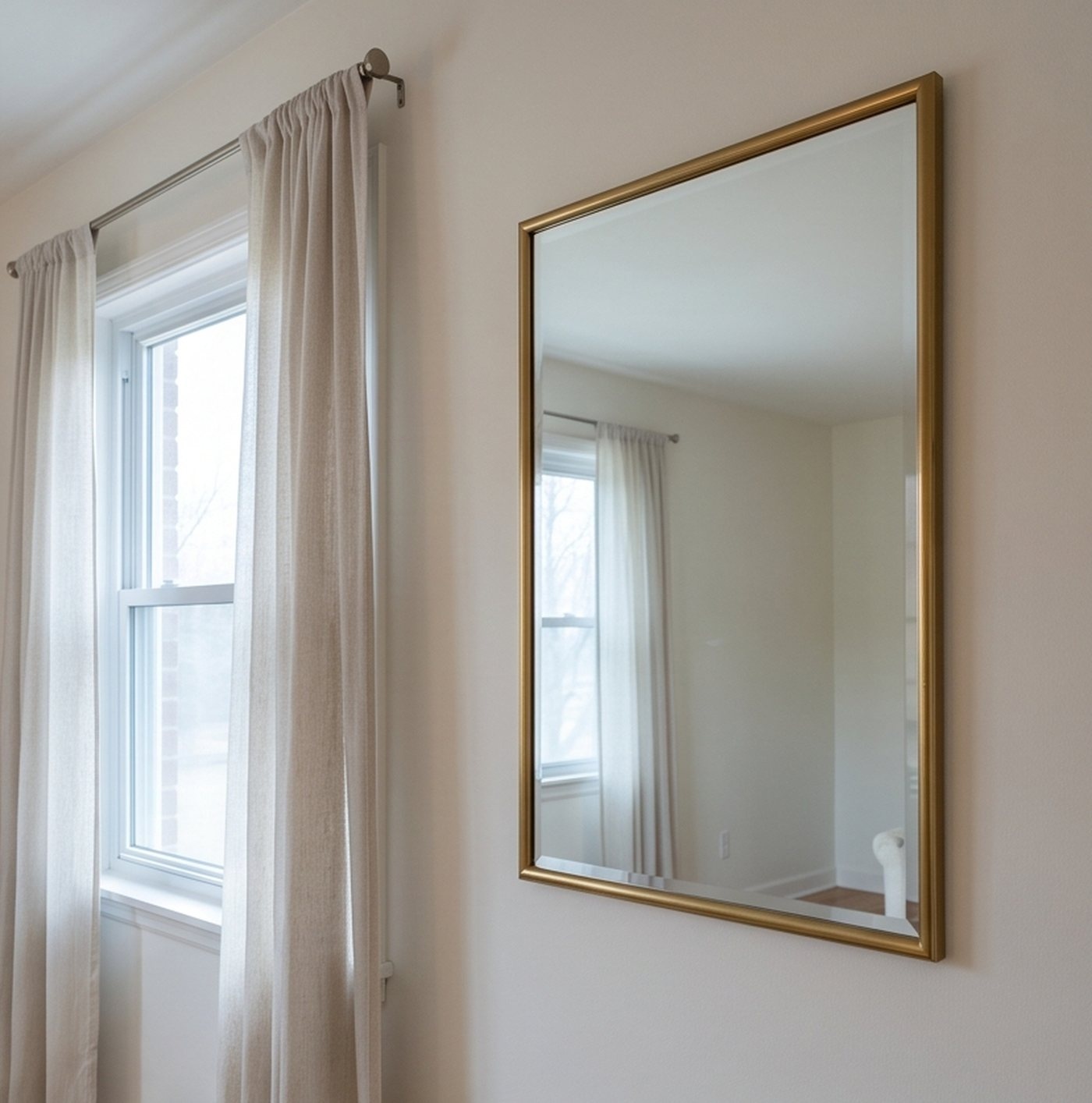
- A mirror on a wall beside the window, angled to catch the light and throw it into the room.
- Sheer curtains, pulled fully clear of the glass in the day.
- A light rug over a dark floor.
- Nothing on the windowsill blocking the bottom of the glass.
How to make a dark room brighter without windows
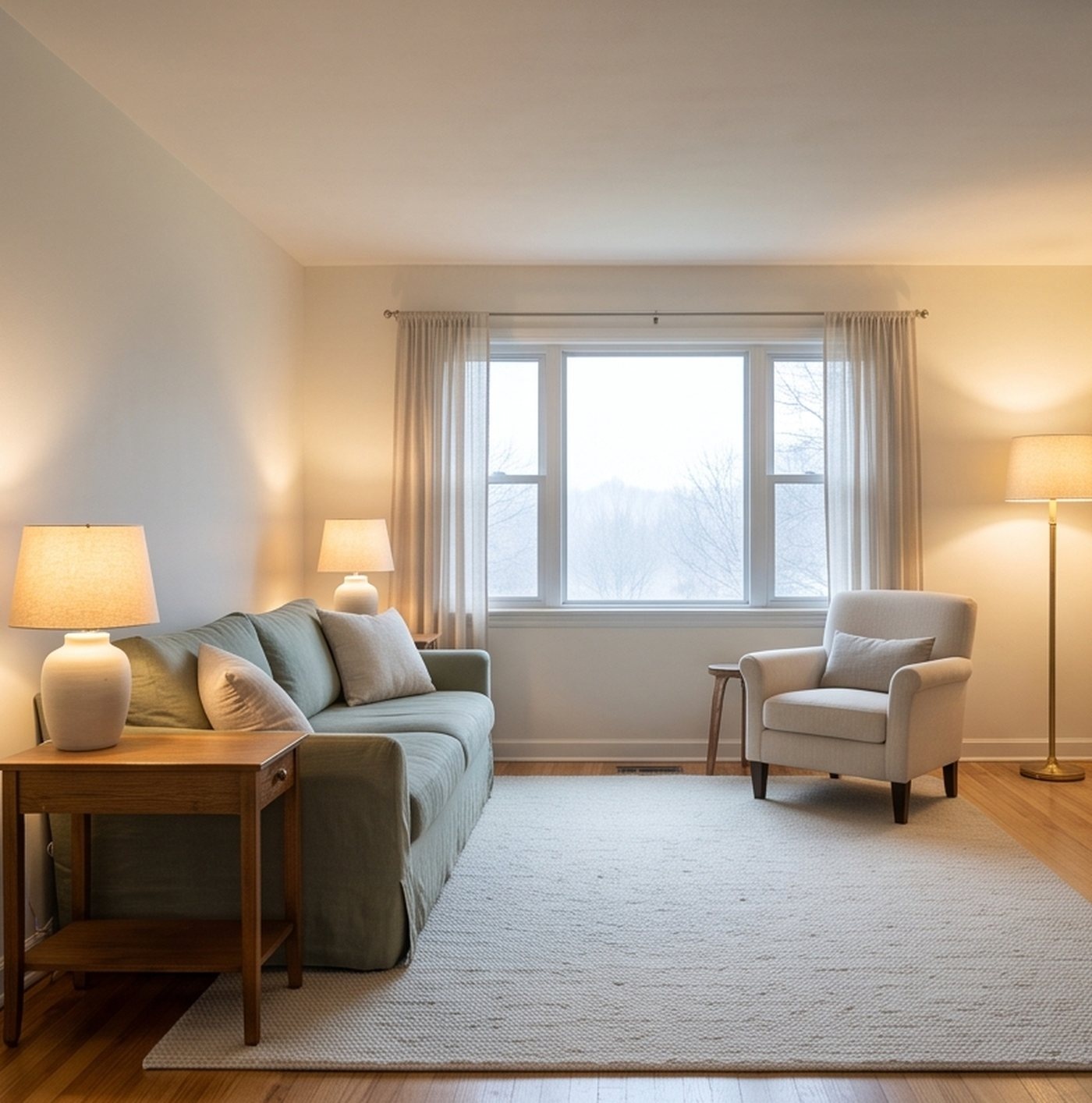
With no daylight at all, every bit of brightness comes from lamps. Use the full lumen range, more points of light than usual (four or five), light-colored walls, and lamps that light the walls and ceiling as well as the furniture.
Mistakes to skip
- One very bright daylight bulb. It makes the room colder, not brighter.
- Leaving the window end unlit.
- Heavy curtains half covering the glass all day.
FAQ
What color makes a north-facing room brighter? Light colors with a high light reflectance value, usually warm whites or soft neutrals. Test a sample on the wall and look at it on a gray afternoon.
How do you get more light into a north-facing room? Keep the window clear, use sheer curtains, a mirror beside the window and pale surfaces. Then add lamps, including one at the window.
What bulbs are best for a dark room? Warm white 2700K, CRI 90 or higher, and enough of them to reach the top of the lumen range.
The north-facing room, planned
The Lamp Plan, No. 04 in the Decorwick Measured Home Series, has the north-facing living room as a full recipe, with every lamp's lumens and spot, at three budgets, plus timers for 4 pm sunsets. See The Lamp Plan