Bulb boxes stopped talking about watts years ago. Now they say lumens, and nobody tells you how many you need.
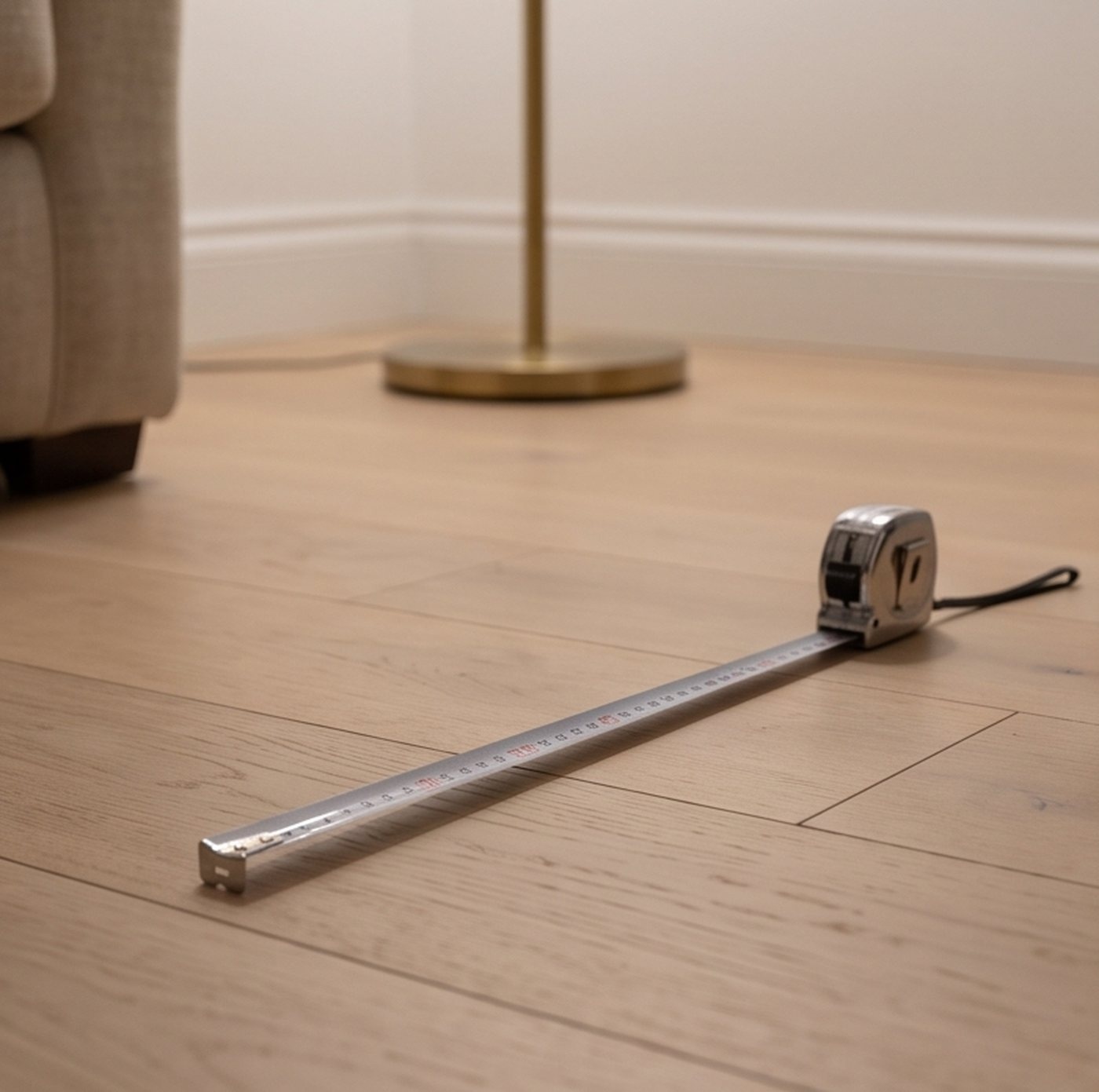
Here's the sum. It takes one minute and a tape measure.
Lumens = square feet x 10 to 20
Lighting standards measure light in foot-candles. One foot-candle is one lumen falling on one square foot. The level commonly recommended for a living room, from the Illuminating Engineering Society (IES), is 10 to 20 foot-candles.
So:
- Measure the room. Length x width = square feet.
- Multiply by 10 for the low end and by 20 for the high end.
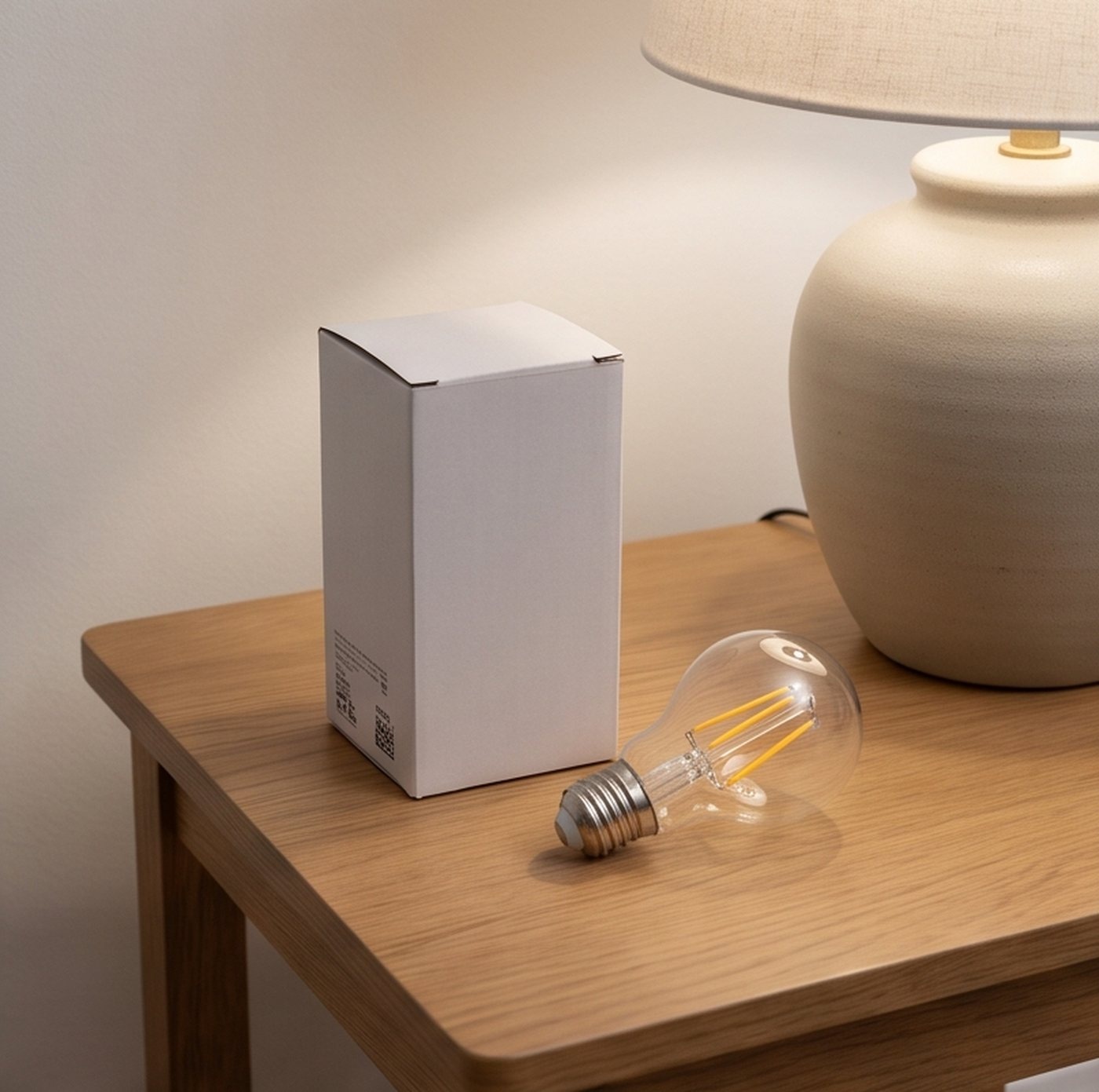
- Add up the lumens of every lamp you plan to use. Land somewhere in between.
One room, worked through
Say your living room is 12 x 15 feet.
- 12 x 15 = 180 square feet.
- 180 x 10 = 1,800. 180 x 20 = 3,600.
- So your lamps should add up to about 1,800 to 3,600 lumens.
Aim for the middle, or higher in a dark room
Shades, dark walls and tall ceilings swallow some light. In a north-facing room, a room with dark paint, or a ceiling over 9 feet, aim for the top of the range.
Split it across lamps, not one bulb
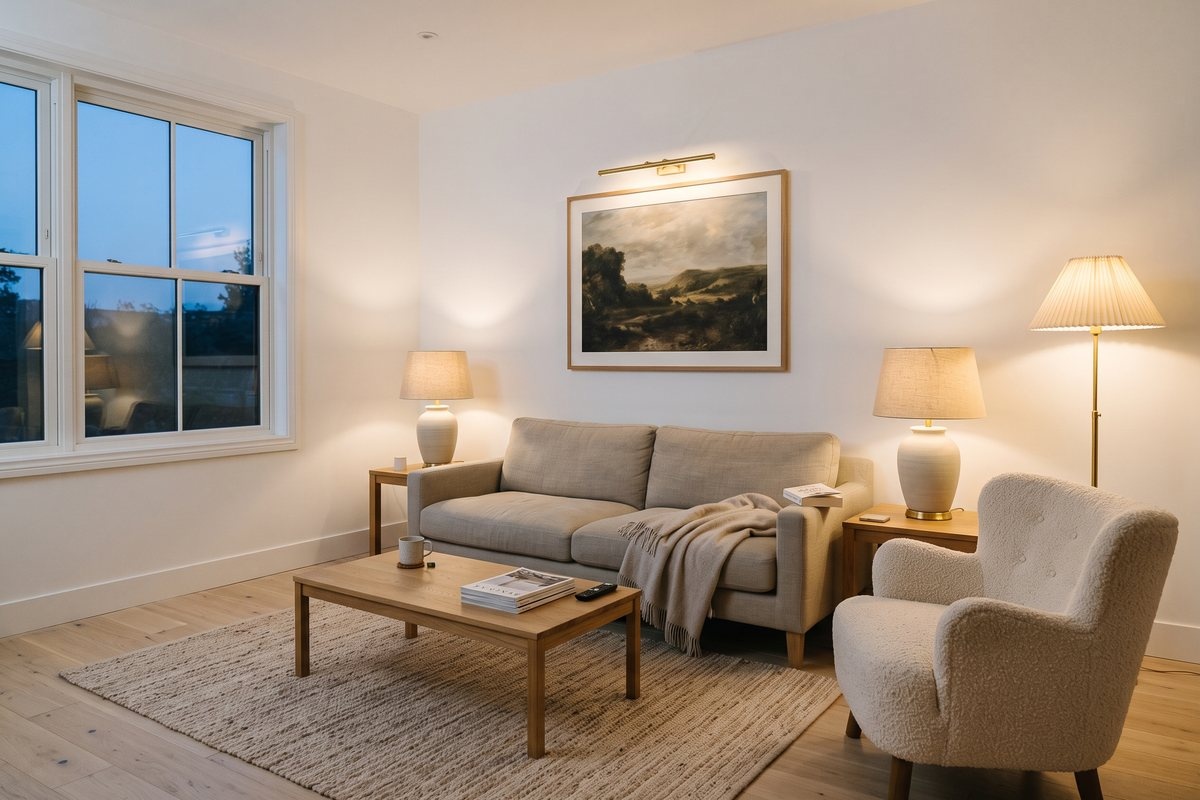
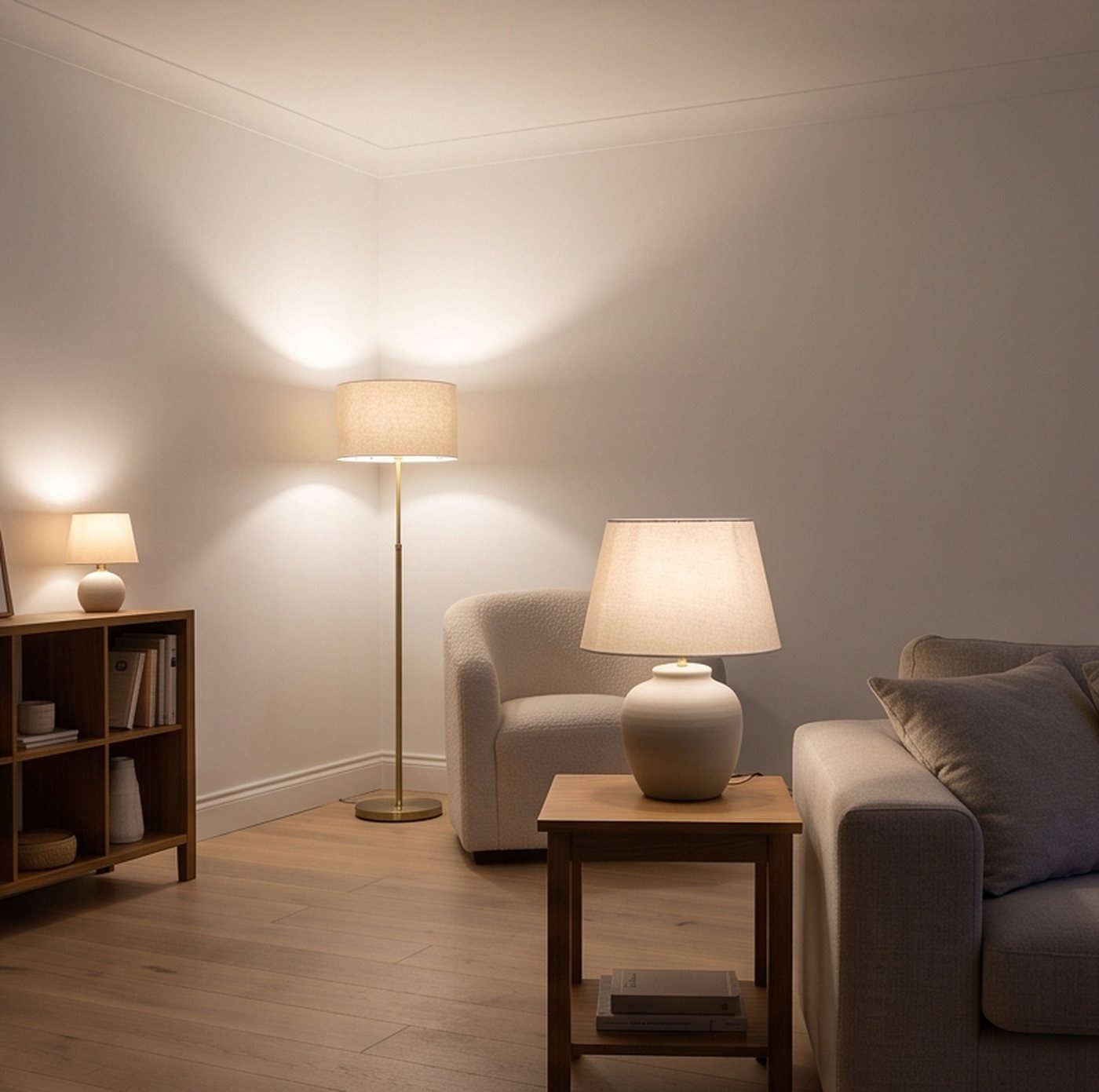
3,000 lumens from one floor lamp is glare. The same 3,000 from four lamps is a living room. A rough split that works:
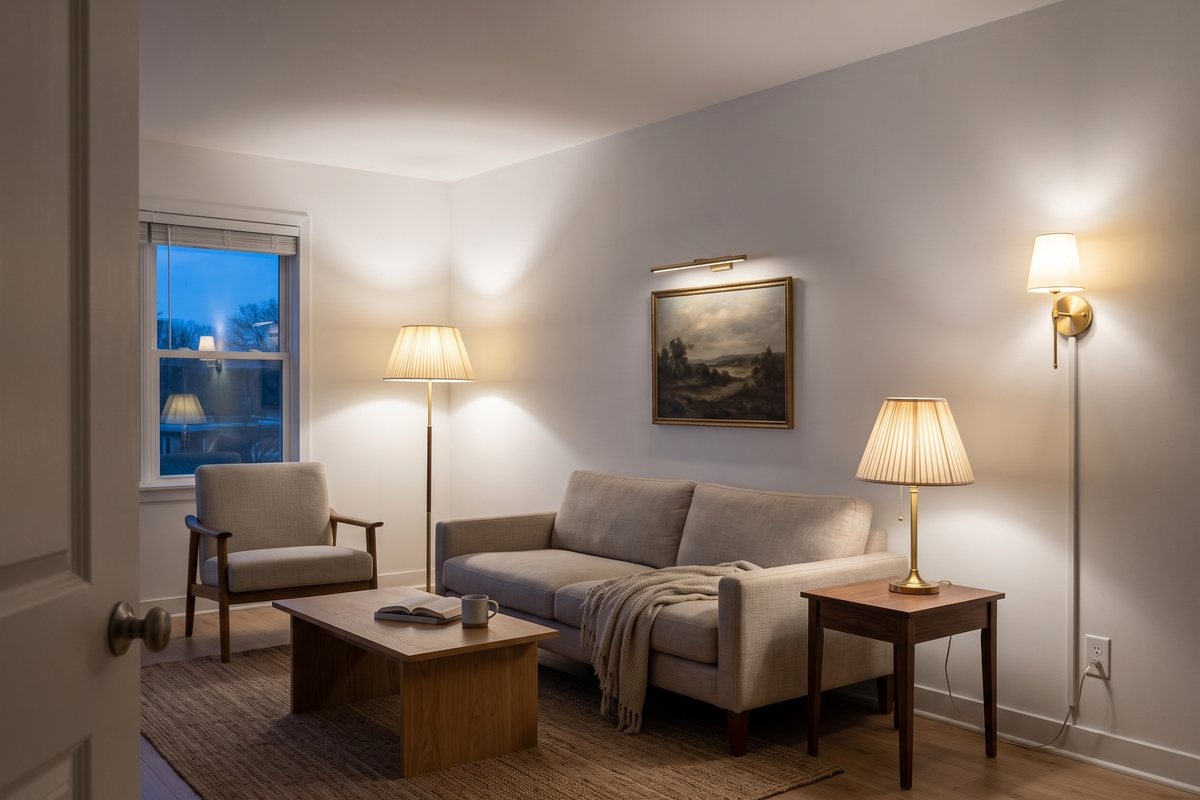
- About half from ambient light: a floor lamp aimed at the ceiling, or the ceiling fixture if you have one.
- About a third from task light: the lamp you read by.
- The rest from accent light: a picture light, a small shelf lamp.
Old watts to lumens
If you still think in old bulbs, this is the conversion most bulb makers use:
- 40 W old bulb: about 450 lumens
- 60 W: about 800 lumens
- 75 W: about 1,100 lumens
- 100 W: about 1,600 lumens
An LED giving 800 lumens draws around 8 to 10 watts, so it's fine in a lamp marked "max 60 W".
How many lumens for a floor lamp?
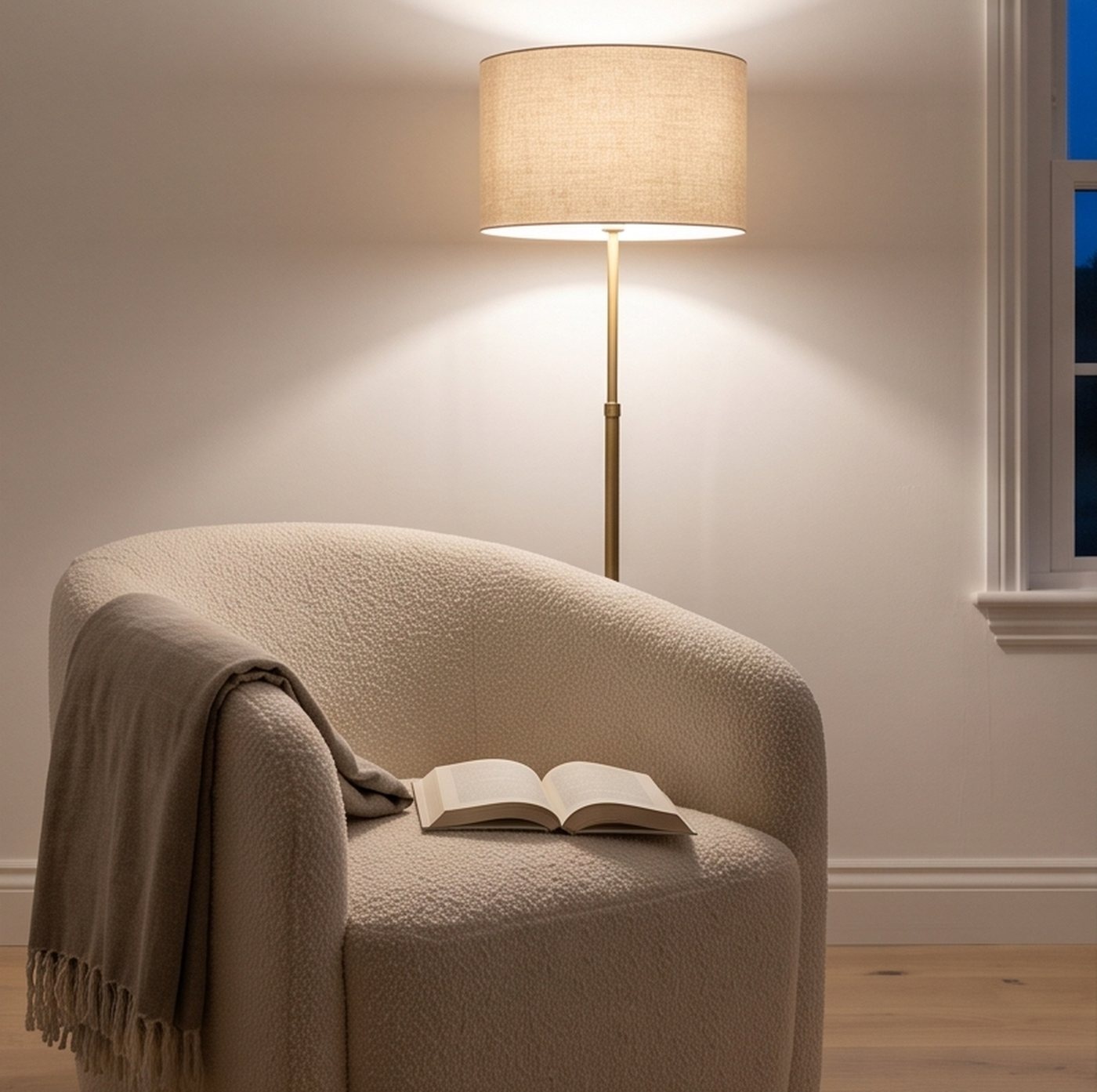
For a floor lamp doing the main job in the room, look for 1,100 to 1,600 lumens, ideally dimmable. A reading floor lamp that only lights your book can be less.
Color and quality count too
- 2700K for a living room. It reads as warm white.
- CRI 90 or higher, so wood, paint and skin look right at night.
- Dimmable bulbs where you sit in the evening.
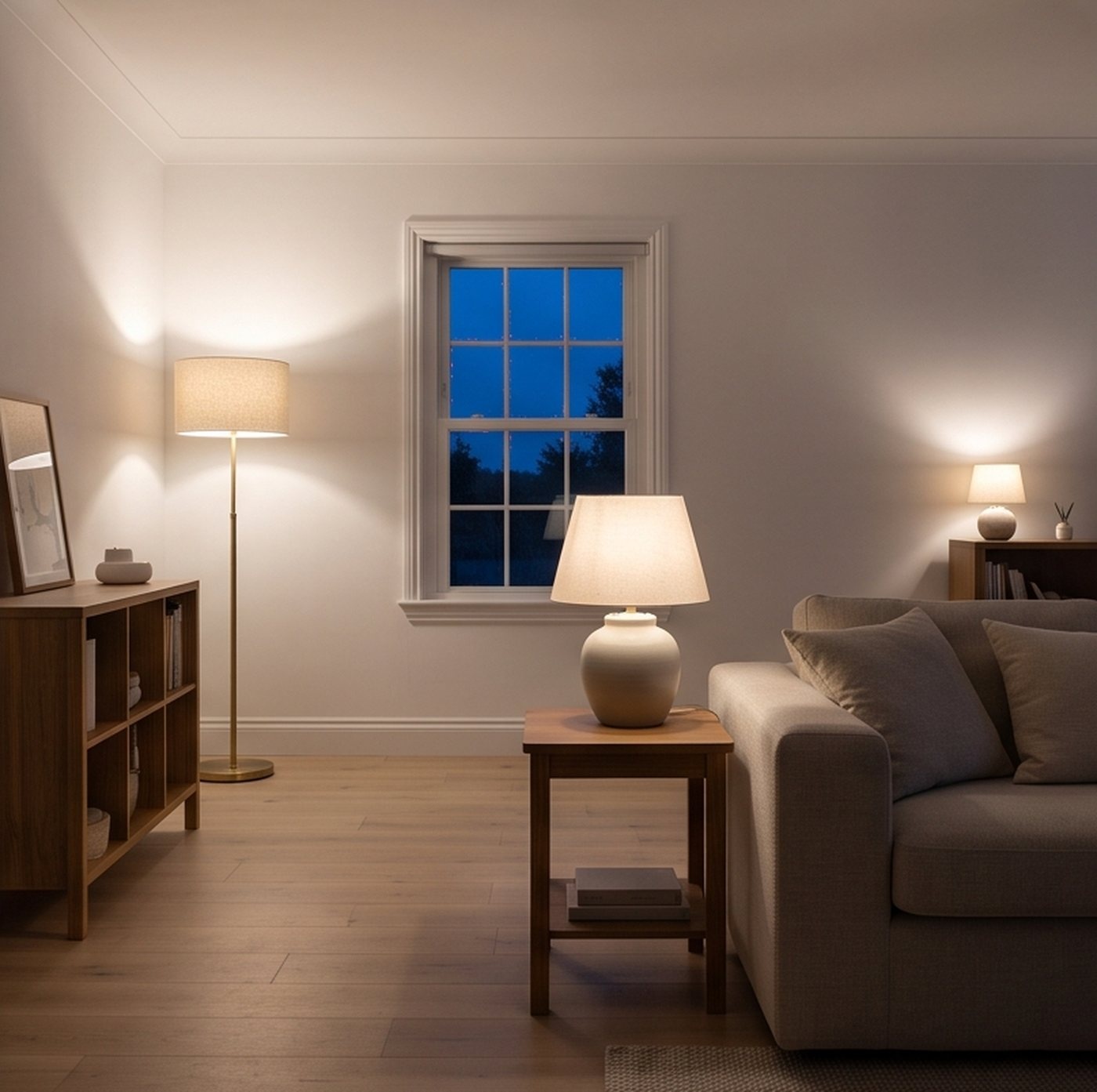
Mistakes to skip
- Buying by watts. Read the lumens.
- One very bright bulb instead of several softer ones.
- Forgetting the ceiling light. If you keep it on, its lumens count toward the total.
FAQ
Is there a lumens per square foot rule for a living room? Yes: 10 to 20 lumens per square foot, which is the same as 10 to 20 foot-candles.
How many lumens for a living room ceiling light? Count it as part of the total. In a 180 square foot room, a ceiling light of about 1,100 to 1,600 lumens covers the ambient half; lamps do the rest.
Is 800 lumens bright enough for a lamp? For a table lamp beside a sofa, yes. That's the old 60 W bulb.
Every room, already added up
The Lamp Plan, No. 04 in the Decorwick Measured Home Series, has the lumen targets for every room, the full bulb and height card, and 14 room recipes with every lamp's lumens already added up. See The Lamp Plan