Two-tone kitchens work when the two tones clearly have nothing in common. Pale uppers, dark lowers. Painted perimeter, wood island. Get too close in shade, a light gray island in a white kitchen, and it just looks like the paint didn't match.
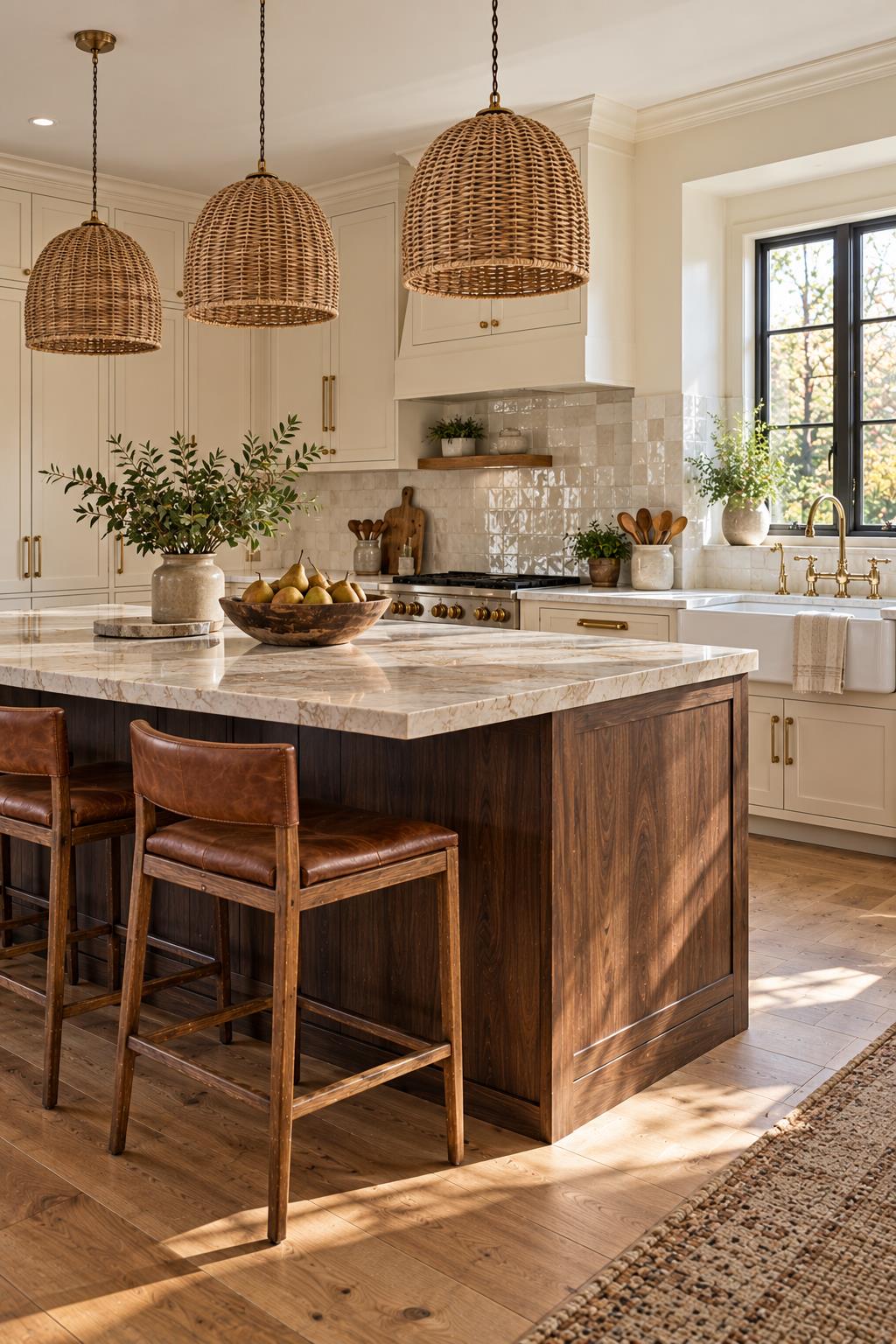
A walnut island against cream or white cabinets is about as safe as two-tone gets. The contrast is strong, the combination is warm, and walnut's rich brown ages beautifully. Here's how to put it together.
Pick a warm white, not a cold one
Walnut is warm, red-brown wood. Put it next to a stark, blue-leaning white and the island looks orange. Next to a warm white or cream, it looks rich.
Good whites for this:
- Benjamin Moore White Dove: soft and slightly creamy. Used here.
- Sherwin-Williams Alabaster: warm, a little more yellow.
- Farrow & Ball Pointing: a warm off-white with a touch of red.
Avoid Chantilly Lace or pure whites with a blue base.
Slab or shaker for the walnut?
Walnut island doors look best in flat slab form. The grain is the decoration, and shaker frames interrupt it. The perimeter can still be shaker. That mix of shaker perimeter and slab island is one of the most common two-tone combinations in current kitchens, and for good reason.
The counter: one material for both
Use the same counter on the island and perimeter. Taj Mahal quartzite, a warm white with soft gold veining, is a favorite with walnut because the gold picks up the warmth of the wood. Honed marble and a warm white quartz are good alternatives.
Two different counters on top of two different cabinet colors is one material too many.
Hardware that suits both
Aged brass bar pulls look good on both walnut and cream. Mount them horizontally on drawers and vertically on doors. On the walnut island, you can also skip hardware and use finger pulls routed into the top edge. It keeps the slab doors completely clean.
Lighting over the island
Three pendants over a standard island, spaced evenly. Woven rattan or paper pendants soften the look; brass domes make it more traditional. Hang them so the bottom sits 30 to 36 inches above the counter.
Stools
Leather-seat stools in cognac or tan bring out the red tones of the walnut. Wood stools in a lighter oak work too. Avoid black metal stools here; they look cold against walnut.
Backsplash
Keep it light and simple: white zellige, cream subway tile or the counter material running up the wall. The walnut island is the focal point; the backsplash is background.
Island size and seating
Plan the island before you fall in love with the wood. A few numbers that matter:
- Clearance: at least 42 inches of walkway on every side, 48 inches on the cooking side if two people cook together.
- Overhang for stools: 12 inches for counter-height seating so knees fit.
- Seat width: allow 24 inches per stool. A 7-foot island seats three comfortably.
- Depth: 36 to 48 inches. Deeper islands give space for storage on both sides.
If the room can't take a full island, a walnut peninsula or even a freestanding walnut worktable in the middle of the kitchen gives the same two-tone effect with less floor space.
Caring for a walnut island
Walnut is a hardwood, but it scratches and marks more easily than oak. A matte or satin lacquer finish protects it. Wipe with a damp cloth and dry it; don't let water sit. Over years, walnut lightens slightly toward a honey color, especially in sun. Most people like the change.
What a walnut island costs
A walnut island is one of the pricier two-tone options because solid walnut and good veneers cost more than paint-grade wood:
- Walnut veneer slab doors: roughly $350 to $700 per linear foot installed for a custom island.
- Refacing an existing island with walnut veneer: often $2,500 to $5,000.
- Semi-custom cabinetry with walnut island options: varies widely by brand.
If walnut is out of reach, a dark-stained oak gets close in tone for less.
Mistakes to avoid
- Cold white perimeter. Makes walnut look orange.
- Two different counters. Keep one material.
- Black hardware on walnut. Brass or finger pulls are warmer.
- A walnut island in a tiny kitchen. In a very small kitchen, keep everything pale and use walnut on open shelves instead.
Walnut island with white cabinets FAQ
What color island goes with white cabinets?
Walnut, dark oak, deep green and navy all work. Walnut is the warmest.
What countertop goes with walnut cabinets?
Warm white quartzite, honed marble or a warm white quartz. Avoid cool gray.
Is a walnut island a good investment?
Walnut is a timeless hardwood that ages well. It suits traditional and modern kitchens.
Should the island match the perimeter hardware?
Ideally, use the same metal finish throughout. Different pull styles are fine.