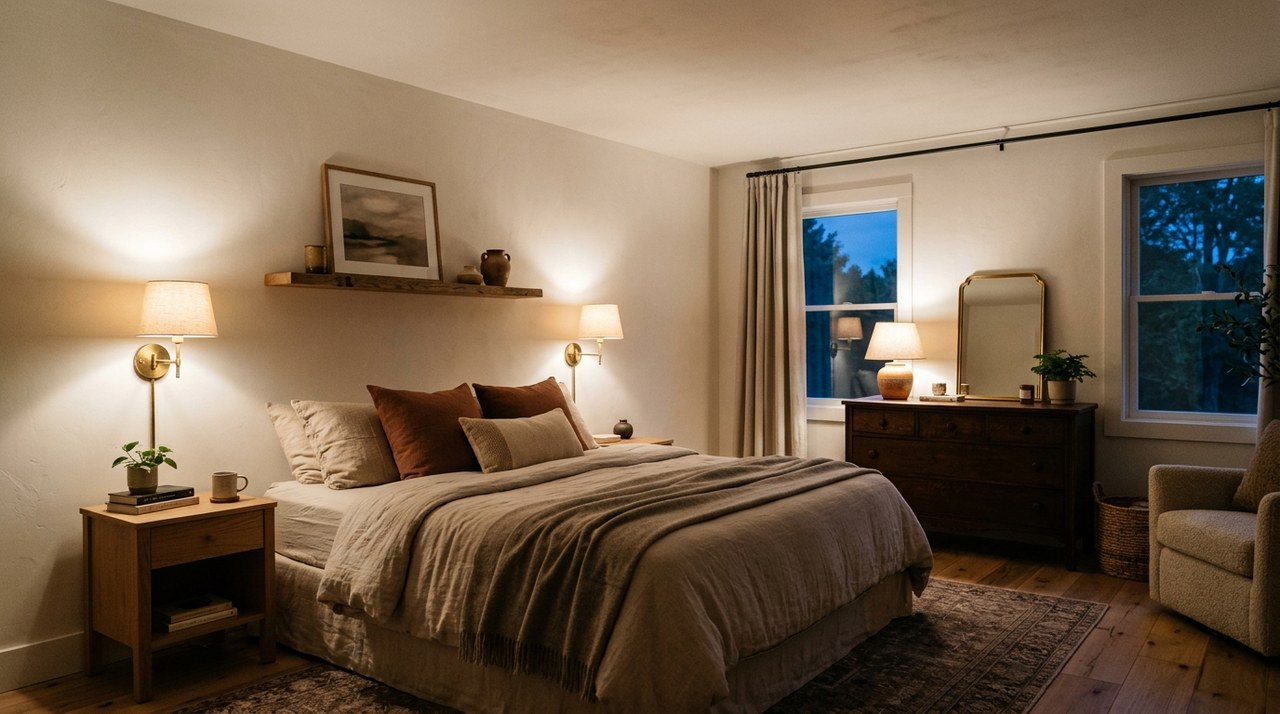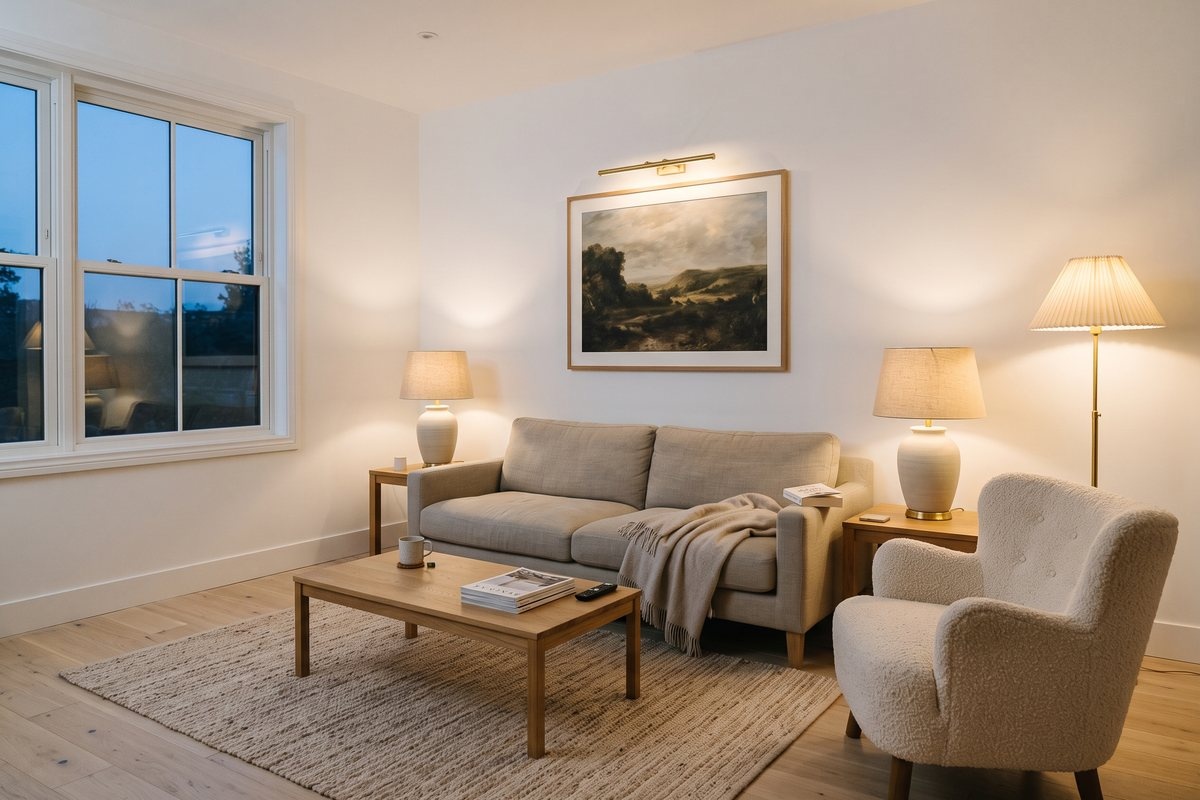
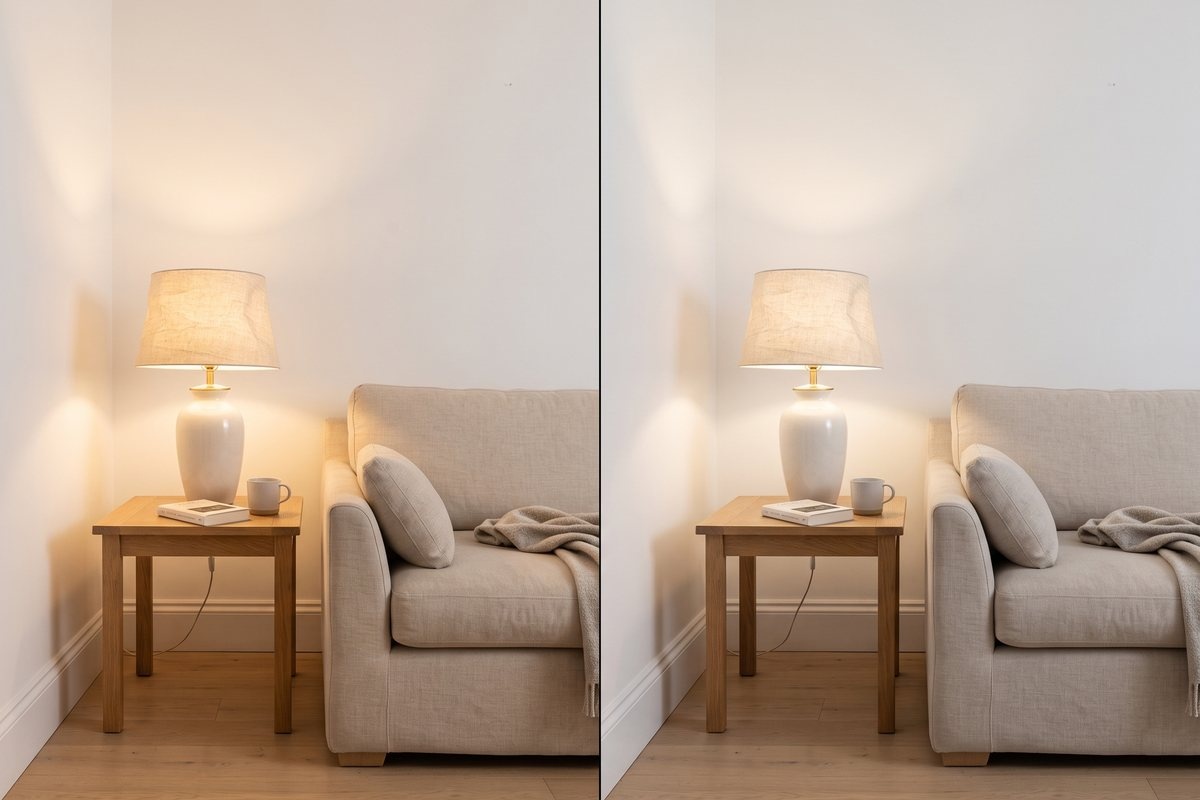
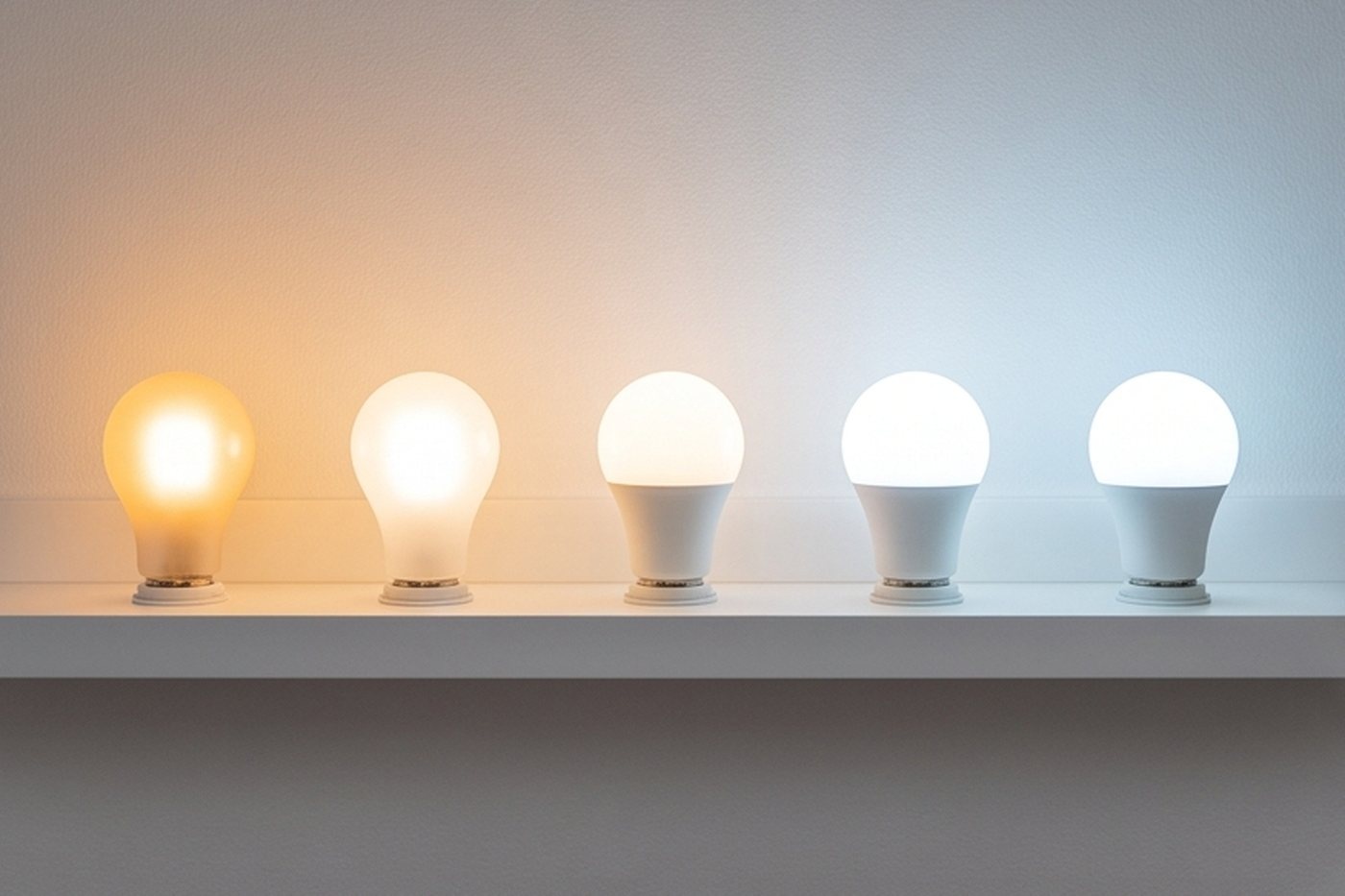
On the shelf, a 2700K bulb and a 3000K bulb look almost identical. At home after dark they don't. One makes a living room feel like evening. The other makes it feel like a kitchen.
What the K means
Bulb color is measured in kelvin (K). Lower numbers are warmer and more yellow. Higher numbers are cooler and bluer.
- 2200K: candle-like. Accent lamps and late evenings.
- 2700K: warm white. The classic lamp glow.
- 3000K: soft white. A little crisper.
- 4000K: neutral white. Garages, laundry, craft tables.
- 5000K and up: daylight. Clinical at home after sunset.
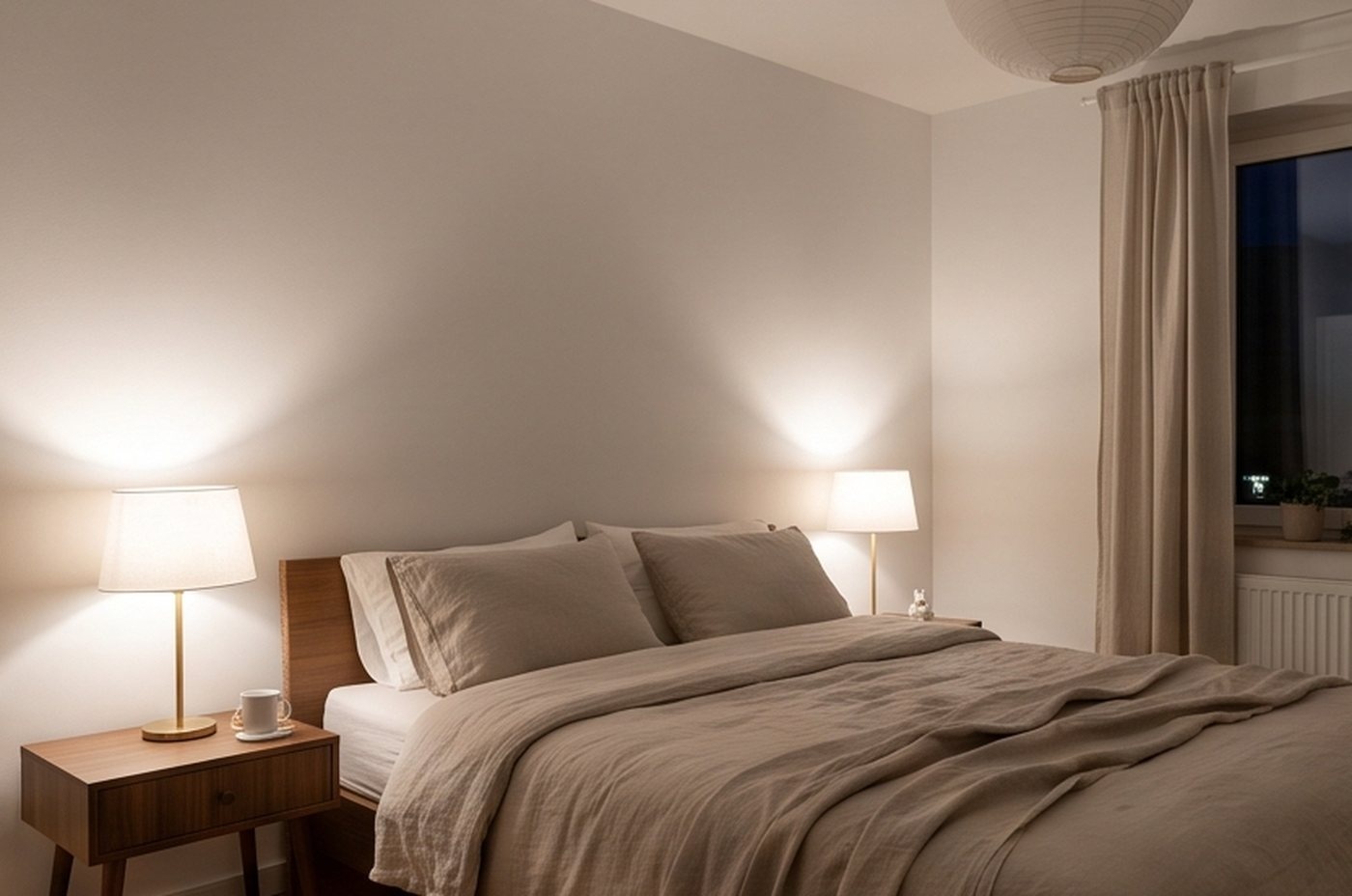
2700K: rooms where you relax
Use 2700K in the living room, bedroom, dining room and reading corner. It's the closest LED color to the old incandescent bulbs most of us grew up with, and it flatters wood, linen and skin in the evening.
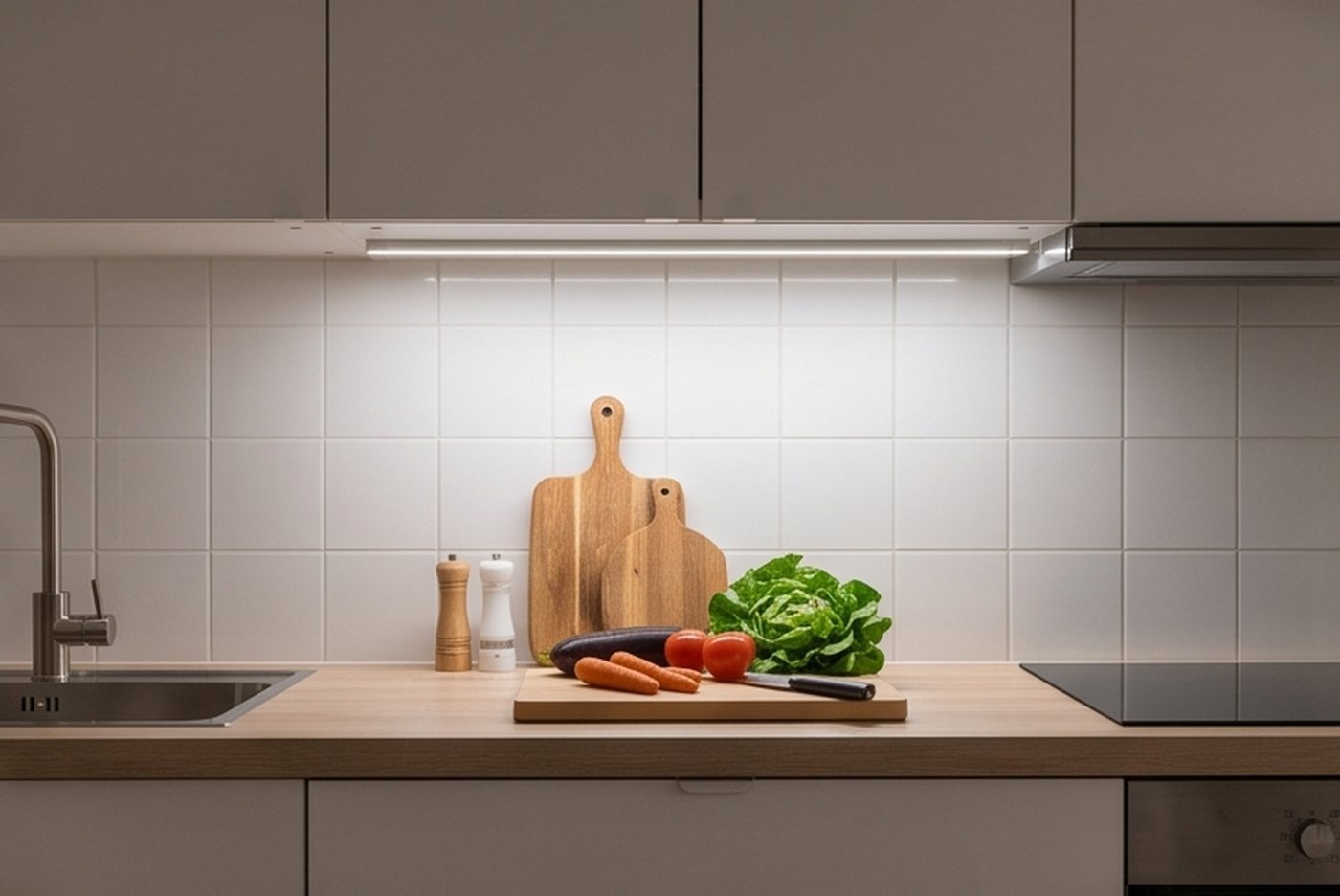
3000K: rooms where you work
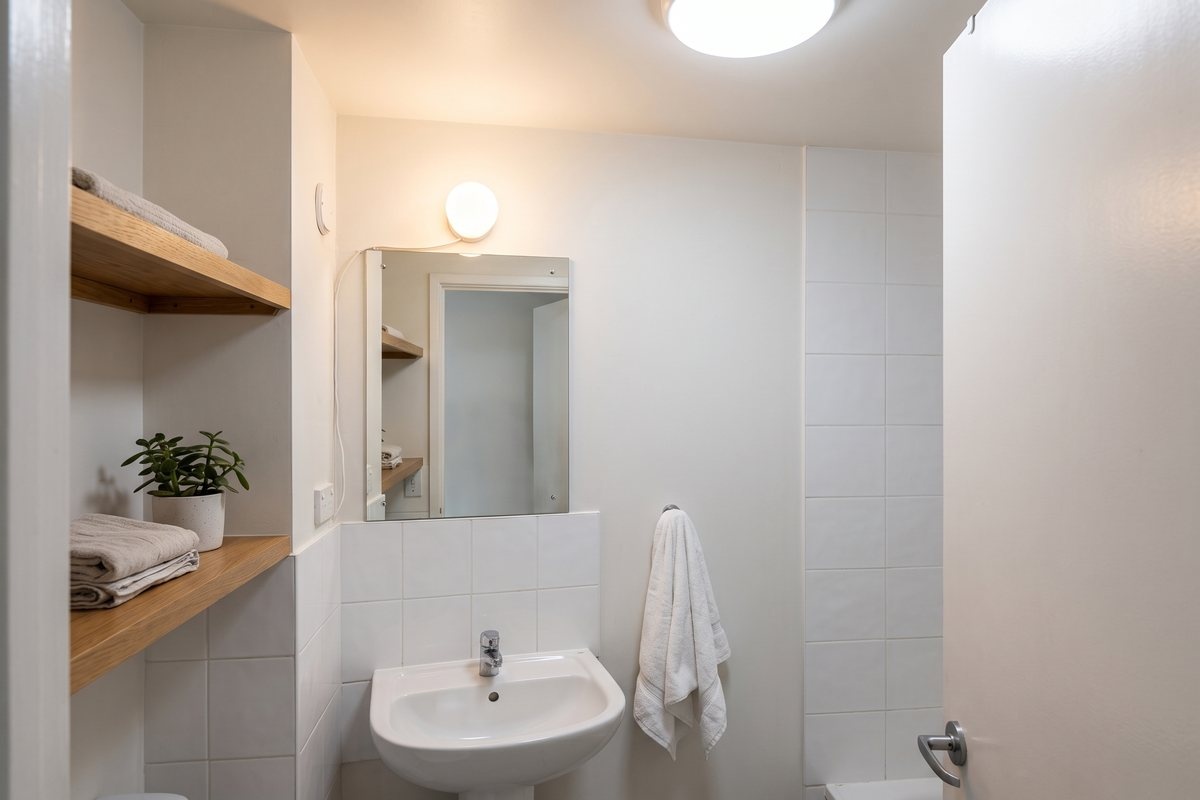
Use 3000K in the kitchen, bathroom, hallway and at a home desk. It's still warm, but crisper, so you can see what you're chopping, reading or putting on your face.
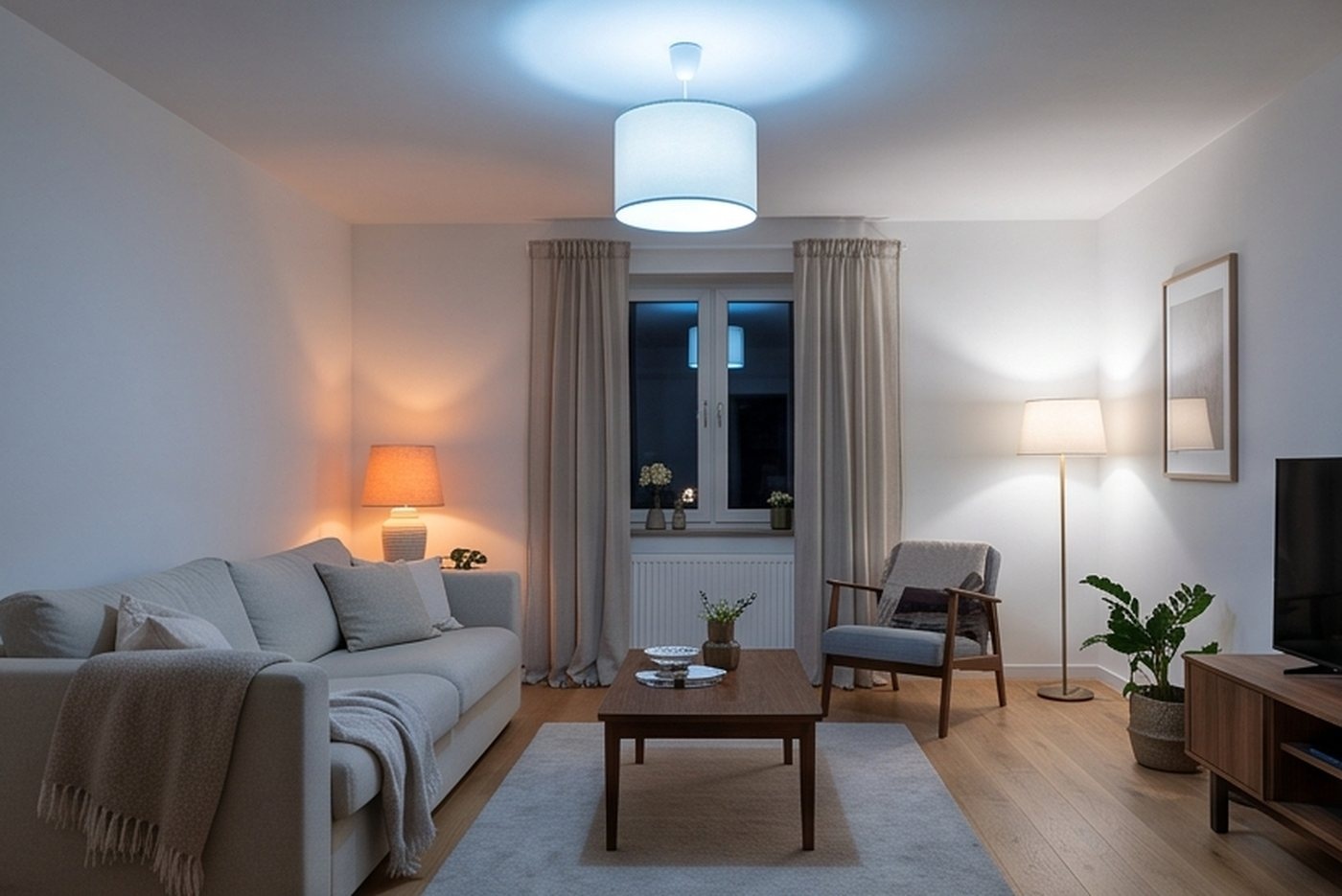
The rule that matters more: one room, one color
Whichever you choose, use the same color for every bulb in a room. A 2700K lamp next to a 4000K ceiling light makes one corner look orange and the other look blue, and the room feels off even if you can't say why.
Check this before you buy: the color is printed on the box, usually beside the lumens.
2700K vs 3000K in a bathroom
Bathrooms are the one room where people argue. A good answer: 3000K at the mirror, with a high CRI (90 or more) so skin tones look true. If you want the bathroom softer at night, put a dimmable bulb or a small battery night light in as well.
What about 3500K, 4000K and 5000K?
At home, these are best kept for places you work rather than relax: a garage, a laundry room, a craft table. In a living room at night, 4000K and above reads as office light.
Look at CRI as well
Color temperature is the color of the light. CRI is how true colors look under it. Aim for CRI 90 or higher in living spaces. Cheap bulbs are often CRI 80, which is why white walls can look gray at night.
Mistakes to skip
- Daylight bulbs in the living room.
- Mixing colors in one room.
- Buying by "warm" or "soft" on the label alone. Brands use the words differently. Read the K number.
FAQ
Is 2700K or 3000K better for a living room? 2700K for most living rooms. Choose 3000K only if you work at a desk in the room most evenings.
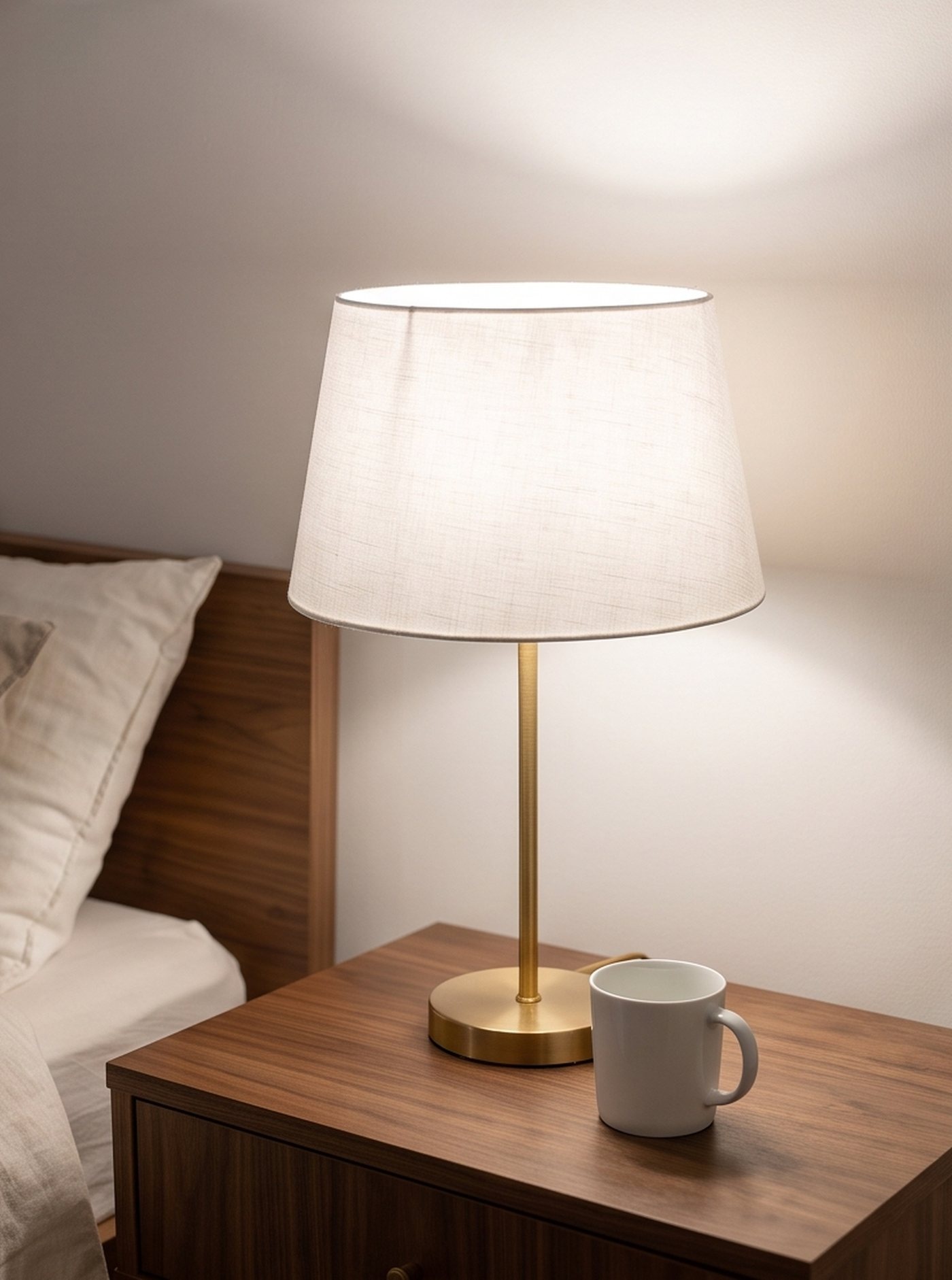
What is the best color temperature for a bedroom? 2700K, or even 2200K in a bedside lamp you only use late at night.
What is the best color temperature for reading? 2700K to 3000K, from a lamp placed over your shoulder. Brightness and position matter more than color here.
Every bulb, on one page
The Lamp Plan, No. 04 in the Decorwick Measured Home Series, puts every bulb rule, color and height on one cut-out card, with 14 room recipes that tell you the exact bulb for every lamp. See The Lamp Plan