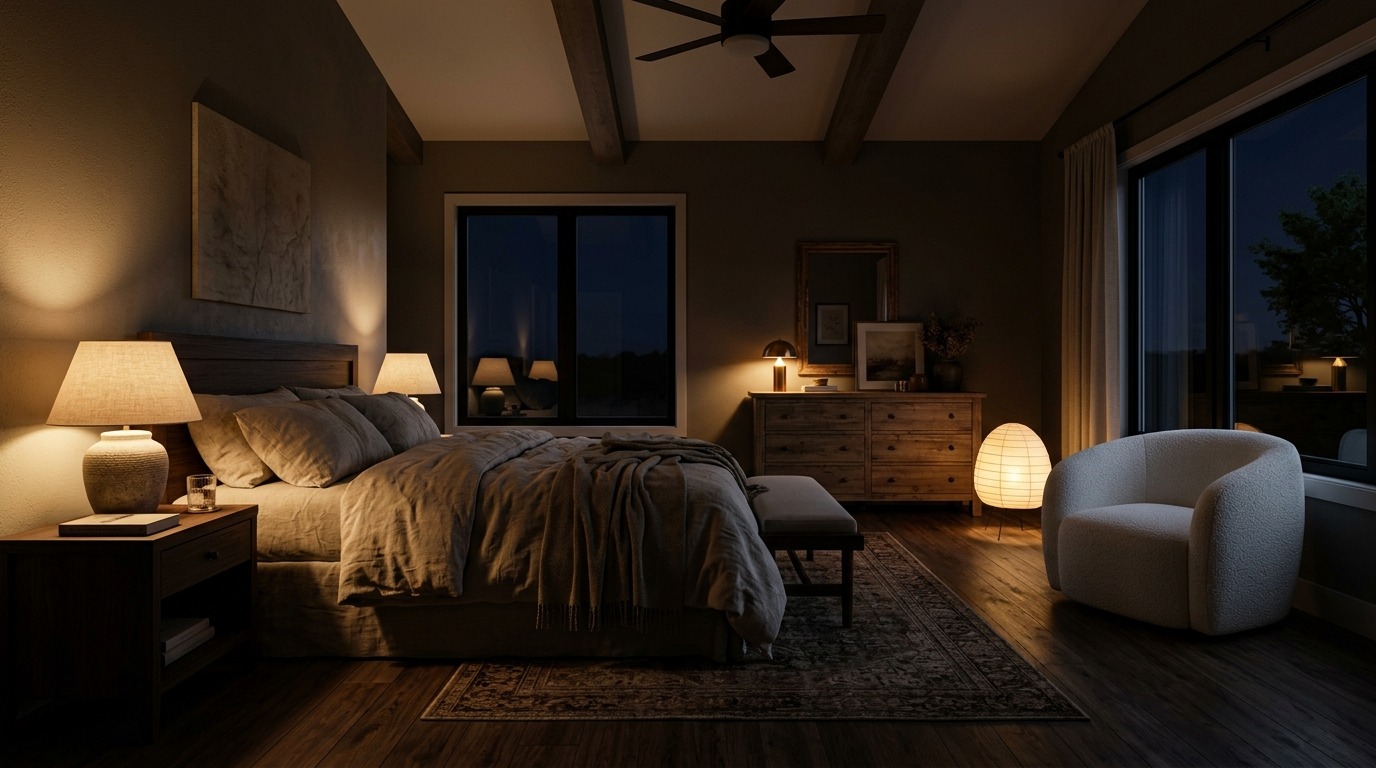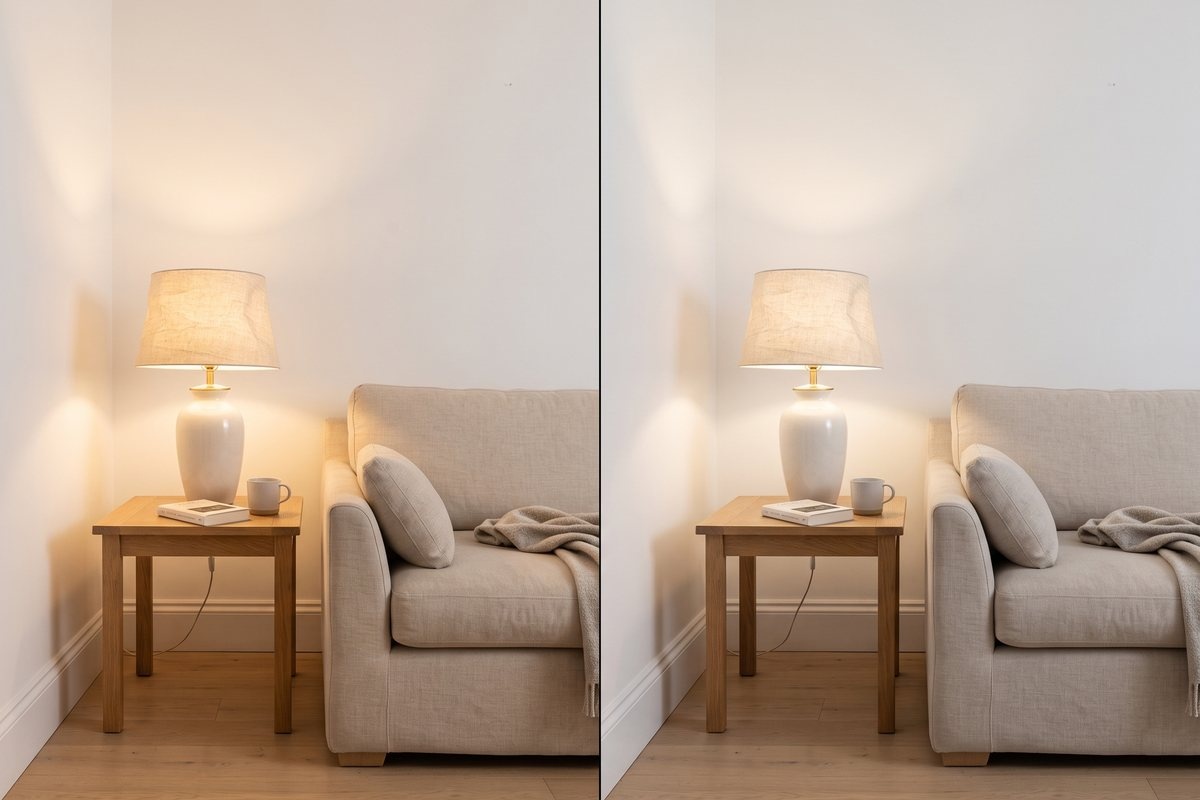
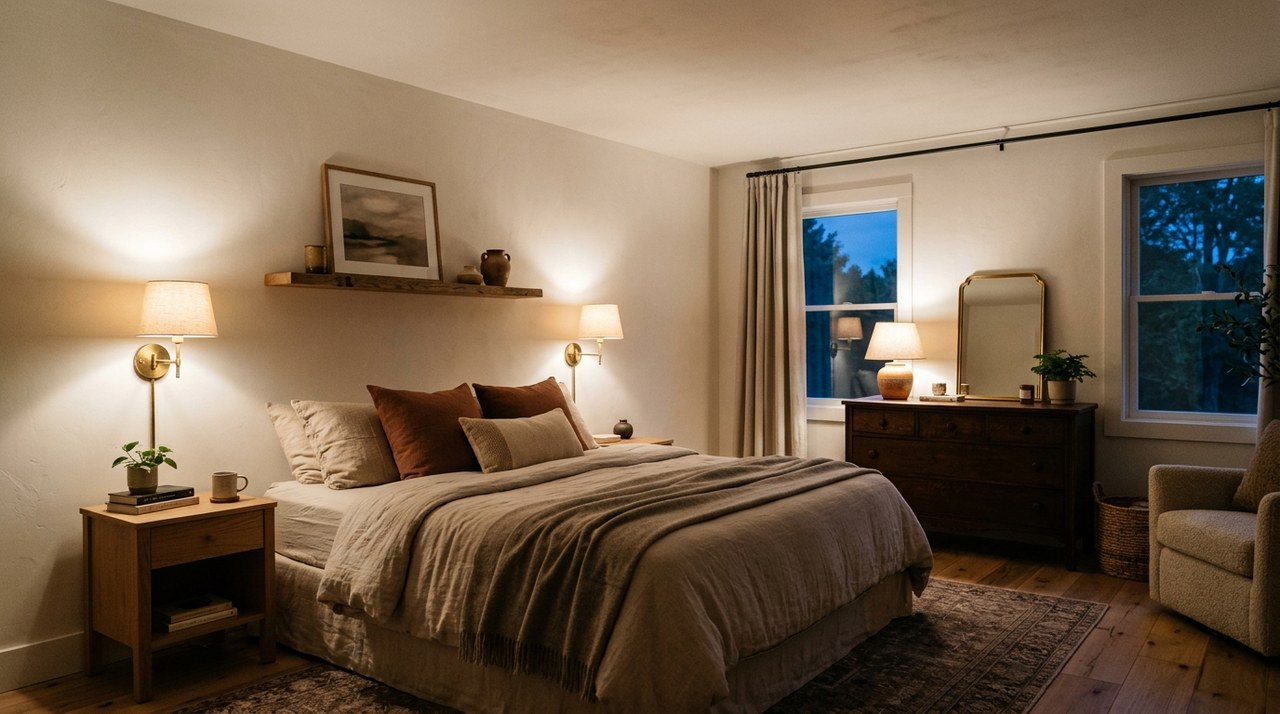
A bedroom with no ceiling light is easier to fix than it sounds. Bedrooms are the one room where you want light low, warm and soft most of the time, and that's exactly what lamps do best.
The plan: three points of light
- A light on each side of the bed. Table lamps or plug-in wall sconces.
- One light across the room. A small lamp on the dresser or a floor lamp in the corner, so the far wall isn't dark.
Drawn on a floor plan, those three make a triangle. That's what stops the room feeling like a cave with a glowing bed in it.
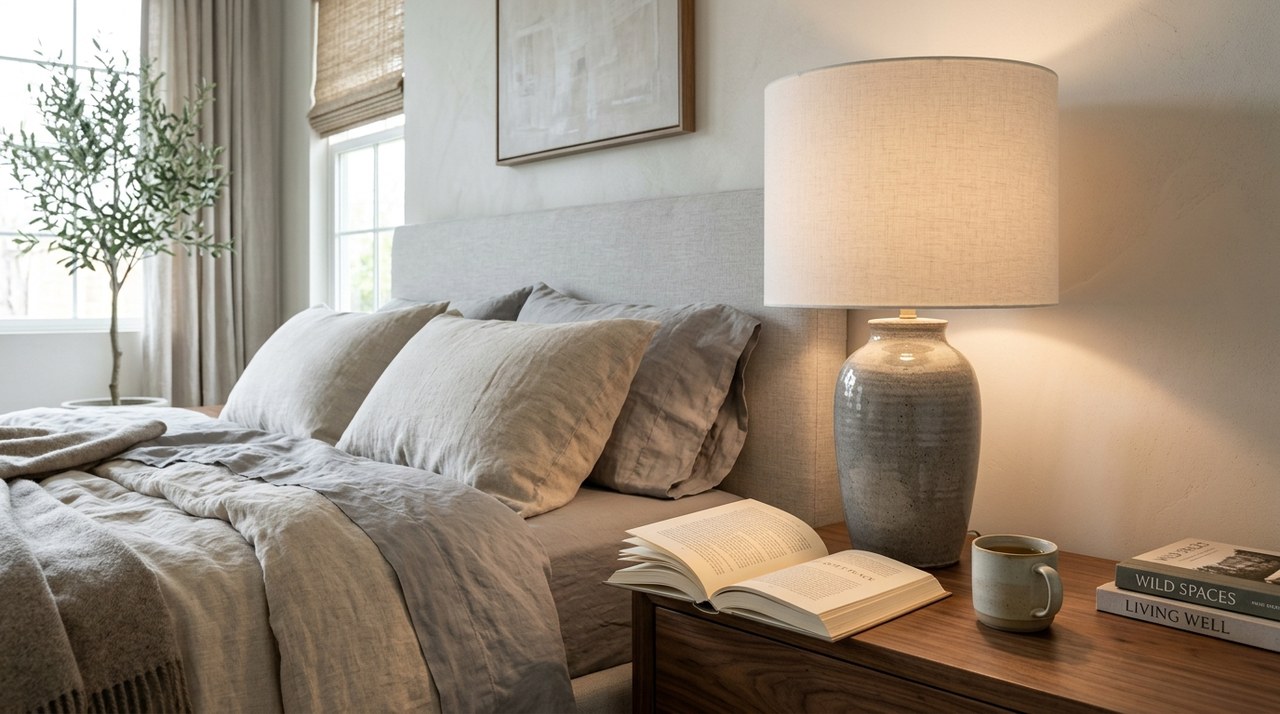
Bedside lamps: get the height right
When you sit up against the headboard, the bottom of the shade should be at about eye level. Any lower and the light lands on the blanket instead of your book. Any higher and you look straight into the bulb.
In practice, most bedside lamps that work are 24 to 30 inches tall, roughly the same height as the nightstand or a little more.
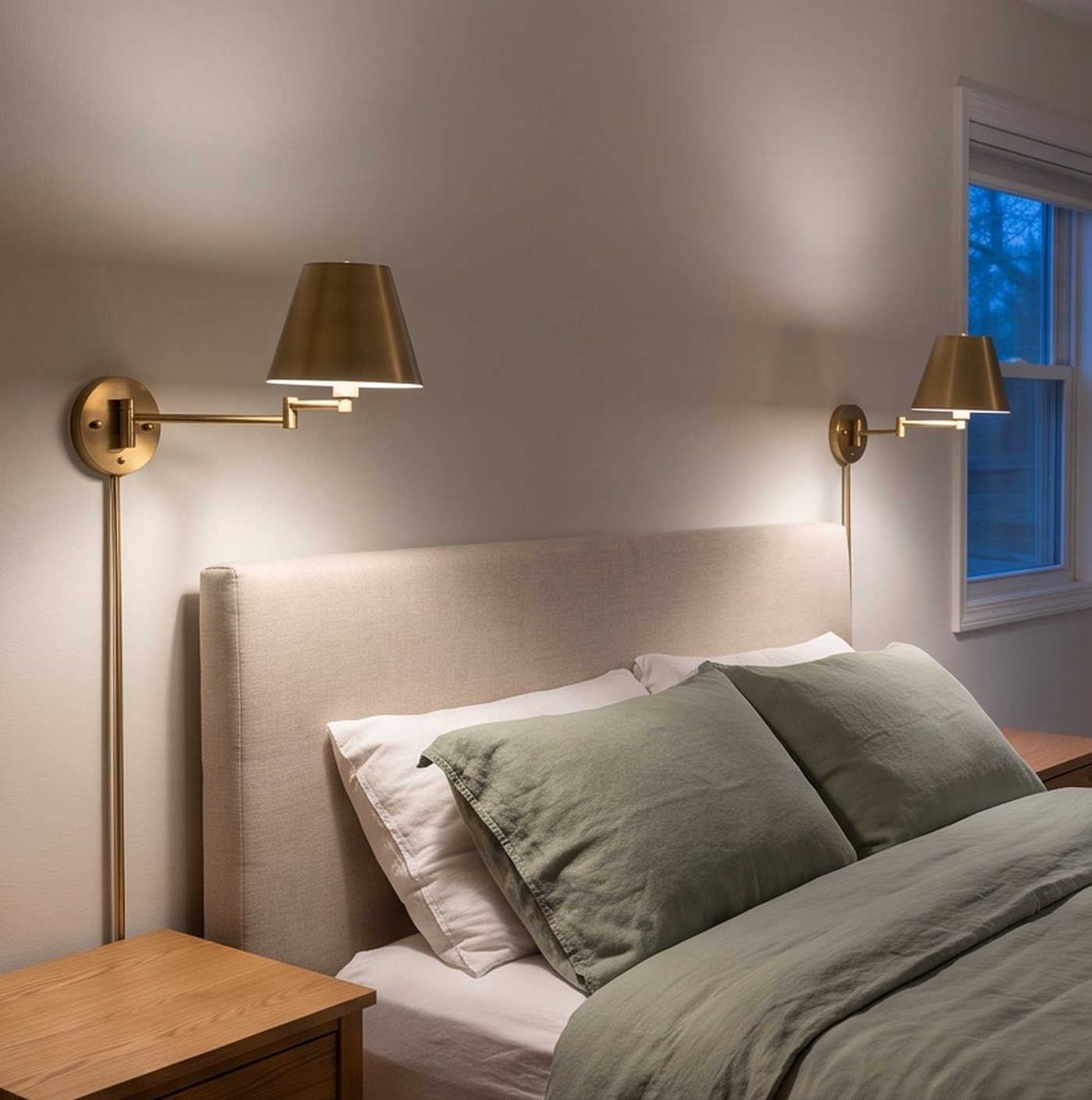
No room for nightstands? Use plug-in sconces
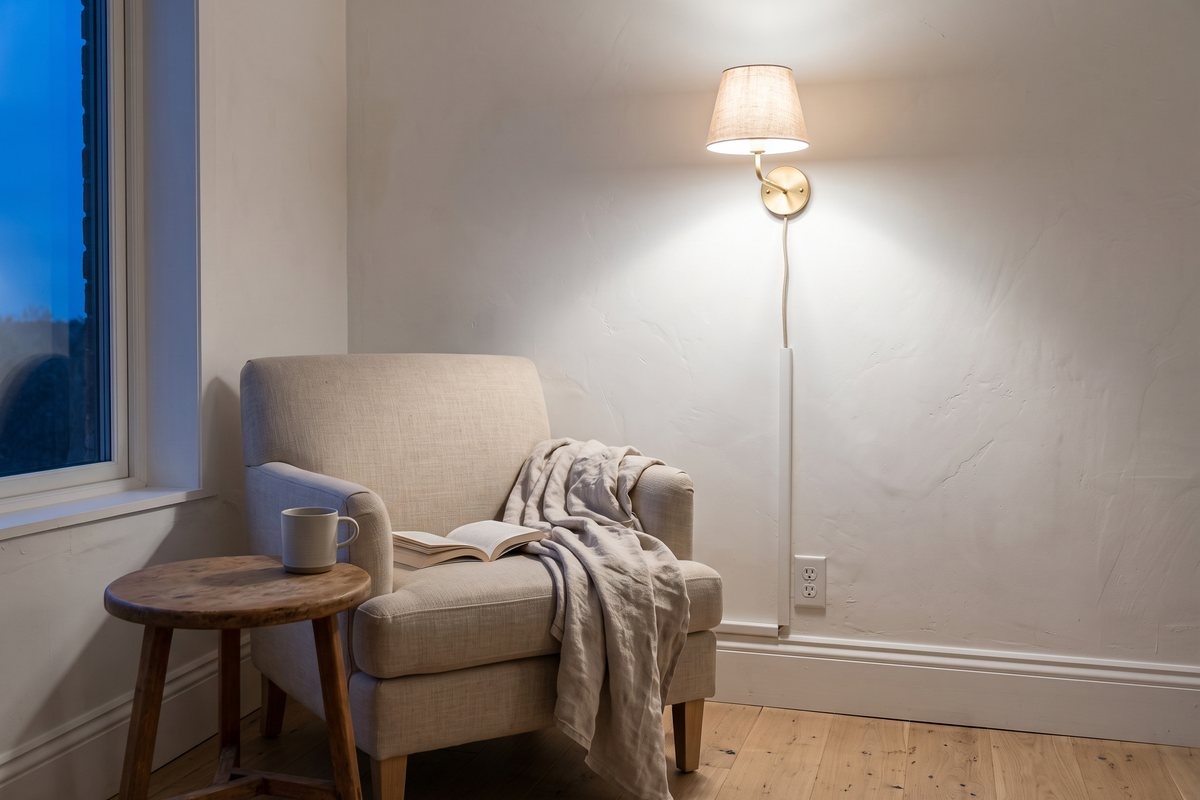
A plug-in sconce hangs on the wall beside the headboard and plugs into the nearest outlet. It frees up the nightstand, or lets you skip one altogether in a small room.
- Height: roughly shoulder height when you're sitting up in bed, low enough to read by.
- Swing arms let each person aim their own light.
- Cords: run them straight down inside a paintable cord cover.
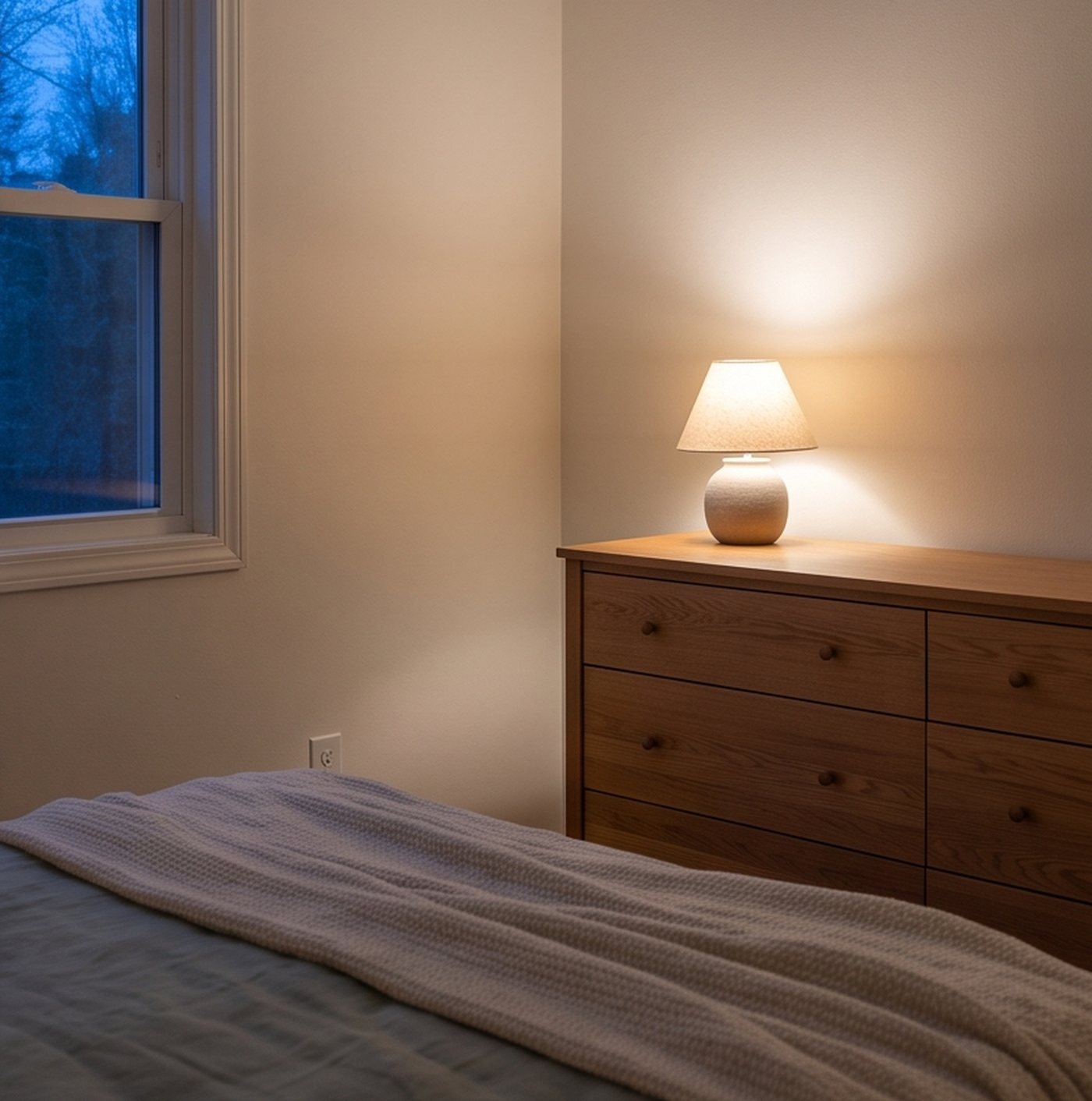
Light the far side of the room
A small lamp on the dresser, or a floor lamp in the corner across from the bed, completes the triangle. Without it, the room shrinks to the size of the bed after dark.
How bright?
The commonly cited IES range for a bedroom is wide, 20 to 50 foot-candles, because you dress there as well as sleep. In a bedroom, plan for the low end and put the lamps on dimmers or dimmable smart bulbs, then turn them down after dark.
A 10 x 12 bedroom is 120 square feet, so about 2,400 lumens covers the low end. Two bedside lights of 450 lumens and a dresser lamp of 450 is 1,350 at night, and you can add a floor lamp for getting dressed.
Warm, and warmer at night
- 2700K in every bedroom bulb.
- Dimmable, so lamps can drop to 20 to 30 percent at bedtime.
- A 2200K bulb in a bedside lamp you only use late is even softer.
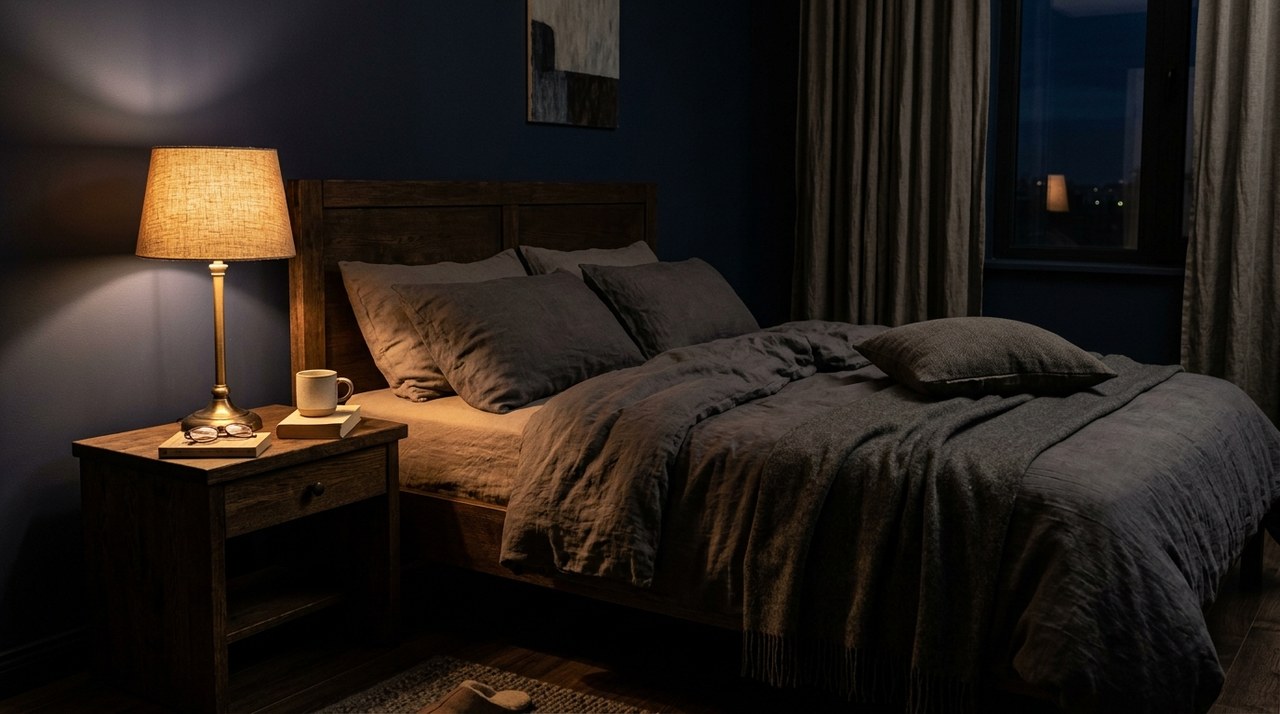
Switch it from the door
Walking into a dark bedroom and crossing the room to find a lamp switch gets old fast. Put one lamp on a smart plug or plug it into the switched outlet by the door, if your room has one.
Mistakes to skip
- A bedside lamp that's too short. You read in shadow.
- One bright lamp on one side only.
- Cool white bulbs. They feel like morning at midnight.
- Cords across the floor where you walk at night.
FAQ
How high should bedside wall lights be? Low enough to read by: roughly shoulder height when you're sitting up in bed. In a hallway or living room, sconces go higher, about 66 to 72 inches.
What size lamp for a bedside table? Usually 24 to 30 inches tall, with the shade bottom near your eye level when you sit up. Keep the shade narrower than the nightstand.
Can I use a floor lamp beside the bed? Yes, if there's no room for a nightstand. Choose one with a shade at that same sitting eye level, or an adjustable arm.
Bedrooms, planned lamp by lamp
The Lamp Plan, No. 04 in the Decorwick Measured Home Series, has three bedroom recipes, including a basement bedroom and a bedroom that doubles as an office, with every lamp's lumens, color and spot, at three budgets. See The Lamp Plan