For nearly a decade, residential interior design was dominated by sterile, blue-tinged grays and stark, hospital-white walls. While that minimalist aesthetic promised clean simplicity, it often left bedrooms feeling cold, austere, and emotionally detached from real comfort.
Today, the design pendulum has swung decidedly back toward warmth, richness, and depth. Chocolate brown has officially emerged as the defining neutral for 2026—a grounded, enveloping tone that transforms a master bedroom from a sterile sleeping box into a restorative retreat.
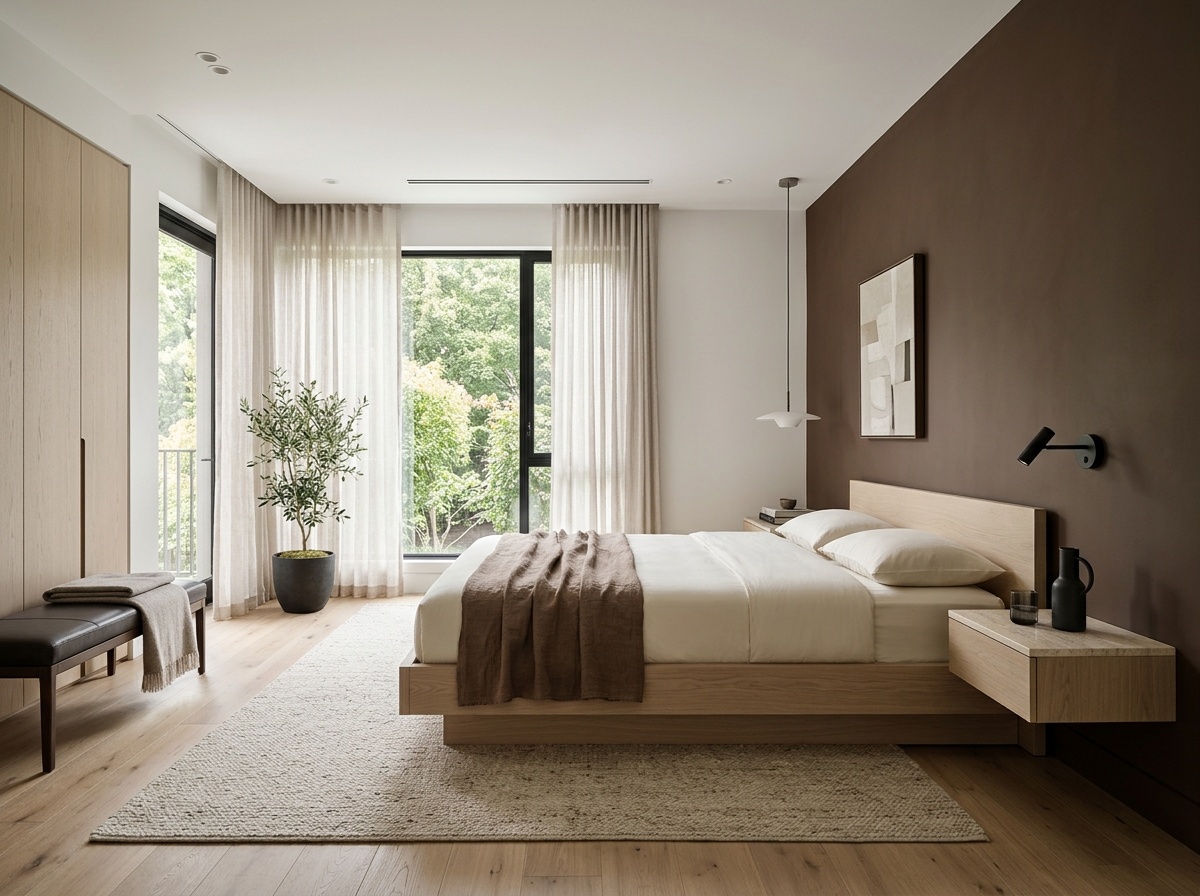
When executed thoughtfully, deep cocoa walls do not feel dreary or retro; they create an architectural backdrop that highlights crisp linen bedding, accentuates natural timber grain, and quiets visual clutter after a long day.
Understanding Undertones: How to Choose the Right Brown
The difference between a sophisticated chocolate brown bedroom and a muddy space comes down to undertones and lighting exposure. Brown pigments can lean toward red, purple, green, or pure charcoal espresso.
When selecting paint for your bedroom walls, test large swatches against your trim across morning, afternoon, and evening light:
- Deep Espresso Anchor:
Sherwin-Williams French Roast (SW 6069)— A rich, velvety dark chocolate with subtle black and umber undertones. It absorbs direct sunlight gracefully without turning purple or sickly. - Warm Cocoa Midtone:
Benjamin Moore Barista (AF-175)— A softer, milk-chocolate tone that works beautifully in north-facing bedrooms where colder natural light requires warmer pigments to prevent a chilly cast. - Biophilic Earth Tone:
Farrow & Ball Salon Drab (No. 290)— A moody brown with an olive undertone, making it the ideal bridge if you are designing a chocolate brown and sage green master bedroom palette. - The Framing Neutral:
Sherwin-Williams Alabaster (SW 7008)— A chalky, soft off-white for ceilings and window trim that provides sharp contrast without the harsh glare of pure hospital white.
Designer Insight: The Finish Matters
Never paint dark brown walls in satin or semi-gloss finishes. The surface sheen reflects daylight unevenly, creating distracting light flashes and emphasizing minor drywall imperfections. Always specify a dead flat or chalky matte finish for dark walls to achieve that velvety, light-absorbing atmosphere.
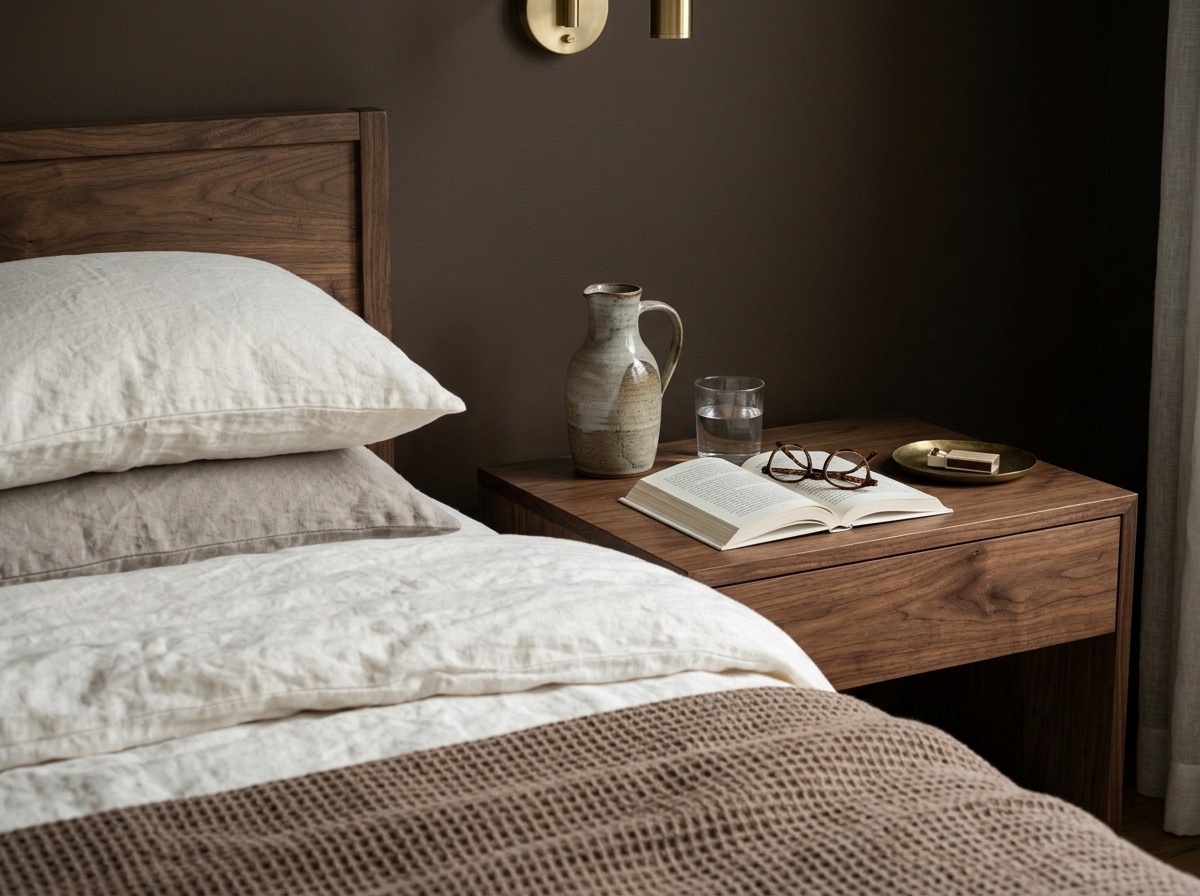
The Anti-Mud Formula: Layering Bedding Against Dark Walls
The most frequent hesitation homeowners express about dark bedroom colors is the fear of creating a "cave." The secret to preventing a heavy, oppressive feeling lies entirely on the bed.
Because dark walls pull visual weight to the perimeter of the room, your bedding must act as a bright, textural focal point. To achieve perfect balance, layer your textiles in three distinct tiers:
- The Crisp Base (Sheets & Pillowcases): Opt for 180 GSM washed Belgian flax linen or crisp organic cotton percale in chalk white, ivory, or pale cream. The gentle wrinkles of relaxed linen soften the crisp geometry of the bed.
- The Mid-Weight Insulator (Blanket): Layer an open-weave waffle cotton blanket or a lightweight wool blanket in soft taupe or heather oat. This provides essential thermal regulation while adding tactile surface interest.
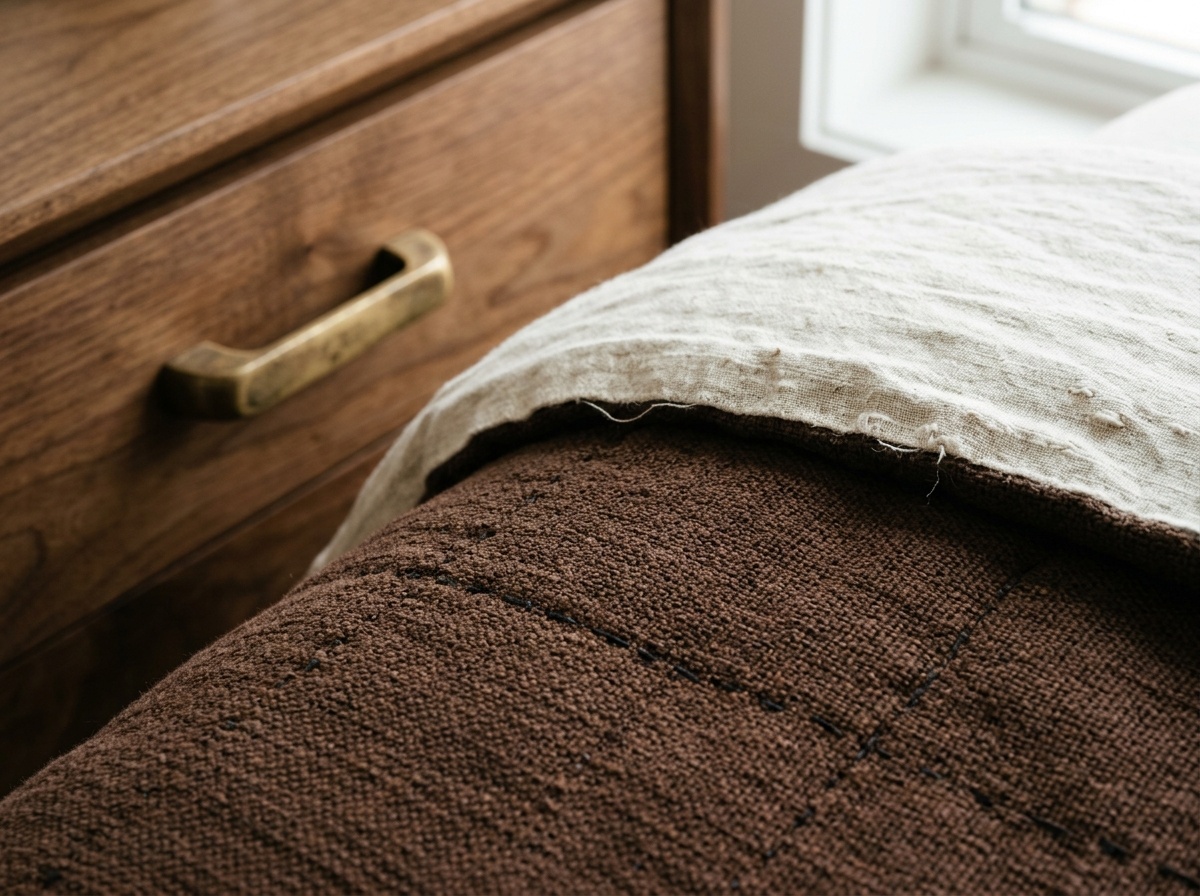
- The Grounding Quilt (The Foot of the Bed): Fold a substantial cotton stitch quilt or washed velvet coverlet across the lower third of the mattress. Choosing a quilt in mocha, rust, or muted moss green ties the bed visually back to your wall paint without overwhelming the crisp white sheets.
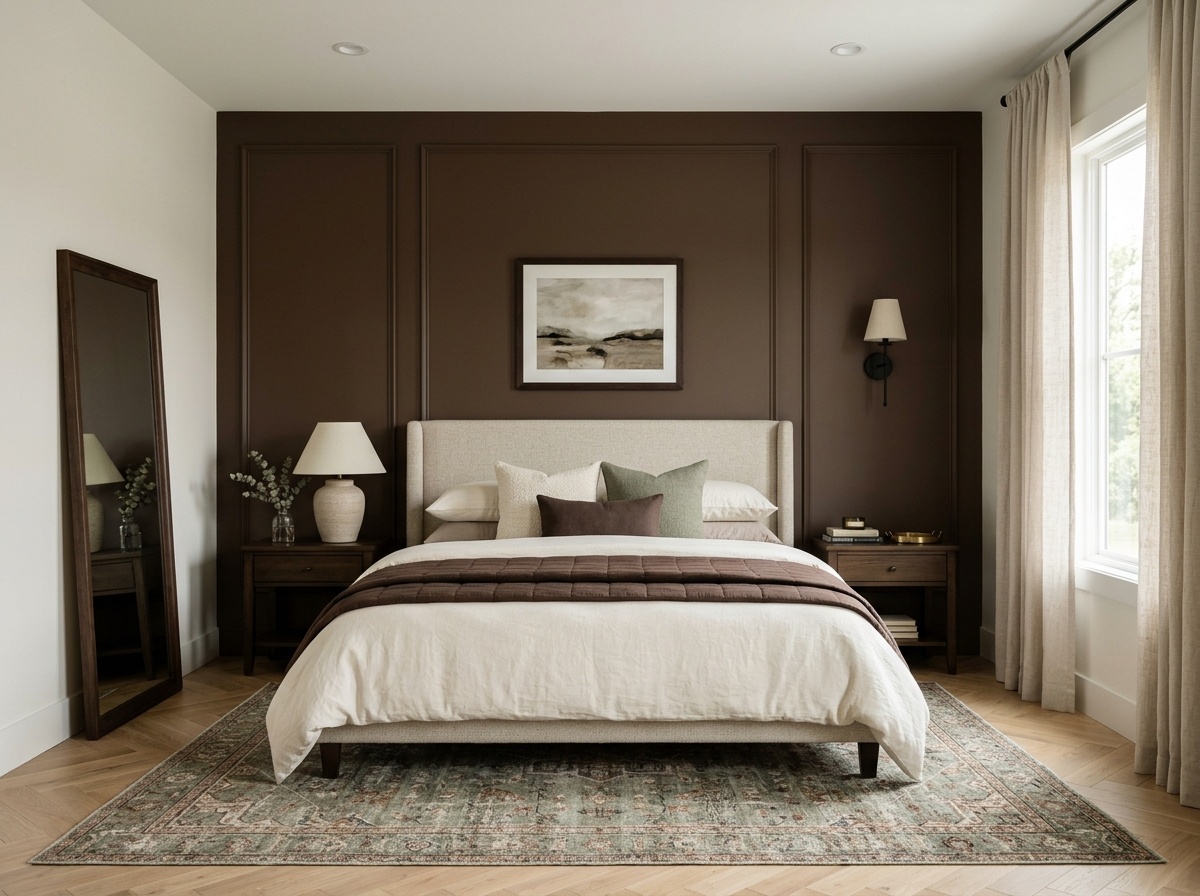
Mixing Wood Tones & Natural Materials
A common myth is that dark brown walls demand light furniture. In reality, matching furniture sets look commercial and dated. A layered, collected room embraces varied wood species:
- Dark Walnut & Ash: Darker woods like American walnut provide seamless cohesion against cocoa walls, creating quiet silhouettes that do not fight for attention.
- White Oak & Travertine: Use natural, wire-brushed white oak flooring or honed Roman travertine lamp bases to inject lightness into the lower third of the room.
- Unlacquered Brass: Hardware and lighting fixtures in aged, unlacquered brass add subtle warmth that gleams against deep brown without the synthetic shine of polished chrome.
If you love botanical accents, incorporate olive green velvet throw cushions or a large potted fiddle-leaf fig or olive tree. The natural chlorophyll green breaks up earth tones effortlessly.
Architectural Lighting: Eliminating Glare
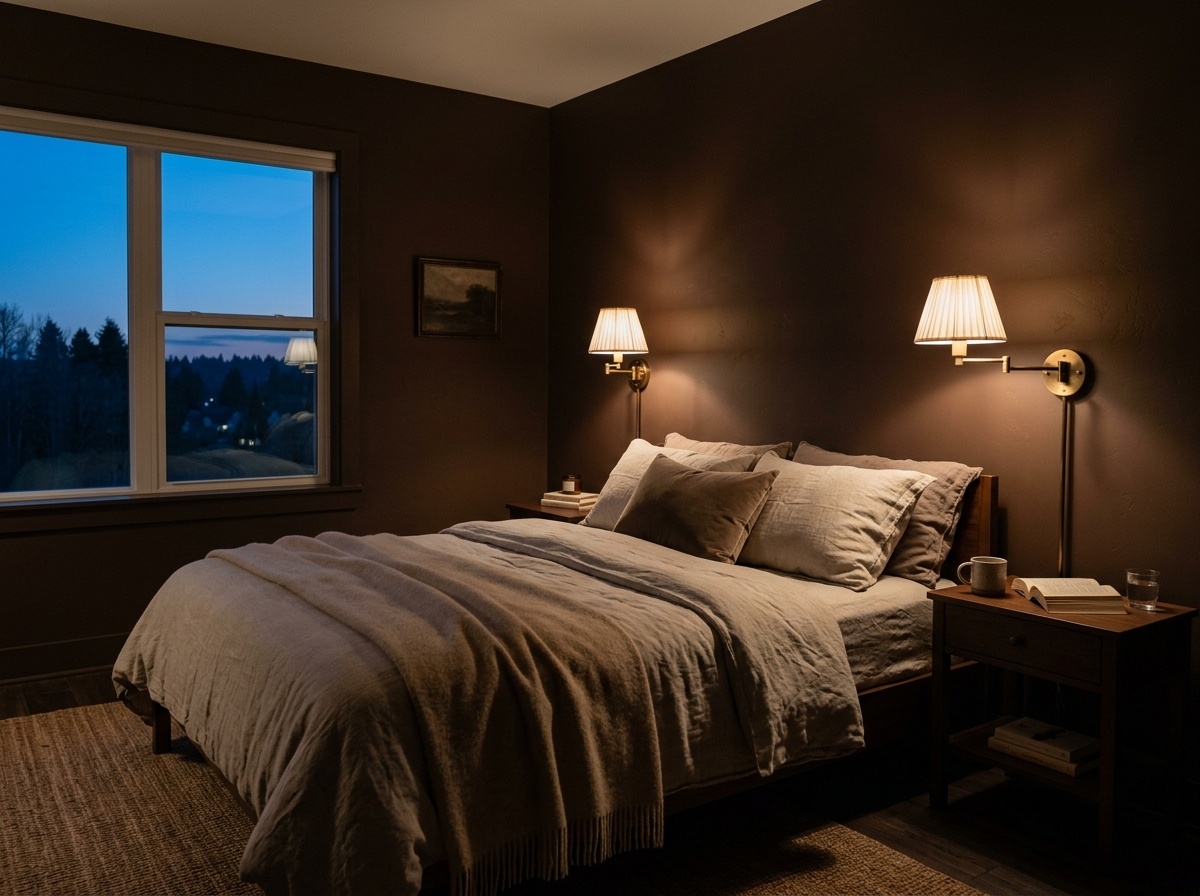
Lighting a dark bedroom requires a completely different approach than lighting a white room. White walls bounce light across the entire ceiling; dark brown walls absorb light, requiring deliberate, layered illumination.
- Ditch the Central Flush-Mount: A single overhead light fixture in a dark bedroom creates harsh downward shadows and ruins the calm evening mood.
- Prioritize Low-Level Ambient Sconces: Mount dimmable brass swing-arm wall sconces at 42 to 46 inches above the finished floor on either side of the headboard. Fitted with pleated parchment or linen shades, they cast a soft, downward pool of light perfect for nighttime reading.
- Choose Warm Circadian Bulbs: Always install 2700K or 2400K warm white LED bulbs. High-kelvin daylight bulbs (4000K+) clash aggressively with earthy pigments, making chocolate walls look cold and industrial.
Frequently Asked Questions
What is the best color to paint a bedroom for better sleep?
Deep, earthy colors with low Light Reflectance Values (LRV)—such as chocolate brown, muted olive green, and slate navy—are scientifically linked to better sleep quality. They minimize visual stimulation, mimic the natural transition into nighttime, and foster an innate feeling of safety and cocooning.
Will painting my bedroom chocolate brown make it feel smaller?
Counterintuitively, no. In smaller bedrooms with standard 8-foot ceilings, deep saturated colors blur the corner lines where walls meet ceilings. Because the eye can no longer easily discern boundary edges, the room often feels deeper and more expansive than it would with high-contrast white walls that sharply define every compact angle.
What rug size should I use with a dark bedroom color scheme?
For a Queen bed, use an 8x10 foot area rug, placed perpendicular to the bed and extending approximately 24 to 30 inches on either side. For a King bed, choose a 9x12 foot rug. Opt for a low-pile wool rug featuring muted creams, soft sage, or subtle terracotta motifs to lift the floor and provide underfoot comfort.
How do I transition chocolate brown decor from summer to fall?
In spring and summer, pair your chocolate brown walls with crisp white cotton percale sheets, sheer linen curtains, and a breezy woven jute rug. When autumn arrives, transition the space simply by adding heavier textures: swap the lightweight blanket for a down duvet, introduce a stitched cocoa or velvet quilt, and layer a sheepskin pelt over your accent chair.