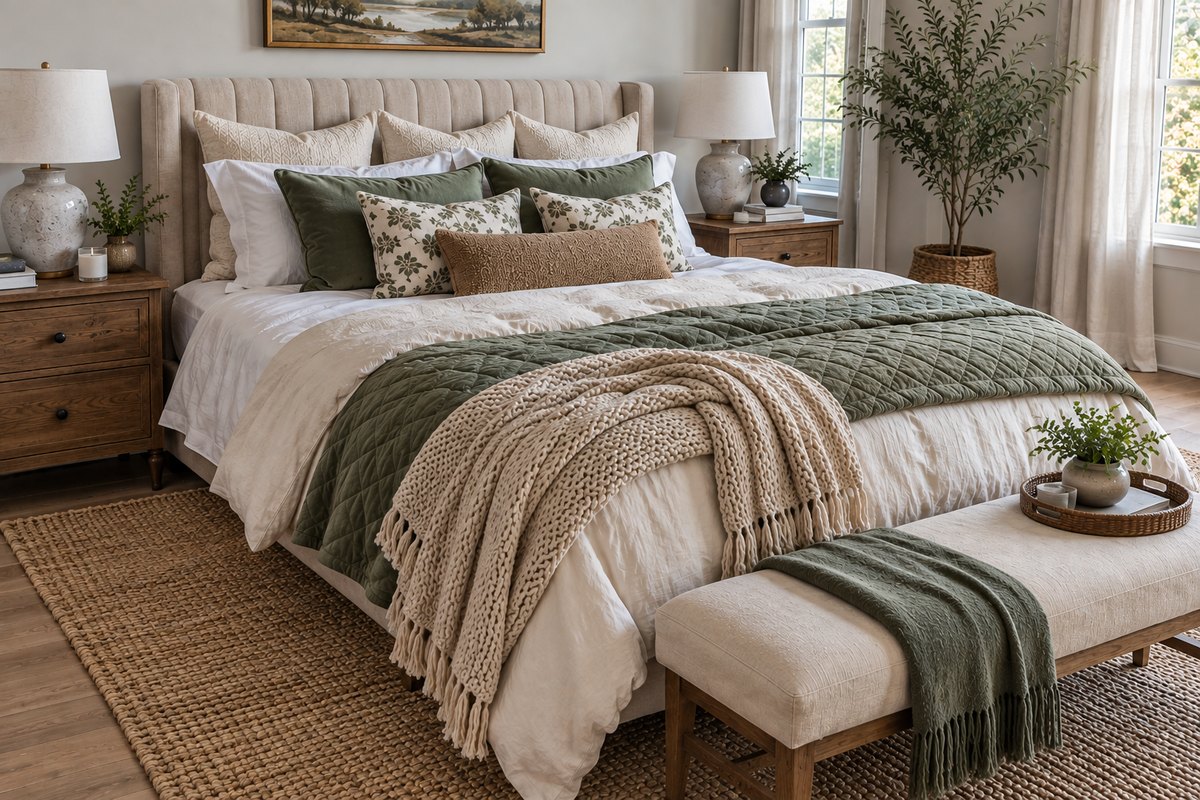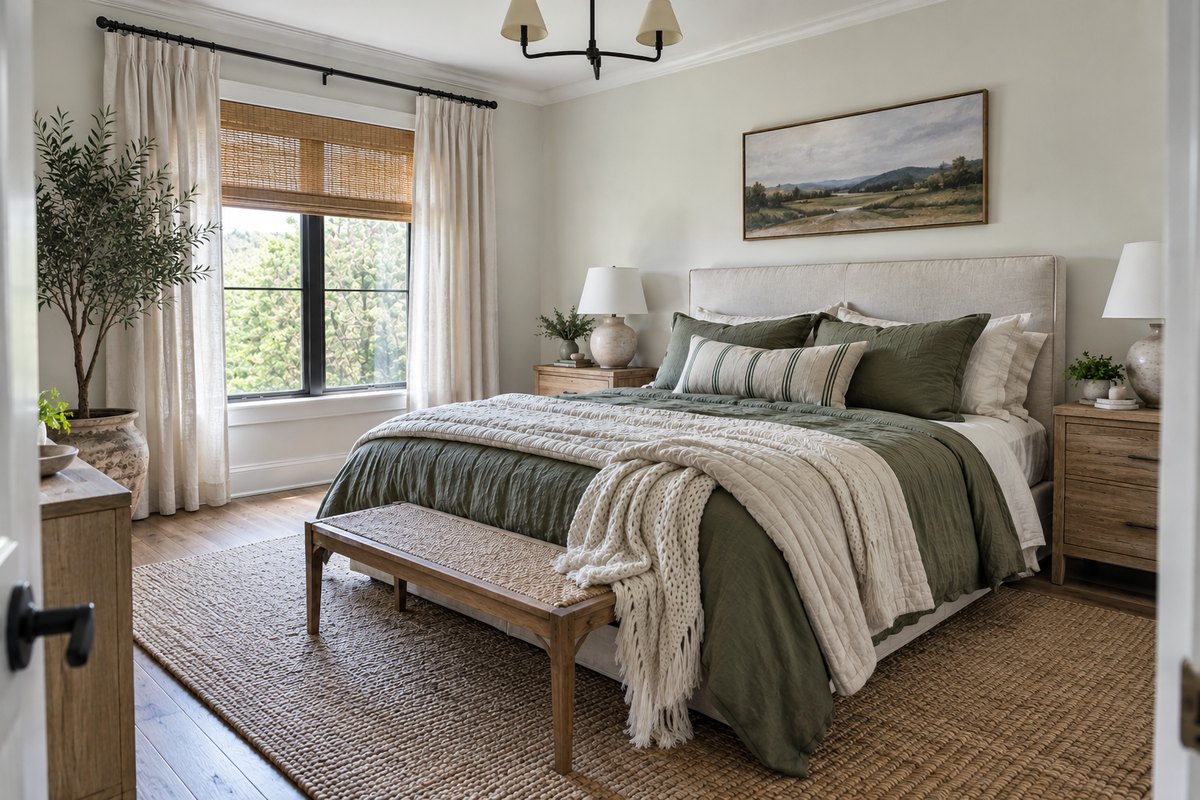
This is the bedroom I keep coming back to. Olive linen on the bed, a cream quilted coverlet folded under it, a knit throw, warm cream walls, oak furniture and a big jute rug.
Nothing in it is loud. But it feels warm in winter, fresh in summer, and it never looks dated. If you want a cozy bedroom that you won't want to repaint in two years, olive green and cream is a very safe place to start.
This guide covers the whole room, not just the bed: how much olive to use, paint colors to test, bedding, rugs, curtains, furniture and lighting. There are also three olive palettes, depending on the look you want.
Why olive and cream work together
Olive is a green with a lot of yellow and gray in it. It sits somewhere between sage and a deep forest green, and that's what makes it so easy to live with.
- It's warm. Unlike cool blue-greens, olive feels cozy, especially in a room that faces north.
- It's earthy. It looks natural next to wood, linen, jute and plants, which are all the materials that make a bedroom feel relaxed.
- It's forgiving. Olive linen hides wrinkles, and olive walls hide scuffs.
Cream is the right partner because it's warm too. Bright white next to olive can look cold and stark. Cream, ivory or oatmeal softens the green and makes the whole room glow a little in morning light.
Olive vs. sage: sage is lighter, grayer and a little cooler. Olive is deeper and warmer. If you like the look of sage but want something cozier for fall and winter, olive is the step up.
The simple color split
The easiest way to use olive without overdoing it is a rough 60-30-10 split:
- 60% cream: walls, the duvet, curtains and the rug.
- 30% olive: bedding, a few pillows and maybe a chair or an accent wall.
- 10% accent: wood, black metal, brown leather or brass.
In the room at the top of this post, the walls, headboard, curtains and throw are all cream. The olive is in the duvet and a few pillows. The accents are oak, jute and a black curtain rod. That balance is why it feels calm, not dark.
Olive green bedroom walls
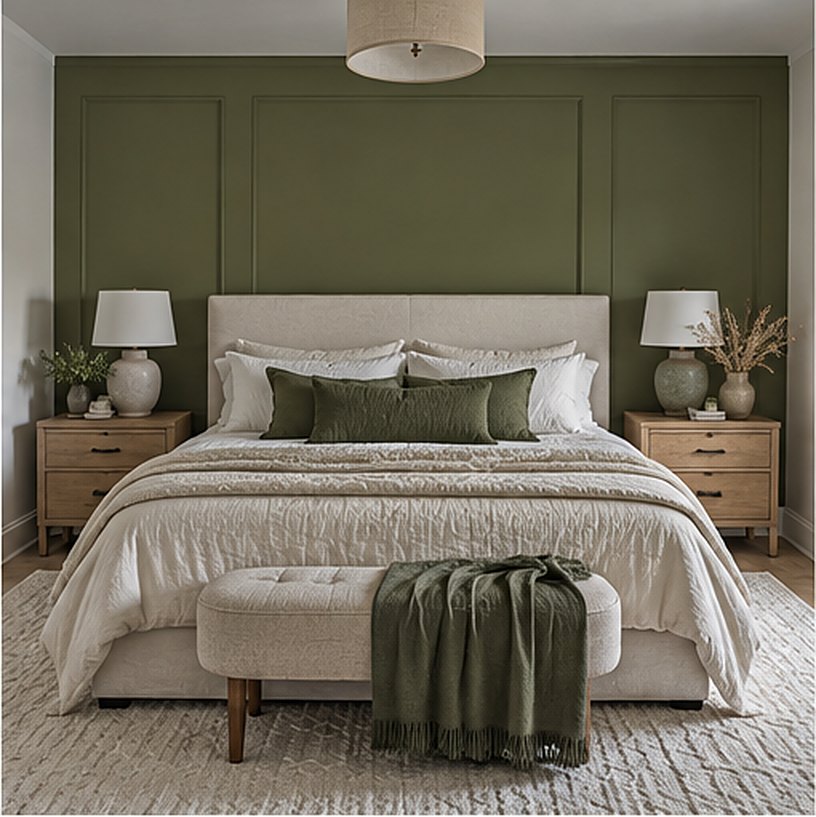
You have two good options.
Cream walls, olive everything else. This is the easiest and most flexible choice. Paint the walls a warm cream, and bring the olive in through bedding, pillows and a plant or two. You can change the whole mood later just by swapping the bedding.
One olive accent wall behind the bed. Paint only the wall behind the headboard olive, and keep the others cream. Simple molding, like the picture-frame panels above, makes it look finished and gives the color some texture. Keep the bedding mostly cream, so the bed stands out against the green.
A whole room in olive can be beautiful too, but it works best in a room with good light, and with lots of cream and wood to balance it.
Olive paint colors to test:
- Farrow & Ball Bancha (No. 298): a deep, earthy olive. Great for an accent wall.
- Farrow & Ball Treron (No. 292): a softer, grayer olive.
- Sherwin-Williams Oakmoss (SW 6180): a warm olive with a yellow lean.
- Sherwin-Williams Pewter Green (SW 6208): a deeper, grayer green that reads olive in warm light.
- Benjamin Moore Saybrook Sage (HC-114): lighter, between sage and olive.
Cream wall colors that pair well: Sherwin-Williams Alabaster (SW 7008) and Benjamin Moore White Dove (OC-17) are both soft warm whites that won't clash with olive.
Always test a large sample on two walls and look at it morning and evening. Olive changes a lot with the light.
Olive green bedding
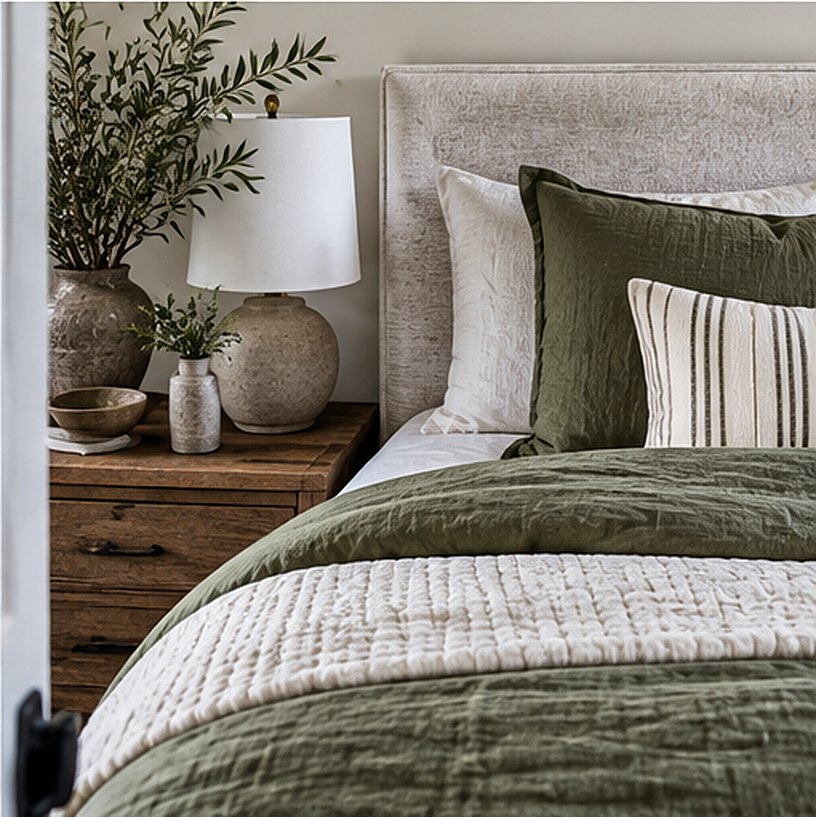
Bedding is the easiest place to start, and the easiest to change.
The combo: an olive green linen duvet, a cream quilted coverlet folded at the foot or tucked underneath, a chunky cream knit throw, and pillows in olive, cream and one striped lumbar in olive and cream.
A few tips:
- Choose linen for olive. Washed linen has a soft, lived-in texture that makes the color look richer. Olive cotton sateen can look flat.
- Add one pattern. A thin stripe, a small check or a simple floral in olive and cream stops the bed looking plain.
- Keep the sheets cream or white. It frames the olive and keeps the bed feeling fresh.
For a step-by-step guide to layering sheets, a duvet, a quilt and a throw, see the fall bedding combo I keep redoing every September. The same method works here, just with olive instead of sage.
Rugs, curtains and furniture
Rug. A big jute or sisal rug adds warmth and texture, and it looks great against olive. If you want something softer underfoot, choose a cream wool rug, or a vintage-style rug in faded olive, cream and rust. Make it large enough to sit under at least the bottom two-thirds of the bed.
Curtains. Cream or oatmeal linen, hung high and wide, just below the ceiling. A bamboo or woven roman shade behind them adds another natural layer, as in the room at the top.
Furniture. Two directions work:
- Light oak or white oak keeps the room fresh and relaxed.
- Walnut or darker wood makes it richer and a little more traditional.
Black metal, like a curtain rod, a lamp or a bed frame, sharpens everything up. Brass adds warmth. Pick one metal and repeat it two or three times.
Plants. An olive tree, a fiddle leaf fig or a trailing pothos brings real green into the room and makes the olive feel natural.
Lighting for a cozy bedroom
A cozy bedroom depends as much on the light as on the colors.
- Use warm bulbs, around 2700K, everywhere.
- Layer your lights: a ceiling fixture on a dimmer, a lamp on each nightstand, and one small lamp or plug-in sconce somewhere else in the room.
- Choose fabric shades in cream or linen. They soften the light and glow warmly in the evening.
- Ceramic or stone lamp bases in cream and oatmeal look lovely against olive.
Three olive and cream palettes
Olive, cream and black
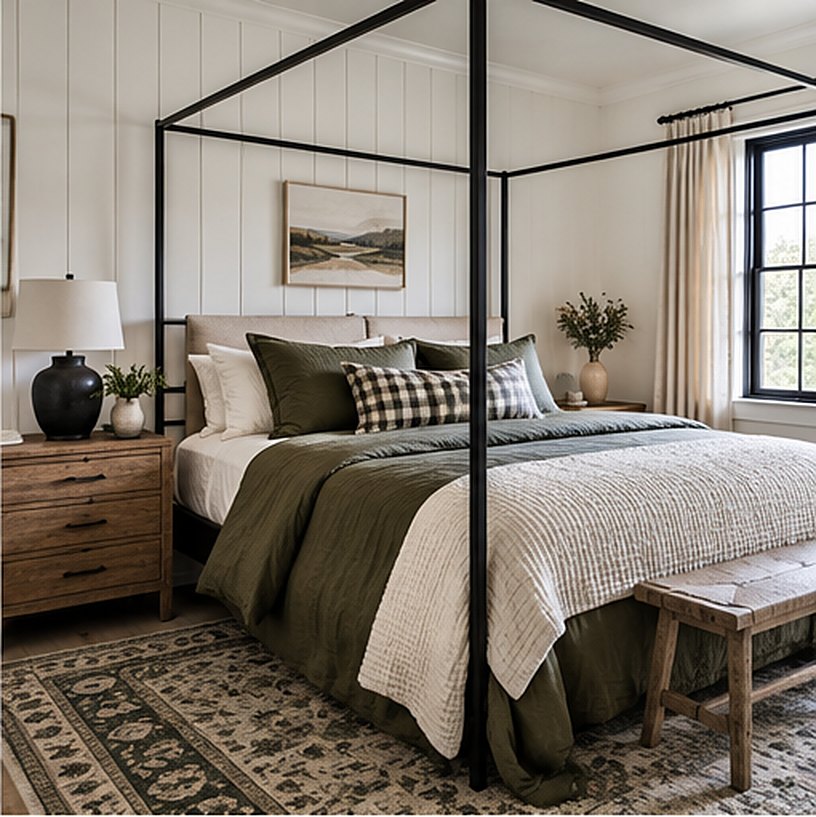
Add black through a canopy bed, black window frames, a black lamp or a black and cream check pillow. It sharpens the soft olive and cream and makes the room feel modern farmhouse. White board-and-batten walls work well with this palette.
Olive, cream and brown
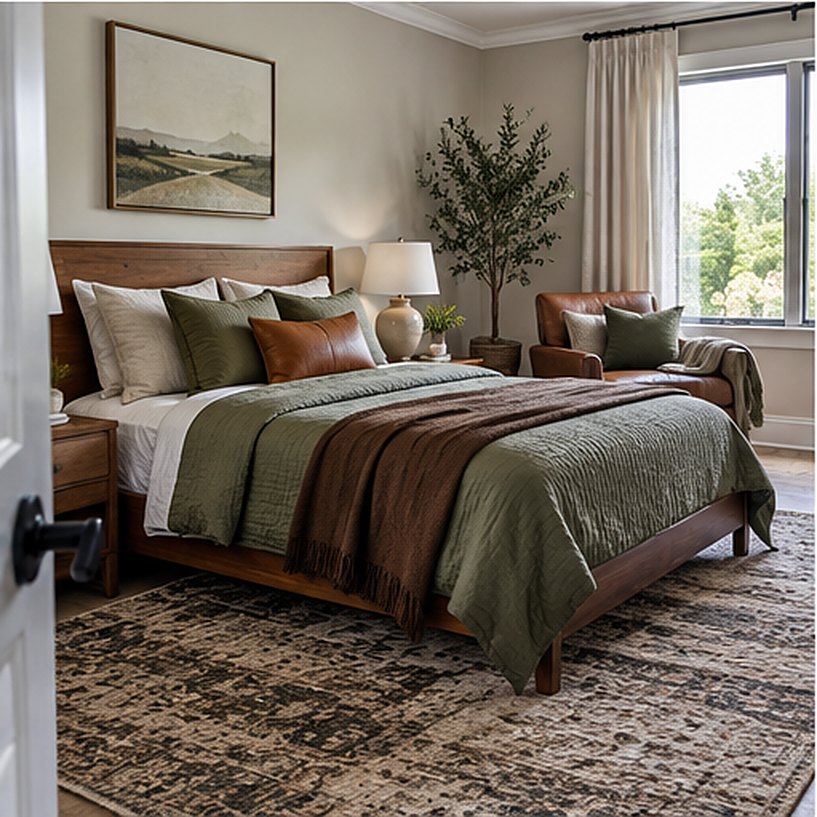
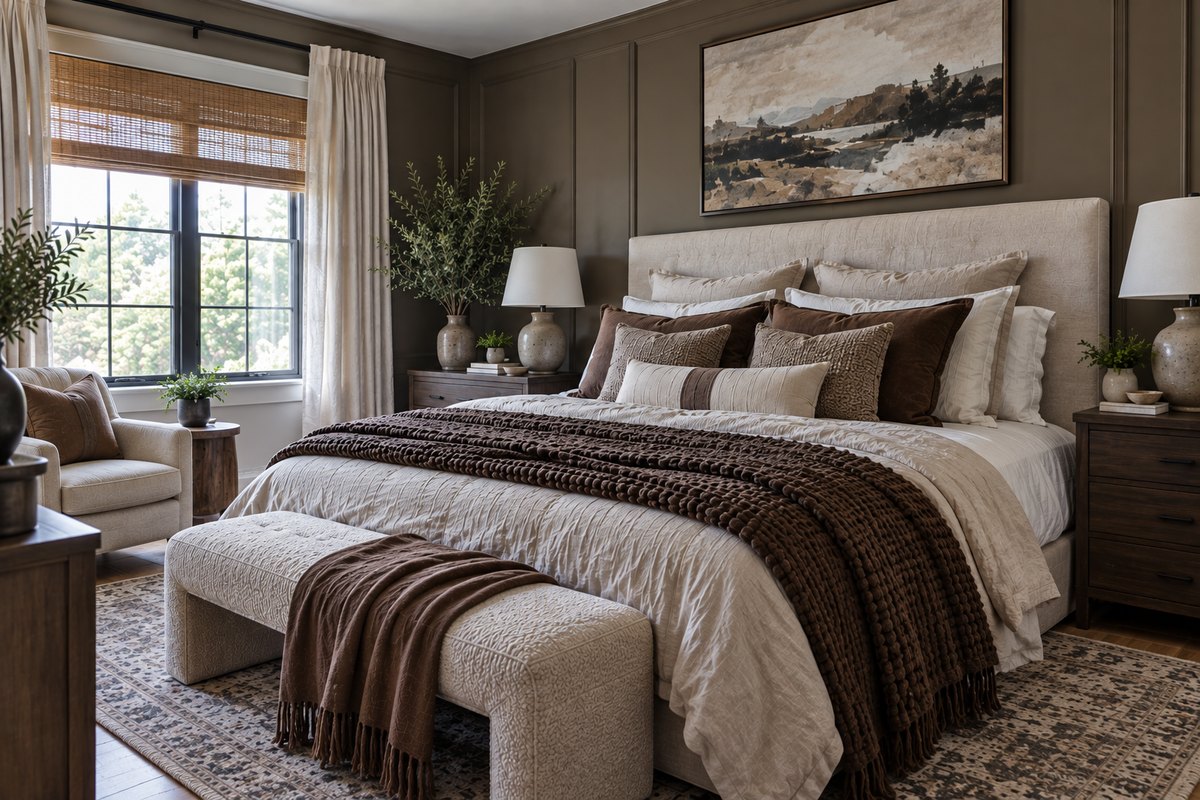
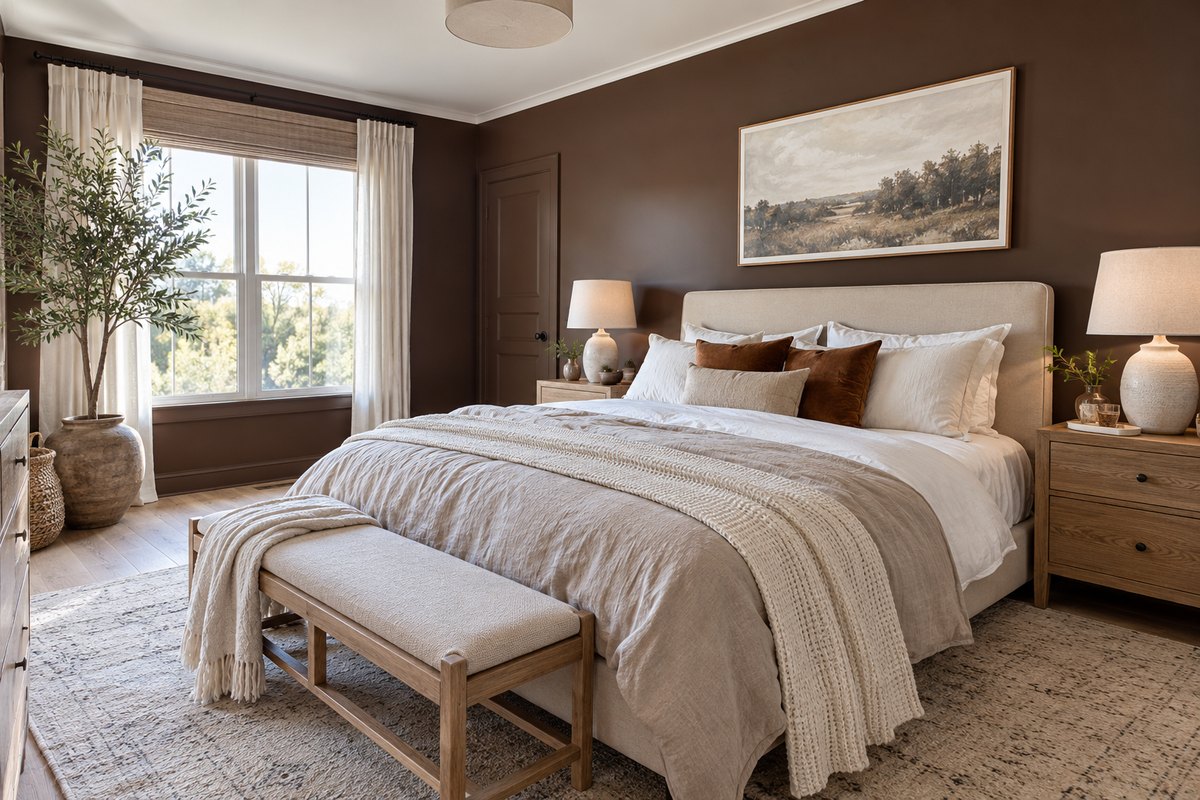
Bring in chocolate brown, cognac leather and walnut. A brown throw across an olive coverlet, a leather lumbar pillow and a leather armchair in the corner make the room feel rich and warm, a little mid-century. It's the coziest of the three, and perfect for fall and winter.
Olive and cream in a small bedroom
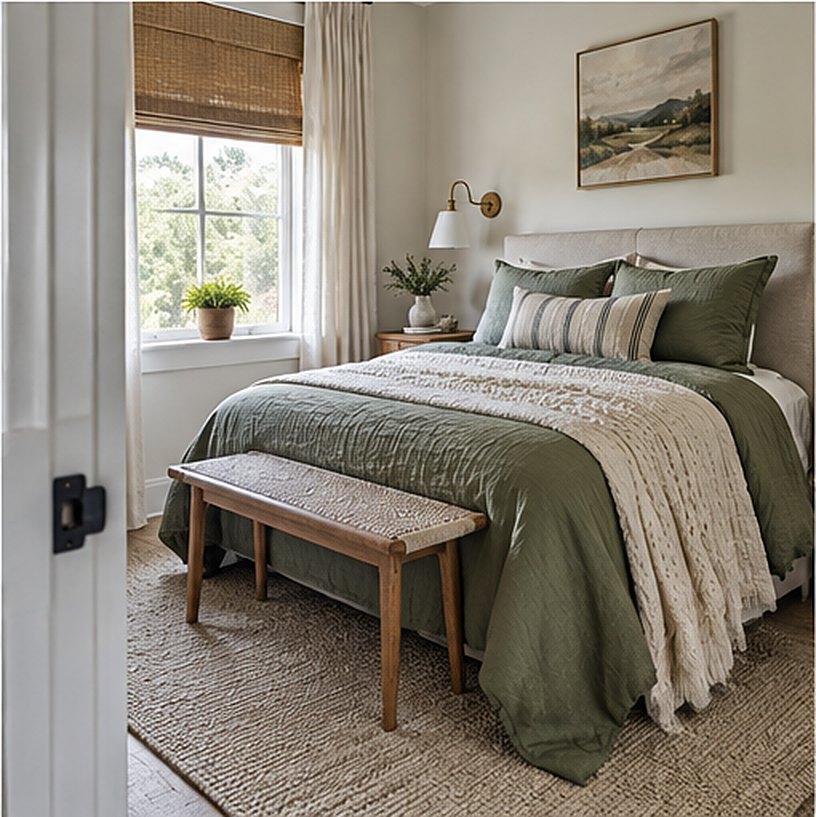
In a small bedroom, keep the walls cream and put the olive on the bed. Swap bulky nightstands and table lamps for a wall-mounted plug-in sconce and a slim nightstand. Use sheer or light linen curtains, and one piece of art rather than several. The room will feel bigger, and the olive will still read clearly.
Common mistakes
Pairing olive with bright white. It looks cold. Use cream or warm white.
Too much olive. A dark olive room with dark furniture can feel heavy. Keep plenty of cream.
Cool-toned bulbs. Blue-white light makes olive look muddy. Use warm 2700K bulbs.
Too many greens. Olive, sage, emerald and teal in one room start to fight. Pick olive and one lighter green at most.
Flat fabrics only. Olive needs texture. Add linen, knit, velvet or a quilt.
Olive green bedroom FAQ
What colors go with olive green in a bedroom?
Cream, ivory and oatmeal first, then natural wood, black, brown leather, rust and brass. Stick to one or two accents.
Is olive green a good color for a bedroom?
Yes. It's warm, calming and earthy, and it works with most wood tones and fabrics. It's especially good in rooms that feel cold or face north.
Should I paint my bedroom olive green or just use olive bedding?
If you're unsure, start with bedding and pillows. If you love it after a few weeks, add an olive accent wall behind the bed.
What is the difference between olive and sage green?
Sage is lighter, grayer and cooler. Olive is deeper and warmer, with more yellow in it.
How do I make an olive green bedroom feel cozy?
Use warm cream on the walls, linen and knit textures, a big natural rug, warm 2700K bulbs and plenty of lamps instead of one ceiling light.
Related reading
- The fall bedding combo I keep redoing every September
- Bedroom ideas that invite you to linger
- The linen bedding guide
Start with olive on the bed and cream everywhere else. Live with it for a few weeks, and you may never want to change it.