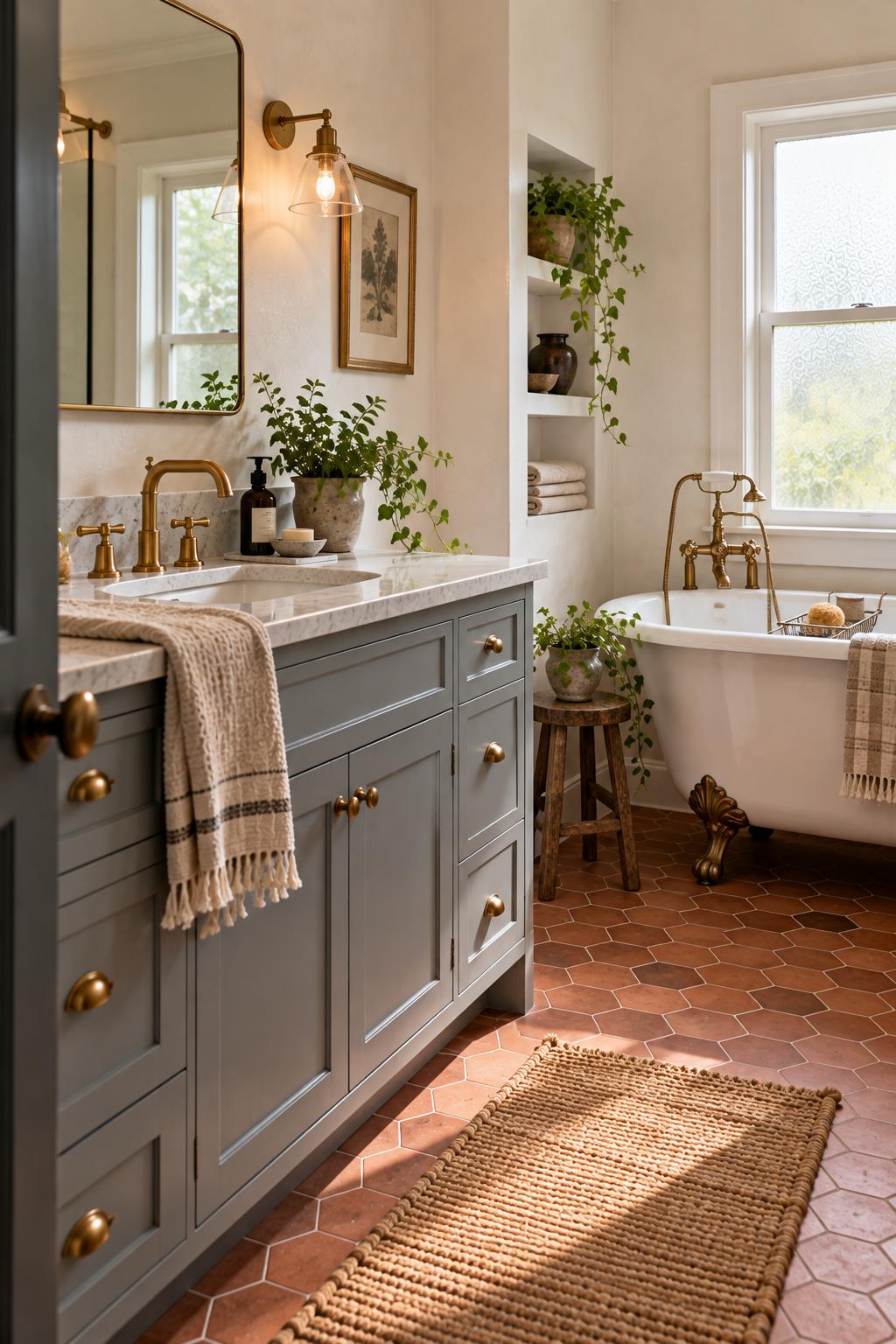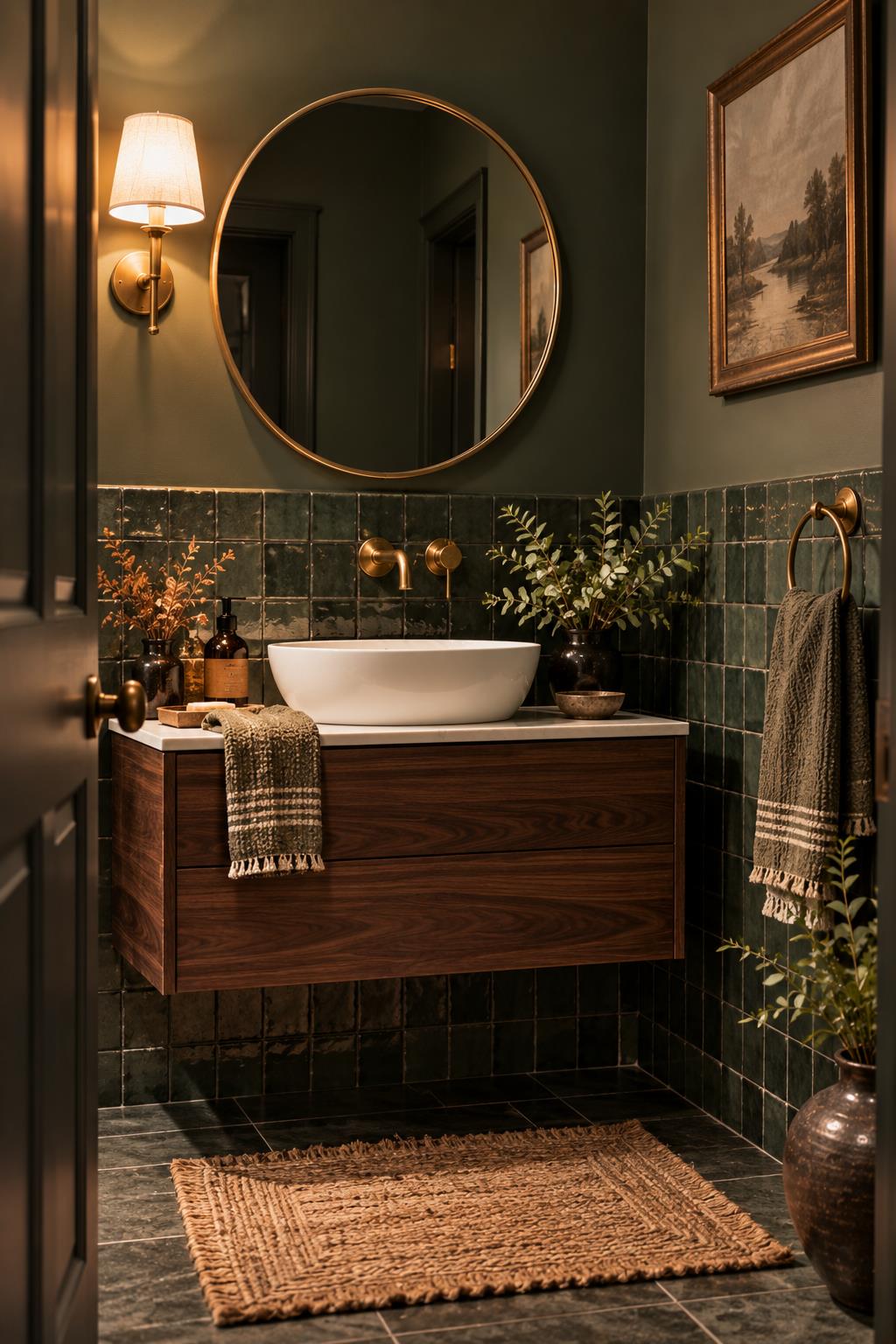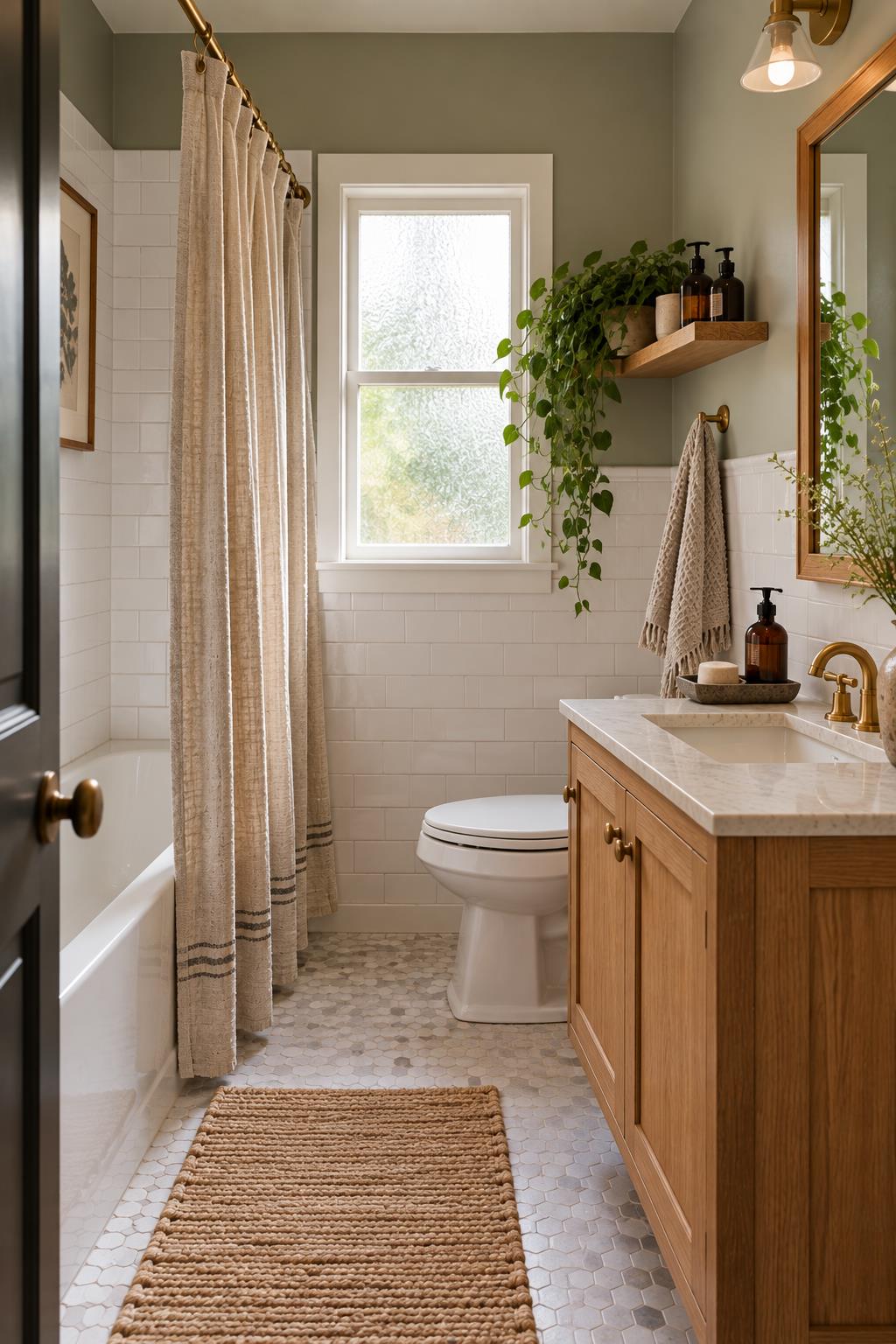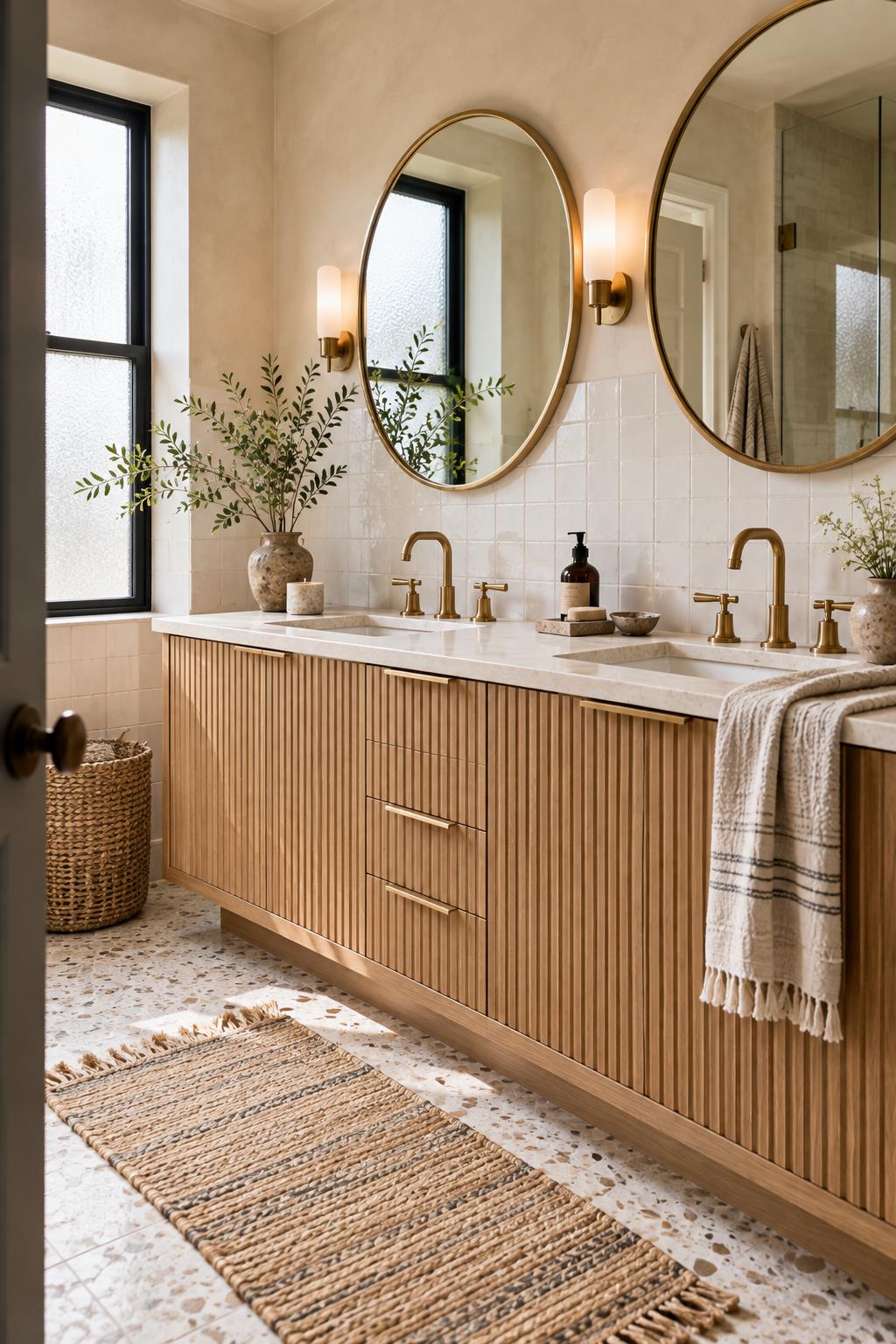
Stone and wood in a bathroom sound perfect together. Get the balance wrong, though, and it tips into a hotel spa: slate everywhere, bamboo accents, a Buddha on the windowsill.
The difference is proportion. Mostly stone. One wood piece. Nothing polished. That's the formula for a travertine bathroom that feels warm and natural, like a house in the south of France, rather than a day spa.
Why travertine
Travertine is a type of limestone with natural pits and holes, formed by mineral springs. It's warm, creamy and slightly irregular, which is exactly why it feels so natural. It has been used in bathrooms since Roman times.
Its warm beige and cream tones are softer than marble and pair beautifully with wood and brass.
Honed, not polished
Polished travertine is shiny and slippery and looks like a hotel lobby. Honed travertine has a soft matte finish that feels velvety and looks natural. It's also less slippery on floors.
Filled vs unfilled: filled travertine has its natural holes filled with resin for a smooth surface. Unfilled leaves them open for a more rustic look. For wet areas, filled is easier to clean.
Mostly stone
Use travertine on:
- The floor.
- The shower walls.
- The wall behind the vanity, or all walls to dado height.
- A travertine basin or vanity top.
The more continuous the stone, the calmer the room.
One wood piece
A single solid wood element, usually the vanity, adds warmth. Walnut, oak or teak. Just one; a wood vanity, a wood ceiling and a wood bench all together start to feel like a sauna.
Brass fittings
Unlacquered brass taps and a brass tub filler age alongside the stone. Brushed nickel works too for a cooler look.
A walk-in shower with a travertine bench
A travertine bench in the shower is useful and beautiful. Make sure the shower is well waterproofed and the bench slopes slightly toward the drain.
Soft textiles
Oatmeal waffle towels and a linen bath mat keep the room soft. Avoid white towels; they look stark against travertine.
Caring for travertine
Travertine is porous and soft, so:
- Seal it every 1 to 2 years, more often in showers.
- Use pH-neutral cleaners. Acidic cleaners like vinegar etch the surface.
- Squeegee the shower after use to reduce water marks.
Tile formats for travertine
- Large format (24x24 or larger): fewer grout lines, calmer and more modern. Best on floors and shower walls.
- Versailles pattern: a mix of rectangles and squares in a repeating layout. Traditional, very European.
- Small mosaics: good for shower floors, where the extra grout lines give grip.
- Slabs: for vanity tops, tub surrounds and full shower walls. The most seamless, and the most expensive.
Use a grout color close to the stone, a warm sand or cream, so the lines disappear.
Lighting stone
Travertine glows in warm side light. Sconces on either side of the mirror, a small pendant or a low lamp in the corner of a large bathroom all bring out the texture in the stone. Overhead can lights flatten it. Warm white, 2700K, keeps the cream tones from going gray.
Travertine vs travertine-look porcelain
Porcelain tiles that mimic travertine are cheaper, need no sealing and are very durable. The best ones are convincing. Real travertine has a warmth and depth porcelain can't quite match, especially in natural light. Many people use real travertine for the vanity top and porcelain for the shower walls.
What it costs
- Travertine tile: $5 to $20 per square foot.
- Travertine vanity top or basin: $300 to $1,500.
- Installation: $10 to $25 per square foot.
Mistakes to avoid
- Polished finish. Choose honed.
- Too many wood pieces.
- Acidic cleaners.
- Stark white towels.
Travertine bathroom FAQ
Is travertine good for bathrooms?
Yes, if honed, sealed and cleaned with pH-neutral products.
Honed or polished travertine for a bathroom?
Honed. It's softer looking and less slippery.
How often should travertine be sealed?
Every 1 to 2 years, more often in showers.
What goes with travertine in a bathroom?
Walnut or oak, brass fittings, oatmeal towels and linen.