If there's only budget for one thing in a bathroom remodel, spend it on the vanity.
It's what you see first when you open the door. It's what you touch every morning and every night. A great vanity makes plain white tile look intentional; a cheap vanity makes expensive tile look wasted. And right now, the vanity everyone is saving is fluted wood: vertical grooves carved into the doors that catch the light and make even a simple bathroom look custom.
What "fluted" means
Fluting is a series of rounded vertical grooves cut into a surface. On vanity doors, it adds texture, shadow and a slightly architectural feel. It comes from classical columns, but on a wood vanity it looks modern and warm.
Reeded is similar, but the ridges stick out instead of being carved in. Both look good; fluted is currently more common.
Choosing the wood
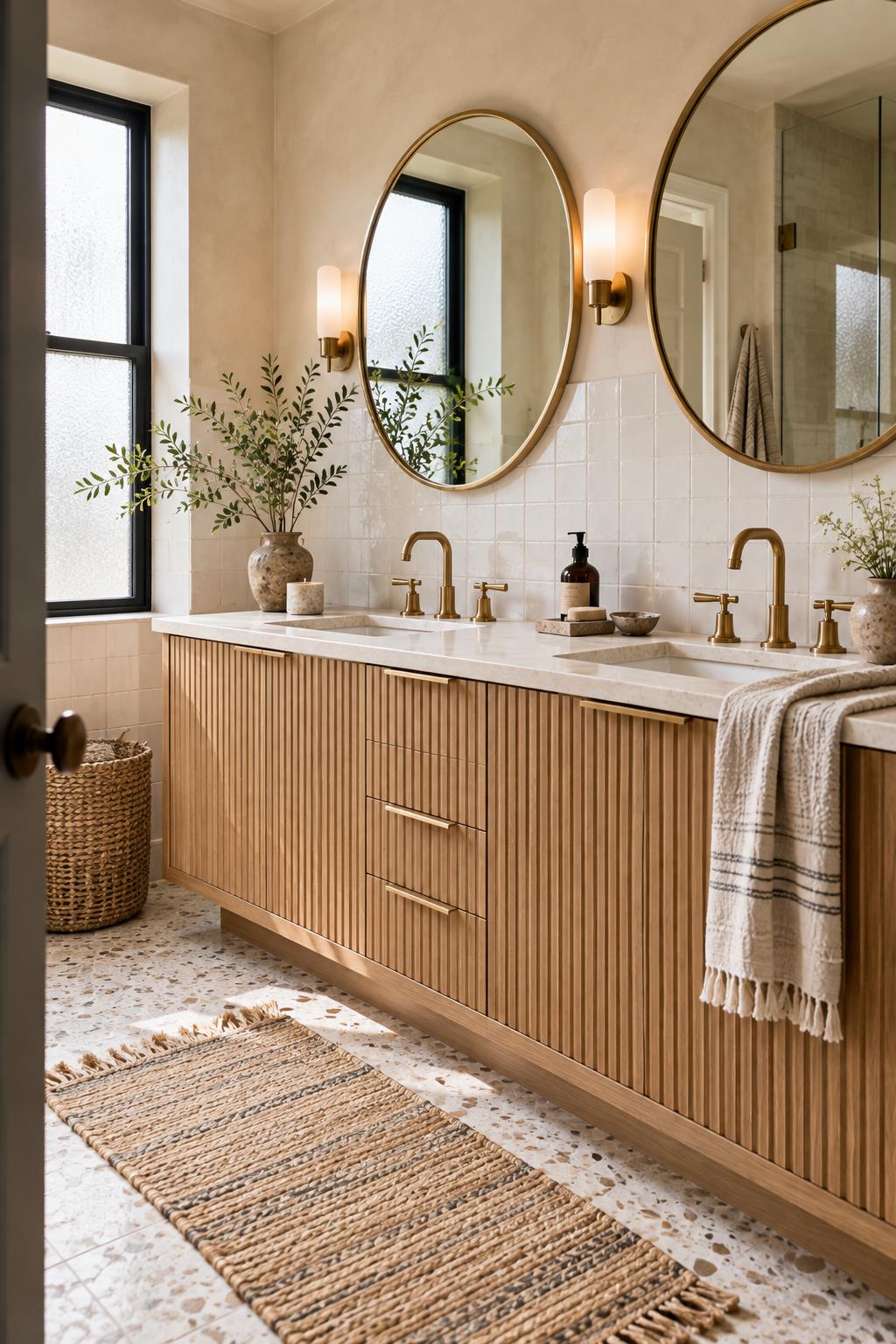
- White oak: pale, warm, modern. The most popular choice, shown here.
- Walnut: darker and richer, more dramatic.
- Painted fluting: in sage, navy or black, for a bold color with texture.
Choose a matte finish so the grooves read as texture rather than shine.
Sizes
- Single vanity: 24, 30, 36 or 48 inches wide.
- Double vanity: 60 or 72 inches wide.
- Depth: usually 18 to 22 inches. Go shallower in a small bathroom.
- Height: 32 to 36 inches. Comfort height, 36 inches, is increasingly standard.
Fluting looks best on vanities at least 30 inches wide, so there's enough surface for the pattern to read.
Floating or floor-standing?
A floating, wall-hung fluted vanity looks lighter and more modern and shows more floor. A floor-standing one on legs looks more like furniture. Both work; floating is better in smaller rooms.
The top
Pair fluted wood with a simple stone top so the texture is the star:
- Honed limestone: soft and warm, used here.
- Honed marble: classic.
- Quartz in warm white: durable and low maintenance.
Undermount basins keep the top clean-lined.
Keep the tile simple
This is the point of spending on the vanity. With a beautiful fluted vanity, plain white square tile or a simple stacked subway looks deliberate. You can put the savings from cheap tile into a better vanity and faucet.
Faucets and mirrors
Aged brass or brushed nickel faucets both suit fluted oak. Round mirrors echo the soft grooves; two round brass mirrors over a double vanity look balanced and classic.
Lighting
Sconces at face height on either side of each mirror, or one sconce above. The side light rakes across the fluting and makes the grooves glow.
Styling
A stoneware soap dish, a small vase and folded linen towels. Keep it minimal so the vanity shows.
Fluted vanity styles beyond oak
- Black fluted vanity: dramatic in a white or marble bathroom.
- Sage or olive painted fluting: soft and fresh.
- Fluted vanity with a curved front: more sculptural, suits a powder room.
- Fluted with legs: reads like a piece of furniture, ideal for traditional homes.
Whatever the color, keep the top and tile simple so the texture still reads.
Caring for a wood vanity in a bathroom
- Wipe water from the top edge and doors after use.
- Run the exhaust fan during and after showers.
- Choose a vanity with a sealed, water-resistant finish.
- Dust the grooves with a soft brush every few weeks.
What it costs
- Fluted oak single vanity with top: $900 to $2,500.
- Fluted oak double vanity: $2,000 to $5,000.
- Custom fluted vanity: $3,500 to $8,000+.
Mistakes to avoid
- Busy tile competing with fluting. Keep tile plain.
- Glossy finish on fluting. Matte reads better.
- Too small a vanity. Fluting needs width.
- Skimping on the faucet. It's the other thing you touch every day.
Fluted bathroom vanity FAQ
Are fluted vanities in style?
Yes. Fluted wood vanities are one of the most saved bathroom looks on Pinterest.
What countertop goes with a fluted oak vanity?
Honed limestone, marble or a warm white quartz.
Are fluted vanities hard to clean?
A soft brush or cloth for the grooves every few weeks is enough.
Should I spend more on the vanity or tile?
On the vanity. It's the focal point and gets the most use.