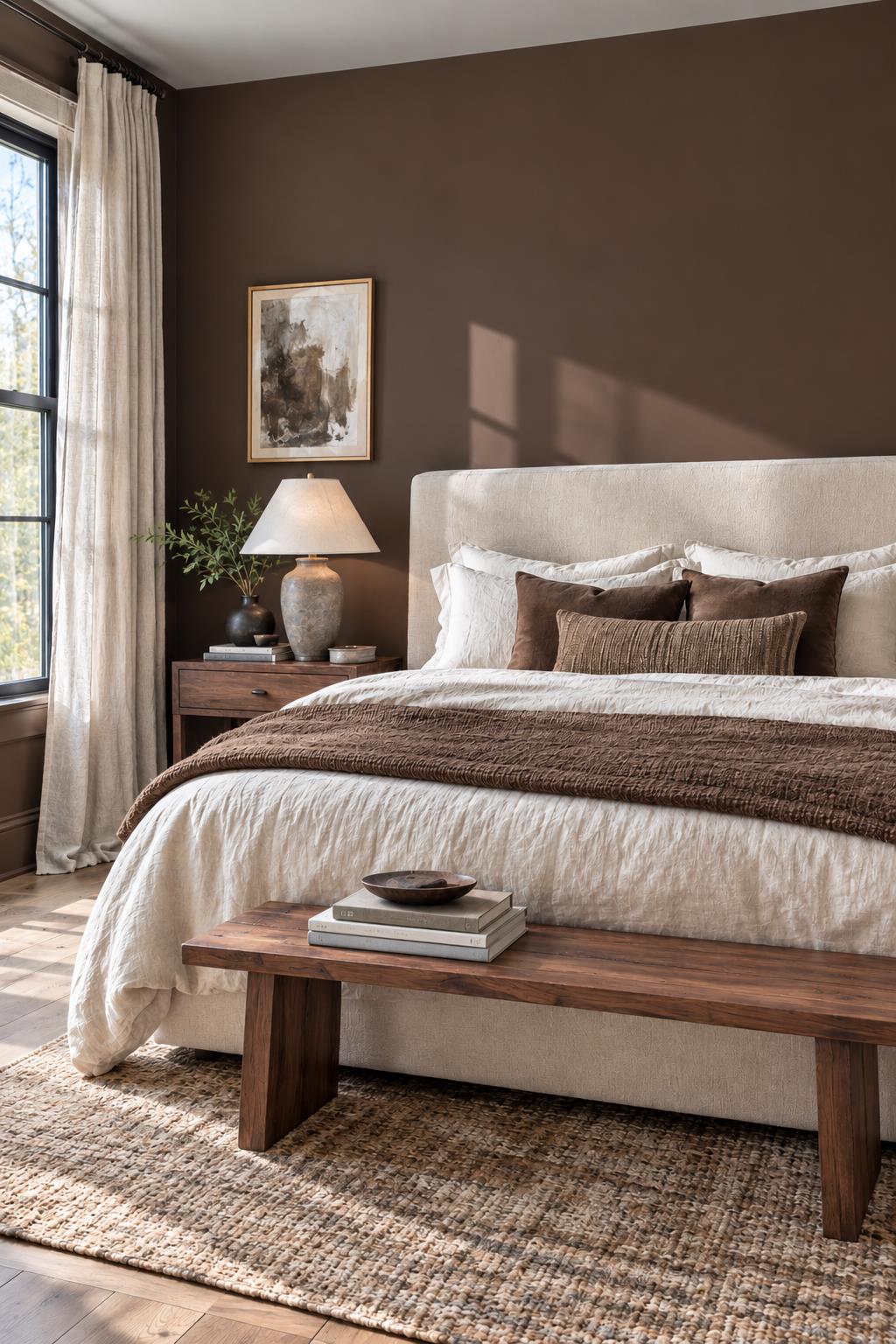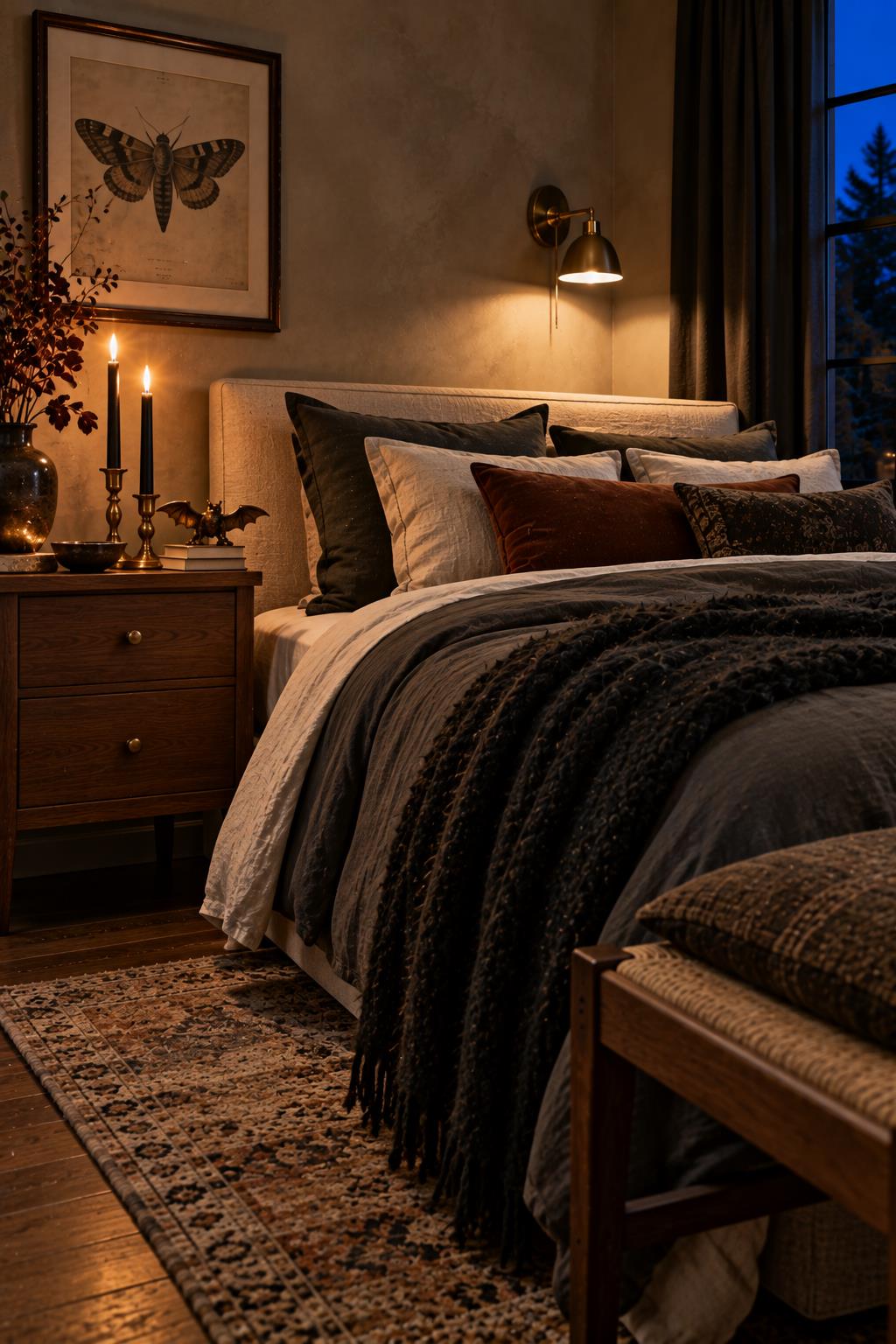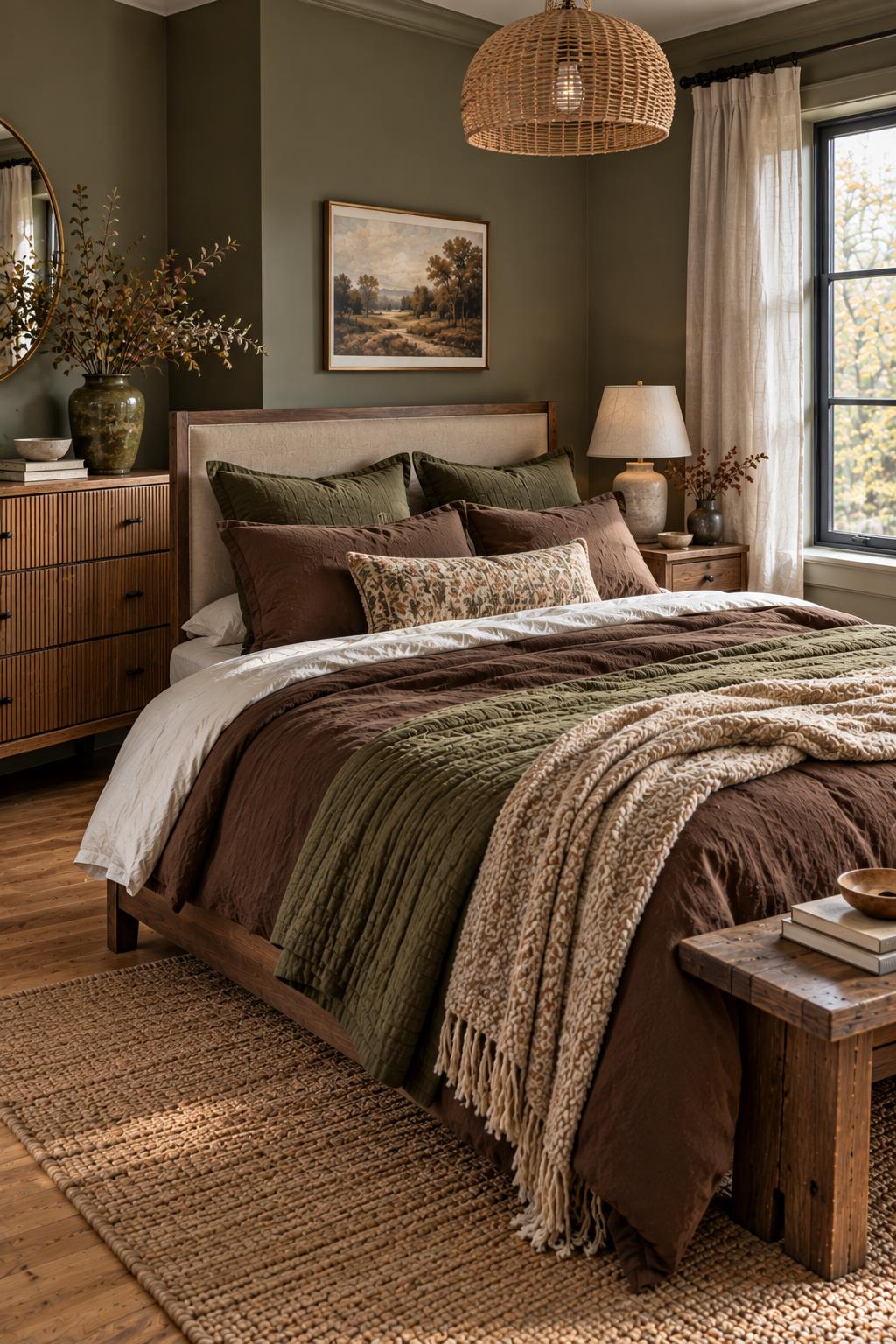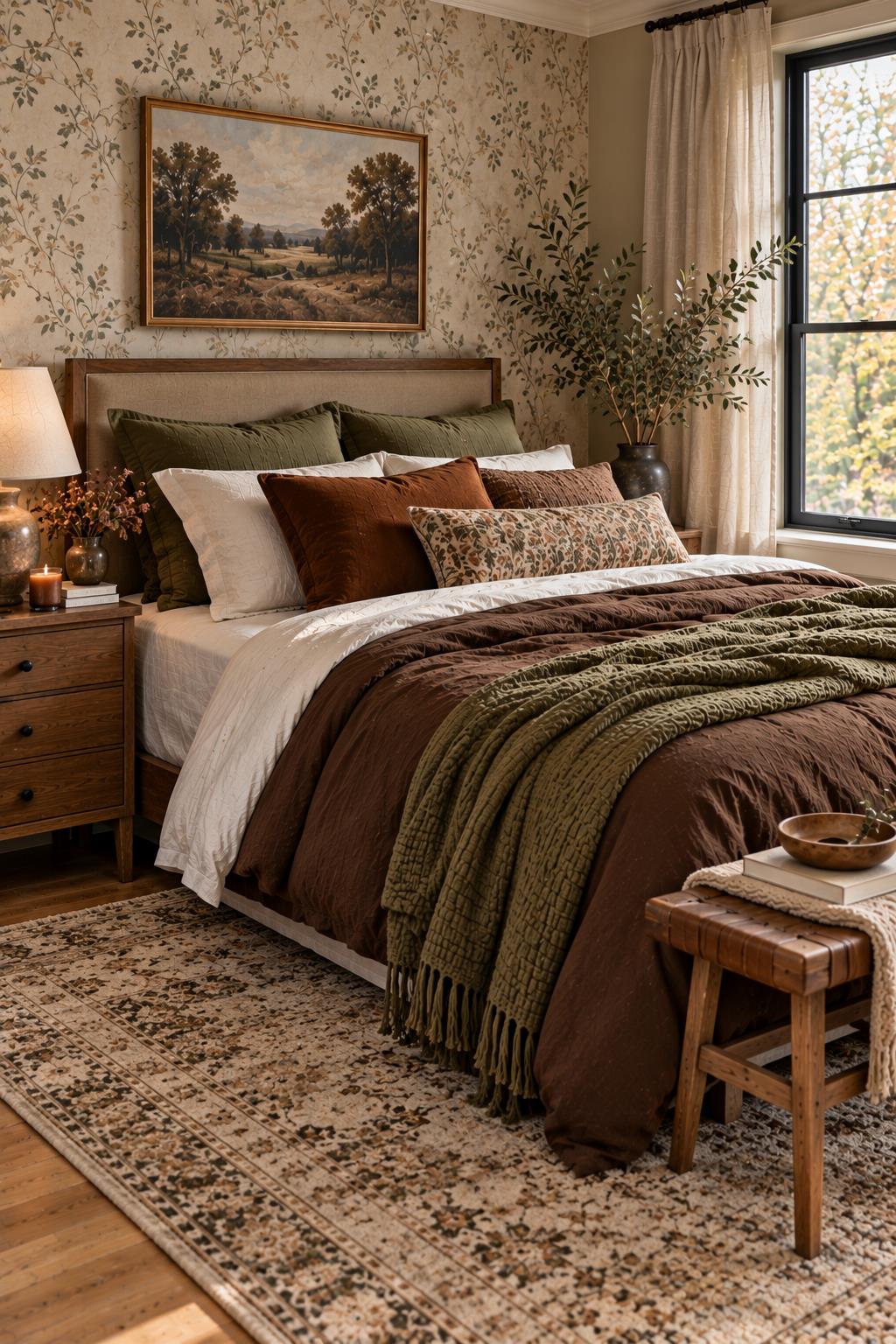
Does olive go with brown? It's one of the most-asked questions under brown bedding searches right now, and the short answer is yes. Better than almost anything.
Here's the longer answer. Brown bedding looks dated for one reason: everything else in the room is brown too. A brown duvet on a brown bed frame under a brown headboard with brown curtains is a 2006 hotel room. The fix isn't to lose the brown. It's to give it a partner, and olive is the partner that works best, because both colors come from the same place. Bark and leaves. Soil and moss.
Why olive, specifically
Brown is a warm neutral with red or orange underneath. Olive is a warm green with yellow and brown underneath. They share warmth, so they sit together without fighting. Cooler greens, like sage with a blue base, emerald or mint, pull against brown and make it look muddy.
If you're holding a swatch, the test is simple. Put the green next to the brown in daylight. If the green looks gray or blue beside it, it's the wrong green. If it looks like a leaf in fall, you've got it.
Decide which layer gets which color
This is where most people go wrong. They buy a brown and green duvet cover with both colors in a pattern, and it reads busy. Better to give each color its own layer:
- Duvet: brown. Chocolate, cocoa or a darker coffee in washed linen or cotton.
- Sheets: white or ivory, always. They sit between the two colors and keep the bed fresh.
- Shams or pillowcases: olive.
- Quilt folded at the foot: olive, or a brown and olive check.
The white sheets matter more than they look. Without them, brown and olive side by side get heavy.
Or flip it: olive duvet, brown accents
If your bedroom is small or dark, reverse the order. An olive duvet is lighter in feel than chocolate, and brown then comes in through a knit throw, a leather headboard or a walnut bed frame. It's the same pairing with a gentler balance.
Fabric matters as much as color
Olive and brown in shiny polyester look cheap every time. Washed linen, cotton percale, cotton waffle and wool are the fabrics that make these colors look rich. They have a slight irregularity in the weave that catches light, and that texture is what separates a good bed from a catalogue one.
Linen also softens with every wash and gets better looking over time. If you only splurge on one piece, make it a linen duvet cover.
What to put on the walls
Brown and olive bedding looks best against a plain, warm background. Cream plaster, warm white or a soft limewash. Avoid gray walls; they drain the warmth out of both colors. If you want more drama, a mushroom or taupe wall works too, as long as it's lighter than the duvet.
One accent that isn't brown or green
Once the bed is set, add one small thing in a third color so it doesn't look matched. The best options are rust, mustard or a faded pink. A single lumbar pillow, a small vase, or a print on the wall. Keep it small.
Where to buy brown and olive bedding that looks right
Online photos are unreliable with both colors. Brown can shift from cocoa to orange on a screen, and olive can look gray or yellow depending on the photographer. A few things that help before you order:
- Read the color name, then look for a customer photo. Reviews with photos in real bedrooms show the true shade far better than studio shots.
- Order a swatch. Most linen brands send fabric swatches for free or a few dollars. Worth it for a $150 duvet cover.
- Buy from one maker for the two main colors. Brands tend to dye their range to work together, so their olive and their chocolate usually suit each other.
- Check the fiber content. Look for 100 percent linen, 100 percent cotton percale, or a linen-cotton blend. Skip microfiber.
Brown and olive bedding for each season
Fall: chocolate duvet, olive quilt, cable knit throw.
Winter: add a wool plaid blanket in brown, olive and cream, and swap percale sheets for flannel in ivory.
Spring and summer: olive linen duvet, white sheets, brown only in the wood of the bed frame and nightstand.
The pairing works all year. You're just moving the weight between the two colors.
Mistakes to avoid
- Matching brown and green patterned sets. They look like a bundle deal. Buy solids and mix them.
- Olive that's too yellow. It turns khaki next to chocolate. Pick an olive with some gray in it.
- Skipping white. Always keep white or ivory sheets in the mix.
- Brown curtains to match. Keep curtains cream or oatmeal so the bed stays the star.
Brown and olive green bedding FAQ
Does olive green go with brown bedding?
Yes. Olive and brown share a warm base, so they look natural together. Use each on a separate layer with white sheets between them.
What color walls go with brown and olive bedding?
Warm white, cream, soft limewash or light mushroom. Avoid cool gray and stark white.
What's the best fabric for brown and olive bedding?
Washed linen or cotton percale for the duvet, waffle or wool for throws. Avoid shiny polyester.
Can I add a pattern?
Yes, on one piece only: a small check quilt or a plaid blanket that has both colors in it.