Most brown bedrooms are built from the bed outward. Somebody buys a mocha duvet, then a brown throw, then brown curtains to match, and the walls stay whatever builder white they were on move-in day. It never quite works. The brown ends up floating in the middle of the room like a stain.
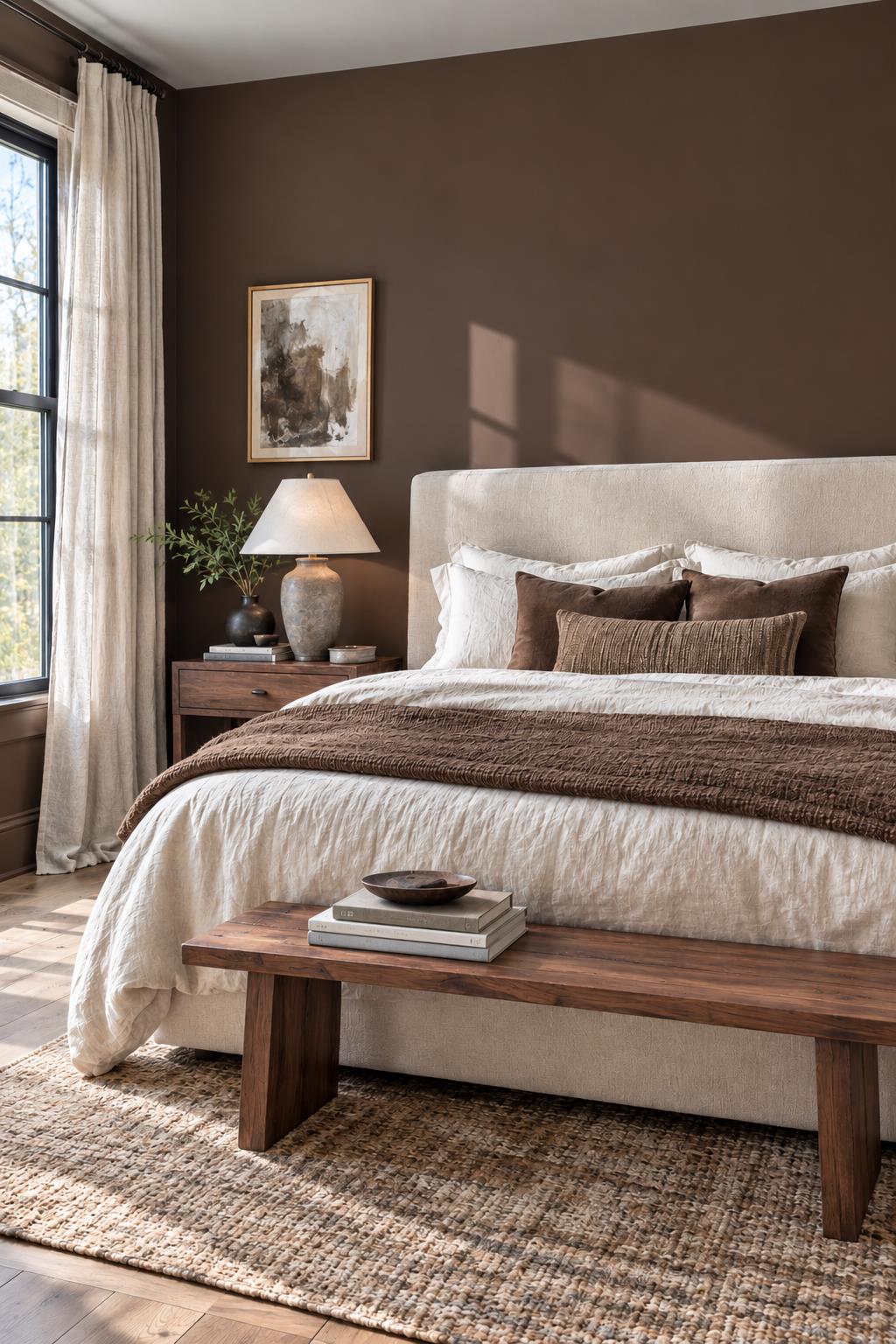
Flip it. Put the brown on the walls first and keep the bed pale. That one change is behind every good room on this page, and it's the reason brown bedroom walls ideas are pulling more searches this fall than brown bedding on its own. The color wraps you instead of sitting on top of you.
I'm an architect, and when a client is nervous about a dark wall I build the room as a render before anyone opens a paint can. Every image here was made that way, so you can see the paint in a real-looking room before you commit a weekend to it.
Pick a brown with the right undertone
Brown paint splits into two families, and mixing them up is the most common mistake I see.
Red-based browns lean chocolate and cocoa. Benjamin Moore Cocoa Bean and Farrow & Ball London Clay sit here. They glow in evening lamplight and read almost burgundy after dark.
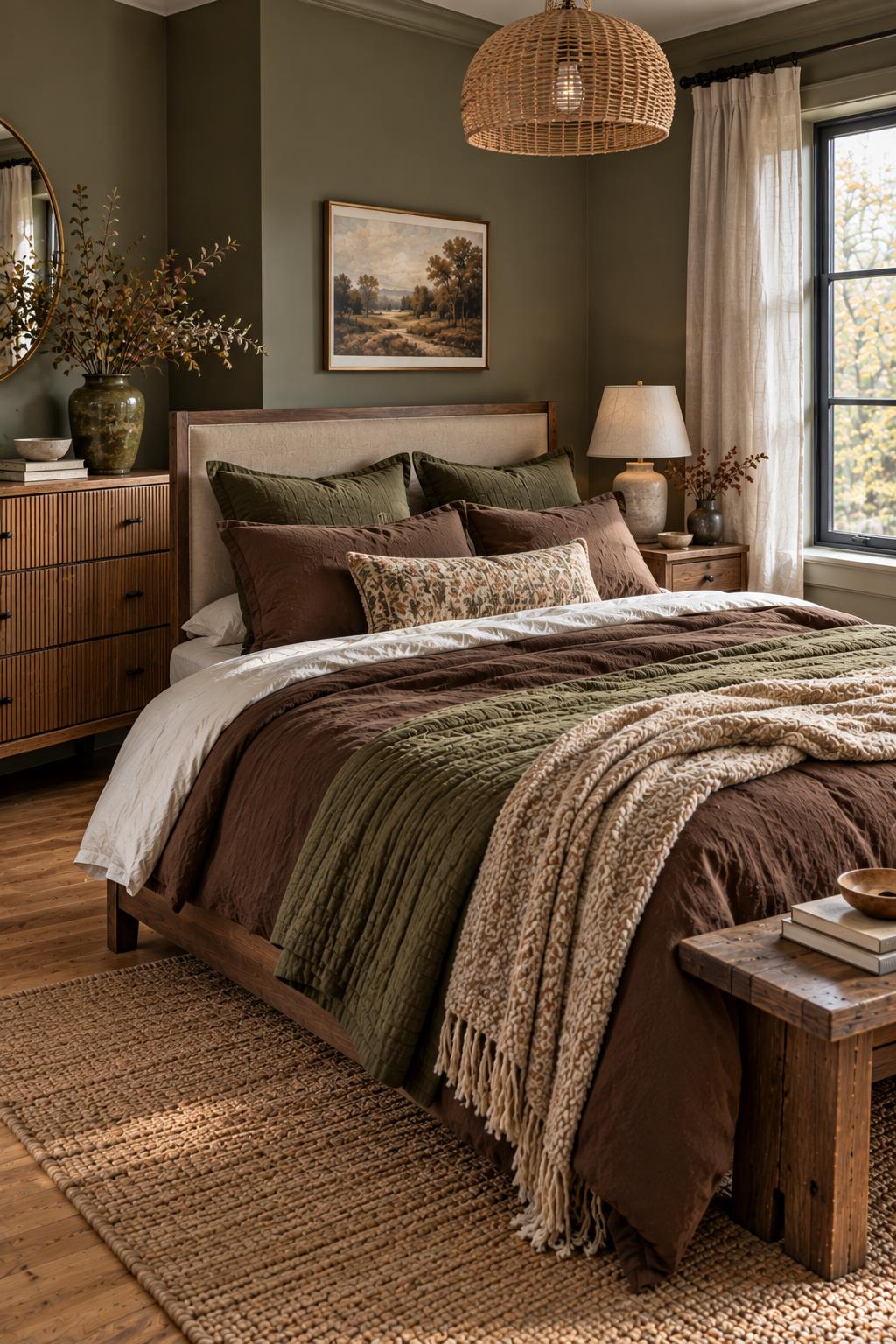
Green-based browns lean toward olive and bronze. Sherwin-Williams Urbane Bronze is the best known. They stay calmer, look more modern, and work better in a north-facing room where red browns can turn muddy.
Paint a sample board, not the wall, and move it around the room over two days. Look at it at 7am and at 9pm. The version you'll live with is the one you see at night.
Keep the bed lighter than the walls
This is the rule that stops a brown room from going flat. The bed should be at least three shades lighter than the walls. Cream, oatmeal, ivory, white percale. If you want brown on the bed, use it as a folded quilt or a throw across the bottom third, not the whole duvet.
The contrast is what makes the walls look expensive. Without it, the eye has nowhere to land and the room shrinks.
Try it on one wall first
Nervous? Paint only the wall behind the headboard. It's the wall you see when you walk in and the one your back is against when you sleep, so it gives you the full effect for a quart of paint and one afternoon. Live with it for a week before you decide on the other three.
Go darker at night with the right lamps
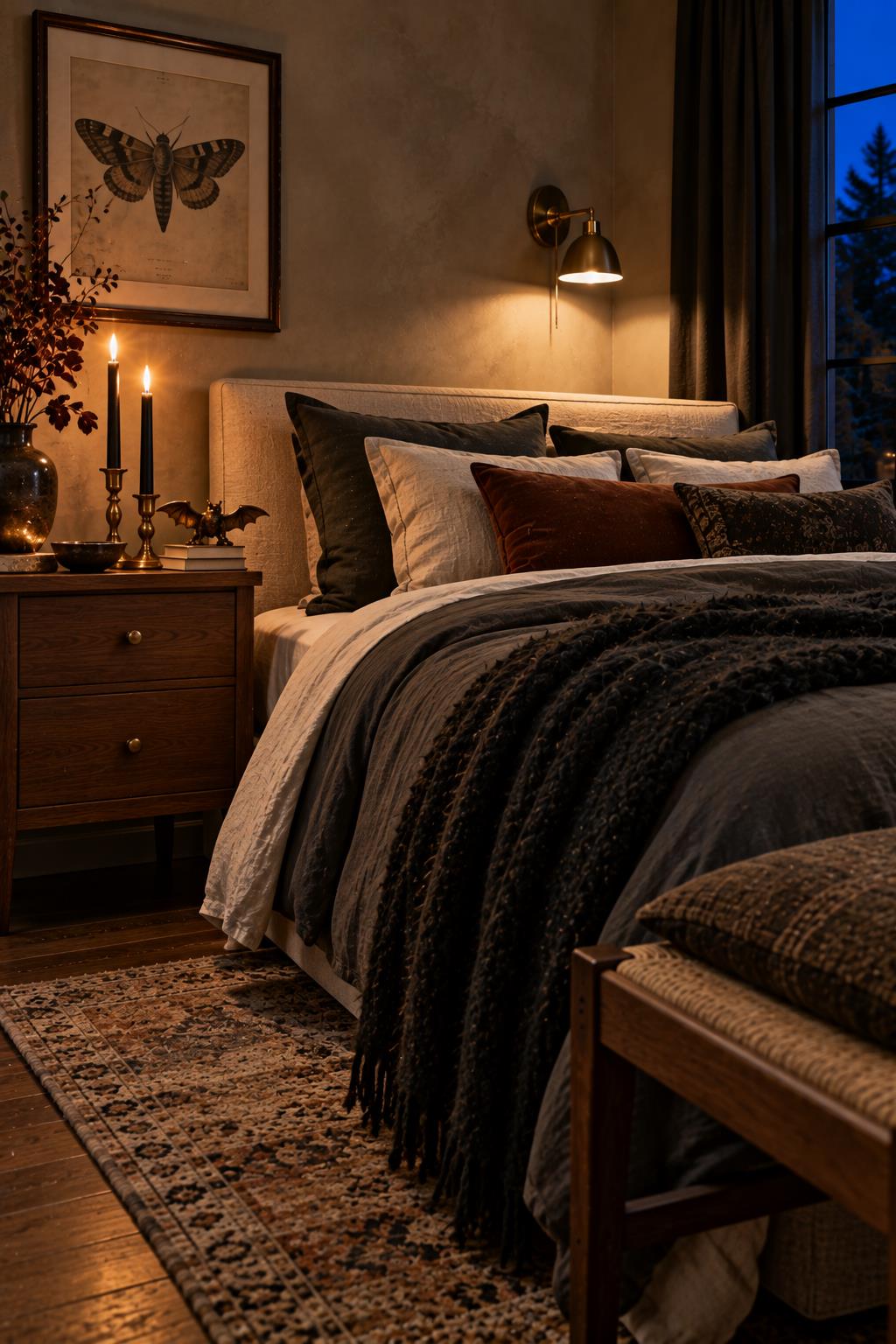
Brown walls come alive in warm light and go dead in cold light. Swap any bulb above 3000K for 2700K. Then add light low in the room: a ceramic table lamp with a linen shade on each nightstand, and a small lamp on the dresser. Overhead lighting flattens brown; side lighting gives it depth.
Add one contrasting material
A brown room needs one thing that isn't brown or cream to give it an edge. The three that work best:
- Aged brass in a swing-arm wall sconce or a lamp base.
- Green from a living plant, an olive tree or a trailing pothos.
- Black in a thin picture frame or iron curtain rod.
Pick one. More than that and the room starts to feel busy against such a strong wall.
Don't forget the trim and ceiling
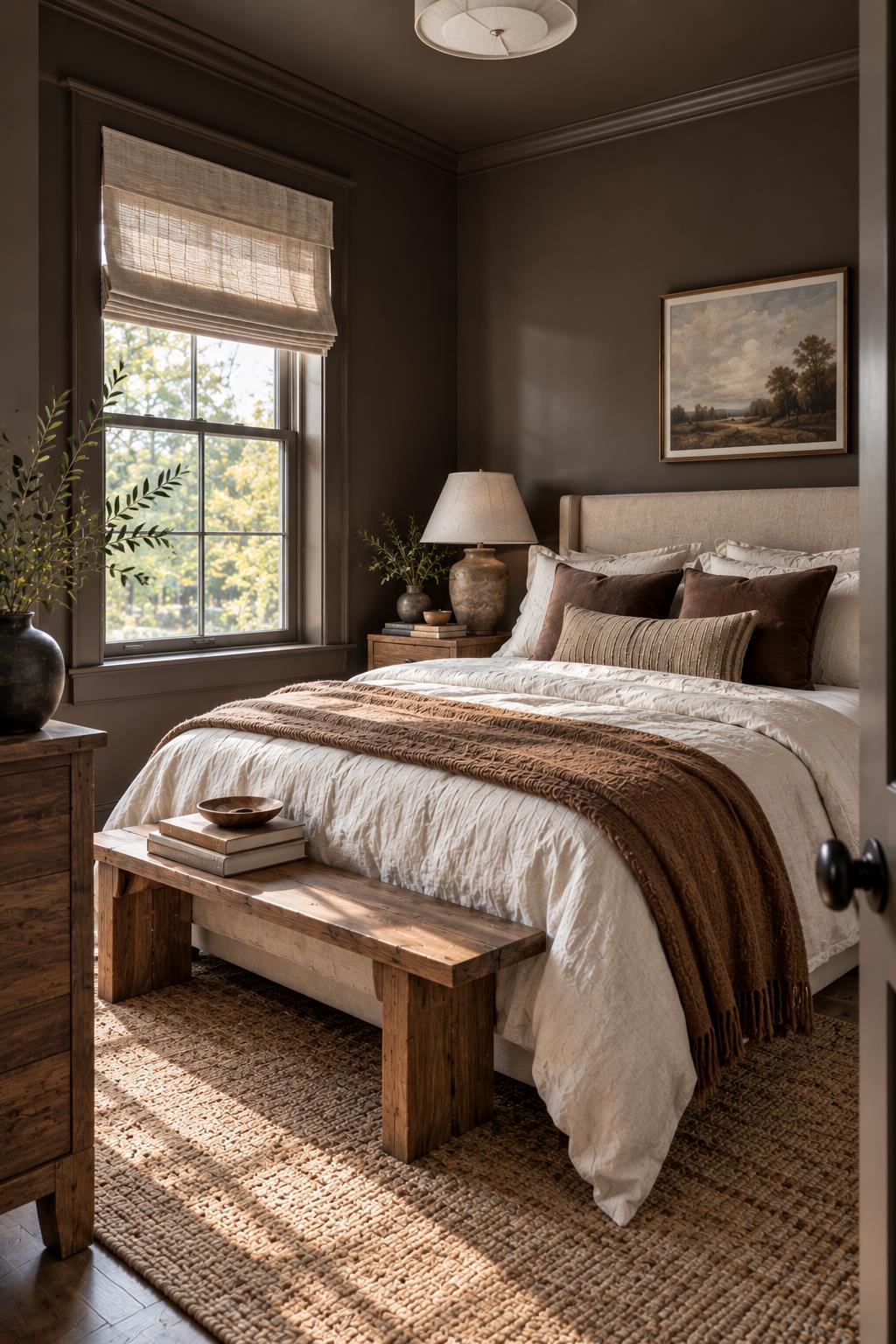
White trim against brown walls looks sharp but can feel dated, a little like a 1990s den. Two better options: paint the trim in the same brown with an eggshell finish, or go one shade lighter. A white ceiling is fine in a tall room. In a room under eight feet, a ceiling tinted with 25 percent of the wall color closes the box in a good way.
Floors that work with brown walls
Pale wide-plank oak is the easiest partner. The floor lightens the bottom of the room, the bed lightens the middle, and the walls do the work. If you have dark floors, add a large wool rug in cream or oatmeal that reaches at least 18 inches past each side of the bed.
Mistakes that make brown walls look muddy
I've seen the same four problems over and over, in clients' homes and in my own.
Using a cool bulb. A 4000K daylight bulb turns cocoa into gray mud. Check every bulb in the room, including the closet.
Leaving the ceiling stark white in a low room. The hard line where brown meets white draws a box around you. Tint the ceiling or paint it the same color.
Too much brown fabric. Brown walls, brown duvet, brown curtains and a brown rug is a lot of the same thing. Keep fabrics lighter than the walls and let wood be the other brown.
Skipping the primer on old walls. Deep browns need a tinted primer, especially over white. Without it you'll be on coat three and still see patches.
What it costs to paint a bedroom brown
A standard 12-by-12 bedroom takes about two gallons for two coats on the walls, plus a quart for trim. Premium paint runs $70 to $110 a gallon, so expect $180 to $260 in paint, another $30 for a tinted primer, and a weekend. If you hire a painter, most quote $400 to $800 for walls only in a room that size, more if they're doing ceiling and trim in the same color.
That's less than a new duvet set from a good brand, and it changes the room far more.
Brown bedroom walls FAQ
Will brown walls make my bedroom look smaller?
Only if everything else in the room is dark too. With a pale bed, pale floor and good lamps, brown walls make the corners recede and the room feels enclosed rather than cramped.
What finish should I use?
Matte or flat on the walls. Brown shows every roller mark in eggshell, and matte gives it that soft, chalky depth. Use eggshell on the trim if you paint it the same color.
What color bedding goes with brown walls?
Cream, ivory, oatmeal and white first. Then olive, rust or a dusty pink as an accent on one layer. Avoid bright white duvets in a very dark room; they glare.
Is brown going out of style?
Brown has been climbing on Pinterest for three years and it's still rising. It's replacing gray as the easy neutral, and warm neutrals tend to last longer than cool ones.