Standing in front of an empty bookcase with a box of books and a pile of objects is overwhelming. Where do you even start?
One shelf at a time. The trick to decorating bookshelves in a living room is to stop thinking about the whole unit and give each shelf one simple job. When every shelf follows its own small rule, the whole bookcase looks balanced without you having to plan it.
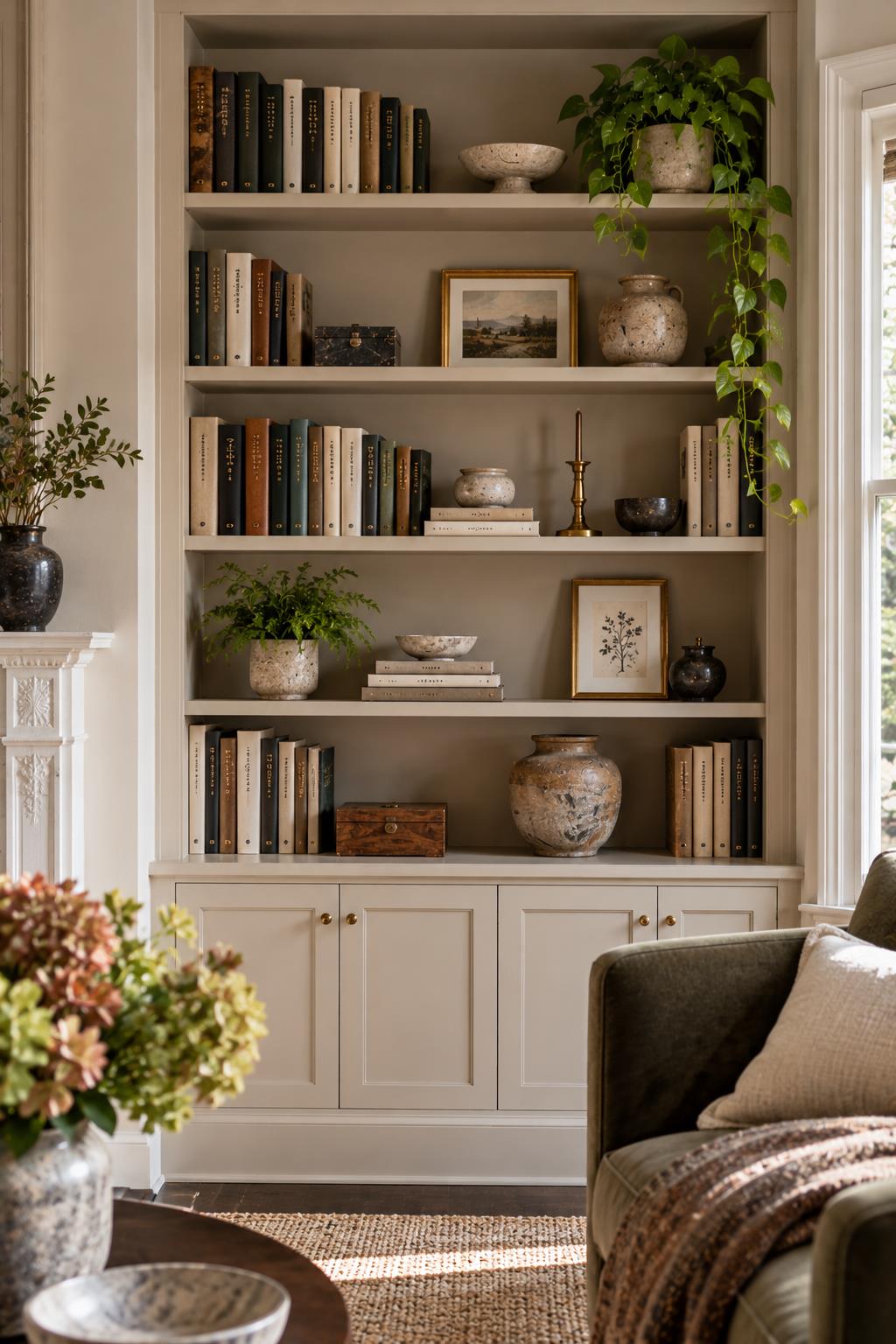
These images show painted alcove shelves on either side of a chimney, the most common living room bookshelf in older homes, but the method works on any bookcase.
Step 1: empty it completely
Take everything off. Wipe the shelves. It's much easier to build up than to rearrange.
Step 2: place the books first
Books are the backbone. Put them on first, before any objects.
- Mix upright and stacked. On most shelves, have a run of upright books and one horizontal stack.
- Alternate sides. If the upright run is on the left on one shelf, put it on the right on the next. This zigzag is what makes the eye move across the bookcase.
- Stack horizontal books in piles of three to five. They can double as a stand for a small object.
Leave about a third of each shelf free for now.
Step 3: add one object per shelf
In the free space, put one object. Just one:
- A vase or jug.
- A small framed print or photo.
- A candlestick.
- A small plant.
Vary the heights from shelf to shelf. Tall on one, low on the next.
Step 4: leave the air
The empty space around objects isn't a gap to fill. It's what makes the objects look chosen. Resist adding more.
What if you have a lot of books?
Many people do, and a styled bookshelf with ten books looks odd if you own four hundred. The method still works:
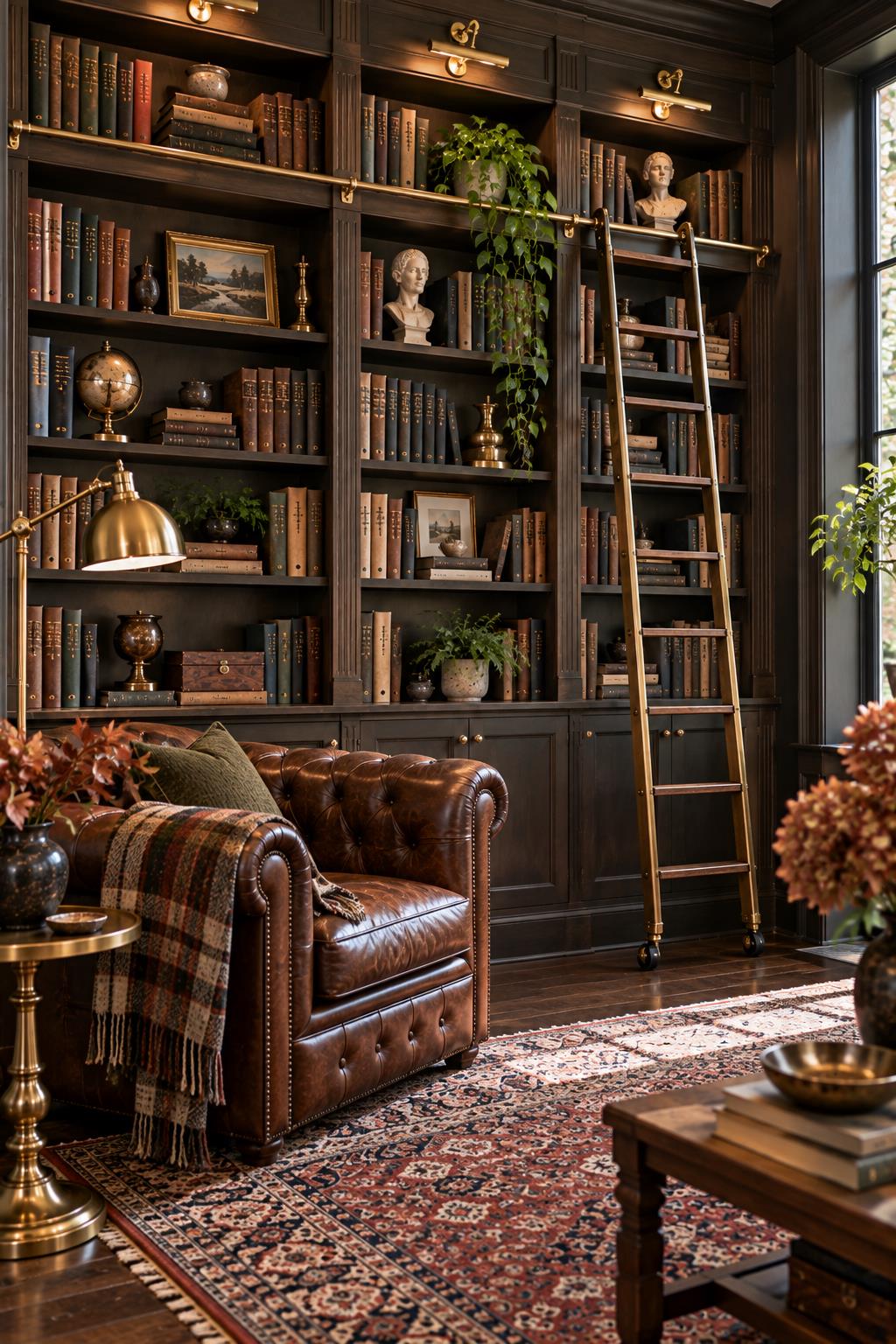
- Fill some shelves completely with books, top to bottom, especially the lowest ones.
- Style the eye-level shelves with the books-plus-one-object rule.
- Leave the top shelf lighter, with a few stacks and a plant.
A real, working library with a few styled shelves looks better than a sparse, staged one.
Paint the back or the whole shelf
In alcove shelves, painting the shelves the same color as the wall makes them look built in. A soft plaster pink, like Farrow & Ball Setting Plaster, is warm and flatters book spines. Darker colors, like a deep green or navy, make books and objects pop.
Light the shelves
A small brass picture light above each alcove, or small LED puck lights under each shelf, makes bookshelves glow in the evening. It's one of the cheapest ways to make a living room feel richer.
Balance the two sides of a fireplace
Alcove shelves on both sides of a chimney should mirror each other loosely, not exactly. Similar amounts of books and objects on each side, but not identical placement. Exact mirroring looks stiff; loose balance looks natural.
Color-coding books: yes or no?
Rainbow shelves photograph well but are hard to use and tend to look like a store display. A gentler option is to group books loosely by tone, whites and creams together, darker spines together, without strict order. Or just arrange by subject and let the colors fall where they may.
Mistakes to avoid
- Too many small objects. They look cluttered. Fewer, larger pieces.
- All books upright in one long row. Mix in stacks.
- Filling every gap. Leave air.
- Perfect mirroring between two bookcases.
How to decorate bookshelves FAQ
How do you decorate a bookshelf in a living room?
Place books first, mixing upright and stacked, alternating sides. Then add one object per shelf and leave space around it.
How do I decorate bookshelves with lots of books?
Fill the lower shelves completely, style the eye-level shelves and keep the top shelf lighter.
Should I paint my bookshelves?
Painting them the same color as the wall makes them look built in and calm.
How many objects should go on a shelf?
One or two per shelf, with space around them.