You spent a weekend styling your desk. Nobody on a video call has ever seen it.
What people see is the wall behind you, framed in a small rectangle on their screen for an hour at a time. That's the part of a home office that's actually public. So the best home office decor starts there: point the camera at a wall worth looking at, and your desk can be as messy as it needs to be.
Think about the frame, not the room
A laptop camera sees a rectangle roughly 4 to 6 feet wide behind you, from about shoulder height to a foot above your head. That's the only area that matters for calls. Sit in your chair, open your camera and look at exactly what's in frame before you buy anything.
Texture on the wall
A plain painted wall looks flat on camera. A wall with texture reads as richer and more considered. Options:
- Grasscloth wallpaper: the natural weave shows beautifully on video and hides small imperfections. Gray or warm beige grasscloth is shown here.
- Limewash paint: soft movement and depth.
- Wood slat panels: vertical oak slats, warm and architectural.
- A painted color block in a warm, muted shade behind your chair.
Avoid busy patterns. Small prints can flicker on camera.
A bookshelf, only two-thirds full
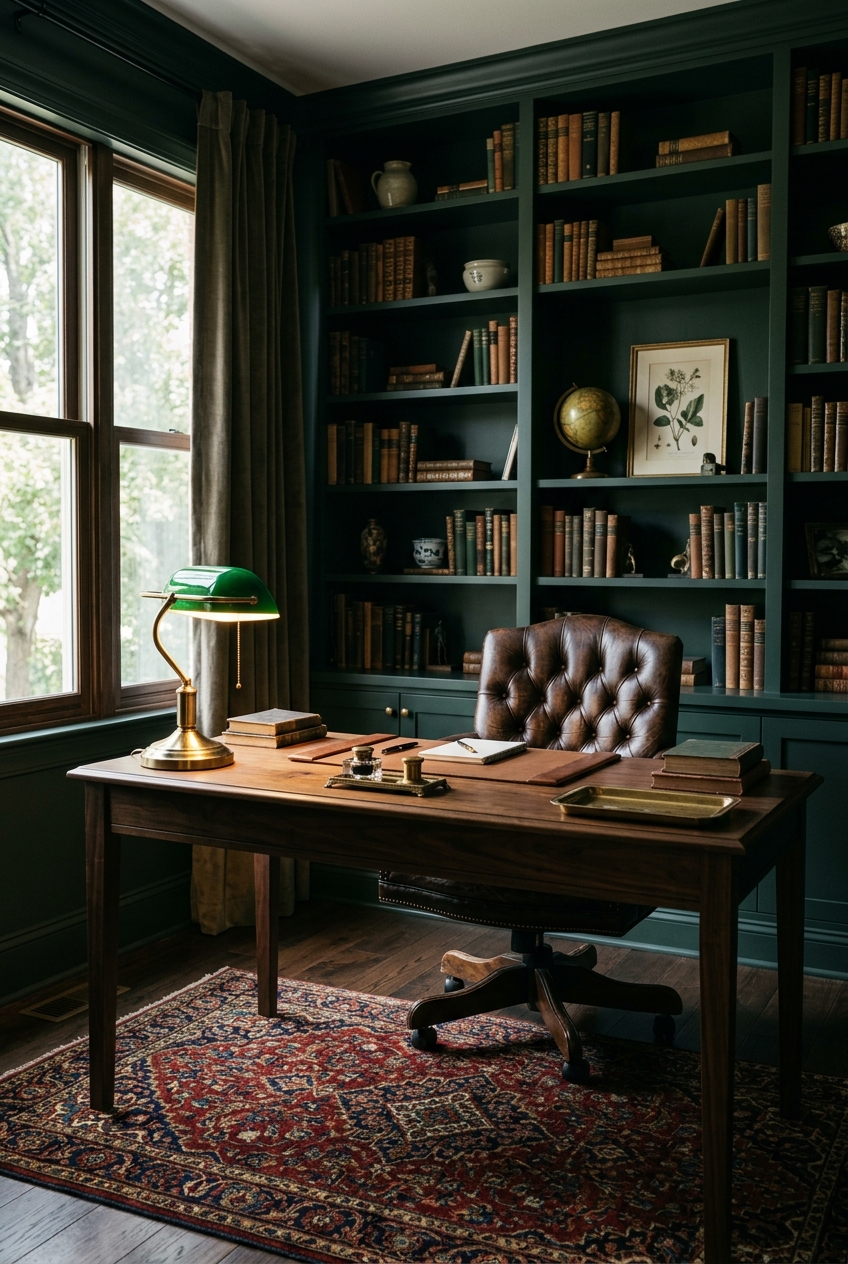
A bookshelf is the classic background, and it works because it looks lived in. The trick is to leave about a third of it empty. Books, a few ceramics, one plant, some open space. A packed shelf looks cluttered on a small screen.
One lamp in the frame
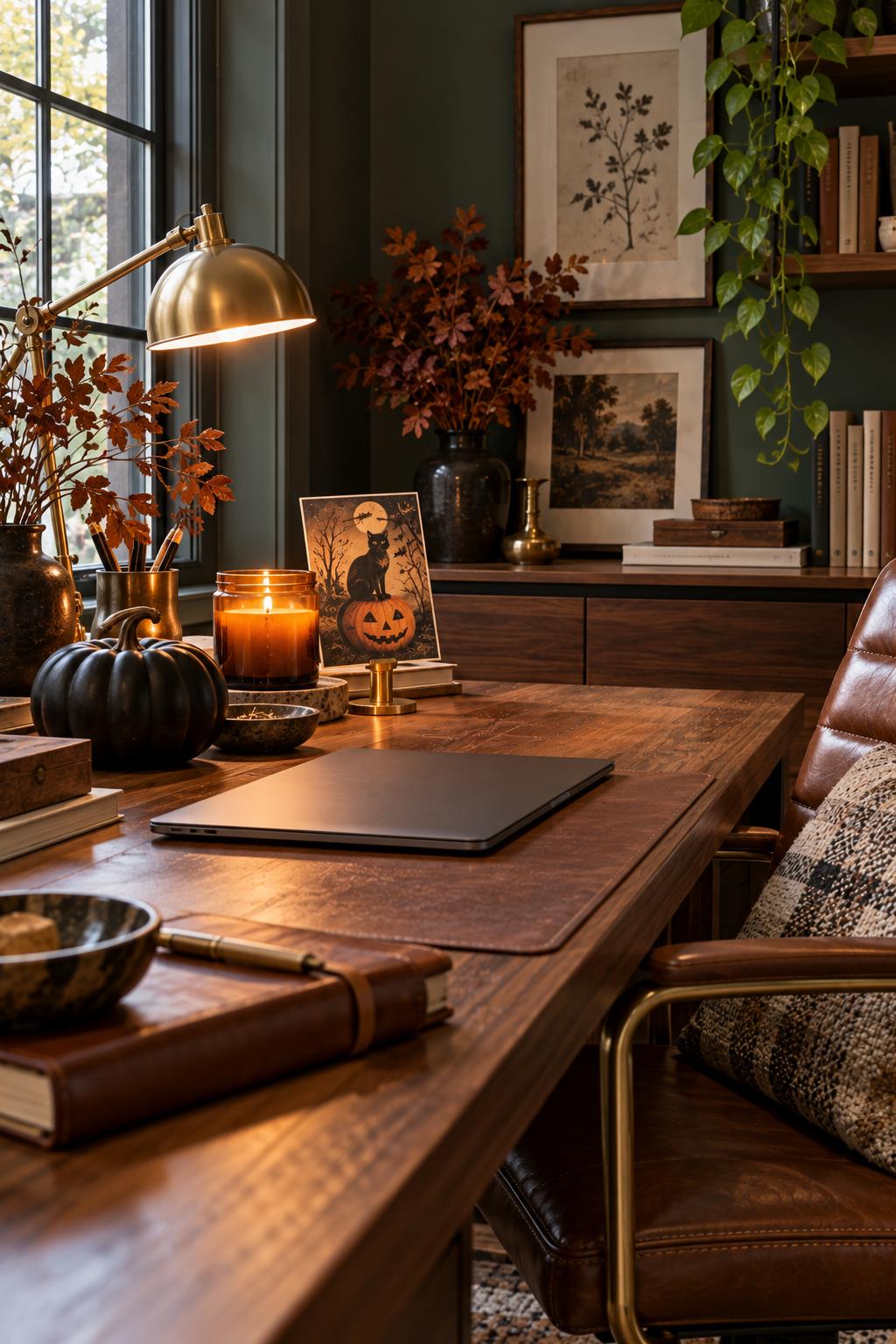
A lamp glowing in the background, on a side cabinet or shelf, adds warmth and depth to the shot and makes the room feel like a real space rather than a studio. Choose a warm bulb, 2700K.
Art that works on camera
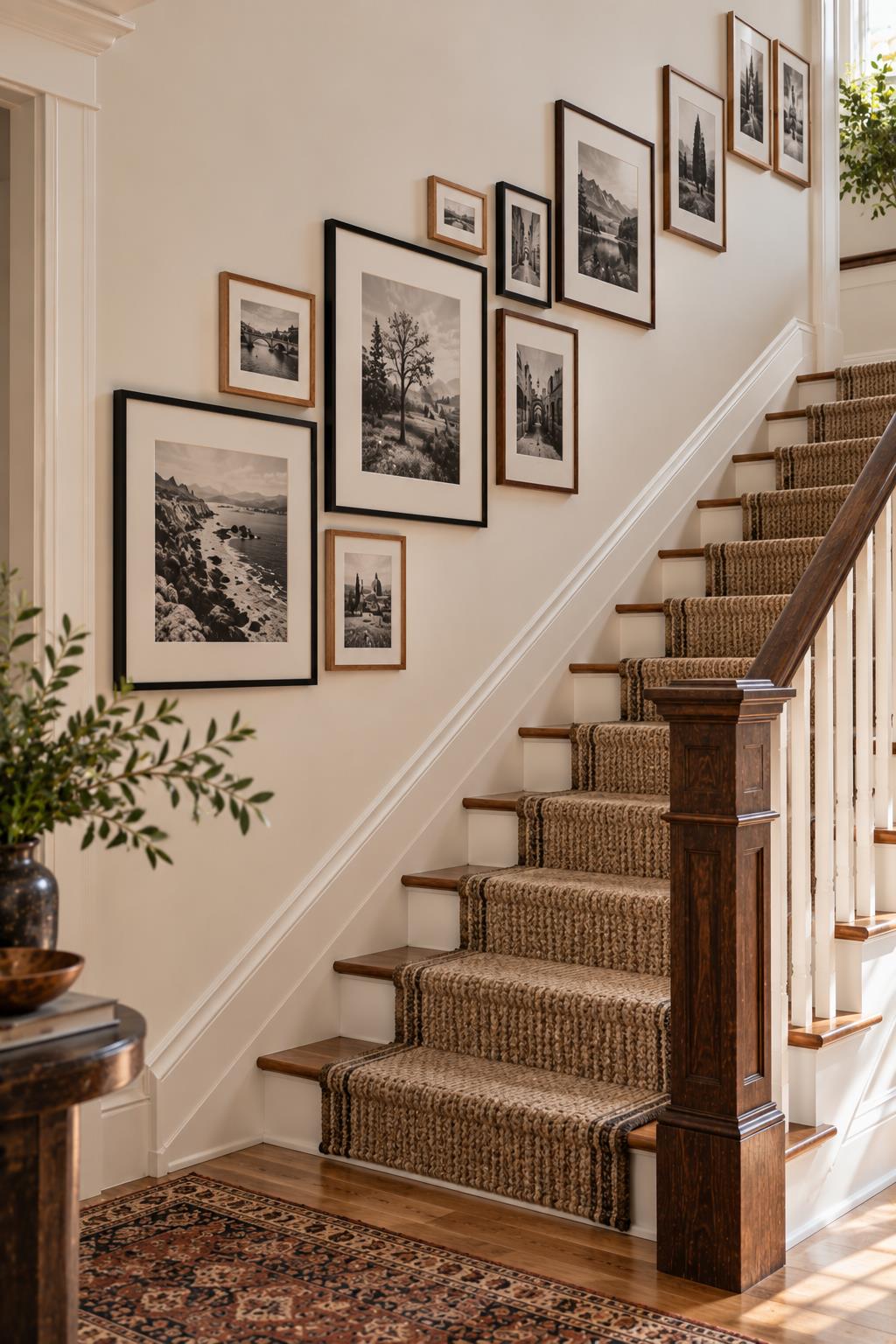
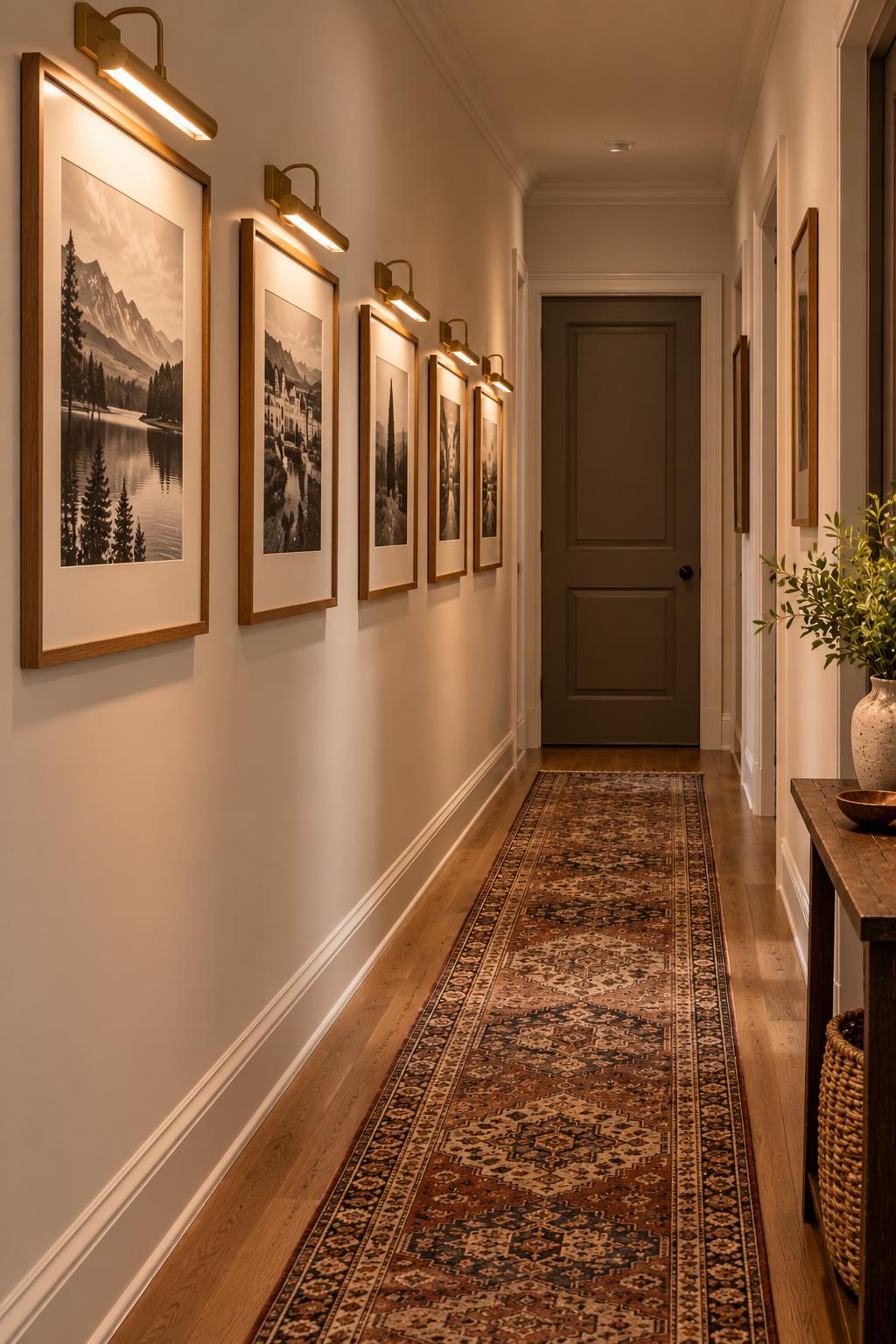
One large piece, or two or three leaned on a shelf. Abstracts and landscapes work well; faces and text can be distracting. Lean rather than hang for an easier, more relaxed look.
Light your face, not the wall
The best background still looks bad if your face is dark. Put your main light source, ideally a window, in front of you or to the side, never behind. Add a desk lamp to one side for evenings. A small warm lamp behind you then separates you from the wall.
A plant, trailing
A trailing pothos or a small olive tree at the edge of the frame softens the background and adds life. Trailing plants from a high shelf look especially good on camera.
What to keep out of frame
- Beds. Even neatly made, they look unprofessional.
- Laundry, doors to closets, clutter.
- Bright windows behind you. You'll be a silhouette.
- Text on the wall. People read it instead of listening.
Small space? Use a single panel
If you work from a kitchen table or a bedroom corner, you can still get a good background. A freestanding folding screen, a single tall bookcase, or even a large framed print on an easel behind your chair creates a mini background that only needs to fill the camera frame.
What it costs
- Grasscloth for one wall: $150 to $500 depending on quality.
- Limewash for one wall: $50 to $120.
- Bookshelf: $100 to $600.
- Background lamp: $40 to $150.
- Art and a plant: $50 to $200.
A camera-ready background for $300 to $1,000.
Mistakes to avoid
- Packed shelves. Leave space.
- Backlighting yourself. Face the light.
- Busy wallpaper. It can flicker on camera.
- A ring light as your only light. It makes the background look flat and dark.
Home office background wall FAQ
What makes a good background for video calls?
A textured wall, a two-thirds-full bookshelf, one warm lamp and a plant, with good light on your face.
What should I put on the wall behind my desk?
Grasscloth or limewash, a bookshelf, a large piece of art or a leaned print.
How do I hide a messy room on video calls?
Use a folding screen or a tall bookcase behind your chair to create a clean background.
What color is best for a video call background?
Warm, muted colors: greige, warm gray, sage, soft brown. Avoid bright white and saturated colors.