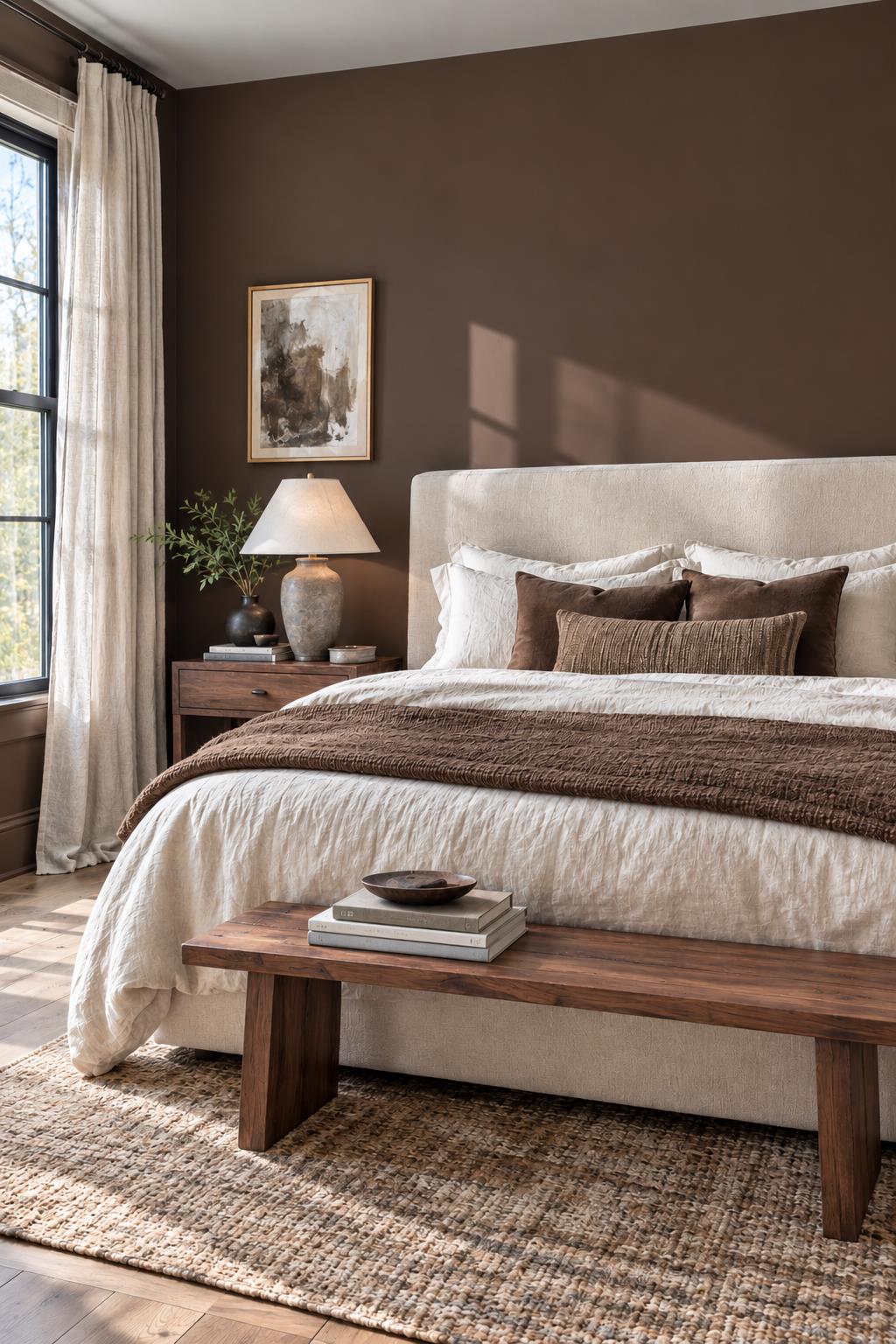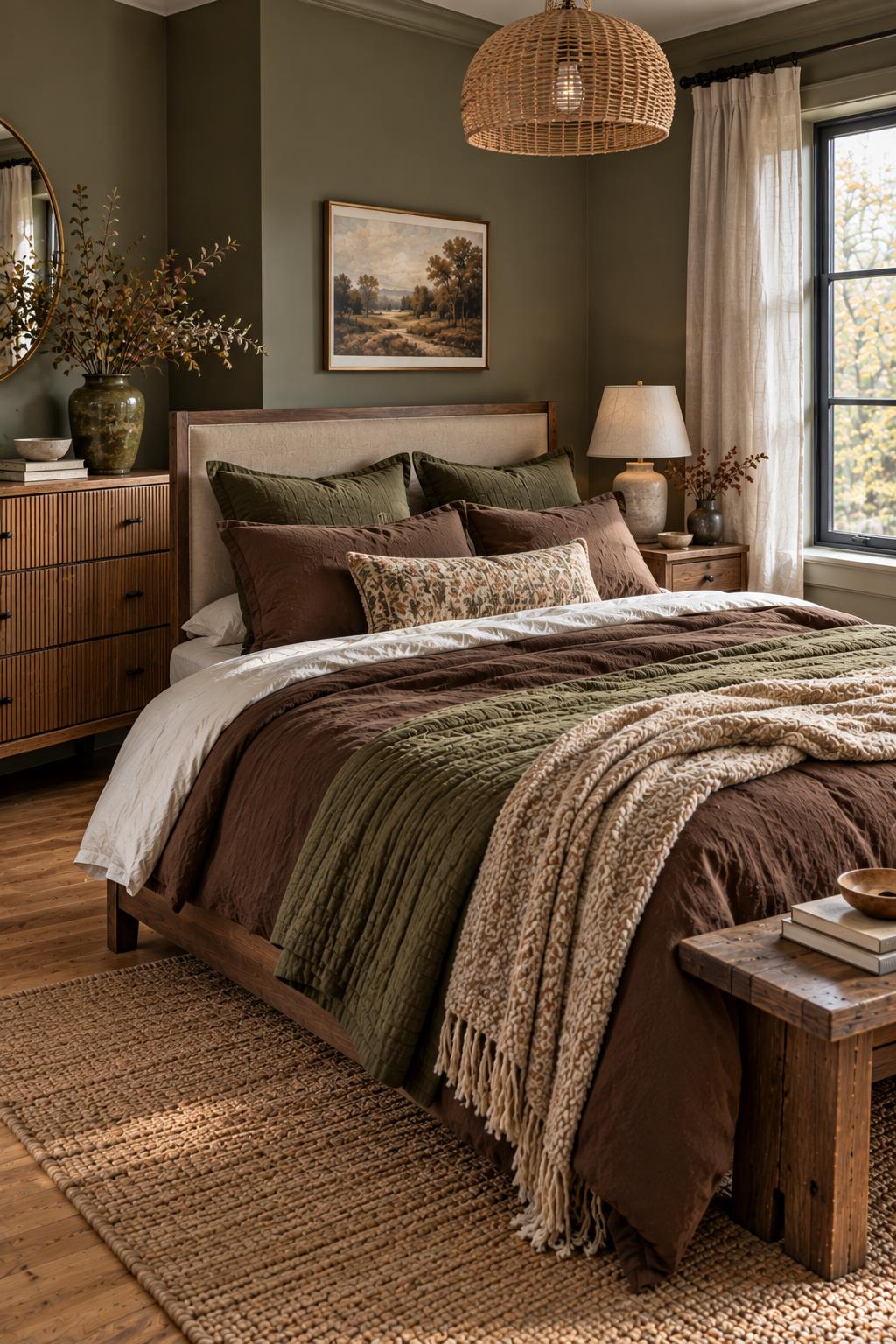
Olive walls. A cocoa duvet. Oak furniture. That's it.
No white, no gray, no black. On paper, an olive green and brown bedroom with nothing else in it shouldn't work. There's barely any contrast. But the two colors come from the same place, the forest floor, and the eye reads them as one room rather than two colors competing.
This is the calmest bedroom scheme I know. It's also one of the easiest to get right, because there are so few decisions.
Choose the olive first
Everything follows the wall color, so take your time here. The olive needs enough gray in it to feel calm, and enough yellow to stay warm. Three that work:
- Farrow & Ball Bancha: a deep, muted olive. The one in these images.
- Benjamin Moore Saybrook Sage: lighter, softer, good for a darker room.
- Sherwin-Williams Clary Sage: lighter again, more gentle.
Paint two big sample boards and look at them next to your brown bedding before you commit. The duvet should be darker than the wall, or at least clearly different.
Let the brown come from two sources
Brown in this room comes from the bedding and the wood. That's enough. A cocoa duvet, olive pillowcases, and oak for the bed, dresser and nightstand. The oak's honey tone sits between the olive and the cocoa, which is why it's so useful.
How to get depth with low contrast
A two-color room risks looking flat. Depth comes from three places:
Texture. Linen duvet, jute rug, ribbed dresser drawers, a handmade green-glazed vase. The more texture, the less you need color contrast.
Light. A rattan pendant or a paper lantern throws patterned shadows. Side lamps create pools of warm light that separate the bed from the wall.
Shade steps within the palette. A darker olive on the pillowcases than on the wall. A lighter brown in the oak than in the duvet.
The dresser moment
Every bedroom needs one place where the eye rests besides the bed. Here it's the dresser: oak with ribbed drawer fronts, a green-glazed vase with dried grasses, a short stack of books. All inside the palette.
Floor and rug
Honey pine or oak floors fit perfectly. Add a jute or sisal rug under the bed for texture. Avoid patterned rugs; they introduce colors the room doesn't need.
When to break the rule
After a few weeks, you might want one thing outside the palette. Make it tiny: a small brass object, a rust candle, a single cream pillow. The discipline is what makes the room calm, so bend it, don't break it.
Painting a bedroom olive: what to expect
Olive is a mid-to-deep color, so plan on two full coats over a gray-tinted primer if your walls are currently white. A 12-by-12 bedroom needs about two gallons for walls. Farrow & Ball and similar premium paints cost more, around $120 a gallon, but their matte finishes have a chalky depth that suits olive. A mid-range matte from Benjamin Moore or Sherwin-Williams will look very close for about $75 a gallon.
Paint the ceiling a soft cream rather than bright white. Bright white above olive walls makes the green look darker and creates a hard line. A cream ceiling blurs that line and makes the room feel taller.
Leave the trim the same olive in eggshell if you want the calmest version, or paint it cream if the room needs a little more definition.
Is a two-color bedroom right for you?
This works best in bedrooms that get decent natural light and are used mostly for sleeping. If your bedroom is also an office, a reading room and a closet, you might want a bit more contrast to separate zones. And if the room faces north, go one step lighter on the olive.
Mistakes to avoid
- Olive that's too bright. It turns army green. Choose a grayed olive.
- Cold white bedding. It breaks the calm. If you need something light, use oatmeal.
- Black metal. Black frames or hardware jump out in a low-contrast room.
- Brown walls and olive bedding. It works, but it's a different, heavier room. Keep the walls olive for this look.
Olive green and brown bedroom FAQ
What colors go with olive green in a bedroom?
Brown, cream, oatmeal, rust and honey wood tones. Brass for metal.
Is olive green a good bedroom color?
It's one of the best. It's calming, warm and forgiving in different lights.
What bedding goes with olive green walls?
Cocoa, chocolate or caramel for warmth. Oatmeal for a lighter look. Olive pillowcases tie the bed to the walls.
Does olive and brown look dated?
Not when the olive is muted and the fabrics are natural. It reads as current and earthy.