Olive walls. Brown leather. Brass that's gone dark.
A moody living room built from three materials is easier to get right than one built from a color palette. You're not matching swatches; you're choosing things that age well and look better together as they get older. Olive, leather and brass have been paired in libraries and clubs for a century, and they still work in a modern living room.
Choose the olive
- Farrow & Ball Bancha: a deep, muted olive. Used here.
- Benjamin Moore Saybrook Sage: lighter, softer.
- Sherwin-Williams Ripe Olive: deeper, almost brown.
- Farrow & Ball Olive: a classic grayed olive.
Test big samples on multiple walls. Olive shifts from green to brown depending on light direction.
Leather that ages
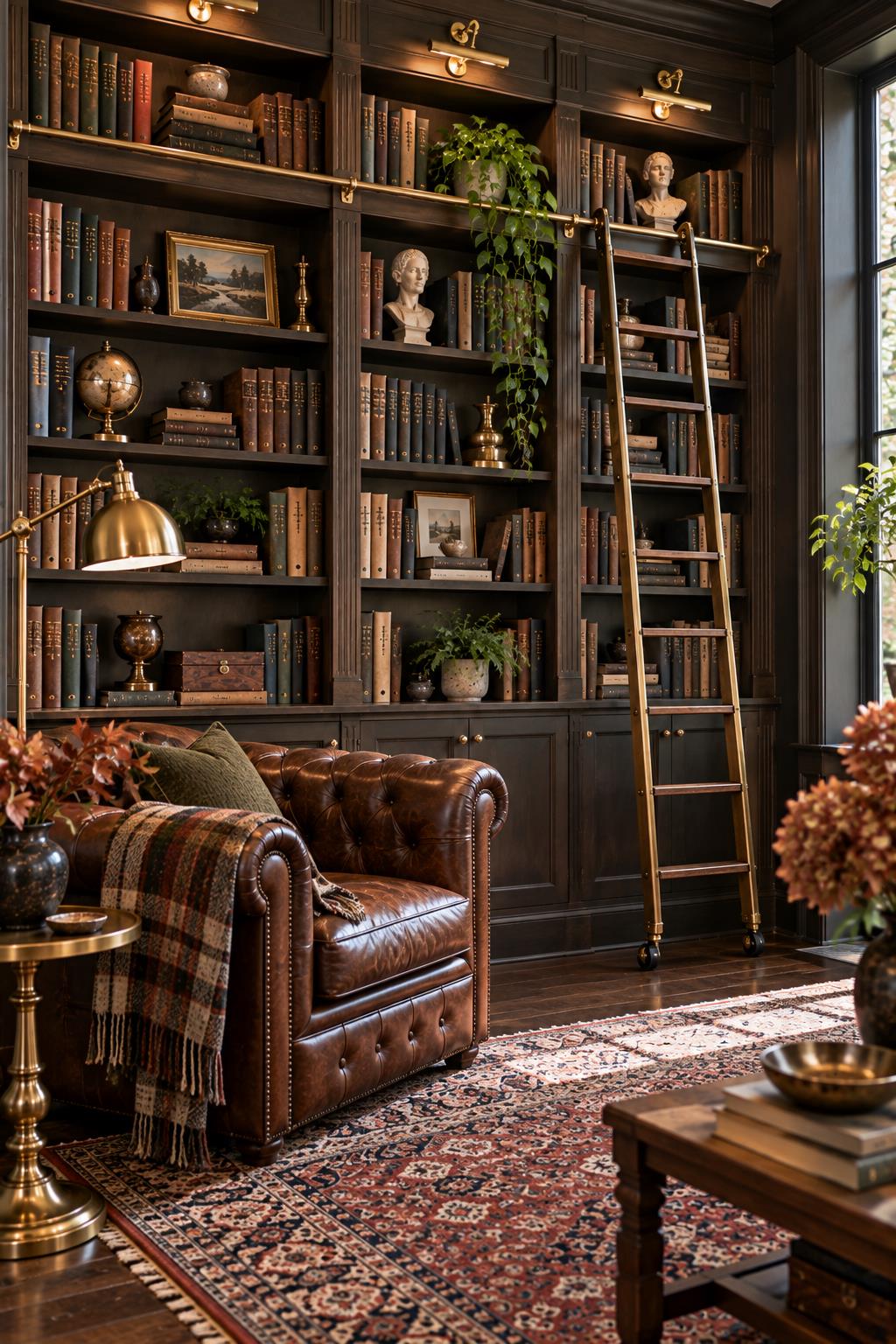
A brown leather sofa or chesterfield is the anchor. Aniline or semi-aniline leather develops a patina: it darkens, softens and picks up marks that make it look loved. Vintage leather sofas are often better value than new ones.
Brass that goes dark
Unlacquered or aged brass swing-arm wall lamps, a brass floor lamp, brass picture frames. Let them tarnish. Shiny brass looks new; dark brass looks like it's always been there.
A walnut coffee table
Dark walnut sits between the olive and the leather. A simple rectangular or round walnut coffee table with a few books.
A faded Persian rug
Reds and indigos in an old Persian rug add warmth against the olive walls. Faded is better than bright.
A bookshelf in the corner
Books add color and life. A tall bookshelf in the corner, painted the same olive as the walls, filled with books and a few objects.
Dried pampas or grasses
A tall floor vase of dried pampas grass or bunny tail adds height and softness. Pampas grass is still one of the most saved living room details.
Lighting
Olive walls need warm lamps: swing-arm wall lamps, a floor lamp, a table lamp. 2700K bulbs. Avoid overhead light.
Painting a living room olive
A few practical notes:
- Primer: use a gray-tinted primer over white walls. It saves a coat.
- Finish: matte on walls. Olive in eggshell shows every bump and roller mark.
- Trim: paint it olive too, in eggshell, for a calm, seamless look. White trim against olive can look choppy.
- Ceiling: a warm cream or a pale tint of the olive. Bright white ceilings look harsh above deep olive.
A typical 14-by-16 living room needs about three gallons for walls and a quart or two for trim.
Making it work in a small living room
Olive can make a small living room feel enclosed. A few adjustments:
- Choose a lighter olive like Saybrook Sage.
- A lighter rug in cream or oatmeal to brighten the floor.
- A cream linen sofa instead of dark leather, with leather on a single chair instead.
- A large mirror opposite the window to bounce light.
Why these three materials age well
Paint, leather and brass all improve with a little wear. Olive walls hide scuffs better than white. Leather softens and darkens. Brass tarnishes into a warm brown. A room built from materials like these looks better in five years than it did on day one, which is rare.
Adding a second color
If you want one more color, choose rust, mustard or deep red. Keep it to cushions or a throw.
What it costs
- Paint: $150 to $350 for a living room.
- Vintage leather sofa: $500 to $2,500.
- Brass wall lamps: $80 to $300 each.
- Vintage-style rug: $200 to $1,000.
Mistakes to avoid
- Shiny new brass. Let it age.
- Gray furniture with olive walls.
- Cool lighting.
- Too many colors. Stick to olive, brown and brass.
Olive green living room FAQ
What colors go with olive green walls in a living room?
Brown leather, walnut, brass, cream and warm reds in rugs.
Is olive green a good living room color?
Yes. It's warm, calming and works well with natural materials.
What sofa goes with olive green walls?
Brown or cognac leather, cream linen or rust velvet.
Does olive green make a room dark?
Deep olive can. Balance with warm lamps and a lighter rug.