Olive green bedding has become one of the most searched bedding colors on Pinterest, and it's easy to see why. It's a green that behaves like a neutral. It goes with wood, brass, cream, brown and rust, it looks right in fall and spring, and it doesn't show every speck of dust the way white does.
But "olive" covers a lot of greens, and some work much better than others. Here's how to pick the right one and what to layer with it.
Pick the right olive
Olive bedding comes in three rough families:
- Gray olive: muted and soft, almost sage. The most versatile.
- Warm olive: yellow-green, like an olive itself. Cozy, great with rust and brown.
- Deep olive: dark, almost khaki-brown. Moody and rich.
If you're unsure, gray olive is the safest. Warm olive can look khaki under cool bulbs; deep olive can look heavy in small rooms.
Olive as the accent, cream as the base
The easiest way to use olive bedding is as one layer, not the whole bed:
- Cream or ivory sheets and duvet.
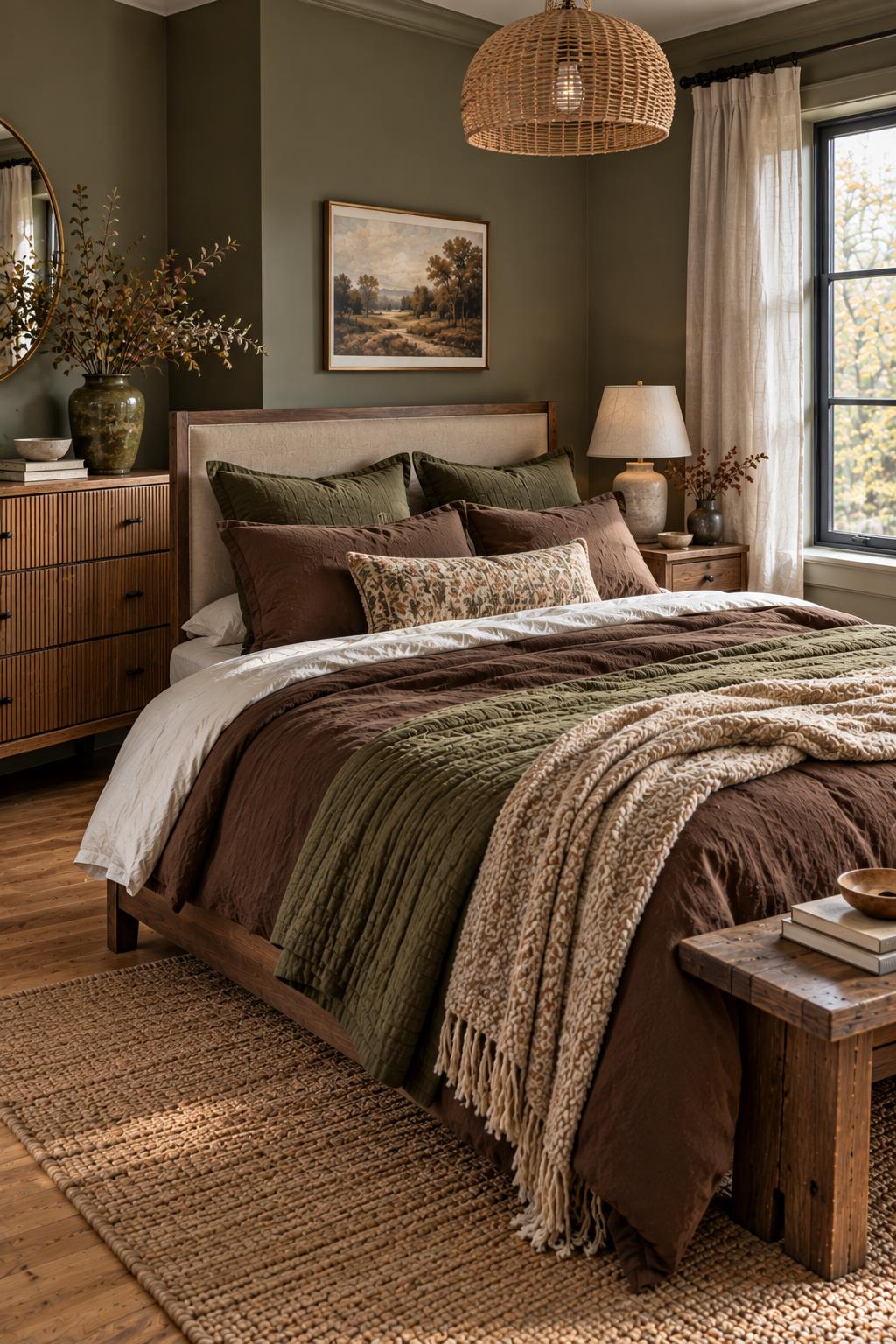
- An olive quilt folded in thirds across the lower part of the bed.
- One or two olive pillowcases or a single olive lumbar.
This keeps the bed light and lets olive be the color that stands out.
Or go all olive
An olive linen duvet with white sheets is a bolder look. It works best in a room with warm white or cream walls and pale wood. Add a cream or oatmeal throw to break it up.
Colors that pair with olive bedding
- Cream and oatmeal: calm and classic.
- Rust and terracotta: warm and fall-like.
- Chocolate brown: earthy and rich.
- Mustard: vintage.
- Soft pink: unexpected and pretty.
Pick one accent color at most.
The oversized throw
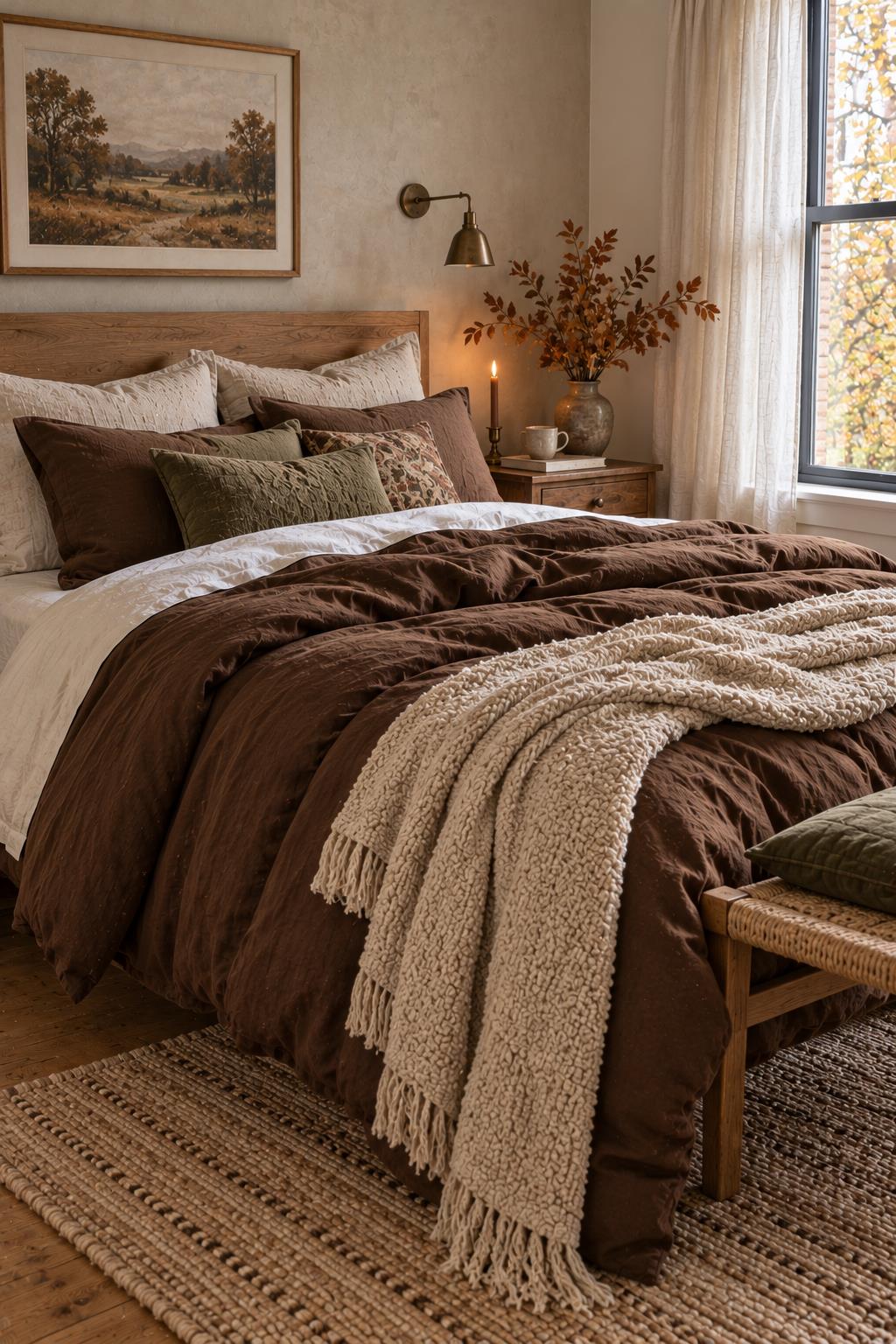
A knit throw that's far too big for the bed, draped off one corner and onto the floor, is what makes a bed look relaxed. Oatmeal or cream cable knit is the classic. It takes a few attempts to get the drape right; that's part of it.
Headboard and walls
Oak, walnut or cane headboards suit olive. For walls, warm white, cream or a soft plaster color. An olive bed against olive walls is a strong, cocooning look, but needs warm light to avoid feeling flat.
Fabrics
Washed linen, cotton percale and cotton waffle. Olive looks especially good in linen, where the color varies slightly with the texture.
Olive bedding through the year
- Fall: olive quilt, rust accent, knit throw.
- Winter: add a plaid wool blanket with olive in it.
- Spring: olive pillowcases with white linen.
- Summer: a light olive linen coverlet on its own.
Olive bedding in different bedrooms
Small bedroom: keep olive to the quilt and pillows. A full olive duvet can make a small room feel darker.
North-facing room: choose a warm olive with yellow in it. Gray olive can look cold in north light.
Bright, sunny room: any olive works. Deep olive looks especially rich in strong light.
Kids' or guest room: an olive quilt over white bedding is practical, hides marks and looks good with almost any wall color.
Buying tips
Olive is one of the colors that varies most between brands and even between batches. A few tips:
- Buy the duvet and pillowcases from the same maker so the olives match.
- Order swatches if you can.
- Look at customer photos in daylight rather than studio shots.
- Wash once before judging the color. Linen often softens and lightens slightly after the first wash.
Mistakes to avoid
- Olive with gray walls. Makes it look drab.
- Too many greens. One olive, not three.
- Cool lighting. Makes olive look khaki.
- Shiny fabrics. Choose matte linen and cotton.
Olive green bedding FAQ
What color goes with olive green bedding?
Cream, oatmeal, rust, chocolate brown, mustard and soft pink.
What color sheets go with an olive duvet?
White, ivory or cream.
Is olive green bedding a good choice for fall?
Yes. It pairs beautifully with rust, brown and knit textures.
What wall color goes with olive bedding?
Warm white, cream or plaster tones.